Ardisia crenata: Uses (Ethnobotany)
The root of the plant is used as an ingredient in Chinese medicine. The plant reportedly contains a substance that may treat asthma and hypertension.
Phonetic Spelling:ar-DIS-ee-ah kre-NAY-tah
Genus:Ardisia
Species:crenata
Family:Primulaceae
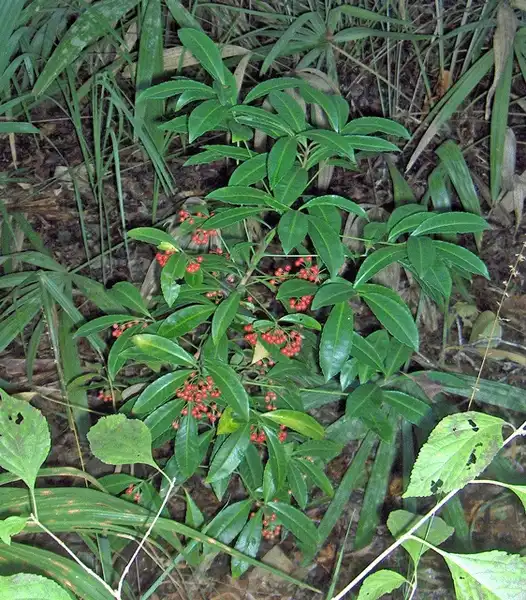
Coralberry is a compact, upright evergreen shrub that can grow up to 6 feet tall. This plant is indigenous to India, Japan, and the Philippines and belongs to the Primrose family. In Japan, it typically thrives in forested areas and on hillsides. In traditional Chinese medicine, the roots of Coralberry are utilized to enhance blood circulation.
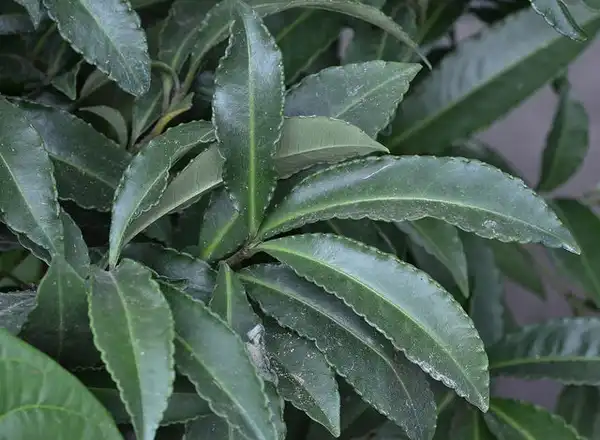
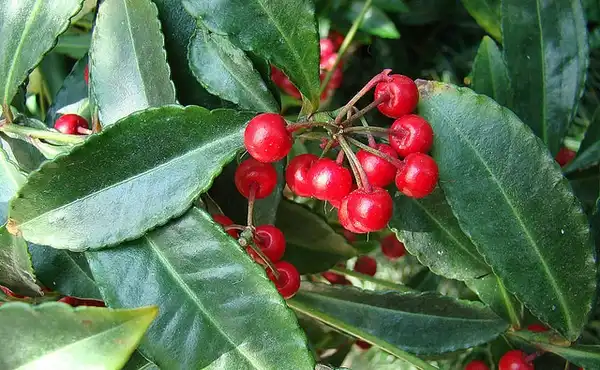
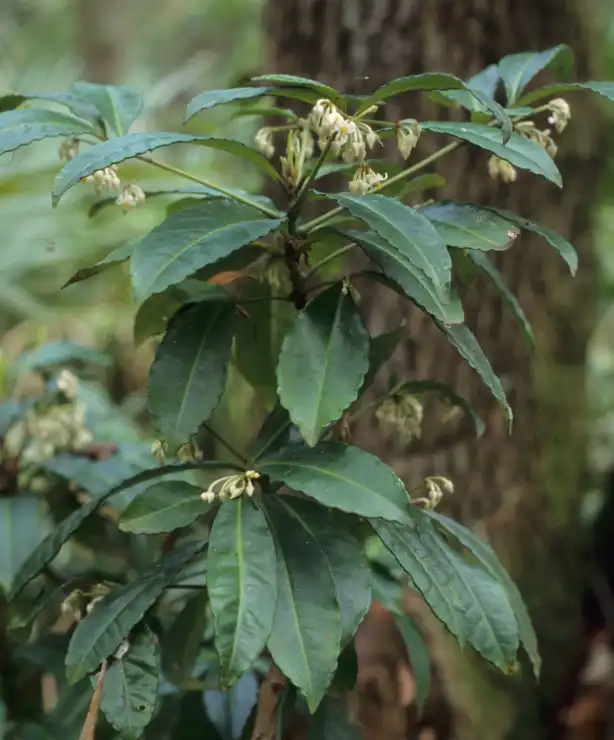
The shrub features slender, glossy green leaves, and during late spring to early summer, it produces clusters of small flowers that range from white to pale pink. As the season progresses, berries develop, transitioning from green to a shiny red hue, and these berries persist on the plant throughout the year. Additionally, a variety with white and pink berries has been cultivated.
The genus name, Ardisia, derives from the Greek word "Ardis," which translates to "point," a nod to the pointed anthers found in its flowers. The species name, crenata, is the feminine form of the Latin term "crenatus," meaning "with blunt teeth," likely referring to the plant's notched leaf edges.
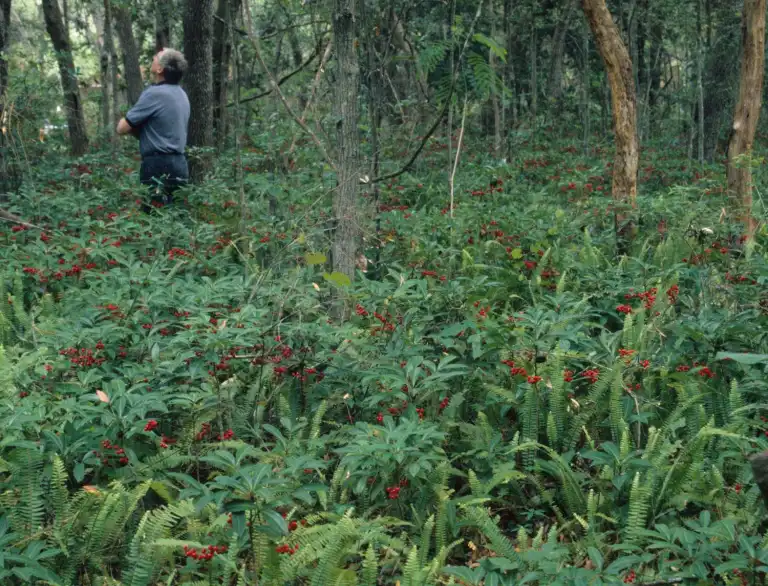
Coralberry was introduced as an ornamental plant in Florida during the 1900s but has since escaped cultivation and become invasive in regions of Florida, Georgia, and Alabama. It was recognized as an invasive species in Florida in 1995 and classified as a noxious weed in 2014. By 1997, it had spread to Texas, where it took over the understory of two nature preserves. Its ability to colonize coastal South Carolina is concerning due to the area's mild winters, and once established, the shrub proves challenging to control.
Closely related to the Marlberry (Ardisia japonica), Coralberry differs in that the Marlberry is a low-growing evergreen shrub, reaching only 8 to 12 inches in height. This species can also spread quickly, forming extensive colonies over time.
Coralberry thrives in rich, acidic soil but struggles to produce berries under excessive heat, and too much sunlight can scorch its leaves. Additionally, the shrub is not tolerant of flooding.
While Coralberry can be cultivated in containers as a houseplant, it is advisable to avoid planting it in landscapes due to its invasive tendencies. Instead, native alternatives like the American Beautyberry may be more suitable.
In terms of wildlife value, the berries of Coralberry are a food source for cedar waxwings, mockingbirds, raccoons, and various small mammals.
Ardisia crenata Feature Summary