Plant Profile: Asparagus densiflorus (Sprengeri group)

Names

Asparagus, Asparagus Fern, Emerald Feather, Emerald Fern, Lace Fern, Plumosa Fern, Racemose Asparagus, Shatavari, Sprengeri Fern

  • Photo of Asparagus densiflorus (Sprengeri group) (Asparagus densiflorus (Sprengeri group)s)

Phonetic Spelling:ah-SPAIR-ah-gus den-sih-FLOR-us

Genus:Asparagus

Species:densiflorus

Family:Asparagaceae

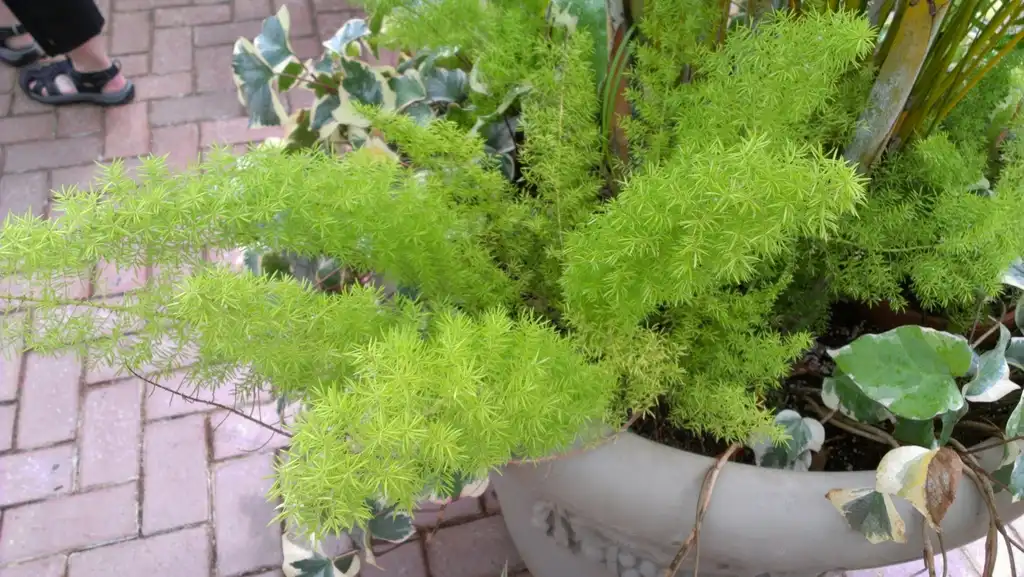
This upright, perennial herb exhibits a somewhat woody structure, with branches that arch gracefully and resemble ferns. Its leaves are arranged alternately and are scale-like, while the terminal branchlets are slender, flat, and needle-like, typically found in clusters of three. The flowers are axillary, drooping, and consist of six parts, forming a bell shape in a yellow-green hue. The fruit produced is a vibrant red berry. Asparagus densiflorus demonstrates moderate tolerance to salt.

As an indoor herbaceous "shrub," it can grow up to 1 meter tall, presenting a dense and compact form that can also spread widely. This plant thrives in moderate warmth and requires regular watering from spring to autumn, with reduced watering in winter. It does not tolerate high light levels, so direct sunlight should be avoided, and it is sensitive to consistently wet soil, which can lead to pest issues.

Valued for its elegant, feathery foliage that resembles ferns, this plant is often used in floral arrangements. It adapts well to a variety of lighting conditions, temperatures, and watering frequencies. It is commonly utilized in hanging baskets and as ground cover in indoor settings.

Family: Asparagaceae (previously classified under Liliaceae).

Quick Identification Tips:

Asparagus densiflorus (Sprengeri group) Feature Summary

Asparagus densiflorus (Sprengeri group) Image Gallery

Tags

#poisonous
#houseplant
#perennial
#red berries
#shade tolerant
#yellow flowers
#salt tolerant
#shade garden
#hanging baskets
#flower arrangements
#deer resistant
#groundcover
#fern-like
#fantz
#indoor
#problem for cats
#problem for dogs
#problem for horses

Similar Plants

Asparagus densiflorus (Sprengeri group) is often confused with:

Asparagus densiflorus (Sprengeri group) Feature Summary

Attributes
Fruit
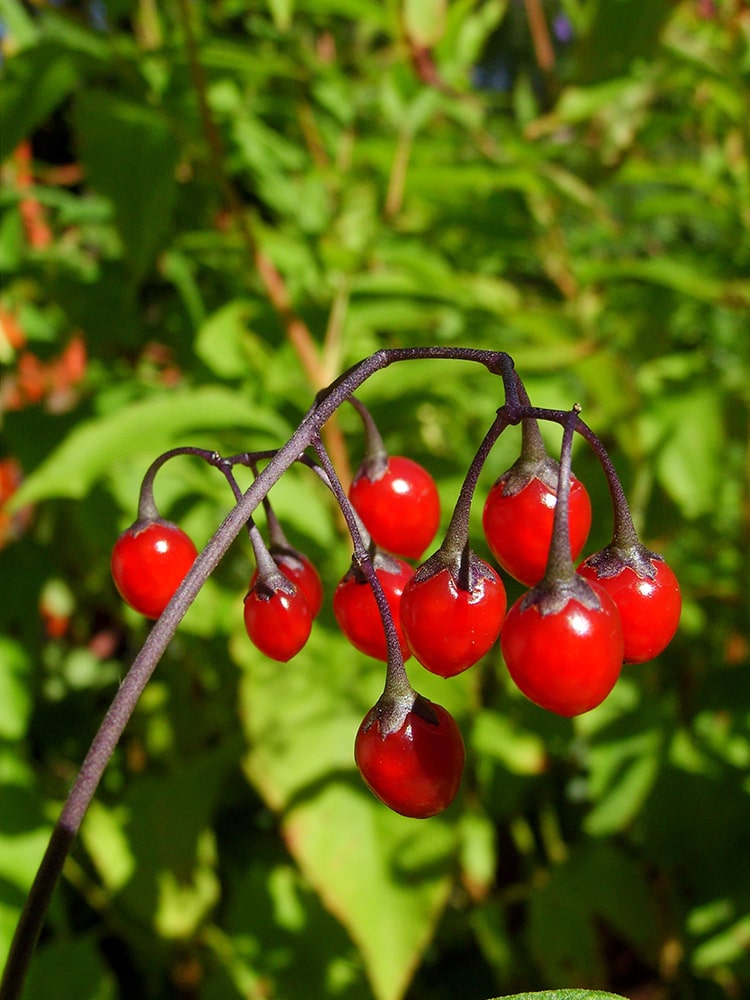
A bright red spherical berry.
Red/Burgundy
Flowers
Flowers axillary, drooping, 6-parted, bell-shaped, yellow-green. Inflorescence a short axillary raceme. Rare in interior settings.
Gold/Yellow
Green
6 petals/rays
Leaves
Leaves alternate and scale-like, terminal branchlets very narrow, flat, needle-like, in clusters of 3
Acicular
Stem
Erect or trailing, finely ridged, spiny, green or brown. Branches spreading with lateral pins short. CLADOPHYLLS minute, flat, linear, narrowly falcate, 1-nerved, spine-like.
Brown/Copper
Green
Poisonous to Humans
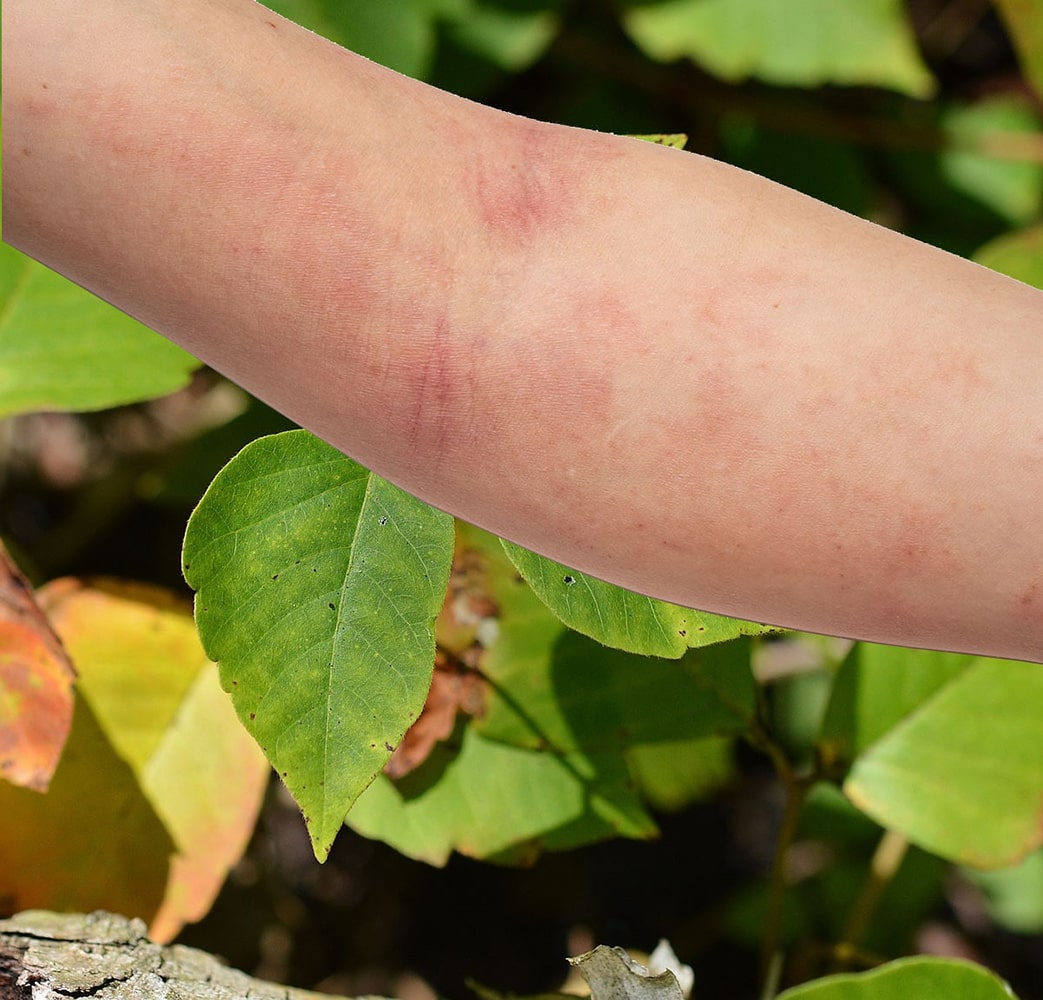
CAUSES ONLY LOW TOXICITY IF EATEN. SKIN IRRITATION MINOR OR LASTING ONLY FOR A FEW MINUTES. Eating of berries may cause gastrointestinal problems. Skin irritation with redness, swelling, and blisters following contact with sap
Leaves
Stems
Fruits
Roots
Whole Plant Traits
Perennial
Poisonous
Arching
Erect
Cultural Conditions
Dappled Sunlight (Shade through upper canopy all day)
Deep shade (Less than 2 hours to no direct sunlight)
Good Drainage
Landscape
Shade Garden
Deer
Salt
Heavy Shade
Poisonous to Humans
Problem for Cats
Problem for Dogs
Problem for Horses
Contact Dermatitis

Asparagus densiflorus (Sprengeri group) Attributes

Asparagus densiflorus (Sprengeri group): Country Or Region Of Origin

South Africa
Asparagus densiflorus (Sprengeri group): Life Cycle

Annual
Biennial
Bulb
Perennial
Woody

Asparagus densiflorus (Sprengeri group) Fruit

Asparagus densiflorus (Sprengeri group): Fruit Description

A bright red spherical berry.

Asparagus densiflorus (Sprengeri group): Fruit Type

Achene
Aggregate
Berry
Capsule
Caryopsis
Drupe
Follicle
Legume
Nut
Pome
Samara
Schizocarp
Siliqua

Asparagus densiflorus (Sprengeri group): Fruit Color

grass
Red/Burgundy

Asparagus densiflorus (Sprengeri group): Fruit Value To Gardener

Edible
Fragrant
Good Cut
Good Dried
Long Bloom Season
Long-lasting
Showy

Asparagus densiflorus (Sprengeri group) Flowers

Asparagus densiflorus (Sprengeri group): Flower Description

Flowers axillary, drooping, 6-parted, bell-shaped, yellow-green. Inflorescence a short axillary raceme. Rare in interior settings.

Asparagus densiflorus (Sprengeri group): Flower Color

filter_vintage
Gold/Yellow
filter_vintage
Green

Asparagus densiflorus (Sprengeri group): Flower Inflorescence

Catkin
Corymb
Cyme
Head
Insignificant
Panicle
Raceme
Solitary
Spadix
Spike
Umbel

Asparagus densiflorus (Sprengeri group): Flower Petals

2-3 rays/petals
4-5 petals/rays
6 petals/rays
7 - 20 petals/rays
asymmetrical petals
Bracts
Colored Sepals
fused petals
more than 20 petals/rays
Tepals

Asparagus densiflorus (Sprengeri group): Flower Shape

Bell
Cross
Crown
Cup
Dome
Funnel
Irregular
Lipped
Radial
Saucer
Star
Trumpet
Tubular
Urn
Wheel

Asparagus densiflorus (Sprengeri group) Leaves

Asparagus densiflorus (Sprengeri group): Leaf Description

Leaves alternate and scale-like, terminal branchlets very narrow, flat, needle-like, in clusters of 3

Asparagus densiflorus (Sprengeri group): Leaf Color

spa
Green

Asparagus densiflorus (Sprengeri group): Leaf Arrangement

Alternate
Opposite
Other/more complex
Rosulate
Whorled

Asparagus densiflorus (Sprengeri group): Leaf Shape

Acicular
Auriculate
Cordate
Cuneate
Deltoid
Elliptical
Filiform
Lanceolate
Linear
Oblanceolate
Oblong
Obovate
Obtuse
Orbicular
Ovate
Palmasect
Palmatifid
Peltate
Pinnatifid
Pinnatisect
Reniform
Rhomboidal
Spatulate
Subcordate
Subulate

Asparagus densiflorus (Sprengeri group): Hairs Present

No
Yes

Asparagus densiflorus (Sprengeri group) Stem

Asparagus densiflorus (Sprengeri group): Stem Description

Erect or trailing, finely ridged, spiny, green or brown. Branches spreading with lateral pins short. CLADOPHYLLS minute, flat, linear, narrowly falcate, 1-nerved, spine-like.

Asparagus densiflorus (Sprengeri group): Stem Color

grass
Brown/Copper
grass
Green

Asparagus densiflorus (Sprengeri group): Stem Is Aromatic

No
Yes

Asparagus densiflorus (Sprengeri group) Poisonous to Humans

Asparagus densiflorus (Sprengeri group): Poison Symptoms

CAUSES ONLY LOW TOXICITY IF EATEN. SKIN IRRITATION MINOR OR LASTING ONLY FOR A FEW MINUTES. Eating of berries may cause gastrointestinal problems. Skin irritation with redness, swelling, and blisters following contact with sap

Asparagus densiflorus (Sprengeri group): Poison Toxic Principle

Unknown

Asparagus densiflorus (Sprengeri group): Poison Severity

High
Low
Medium

Asparagus densiflorus (Sprengeri group): Causes Contact Dermatitis

No
Yes

Asparagus densiflorus (Sprengeri group): Poison Part

Bark
Flowers
Fruits
Leaves
Roots
Sap/Juice
Seeds
Stems

Asparagus densiflorus (Sprengeri group) Whole Plant Traits

Asparagus densiflorus (Sprengeri group): Plant Type

Annual
Bulb
Carnivorous
Edible
Epiphyte
Fern
Ground Cover
Herb
Herbaceous Perennial
Houseplant
Mushroom
Native Plant
Ornamental Grasses and Sedges
Perennial
Poisonous
Rose
Shrub
Succulent
Tree
Turfgrass
Vegetable
Vine
Water Plant
Weed
Wildflower

Asparagus densiflorus (Sprengeri group): Habit/Form

Arching
Ascending
Broad
Cascading
Climbing
Clumping
Columnar
Conical
Creeping
Dense
Erect
Horizontal
Irregular
Mounding
Multi-stemmed
Multi-trunked
Open
Oval
Prostrate
Pyramidal
Rounded
Spreading
Vase
Weeping

Asparagus densiflorus (Sprengeri group) Cultural Conditions

Asparagus densiflorus (Sprengeri group): Light

Dappled Sunlight (Shade through upper canopy all day)
Deep shade (Less than 2 hours to no direct sunlight)
Full sun (6 or more hours of direct sunlight a day)
Partial Shade (Direct sunlight only part of the day, 2-6 hours)

Asparagus densiflorus (Sprengeri group): Soil Drainage

Frequent Standing Water
Good Drainage
Moist
Occasional Flooding
Occasionally Dry
Occasionally Wet
Very Dry

Asparagus densiflorus (Sprengeri group) Landscape

Asparagus densiflorus (Sprengeri group): Landscape Theme

Asian Garden
Butterfly Garden
Children's Garden
Cottage Garden
Cutting Garden
Drought Tolerant Garden
Edible Garden
English Garden
Fairy Garden
Garden for the Blind
Native Garden
Nighttime Garden
Pollinator Garden
Rain Garden
Rock Garden
Shade Garden
Water Garden
Winter Garden

Asparagus densiflorus (Sprengeri group): Resistance To Challenges

Black Walnut
Compaction
Deer
Diseases
Drought
Dry Soil
Erosion
Fire
Foot Traffic
Heat
Heavy Shade
Humidity
Insect Pests
Pollution
Poor Soil
Rabbits
Salt
Slugs
Squirrels
Storm damage
Urban Conditions
Voles
Wet Soil
Wind

Asparagus densiflorus (Sprengeri group): Landscape Location

Coastal
Container
Hanging Baskets
Houseplants
Lawn
Meadow
Naturalized Area
Near Septic
Patio
Pond
Pool/Hardscape
Recreational Play Area
Riparian
Rock Wall
Slope/Bank
Small Space
Vertical Spaces
Walkways
Woodland

Asparagus densiflorus (Sprengeri group): Problems

Allelopathic
Contact Dermatitis
Frequent Disease Problems
Frequent Insect Problems
Invasive Species
Malodorous
Messy
Poisonous to Humans
Problem for Cats
Problem for Children
Problem for Dogs
Problem for Horses
Short-lived
Spines/Thorns
Weak Wood
Weedy