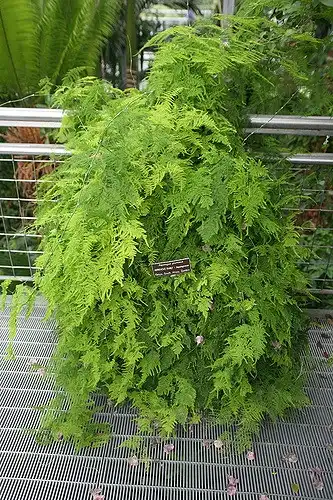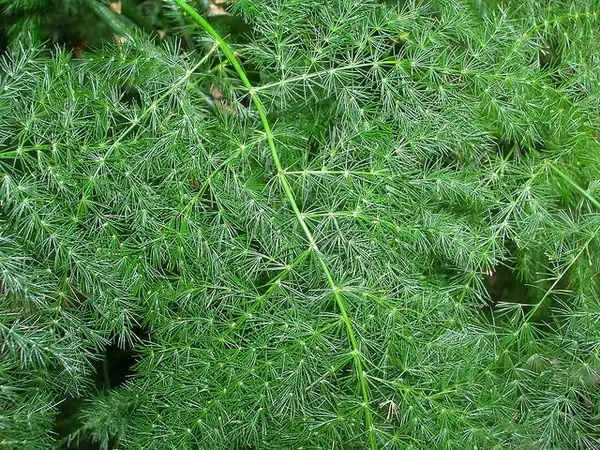
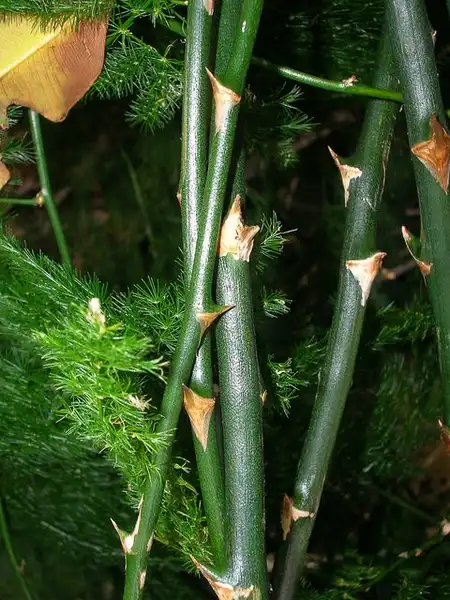
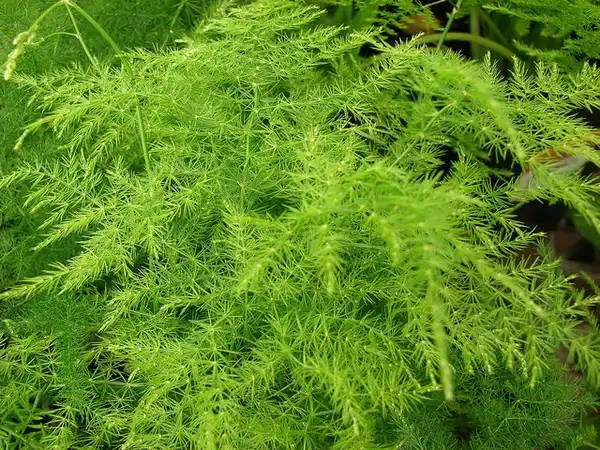
• Photo of Asparagus plumosus (Asparagus plumosuss)

Plant Profile: Asparagus plumosus

Taxonomy: Asparagus plumosus

Names

Asparagus Fern, Climbing Asparagus, Lace Fern

  • Photo of Asparagus plumosus (Asparagus plumosuss)

Phonetic Spelling:a-SPARE-uh-gus plu-MOH-sus

Genus:Asparagus

Species:plumosus

Family:Asparagaceae

This slender shrub features branches that either scramble or climb, making it one of the quickest-growing and least demanding houseplants available. Despite its name, the asparagus fern is not a true fern; it is part of the asparagus family. These plants thrive in bright, indirect light but should be shielded from direct sunlight, as inadequate lighting can lead to yellowing needles that eventually fall off. They favor rich, slightly acidic, well-drained soil and develop large, tuberous roots that can quickly become potbound. If pruning is needed, it’s best to cut the stems back to the root rather than simply trimming them.

In terms of pests, asparagus ferns are susceptible to mealybugs, spider mites, and scale insects.

In some regions, they have become invasive when grown outdoors.

For optimal growth, these plants can be placed outside in the shade of a tree during the summer months, although they prefer temperatures around 70 degrees Fahrenheit.

Identification Tips:

Asparagus ferns are valued for their elegant, feathery foliage, which is often used in floral arrangements. They adapt well to a range of light conditions, temperatures, and watering frequencies. Ideally, they prefer moderate warmth, requiring regular watering from spring to autumn and less frequent watering in winter. They do not tolerate high light levels, so it’s important to keep them out of direct sunlight.

Asparagus plumosus Feature Summary

Asparagus plumosus Image Gallery

Tags

#evergreen
#houseplant
#shrub
#scrambling
#fine leaves
#interiorscape
#hanging baskets
#flower arrangements
#fast growing
#herbaceous
#deer resistant
#fern-like
#fantz
#container plants

Similar Plants

Asparagus plumosus is often confused with:

Asparagus plumosus Feature Summary

Fruit
Occasionally produces a red berry-like structure, rare.
Green
Black
Flowers
Tiny white flowers appear late summer to fall. Inconspicuous, rare in interior settings.
Leaves
Plumosus comes from the Latin word "plume" because the leaves are feather-like. They produce soft, fine lime-green needle-like leaves that can cascade down a container on pendulous stems or can be trained up a trellis like a vine.
Acicular
Stem
Wiry, herringbone pattern, lateral branches progressively shorter towards apex. CLADOPHYLLS bright to dark green, triangular-shaped, pointed apically.
Whole Plant Traits
Perennial
Ground Cover
Spreading
Cultural Conditions
Partial Shade (Direct sunlight only part of the day, 2-6 hours)
Acid (<6.0)
High Organic Matter
Landscape

Asparagus plumosus Attributes

Asparagus plumosus: Country Or Region Of Origin

South America
Asparagus plumosus: Particularly Resistant To (Insects/Diseases/Other Problems)

Deer

Asparagus plumosus: Life Cycle

Annual
Biennial
Bulb
Perennial
Woody

Asparagus plumosus: Recommended Propagation Strategy

Division
Grafting
Layering
Leaf Cutting
Root Cutting
Seed
Stem Cutting

Asparagus plumosus Fruit

Asparagus plumosus: Fruit Description

Occasionally produces a red berry-like structure, rare.

Asparagus plumosus: Fruit Type

Achene
Aggregate
Berry
Capsule
Caryopsis
Drupe
Follicle
Legume
Nut
Pome
Samara
Schizocarp
Siliqua

Asparagus plumosus: Fruit Color

grass
Black
grass
Green

Asparagus plumosus Flowers

Asparagus plumosus: Flower Description

Tiny white flowers appear late summer to fall. Inconspicuous, rare in interior settings.

Asparagus plumosus: Flower Color

filter_vintage
White

Asparagus plumosus: Flower Bloom Time

Winter
Spring
Summer
Fall

Asparagus plumosus Leaves

Asparagus plumosus: Leaf Description

Plumosus comes from the Latin word "plume" because the leaves are feather-like. They produce soft, fine lime-green needle-like leaves that can cascade down a container on pendulous stems or can be trained up a trellis like a vine.

Asparagus plumosus: Woody Plant Leaf Characteristics

Broadleaf Evergreen
Deciduous
Needled Evergreen
Semi-evergreen

Asparagus plumosus: Leaf Color

spa
Green

Asparagus plumosus: Leaf Shape

Acicular
Auriculate
Cordate
Cuneate
Deltoid
Elliptical
Filiform
Lanceolate
Linear
Oblanceolate
Oblong
Obovate
Obtuse
Orbicular
Ovate
Palmasect
Palmatifid
Peltate
Pinnatifid
Pinnatisect
Reniform
Rhomboidal
Spatulate
Subcordate
Subulate

Asparagus plumosus: Hairs Present

No
Yes

Asparagus plumosus: Leaf Feel

Fleshy
Glossy
Leathery
Papery
Prickly
Rough
Rubbery
Slippery
Smooth
Soft
Velvety
Waxy

Asparagus plumosus Stem

Asparagus plumosus: Stem Description

Wiry, herringbone pattern, lateral branches progressively shorter towards apex. CLADOPHYLLS bright to dark green, triangular-shaped, pointed apically.

Asparagus plumosus: Stem Is Aromatic

No
Yes

Asparagus plumosus Whole Plant Traits

Asparagus plumosus: Plant Type

Annual
Bulb
Carnivorous
Edible
Epiphyte
Fern
Ground Cover
Herb
Herbaceous Perennial
Houseplant
Mushroom
Native Plant
Ornamental Grasses and Sedges
Perennial
Poisonous
Rose
Shrub
Succulent
Tree
Turfgrass
Vegetable
Vine
Water Plant
Weed
Wildflower

Asparagus plumosus: Woody Plant Leaf Characteristics

Broadleaf Evergreen
Deciduous
Needled Evergreen
Semi-evergreen

Asparagus plumosus: Habit/Form

Arching
Ascending
Broad
Cascading
Climbing
Clumping
Columnar
Conical
Creeping
Dense
Erect
Horizontal
Irregular
Mounding
Multi-stemmed
Multi-trunked
Open
Oval
Prostrate
Pyramidal
Rounded
Spreading
Vase
Weeping

Asparagus plumosus: Growth Rate

Slow
Medium
Rapid

Asparagus plumosus: Maintenance

Low
Medium
High

Asparagus plumosus: Texture

Fine
Medium
Coarse

Asparagus plumosus Cultural Conditions

Asparagus plumosus: Light

Dappled Sunlight (Shade through upper canopy all day)
Deep shade (Less than 2 hours to no direct sunlight)
Full sun (6 or more hours of direct sunlight a day)
Partial Shade (Direct sunlight only part of the day, 2-6 hours)

Asparagus plumosus: Soil pH

Acid (<6.0)
Alkaline (>8.0)
Neutral (6.0-8.0)

Asparagus plumosus: USDA Plant Hardiness Zone

thermostat
10a
thermostat
10b
thermostat
11a
thermostat
11b
thermostat
9a
thermostat
9b

Asparagus plumosus: Soil Texture

Clay
High Organic Matter
Loam (Silt)
Sand
Shallow Rocky

Asparagus plumosus Landscape

Asparagus plumosus: Resistance To Challenges

Black Walnut
Compaction
Deer
Diseases
Drought
Dry Soil
Erosion
Fire
Foot Traffic
Heat
Heavy Shade
Humidity
Insect Pests
Pollution
Poor Soil
Rabbits
Salt
Slugs
Squirrels
Storm damage
Urban Conditions
Voles
Wet Soil
Wind

Asparagus plumosus: Landscape Location

Coastal
Container
Hanging Baskets
Houseplants
Lawn
Meadow
Naturalized Area
Near Septic
Patio
Pond
Pool/Hardscape
Recreational Play Area
Riparian
Rock Wall
Slope/Bank
Small Space
Vertical Spaces
Walkways
Woodland

Asparagus plumosus: Problems

Allelopathic
Contact Dermatitis
Frequent Disease Problems
Frequent Insect Problems
Invasive Species
Malodorous
Messy
Poisonous to Humans
Problem for Cats
Problem for Children
Problem for Dogs
Problem for Horses
Short-lived
Spines/Thorns
Weak Wood
Weedy