Asplenium rhizophyllum: Country Or Region Of Origin
E. Canada to U.S.A.
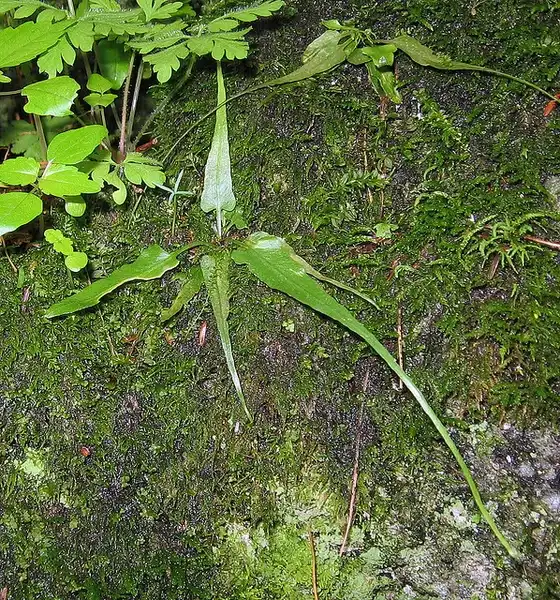
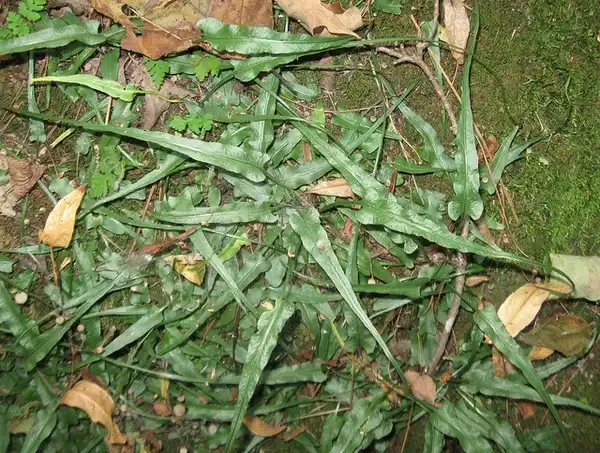
Phonetic Spelling:ah-SPLEE-nee-um rye-zo-FYE-lum
Genus:Asplenium
Species:rhizophyllum
Family:Aspleniaceae
Walking Fern is indigenous to eastern Canada and the central to eastern regions of the United States. This small, perennial, evergreen fern is classified as endangered or threatened in several northeastern U.S. states. It typically grows in clusters on moist, shaded rocky cliffs, moss-covered stones, and along streams or ravines. While it predominantly thrives on basic limestone, it can also be found on sandstone and other acidic substrates. Occasionally, Walking Ferns may take root on fallen tree trunks, although this is less common. The plant favors environments with light to dense shade, thin rocky soil, and protection from strong winds.
Visually, it is distinguished by its narrow, smooth, elongated triangular fronds that are dark green and taper to a slender point. The base of each frond features eared lobes on either side, with slightly wavy edges. The stems can be either erect or ascending, and the size of the fronds can vary significantly even on the same plant. The undersides of the fronds are a lighter green and contain spores that are released during the summer or fall. Walking Fern has a short rhizomatous crown and shallow fibrous roots, reproducing through spore dispersal and vegetative propagation. The tips of the fronds can root in moist soil, leading to the formation of new fern colonies around the parent plant. The ecological relationships involving this plant are not well documented, and herbivore browsing is likely limited due to its naturally hard-to-reach habitat.
In terms of pests and diseases, Walking Fern does not withstand prolonged drought conditions and may be vulnerable to slugs, snails, and certain aphid species.
Asplenium rhizophyllum Feature Summary
Asplenium rhizophyllum Image Gallery