Plant Profile: Begonia 'Argenteo-guttata'

Names

Angel Wing Begonia

  • Photo of Begonia 'Argenteo-guttata' (Begonia 'Argenteo-guttata's)

Phonetic Spelling:beh-GO-nee-a ar-JEN-tee-oh goo-TAY-tuh

Genus:Begonia

Species:

Family:Begoniaceae

Begoniaceae is a vast family of flowering plants that encompasses around 1,500 species and numerous hybrids. These mature begonias can vary significantly in height, ranging from just a few inches to over 12 feet, and they exhibit a wide array of flower types, leaf colors, and sizes.

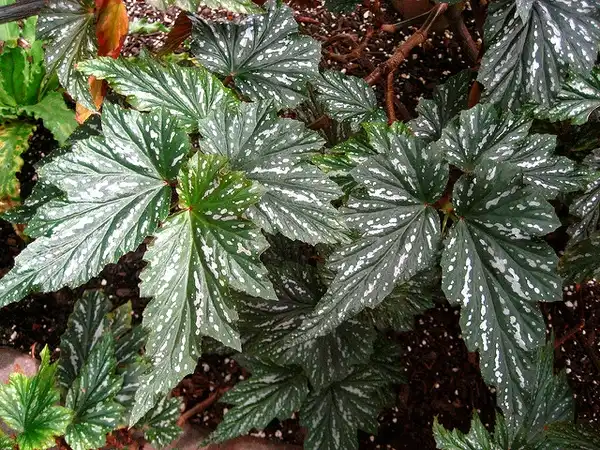
The Angel Wing Begonia, scientifically known as Begonia 'Argenteo-guttata', is a hybrid resulting from the cross between B. aconitifolia and B. coccinea. This particular begonia belongs to a diverse category of shrub-like begonias, known for their striking foliage and seasonal blooms. Unlike cane-like begonias, which have woody stems with swollen joints, shrub-like begonias branch easily and possess a more delicate appearance. The Angel Wing variety thrives in shaded environments, is resilient to heat and humidity, and includes cultivars that can handle morning sunlight. Its leaves are particularly eye-catching, featuring silver patterns against a green backdrop and a red underside that occasionally peeks through. The flowers of Begonia 'Argenteo guttata' are a vibrant red.

Light exposure is crucial for shrub-like begonias. They should receive ample light or sunlight, as long as it doesn’t lead to any signs of distress, while avoiding the harsh midday sun. In areas with intense sunlight and high summer temperatures, providing dappled shade is beneficial. The ideal planting medium is a loose, coarse mix specifically designed for begonias. These plants require just enough moisture to keep their leaves crisp; overwatering can lead to rot in the leaves and stems. Always ensure that the top layer of the planting mix is dry before watering again.

If the plant begins to grow excessively or takes on an awkward shape, it may require pruning or staking. Starting to pinch back the tips early on will encourage branching, resulting in a fuller plant with more blooms. The most effective propagation method is through tip cuttings, although stem cuttings can also be successful. Begonia 'Argenteo guttata' is not frost-resistant, so it should be kept in temperatures above 50 degrees Fahrenheit and below 86 degrees Fahrenheit, making it a popular choice as a houseplant or as an annual in garden settings.

Regarding pests and diseases, shrub-like begonias are generally not prone to specific insects or diseases, aside from those that may affect begonias in general.

For more information on Begonias, please refer to additional resources.

Begonia 'Argenteo-guttata' Feature Summary

Begonia 'Argenteo-guttata' Image Gallery

Tags

#showy flowers
#houseplant
#annual
#silver leaves
#dark green
#shade tolerant
#showy leaves
#interiorscape
#year-round interest
#hanging baskets
#cpp
#silver
#delicate flowers
#patio planting
#partial shade tolerant
#problem for cats
#problem for dogs
#problem for horses
#container plants

Similar Plants

Begonia 'Argenteo-guttata' Feature Summary

Fruit
Winged capsule
Flowers
Soft pink to deep red delicate sprays (cymes) of flowers. The male and female flowers are on the same plant.
Pink
Red/Burgundy
Leaves
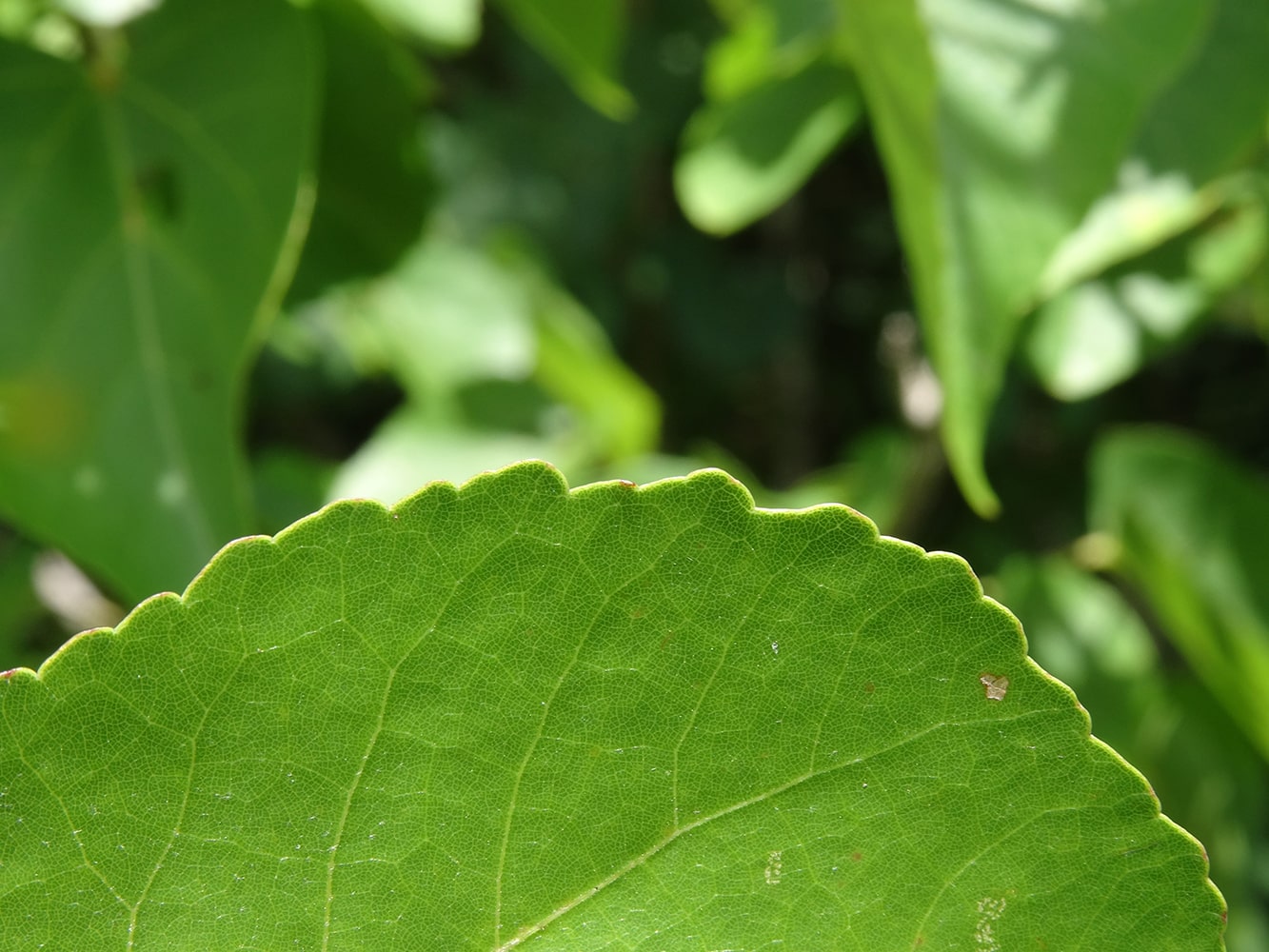
Dark green, elephant ear leaves spotted with silver, reddish underneath, serrate margins. The red underneath sometimes shines through the leaves so it is visible from above.
Green
Gray/Silver
Red/Burgundy
Serrate
Dentate
3-6 inches
1-3 inches
Stem
Upright and zig zags.
Red/Burgundy
Zig Zags
Poisonous to Humans
Kidney failure (in grazing animals), vomiting, salivation in dogs/cats. The most toxic part is underground.
Soluble calcium oxalates
Attributes
Perennial
Annual
Seed
Stem Cutting
Leaf Cutting
Whole Plant Traits
Annual
Houseplant
Erect
Dense
Broad
Cultural Conditions
Partial Shade (Direct sunlight only part of the day, 2-6 hours)
Dappled Sunlight (Shade through upper canopy all day)
Deep shade (Less than 2 hours to no direct sunlight)
Acid (<6.0)
Neutral (6.0-8.0)
Good Drainage
Moist
Clay
Loam (Silt)
Sand
Landscape
Shade Garden
Container
Patio
Houseplants
Hanging Baskets
Problem for Cats
Problem for Dogs
Problem for Horses

Begonia 'Argenteo-guttata' Fruit

Begonia 'Argenteo-guttata': Fruit Description

Winged capsule
Begonia 'Argenteo-guttata': Fruit Type

Achene
Aggregate
Berry
Capsule
Caryopsis
Drupe
Follicle
Legume
Nut
Pome
Samara
Schizocarp
Siliqua

Begonia 'Argenteo-guttata' Flowers

Begonia 'Argenteo-guttata': Flower Description

Soft pink to deep red delicate sprays (cymes) of flowers. The male and female flowers are on the same plant.

Begonia 'Argenteo-guttata': Flower Color

filter_vintage
Pink
filter_vintage
Red/Burgundy

Begonia 'Argenteo-guttata': Flower Inflorescence

Catkin
Corymb
Cyme
Head
Insignificant
Panicle
Raceme
Solitary
Spadix
Spike
Umbel

Begonia 'Argenteo-guttata': Flower Value To Gardener

Edible
Fragrant
Good Cut
Good Dried
Long Bloom Season
Long-lasting
Showy

Begonia 'Argenteo-guttata' Leaves

Begonia 'Argenteo-guttata': Leaf Description

Dark green, elephant ear leaves spotted with silver, reddish underneath, serrate margins. The red underneath sometimes shines through the leaves so it is visible from above.

Begonia 'Argenteo-guttata': Woody Plant Leaf Characteristics

Broadleaf Evergreen
Deciduous
Needled Evergreen
Semi-evergreen

Begonia 'Argenteo-guttata': Leaf Color

spa
Gray/Silver
spa
Green
spa
Red/Burgundy

Begonia 'Argenteo-guttata': Leaf Type

Compound (Pinnately , Bipinnately, Palmately)
Fronds
Needles
Sheath
Simple

Begonia 'Argenteo-guttata': Leaf Arrangement

Alternate
Opposite
Other/more complex
Rosulate
Whorled

Begonia 'Argenteo-guttata': Leaf Shape

Acicular
Auriculate
Cordate
Cuneate
Deltoid
Elliptical
Filiform
Lanceolate
Linear
Oblanceolate
Oblong
Obovate
Obtuse
Orbicular
Ovate
Palmasect
Palmatifid
Peltate
Pinnatifid
Pinnatisect
Reniform
Rhomboidal
Spatulate
Subcordate
Subulate

Begonia 'Argenteo-guttata': Leaf Margin

Crenate
Crenulate
Dentate
Denticulate
Doubly Crenate
Doubly Dentate
Doubly Serrate
Entire
Lobed
Serrate
Sinuate
Undulate

Begonia 'Argenteo-guttata': Hairs Present

No
Yes

Begonia 'Argenteo-guttata': Leaf Length

< 1 inch
1-3 inches
3-6 inches
> 6 inches

Begonia 'Argenteo-guttata': Leaf Value To Gardener

Edible
Fragrant
Good Cut
Good Dried
Long-lasting
Showy

Begonia 'Argenteo-guttata': Leaf Width

< 1 inch
1-3 inches
3-6 inches
> 6 inches

Begonia 'Argenteo-guttata' Stem

Begonia 'Argenteo-guttata': Stem Description

Upright and zig zags.

Begonia 'Argenteo-guttata': Stem Color

grass
Red/Burgundy

Begonia 'Argenteo-guttata': Stem Is Aromatic

No
Yes

Begonia 'Argenteo-guttata': Stem Form

Straight
Zig Zags

Begonia 'Argenteo-guttata' Poisonous to Humans

Begonia 'Argenteo-guttata': Poison Symptoms

Kidney failure (in grazing animals), vomiting, salivation in dogs/cats. The most toxic part is underground.

Begonia 'Argenteo-guttata': Poison Toxic Principle

Soluble calcium oxalates

Begonia 'Argenteo-guttata': Poison Severity

High
Low
Medium

Begonia 'Argenteo-guttata': Causes Contact Dermatitis

No
Yes

Begonia 'Argenteo-guttata' Attributes

Begonia 'Argenteo-guttata': Life Cycle

Annual
Biennial
Bulb
Perennial
Woody

Begonia 'Argenteo-guttata': Recommended Propagation Strategy

Division
Grafting
Layering
Leaf Cutting
Root Cutting
Seed
Stem Cutting

Begonia 'Argenteo-guttata' Whole Plant Traits

Begonia 'Argenteo-guttata': Plant Type

Annual
Bulb
Carnivorous
Edible
Epiphyte
Fern
Ground Cover
Herb
Herbaceous Perennial
Houseplant
Mushroom
Native Plant
Ornamental Grasses and Sedges
Perennial
Poisonous
Rose
Shrub
Succulent
Tree
Turfgrass
Vegetable
Vine
Water Plant
Weed
Wildflower

Begonia 'Argenteo-guttata': Woody Plant Leaf Characteristics

Broadleaf Evergreen
Deciduous
Needled Evergreen
Semi-evergreen

Begonia 'Argenteo-guttata': Habit/Form

Arching
Ascending
Broad
Cascading
Climbing
Clumping
Columnar
Conical
Creeping
Dense
Erect
Horizontal
Irregular
Mounding
Multi-stemmed
Multi-trunked
Open
Oval
Prostrate
Pyramidal
Rounded
Spreading
Vase
Weeping

Begonia 'Argenteo-guttata': Growth Rate

Slow
Medium
Rapid

Begonia 'Argenteo-guttata': Maintenance

Low
Medium
High

Begonia 'Argenteo-guttata' Cultural Conditions

Begonia 'Argenteo-guttata': Light

Dappled Sunlight (Shade through upper canopy all day)
Deep shade (Less than 2 hours to no direct sunlight)
Full sun (6 or more hours of direct sunlight a day)
Partial Shade (Direct sunlight only part of the day, 2-6 hours)

Begonia 'Argenteo-guttata': Soil pH

Acid (<6.0)
Alkaline (>8.0)
Neutral (6.0-8.0)

Begonia 'Argenteo-guttata': Soil Drainage

Frequent Standing Water
Good Drainage
Moist
Occasional Flooding
Occasionally Dry
Occasionally Wet
Very Dry

Begonia 'Argenteo-guttata': Available Space To Plant

12 inches-3 feet
12-24 feet
24-60 feet
3 feet-6 feet
6-feet-12 feet
Less than 12 inches
more than 60 feet

Begonia 'Argenteo-guttata': USDA Plant Hardiness Zone

thermostat
10a
thermostat
10b
thermostat
11a
thermostat
11b

Begonia 'Argenteo-guttata': Soil Texture

Clay

High Organic Matter
Loam (Silt)
Sand
Shallow Rocky

Begonia 'Argenteo-guttata' Landscape

Begonia 'Argenteo-guttata': Landscape Theme

Asian Garden
Butterfly Garden
Children's Garden
Cottage Garden
Cutting Garden
Drought Tolerant Garden
Edible Garden
English Garden
Fairy Garden
Garden for the Blind
Native Garden
Nighttime Garden
Pollinator Garden
Rain Garden
Rock Garden
Shade Garden
Water Garden
Winter Garden

Begonia 'Argenteo-guttata': Resistance To Challenges

Black Walnut
Compaction
Deer
Diseases
Drought
Dry Soil
Erosion
Fire
Foot Traffic
Heat
Heavy Shade
Humidity
Insect Pests
Pollution
Poor Soil
Rabbits
Salt
Slugs
Squirrels
Storm damage
Urban Conditions
Voles
Wet Soil
Wind

Begonia 'Argenteo-guttata': Landscape Location

Coastal
Container
Hanging Baskets
Houseplants
Lawn
Meadow
Naturalized Area
Near Septic
Patio
Pond
Pool/Hardscape
Recreational Play Area
Riparian
Rock Wall
Slope/Bank
Small Space
Vertical Spaces
Walkways
Woodland

Begonia 'Argenteo-guttata': Attracts

Bats
Bees
Butterflies
Frogs
Hummingbirds
Moths
Pollinators
Predatory Insects
Reptiles
Small Mammals
Songbirds
Specialized Bees

Begonia 'Argenteo-guttata': Problems

Allelopathic
Contact Dermatitis
Frequent Disease Problems
Frequent Insect Problems
Invasive Species
Malodorous
Messy
Poisonous to Humans
Problem for Cats
Problem for Children
Problem for Dogs
Problem for Horses
Short-lived
Spines/Thorns
Weak Wood
Weedy