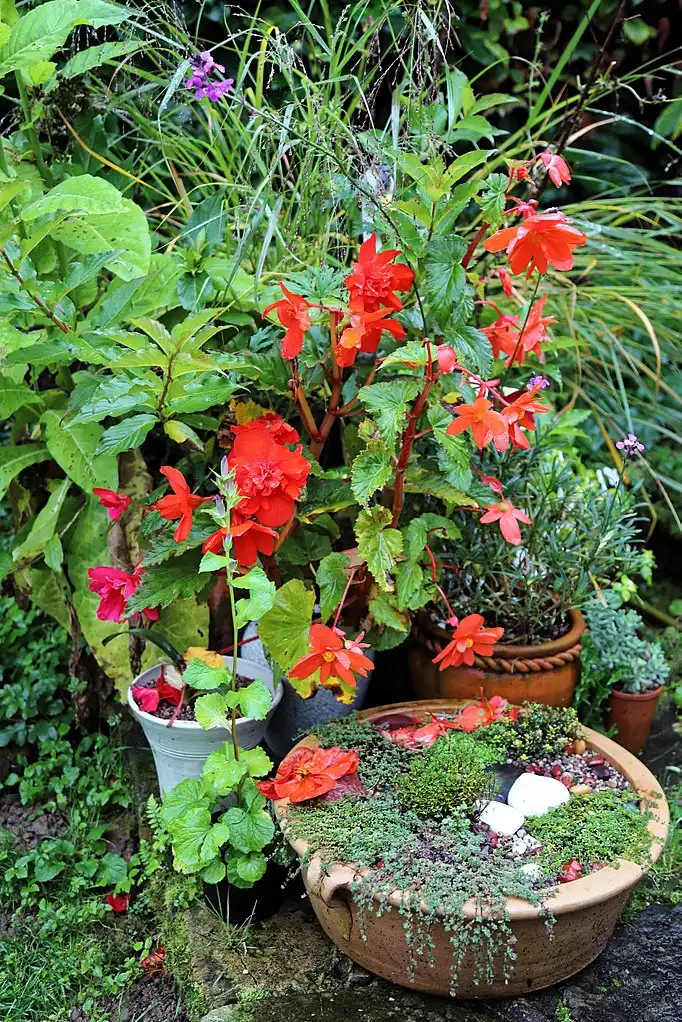
Begonia (Tuberosa Group): Country Or Region Of Origin
Southern China, Japan
Phonetic Spelling:beh-GON-yuh
Genus:Begonia
Species:
Family:Begoniaceae
Begoniaceae is a vast family of flowering plants that includes approximately 1,500 species and numerous hybrids. These mature begonias can vary significantly in height, ranging from just a few inches to over 12 feet. Their flowers and foliage exhibit a wide array of colors and sizes. The American Begonia Society has established several non-scientific categories for classifying begonias, one of which is the tuberosa group. Hybrids within the Begonia (Tuberosa Group) have demonstrated some resilience to cold, particularly the tuberous Begonia grandis, which thrives in USDA zones 6-10. Typically, this variety features large, round leaves with a pale green underside or red veins, and produces pale pink or white flowers that emerge in spring from dormant tubers, blooming in late summer. As winter nears, small tubers or bulbils form at the base of each leaf; these drop off and will sprout the following year, creating a beautiful patch of begonias.
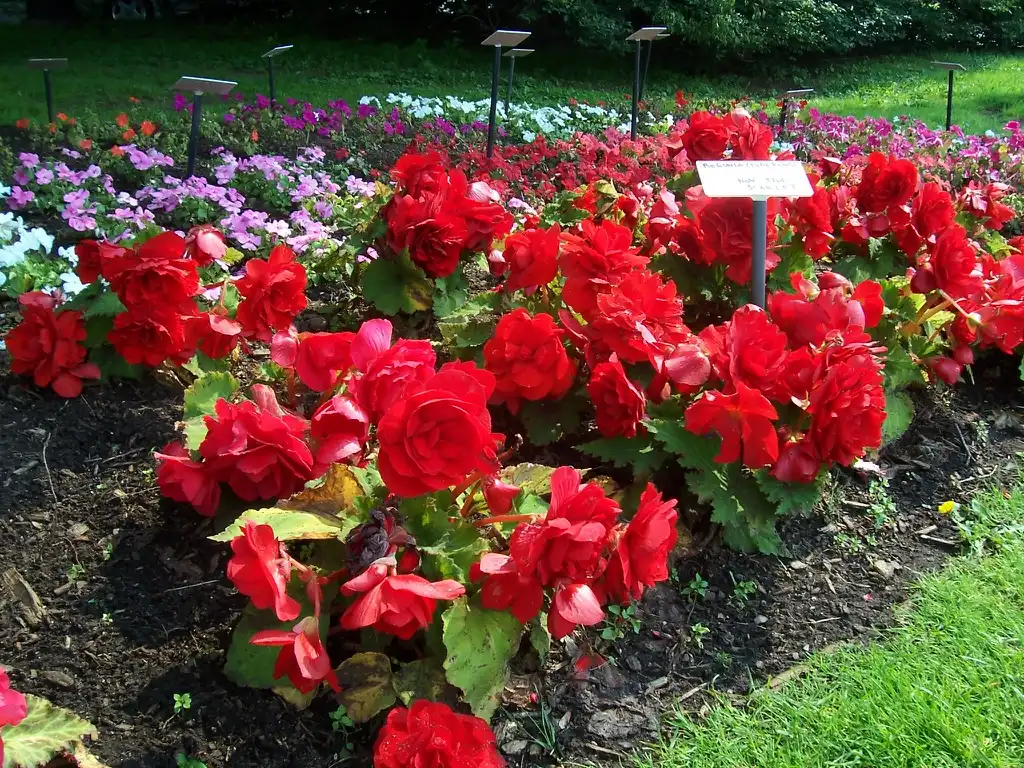
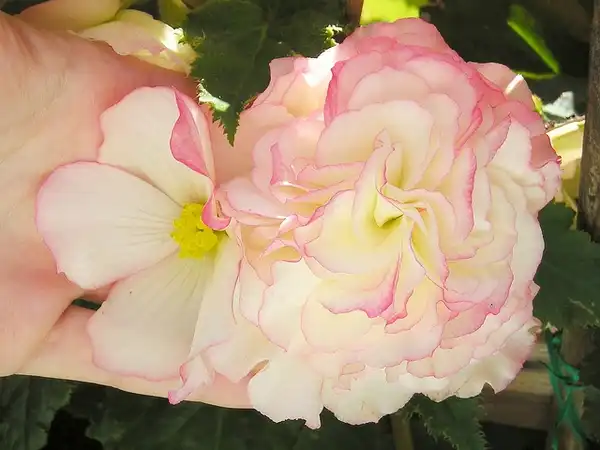
The Begonia (Tuberosa group) consists of hybrid tuberous begonias that include 13 distinct types of tender, summer-flowering plants known for their vibrant, waxy petals. The flowers can take on various shapes, resembling camellias or carnations, and differ in petal count (single or double), petal characteristics (banded or ruffled), and growth habits (compact, weeping, or cascading). Some hybrids may require staking for support. Tuberous begonias thrive in dappled sunlight or bright shade, preferring organically rich, well-drained, moist soil—though they should not be waterlogged. While they can be challenging to cultivate, they serve as excellent container plants for both indoor and outdoor settings, whether mass-planted in borders or arranged in window boxes. When planting, position tubers shallowly in groups of 3-4 per container or space them 12-18 inches apart in the ground. Outdoor containers can be brought indoors for the winter. These plants do not tolerate high humidity or heat well, which can lead to difficulties during southern summers. To protect them from excessive sun and wind, use mulch and select sheltered locations, while ensuring adequate air circulation to prevent foliar diseases. Begonias can be easily propagated from stem or leaf cuttings.
To encourage abundant blooming, regular fertilization during the growing season is essential. Start the plants indoors in late winter, about 2.5 to 3 months before the last frost. When planting tubers, place them shallowly with the concave side facing up. As fall approaches and the leaves begin to yellow, reduce watering. Before the first frost, either store the containers in a frost-free area or dig up the tubers for storage until it’s time to replant in late winter for the next growing season.
In terms of pests and diseases, begonias may occasionally face issues with aphids, mealybugs, whiteflies, slugs, and snails. Powdery mildew and stem rot can also occur. Overwatering can lead to tuber rot, while insufficient air circulation may result in disease problems.
Begonia (Tuberosa Group) Feature Summary
Begonia (Tuberosa Group) Image Gallery