Bignonia capreolata: Uses (Ethnobotany)
This plant was used by Native Americans for medicinal purposes.

Phonetic Spelling:big-NO-nee-uh kap-ree-oh-LAH-tuh
Genus:Bignonia
Species:capreolata
Family:Bignoniaceae
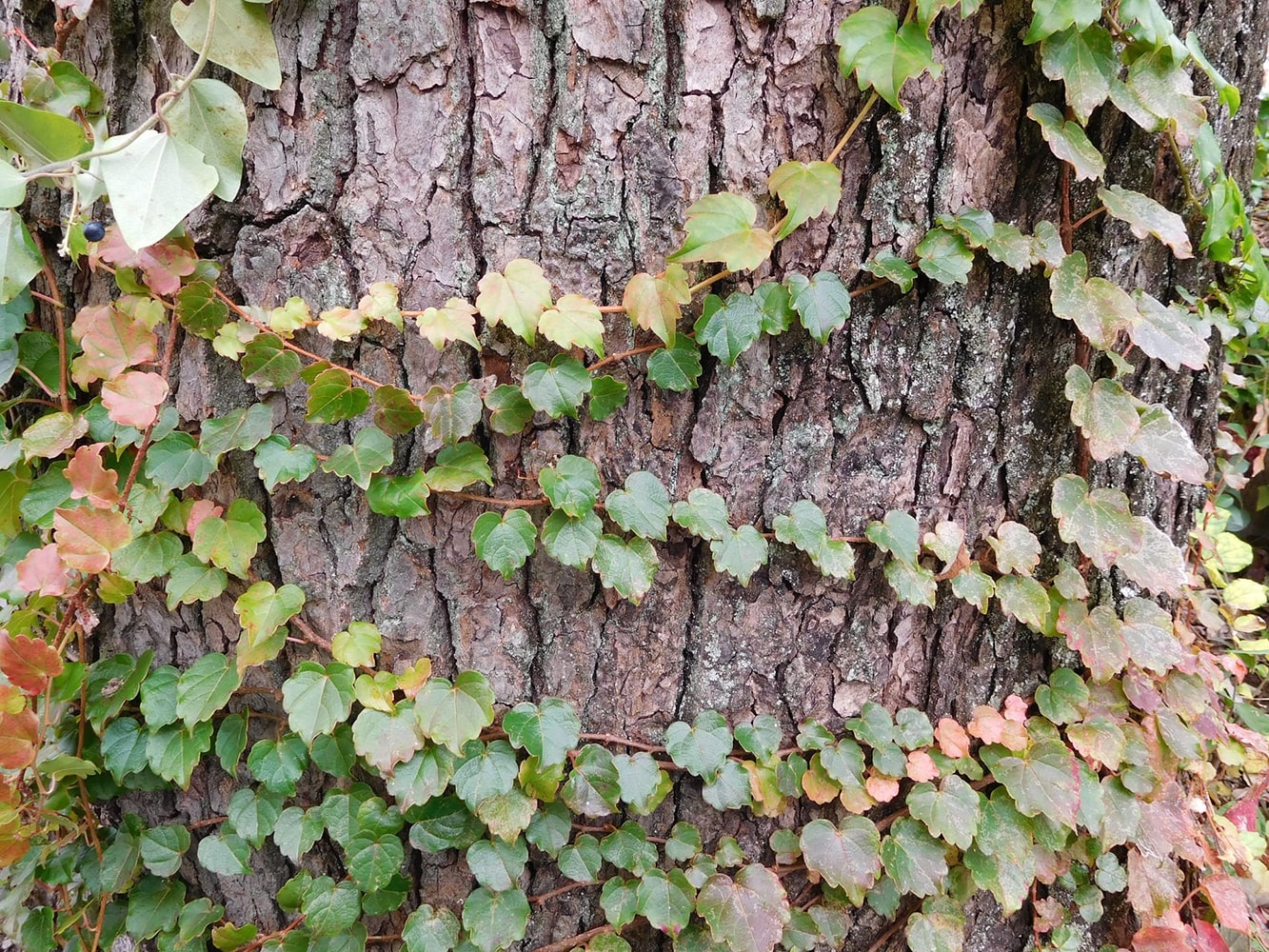
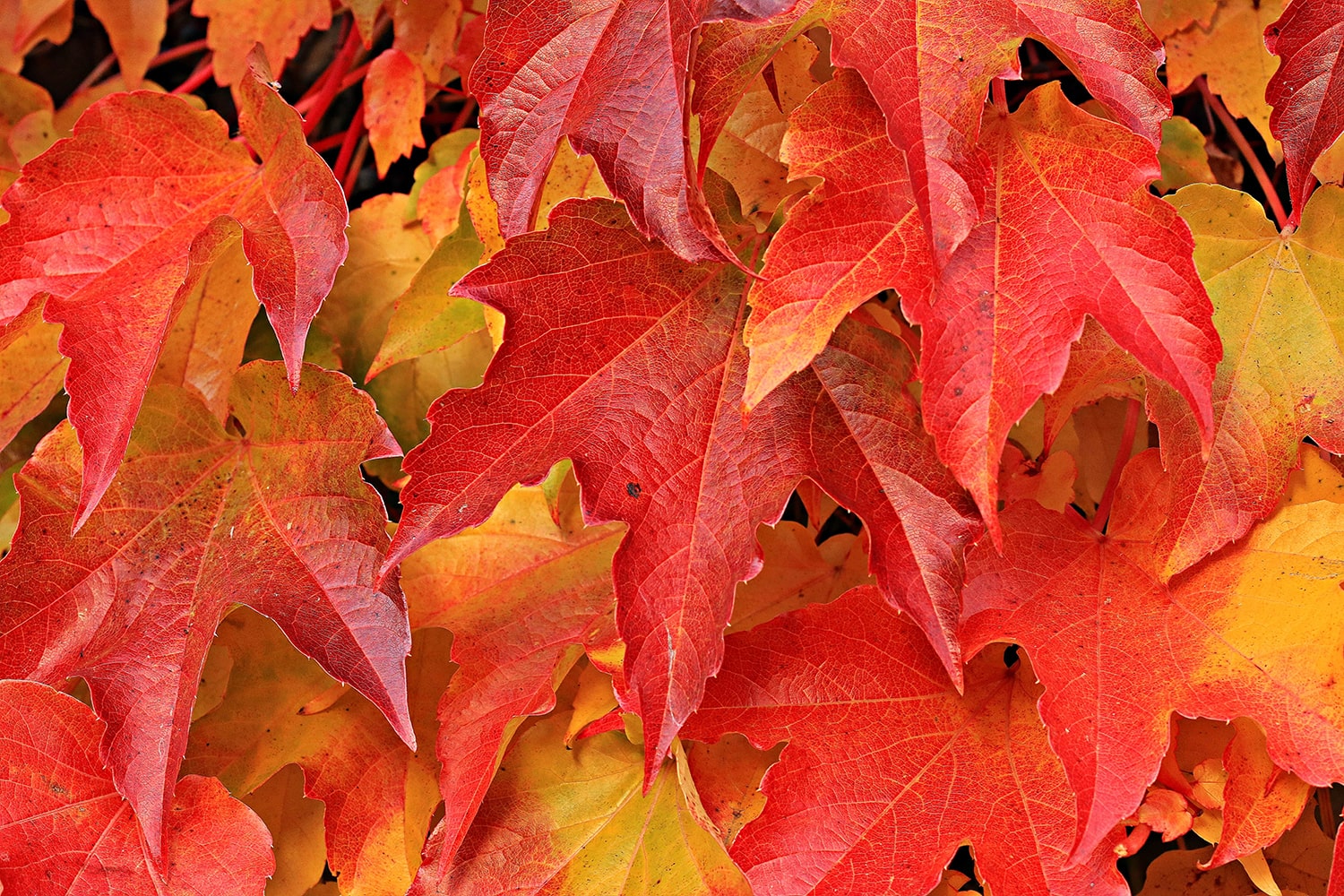
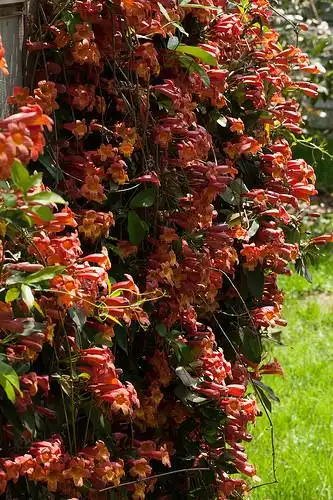
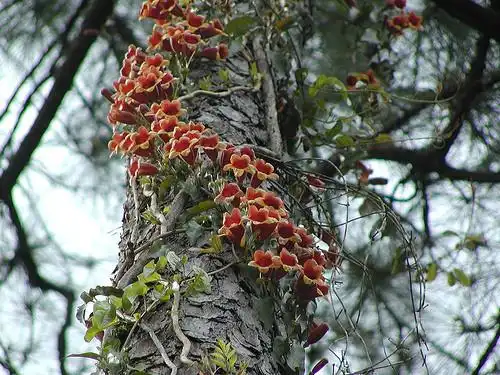
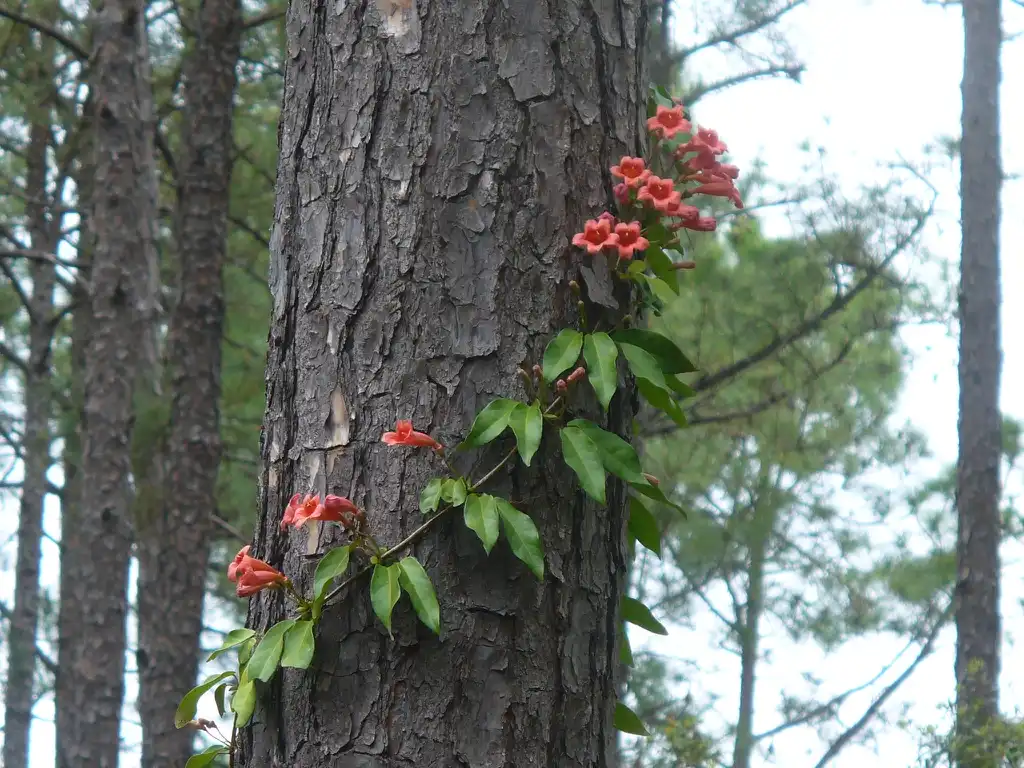
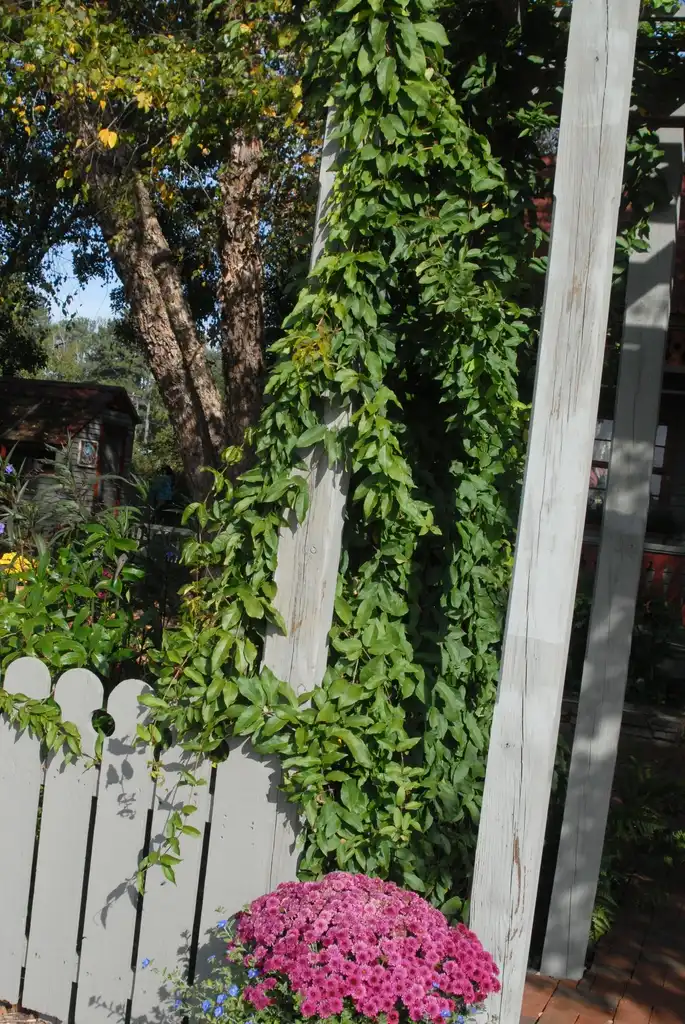
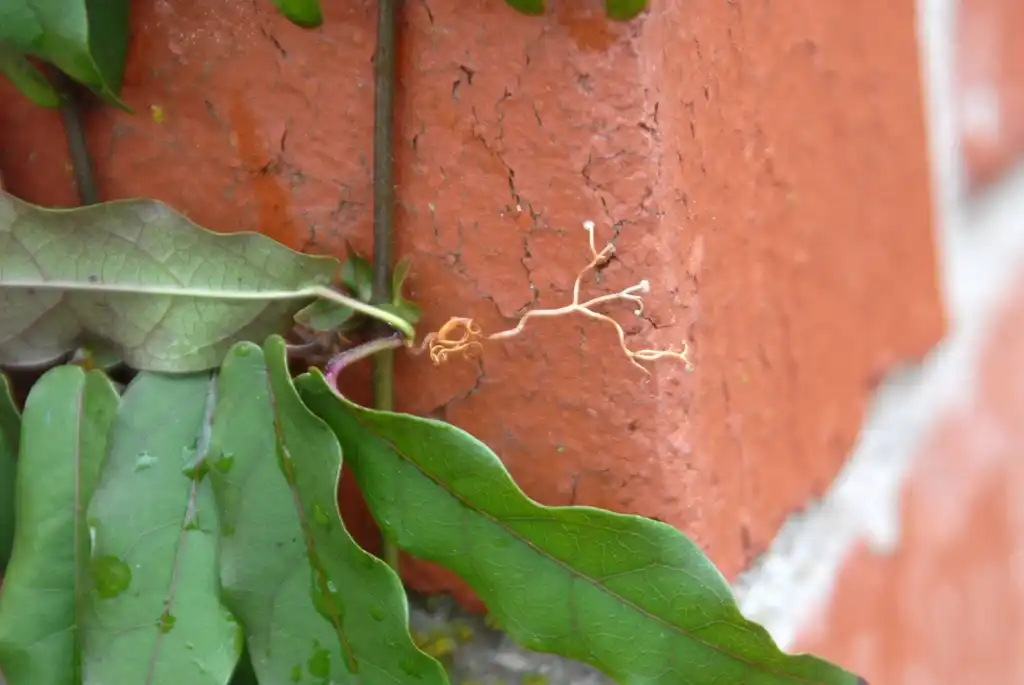
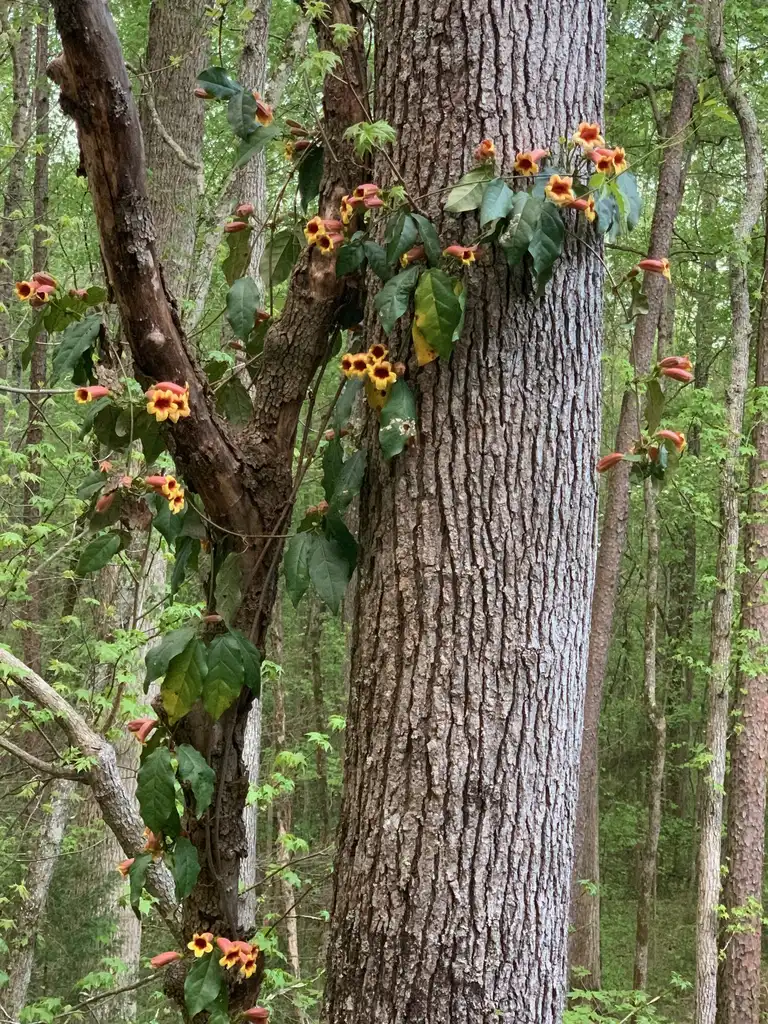
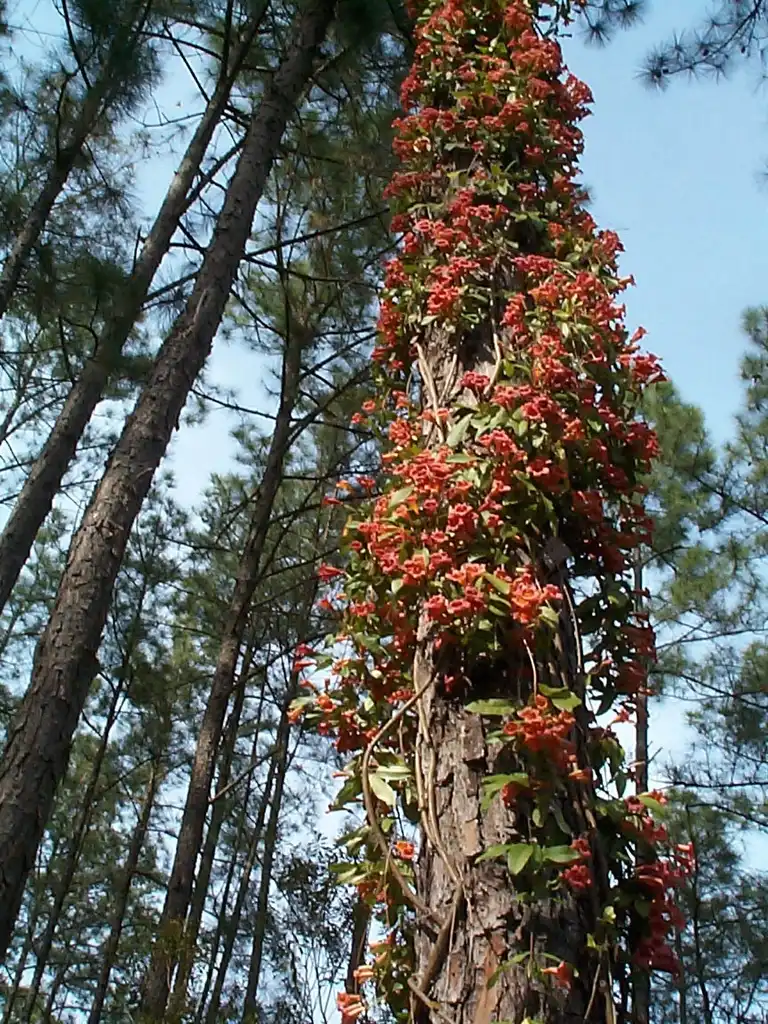
Bignonia capreolata, commonly known as cross-vine, is a robust climbing plant that ascends by entwining its tendrils around nearby stems or bark for support, allowing it to scale tall structures such as fences and pine trees. A cross-section of its stem displays a pattern reminiscent of the Greek cross, which is the origin of its common name. In North Carolina, this vine typically exhibits a rich, glossy green hue, while in cooler regions of its habitat, the leaves may adopt a reddish-purple tint.
This vine is indigenous to the southeastern United States, thriving in USDA hardiness zones 6 to 9. It can adapt to various soil types and is often found climbing other trees, particularly pines. In its natural environment, it flourishes in swampy forests and woodlands. Although it can tolerate a range of conditions, including coastal environments, it thrives best in organically rich, well-drained soil under full sunlight. Cross-vine can grow in both shaded and sunny areas, with increased flowering occurring in brighter conditions. This plant would be an excellent choice for a colonial-style garden, with numerous cultivars available, such as 'Tangerine Beauty.'
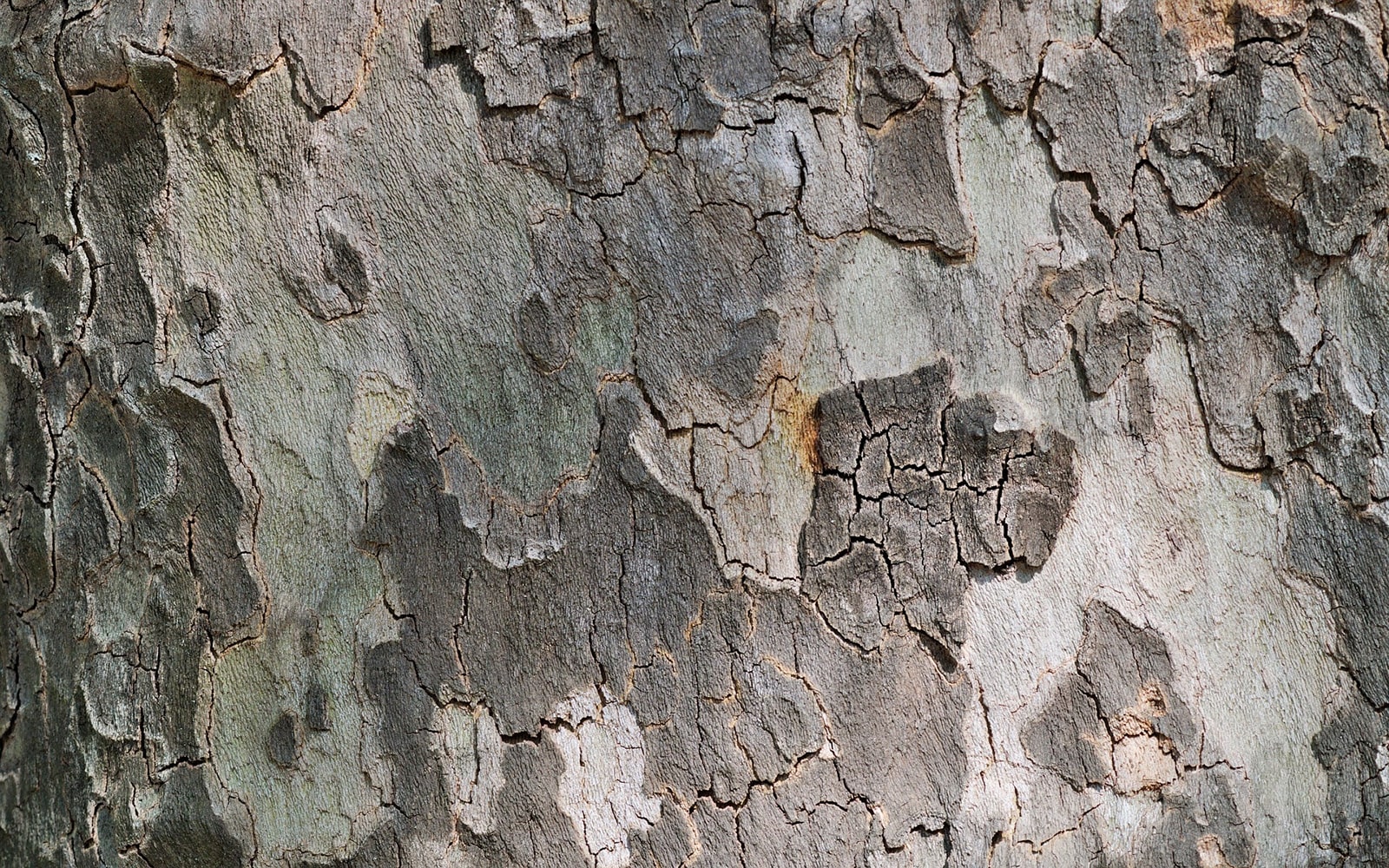
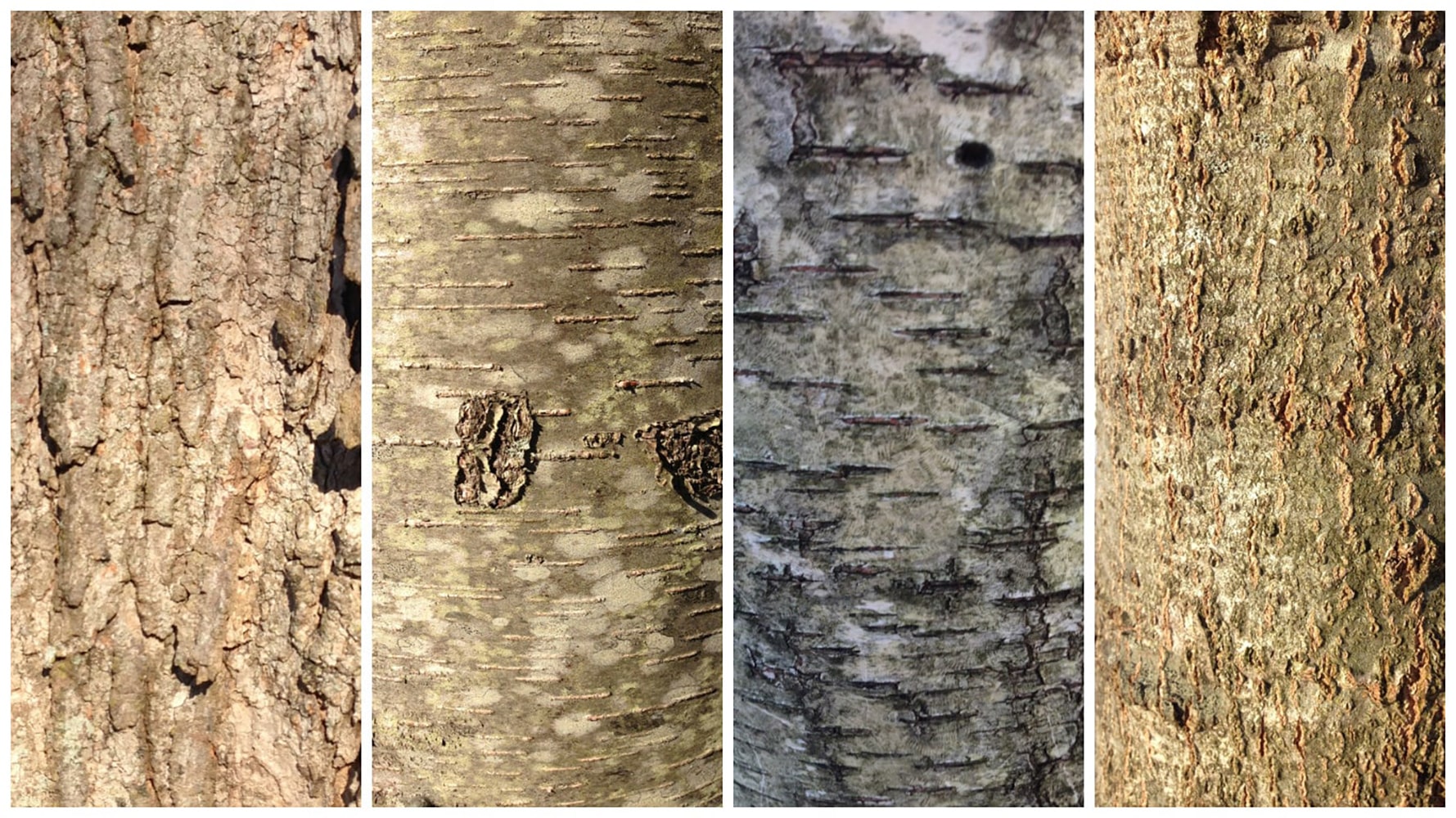
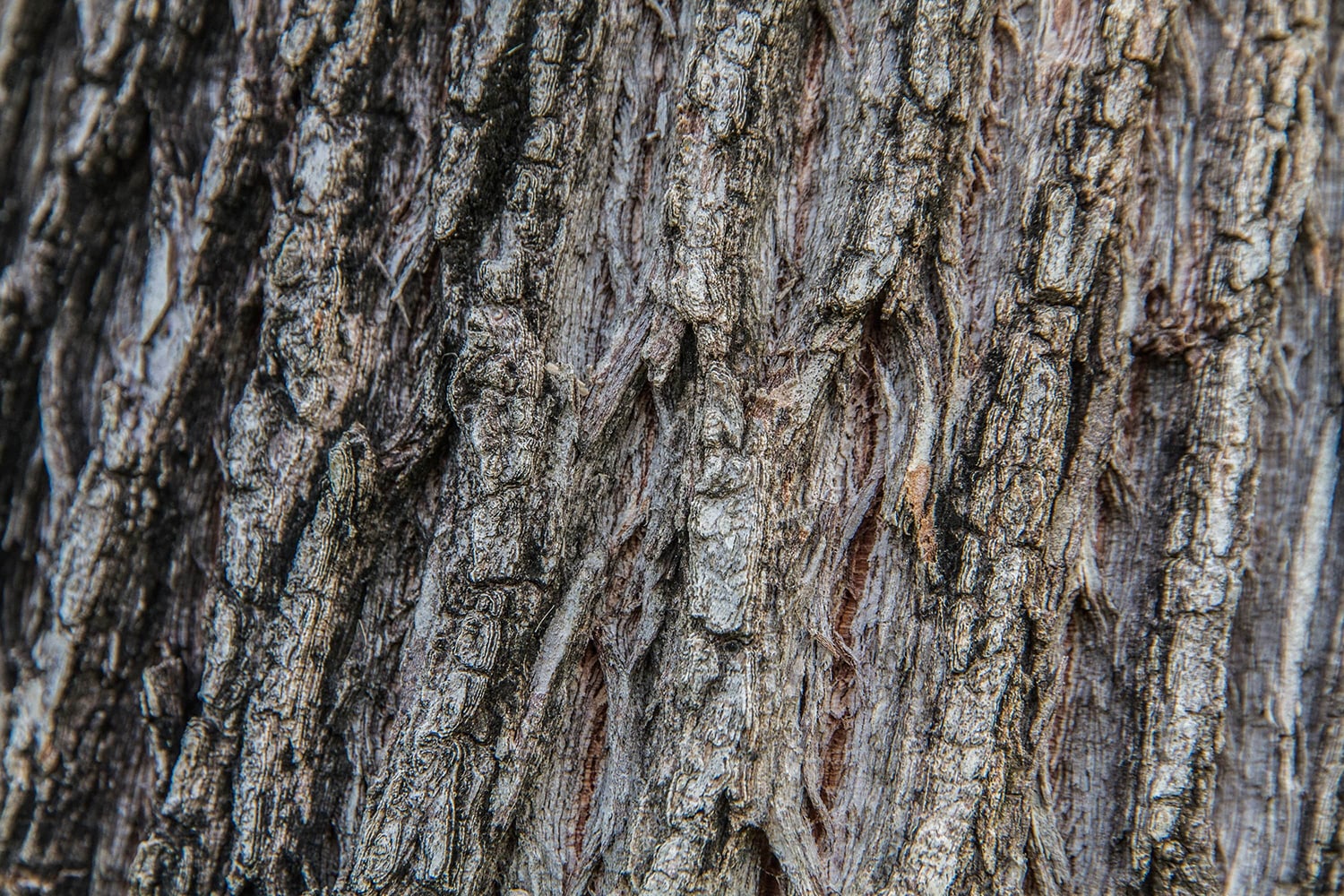
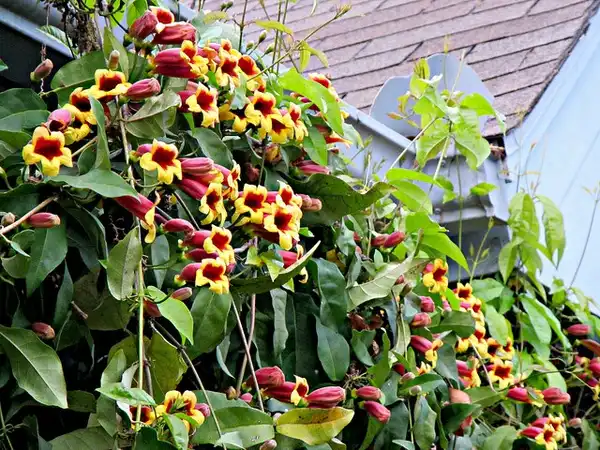
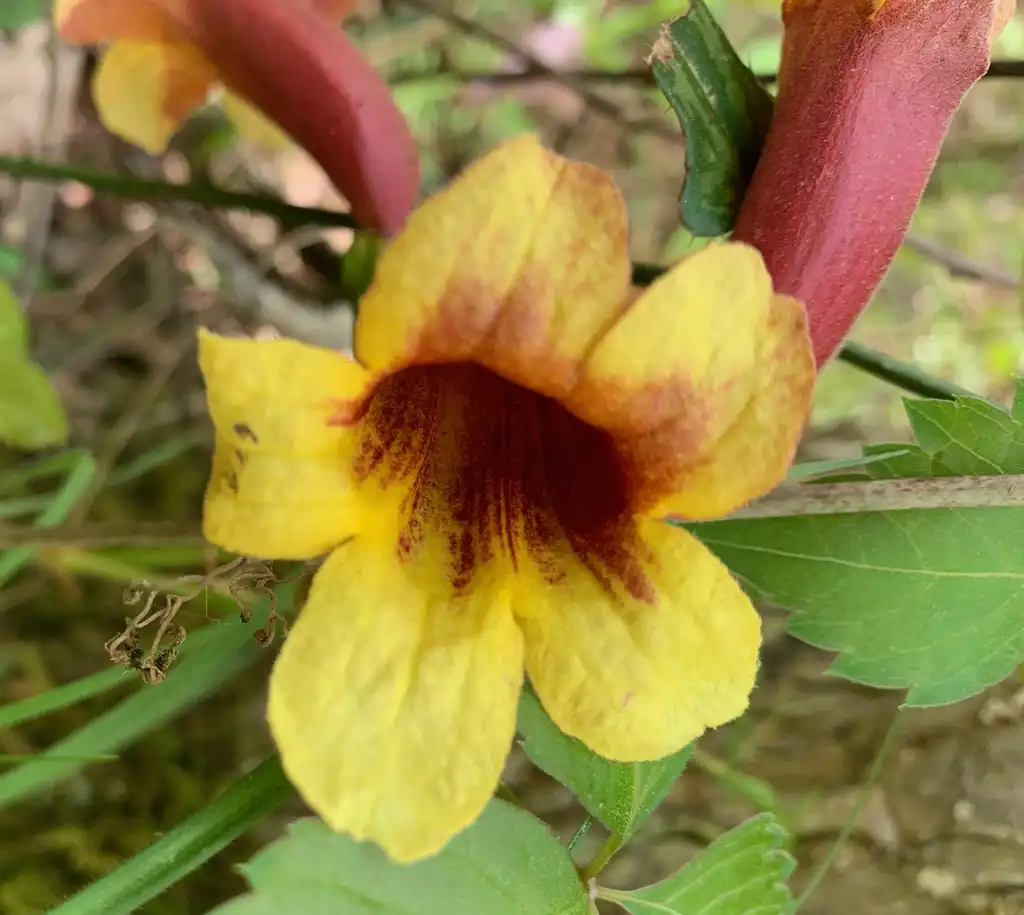
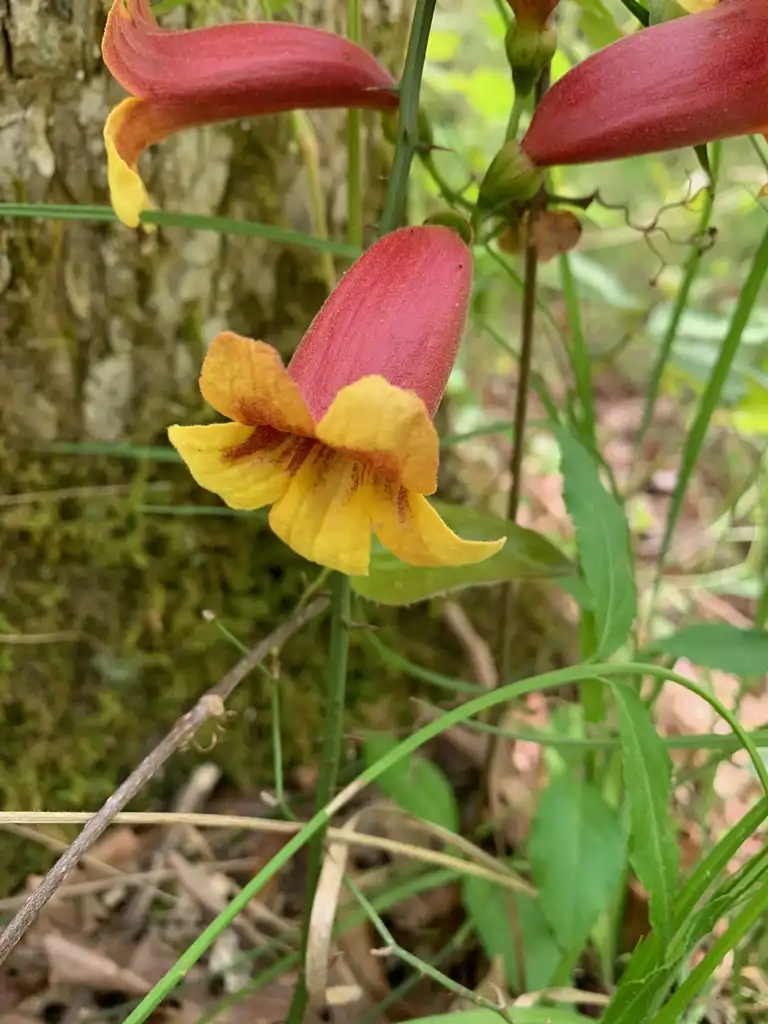
The vine produces blooms from late winter to early spring on new growth, forming clusters of 2 to 5 flowers. The flowers can vary in color from orange and yellow to reddish-orange, providing an early food source for local hummingbirds. Following the flowering period, greenish, pod-like seed capsules, which can reach up to 7 inches in length, develop and mature by late summer, often persisting into the fall. The bark of the vine is gray-brown, finely scaled, and features longitudinal splits. Above-ground stems may not withstand winter in USDA Zone 5 and colder; during harsh winters, the vine may die back to the ground, but the roots typically remain resilient, sprouting new growth in the following spring.
**Diseases, Insects, and Other Plant Issues:**
Cross-vine does not have significant pest issues. However, it can become invasive, spreading through both seeds and root suckers. To manage its growth and prevent it from encroaching into unwanted areas, it is advisable to remove root suckers as they appear.
**Fire Risk:**
This plant has a high flammability rating and should not be planted within the defensible space around your home. It is recommended to choose plants with low flammability ratings for areas closest to your residence.
Bignonia capreolata Feature Summary
Bignonia capreolata Image Gallery