Campanula punctata: Country Or Region Of Origin
Sibera, China, Japan
Phonetic Spelling:kam-PAN-yoo-luh punk-TAH-tah
Genus:Campanula
Species:punctata
Family:Campanulaceae
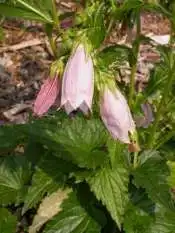
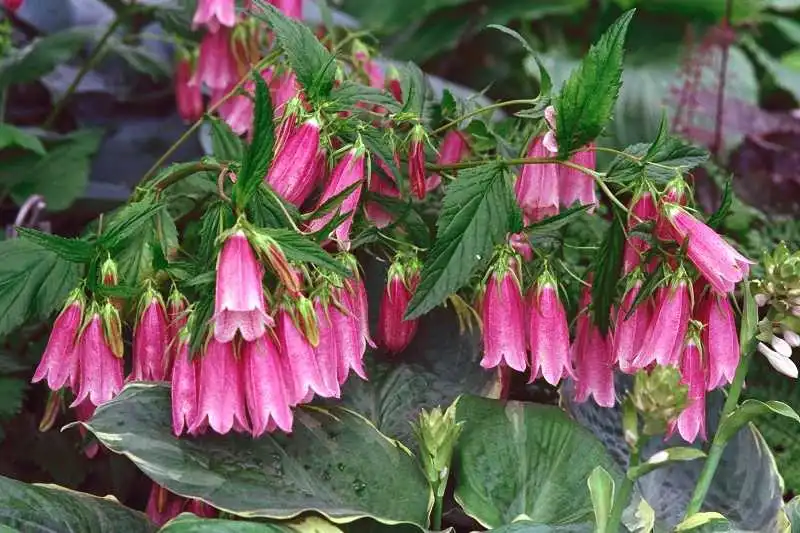
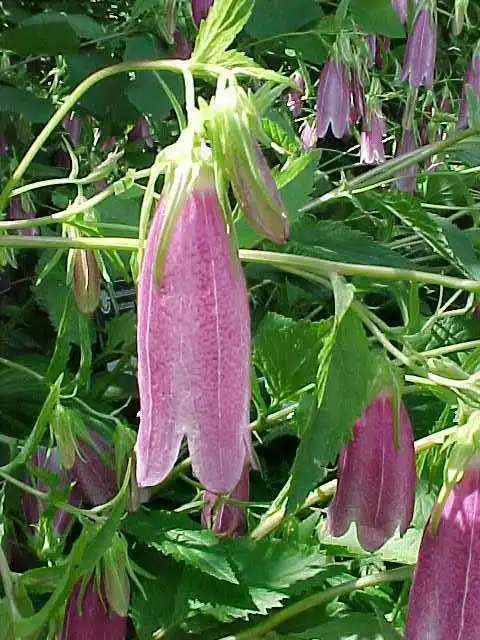
The Spotted Bellflower is a perennial plant that grows upright and forms clumps, typically reaching heights of 1 to 2 feet. This striking species is indigenous to Siberia, China, and Japan. Its distinctive bell-shaped flowers, adorned with spots on the inside, are reflected in its Latin name—where "campana" translates to bell and "punctata" means spotted. The Campanula genus encompasses a variety of plants, including annuals, herbaceous, and evergreen perennials, all characterized by their bell or star-shaped flowers, which are often blue and bloom in late spring or summer. For optimal growth, it should be planted in well-drained soil and positioned in full sun to partial shade, although in warmer southern climates, it thrives better in partial shade. To propagate, divide the clumps every three to four years in the fall, or allow it to self-seed and spread through rhizomes under suitable conditions.
Both the flowers and leaves can be utilized as potherbs. For a stunning display, consider planting them in large groups or clusters. They are well-suited for woodland borders, rock gardens, or cottage gardens, serving as attractive accent plants, or you can allow them to naturalize in your landscape.
In terms of pests and diseases, the Spotted Bellflower is relatively resilient, facing few issues. However, it can spread quite aggressively.
Campanula punctata Feature Summary
Campanula punctata Image Gallery