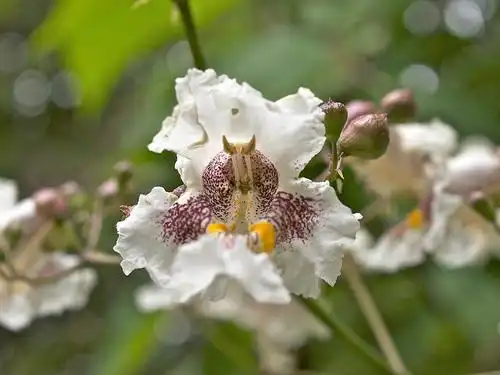
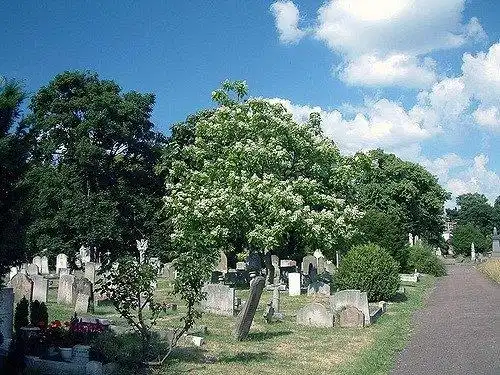
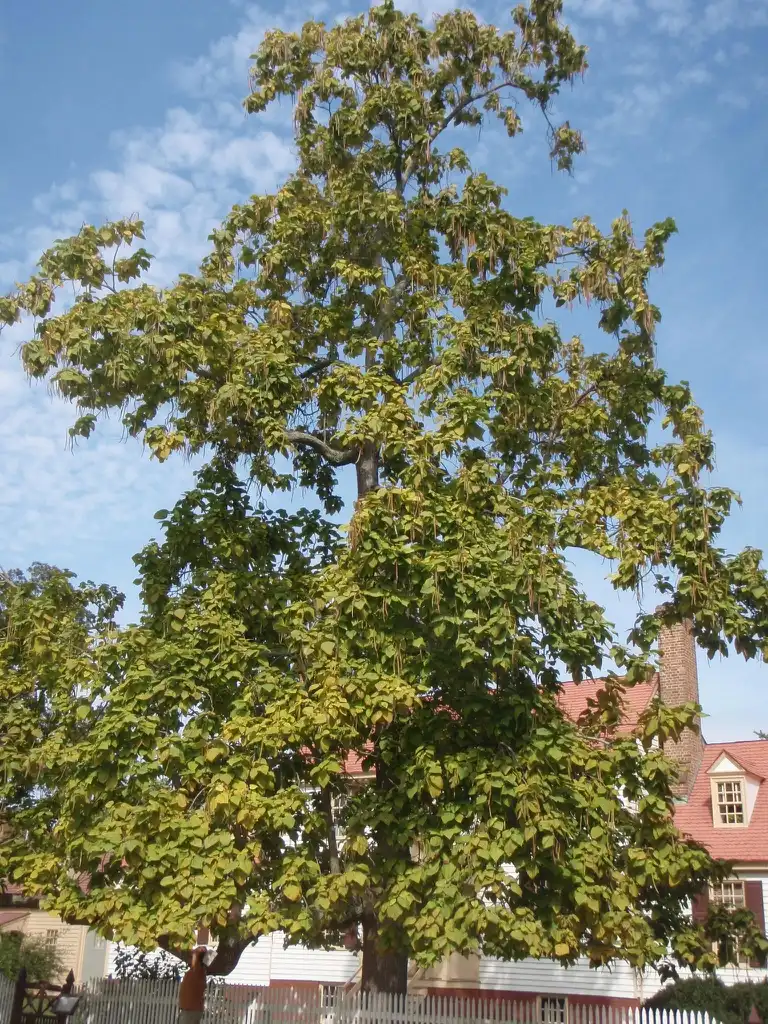
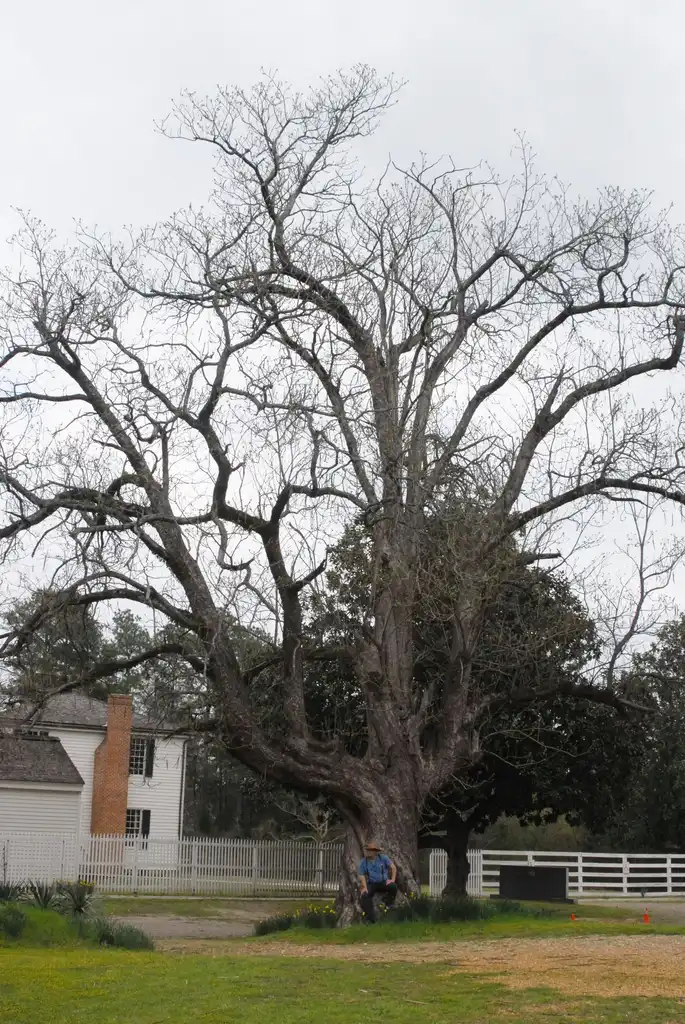
• Photo of Catalpa bignonioides (Catalpa bignonioidess)

Plant Profile: Catalpa bignonioides

Taxonomy: Catalpa bignonioides

Names

Cigar Tree, Southern Catalpa

  • Photo of Catalpa bignonioides (Catalpa bignonioidess)

Phonetic Spelling:kah-TAL-pah big-non-ee-OY-deez

Genus:Catalpa

Species:bignonioides

Family:Bignoniaceae

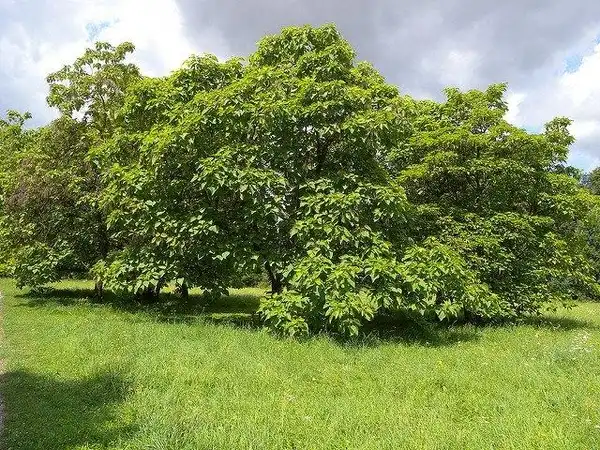
The Catalpa bignonioides, a medium-sized flowering deciduous tree, is relatively easy to cultivate as a shade tree. It thrives in moderate soil conditions but can adapt to both wet and dry environments. Ideally, it should be planted in full sun to partial shade, and it develops an irregular shape as it matures.

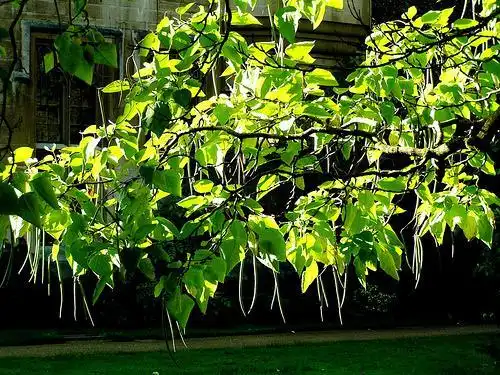
This tree features an uneven silhouette and produces white flowers approximately one and a half inches wide during early summer. Known for its longevity, it generates distinctive seed pods that hang from the branches in a unique, string-like fashion following the initial bloom.

While generally resilient to diseases, the Catalpa bignonioides can be vulnerable to issues such as verticillium wilt, leaf spots, mildew, and anthracnose blight. Additionally, the caterpillars of the catalpa sphinx moth can inflict damage on its leaves.

However, there are some drawbacks to consider. Its irregular form may not harmonize with all landscapes, as its branches can appear randomly spread and crooked, which some may find unappealing. Furthermore, the foliage emits an unpleasant odor when damaged.

It’s worth noting that this tree flowers later than C. speciosa and tends to exhibit a deeper purple hue.

**Form:** The tree has a short, thick trunk and a broadly rounded crown with an irregular outline.

**Insects, Diseases, and Other Plant Issues:** There are no significant problems associated with this tree. However, caterpillars of the catalpa sphinx moth can cause considerable harm. Occasional issues include mildew, twig blight, verticillium wilt, and leaf spots. Leaves may also suffer damage from wind or hail, resulting in a ragged appearance.

Catalpa bignonioides Feature Summary

Catalpa bignonioides Image Gallery

Tags

#showy flowers
#deciduous
#shade tree
#native tree
#deciduous tree
#malodorus

Similar Plants

Catalpa bignonioides is often confused with:

Catalpa bignonioides Feature Summary

Attributes
E. Texas to S. Georgia
Flowers
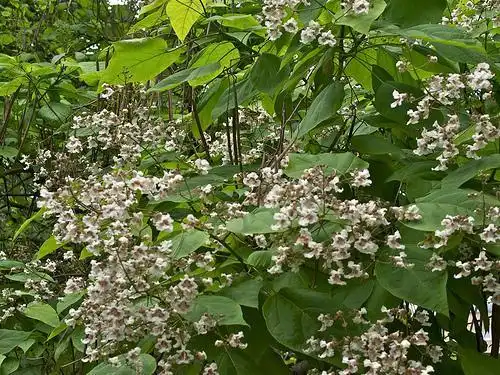
flowers later than C. speciosa and has more purple color, 6-12 in. panicle of white, bell-shaped flowers with two rows and ridges of yellow spots and numerous purple spots in early summer.
Purple/Lavender
White
> 6 inches
Leaves
Large, heartshaped slightly pubecent, 4-8 in. whorled or opposite, simple leaf; has an unpleasant odor when crushed; no significant fall color.
Opposite
Whorled
Whole Plant Traits
Cultural Conditions
Full sun (6 or more hours of direct sunlight a day)
Partial Shade (Direct sunlight only part of the day, 2-6 hours)
Good Drainage
Moist
5b
5a
6a
6b
7a
7b
8b
8a
9a
9b
Landscape
Shade Tree

Catalpa bignonioides Attributes

Catalpa bignonioides: Country Or Region Of Origin

E. Texas to S. Georgia
Catalpa bignonioides: Life Cycle

Annual
Biennial
Bulb
Perennial
Woody

Catalpa bignonioides Flowers

Catalpa bignonioides: Flower Description

flowers later than C. speciosa and has more purple color, 6-12 in. panicle of white, bell-shaped flowers with two rows and ridges of yellow spots and numerous purple spots in early summer.

Catalpa bignonioides: Flower Color

filter_vintage
Purple/Lavender
filter_vintage
White

Catalpa bignonioides: Flower Inflorescence

Catkin
Corymb
Cyme
Head
Insignificant
Panicle
Raceme
Solitary
Spadix
Spike
Umbel

Catalpa bignonioides: Flower Bloom Time

Winter
Spring
Summer
Fall

Catalpa bignonioides: Flower Size

1-3 inches
3-6 inches
< 1 inch
> 6 inches

Catalpa bignonioides Leaves

Catalpa bignonioides: Leaf Description

Large, heartshaped slightly pubecent, 4-8 in. whorled or opposite, simple leaf; has an unpleasant odor when crushed; no significant fall color.

Catalpa bignonioides: Woody Plant Leaf Characteristics

Broadleaf Evergreen
Deciduous
Needled Evergreen
Semi-evergreen

Catalpa bignonioides: Leaf Color

spa
Green

Catalpa bignonioides: Leaf Type

Compound (Pinnately , Bipinnately, Palmately)
Fronds
Needles
Sheath
Simple

Catalpa bignonioides: Leaf Arrangement

Alternate
Opposite
Other/more complex
Rosulate
Whorled

Catalpa bignonioides: Hairs Present

No
Yes

Catalpa bignonioides Stem

Catalpa bignonioides: Stem Description

crooked branches

Catalpa bignonioides: Stem Is Aromatic

No
Yes

Catalpa bignonioides Whole Plant Traits

Catalpa bignonioides: Plant Type

Annual
Bulb
Carnivorous
Edible
Epiphyte
Fern
Ground Cover
Herb
Herbaceous Perennial
Houseplant
Mushroom
Native Plant
Ornamental Grasses and Sedges
Perennial
Poisonous
Rose
Shrub
Succulent
Tree
Turfgrass
Vegetable
Vine
Water Plant
Weed
Wildflower

Catalpa bignonioides: Woody Plant Leaf Characteristics

Broadleaf Evergreen
Deciduous
Needled Evergreen
Semi-evergreen

Catalpa bignonioides: Habit/Form

Arching
Ascending
Broad
Cascading
Climbing
Clumping
Columnar
Conical
Creeping
Dense
Erect
Horizontal
Irregular
Mounding
Multi-stemmed
Multi-trunked
Open
Oval
Prostrate
Pyramidal
Rounded
Spreading
Vase
Weeping

Catalpa bignonioides: Growth Rate

Slow
Medium
Rapid

Catalpa bignonioides: Texture

Fine
Medium
Coarse

Catalpa bignonioides Cultural Conditions

Catalpa bignonioides: Light

Dappled Sunlight (Shade through upper canopy all day)
Deep shade (Less than 2 hours to no direct sunlight)
Full sun (6 or more hours of direct sunlight a day)
Partial Shade (Direct sunlight only part of the day, 2-6 hours)

Catalpa bignonioides: Soil Drainage

Frequent Standing Water
Good Drainage
Moist
Occasional Flooding
Occasionally Dry
Occasionally Wet
Very Dry

Catalpa bignonioides: USDA Plant Hardiness Zone

thermostat
5a
thermostat
5b
thermostat
6a
thermostat
6b
thermostat
7a
thermostat
7b
thermostat
8a
thermostat
8b
thermostat
9a
thermostat
9b

Catalpa bignonioides Landscape

Catalpa bignonioides: Design Feature

Accent
Barrier
Border
Flowering Tree
Foundation Planting
Hedge
Mass Planting
Screen/Privacy
Security
Shade Tree
Small groups
Small Tree
Specimen
Street Tree
Understory Tree