Plant Profile: Cicuta maculata

Taxonomy: Cicuta maculata

Names

cowbane, Poison Parsnip, Spotted Cowbane, Spotted Water Hemlock, Water Hemlock

  • Photo of Cicuta maculata (Cicuta maculatas)

Phonetic Spelling:sih-KYOO-tah mak-yoo-LAY-tah

Genus:Cicuta

Species:maculata

Family:Apiaceae

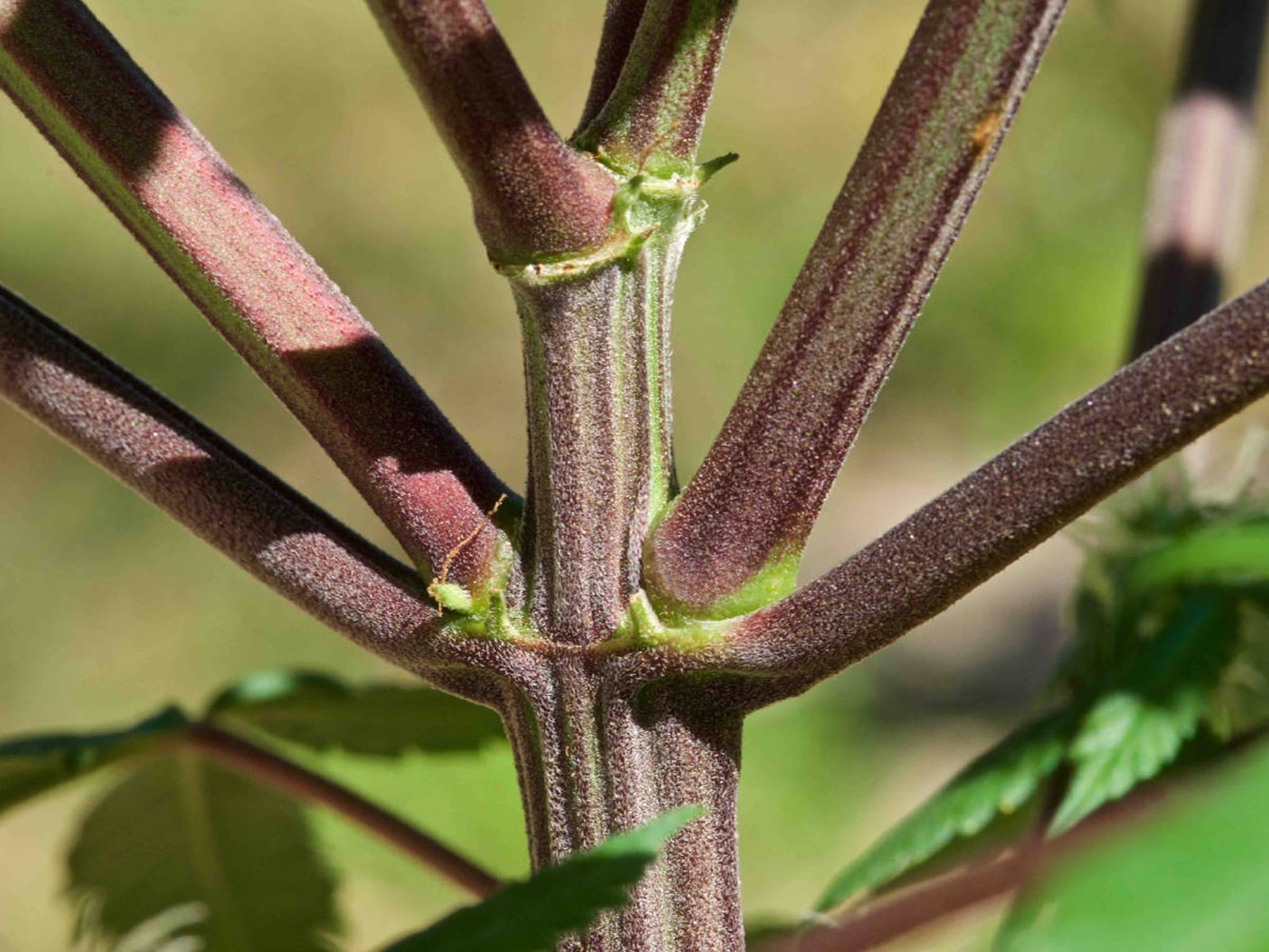
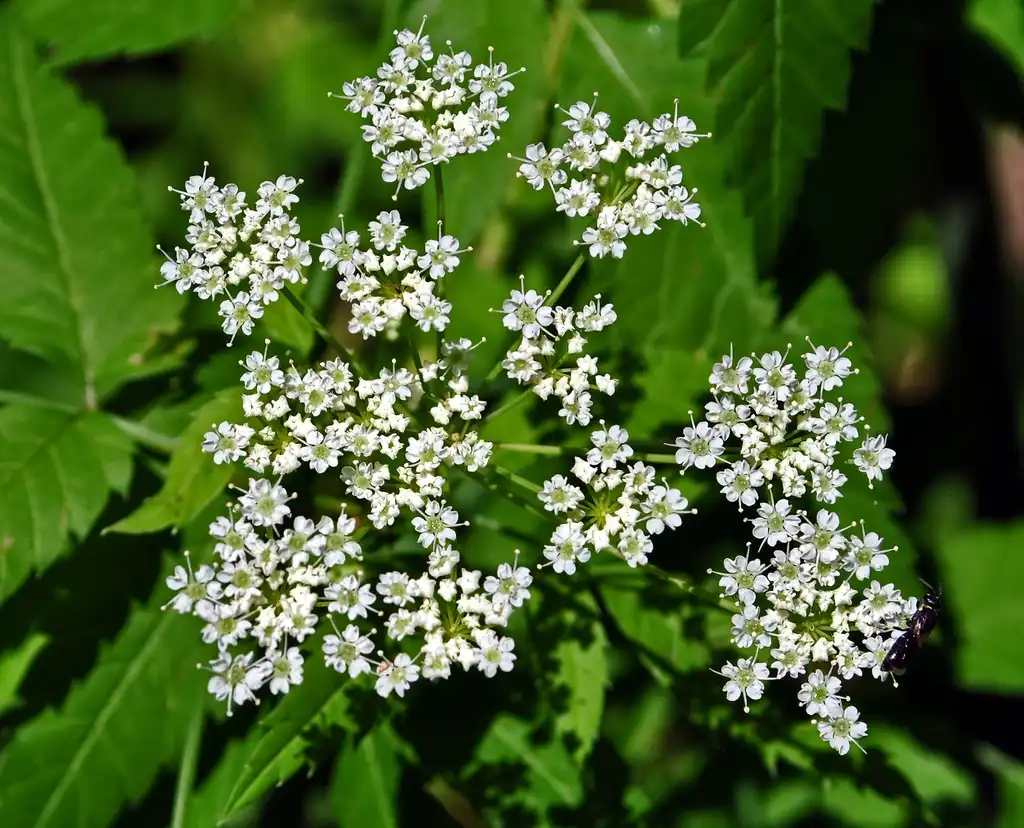
This is a perennial herb characterized by short tuberous roots and hollow stems that are either purple-striped or mottled, featuring cross-partitions at the nodes, particularly abundant at the base. The leaves are arranged alternately, wrapping around the stem, and are divided into 2-3 pinnate sections, with leaflets that have veins terminating in the notches between the serrated edges. The flowers are small and white, forming clusters that resemble umbrellas.

Preferred habitats include wet meadows, thickets, and freshwater swamps. This plant is typically found in forested or natural areas with moist conditions, such as the banks of ponds, streams, or ditches.

WARNING: This plant is highly toxic and can be fatal if ingested!

Cicuta maculata Feature Summary

Cicuta maculata Image Gallery

Tags

#NC native
#problem for cats
#problem for dogs
#problem for horses

Similar Plants

Cicuta maculata is often confused with:

Cicuta maculata Feature Summary

Attributes
Flowers
Dome-shaped cluster of small white flowers; no bracts beneath the umbels
Leaves
Lower leaves are up to 1 ft., doubly divided with veins ending at notches between the teeth; smooth, erect highly branched stem
Compound (Pinnately , Bipinnately, Palmately)
> 6 inches
Stem
Purple-striped or mottled, hollow stems with cross-partitions at the nodes and many of these at the base of the stem
Purple/Lavender
Green
Straight
Poisonous to Humans
HIGHLY TOXIC, MAY BE FATAL IF EATEN! Muscle spasms, dilated pupils, dizziness, diarrhea, stomach pain, convulsions. Seizures, tremors, fever, bloat, respiratory depression
Cicutoxin and cicutol
Seeds
Leaves
Stems
Flowers
Bark
Fruits
Roots
Whole Plant Traits
Native Plant
Poisonous
Wildflower
Cultural Conditions
Occasionally Wet
Landscape
Woodland
Naturalized Area
Problem for Cats
Problem for Dogs
Problem for Horses

Cicuta maculata Attributes

Cicuta maculata: Country Or Region Of Origin

North America
Cicuta maculata: Life Cycle

Annual
Biennial
Bulb
Perennial
Woody

Cicuta maculata Flowers

Cicuta maculata: Flower Description

Dome-shaped cluster of small white flowers; no bracts beneath the umbels

Cicuta maculata: Flower Color

filter_vintage
White

Cicuta maculata: Flower Inflorescence

Catkin
Corymb
Cyme
Head
Insignificant
Panicle
Raceme
Solitary
Spadix
Spike
Umbel

Cicuta maculata: Flower Bloom Time

Winter
Spring
Summer
Fall

Cicuta maculata Leaves

Cicuta maculata: Leaf Description

Lower leaves are up to 1 ft., doubly divided with veins ending at notches between the teeth; smooth, erect highly branched stem

Cicuta maculata: Leaf Color

spa
Green

Cicuta maculata: Leaf Type

Compound (Pinnately , Bipinnately, Palmately)
Fronds
Needles
Sheath
Simple

Cicuta maculata: Leaf Arrangement

Alternate
Opposite
Other/more complex
Rosulate
Whorled

Cicuta maculata: Hairs Present

No
Yes

Cicuta maculata: Leaf Length

< 1 inch
1-3 inches
3-6 inches
> 6 inches

Cicuta maculata Stem

Cicuta maculata: Stem Description

Purple-striped or mottled, hollow stems with cross-partitions at the nodes and many of these at the base of the stem

Cicuta maculata: Stem Color

grass
Green
grass
Purple/Lavender

Cicuta maculata: Stem Is Aromatic

No
Yes

Cicuta maculata: Stem Form

Straight
Zig Zags

Cicuta maculata Poisonous to Humans

Cicuta maculata: Poison Symptoms

HIGHLY TOXIC, MAY BE FATAL IF EATEN! Muscle spasms, dilated pupils, dizziness, diarrhea, stomach pain, convulsions. Seizures, tremors, fever, bloat, respiratory depression

Cicuta maculata: Poison Toxic Principle

Cicutoxin and cicutol

Cicuta maculata: Poison Severity

High
Low
Medium

Cicuta maculata: Causes Contact Dermatitis

No
Yes

Cicuta maculata: Poison Part

Bark
Flowers
Fruits
Leaves
Roots
Sap/Juice
Seeds
Stems

Cicuta maculata Whole Plant Traits

Cicuta maculata: Plant Type

Annual
Bulb
Carnivorous
Edible
Epiphyte
Fern
Ground Cover
Herb
Herbaceous Perennial
Houseplant
Mushroom
Native Plant
Ornamental Grasses and Sedges
Perennial
Poisonous
Rose
Shrub
Succulent
Tree
Turfgrass
Vegetable
Vine
Water Plant
Weed
Wildflower

Cicuta maculata Cultural Conditions

Cicuta maculata: Soil Drainage

Frequent Standing Water
Good Drainage
Moist
Occasional Flooding
Occasionally Dry
Occasionally Wet
Very Dry

Cicuta maculata Landscape

Cicuta maculata: Landscape Location

Coastal
Container
Hanging Baskets
Houseplants
Lawn
Meadow
Naturalized Area
Near Septic
Patio
Pond
Pool/Hardscape
Recreational Play Area
Riparian
Rock Wall
Slope/Bank
Small Space
Vertical Spaces
Walkways
Woodland

Cicuta maculata: Problems

Allelopathic
Contact Dermatitis
Frequent Disease Problems
Frequent Insect Problems
Invasive Species
Malodorous
Messy
Poisonous to Humans
Problem for Cats
Problem for Children
Problem for Dogs
Problem for Horses
Short-lived
Spines/Thorns
Weak Wood
Weedy