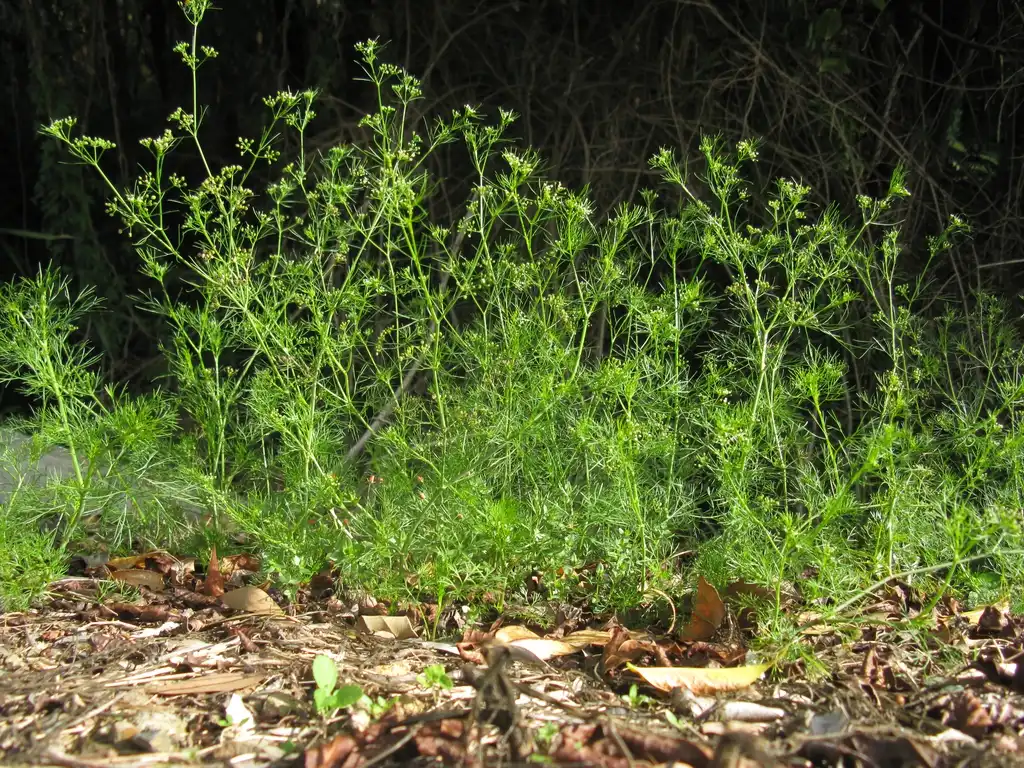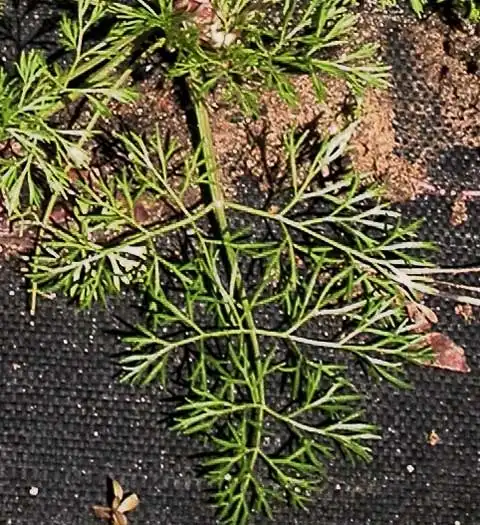
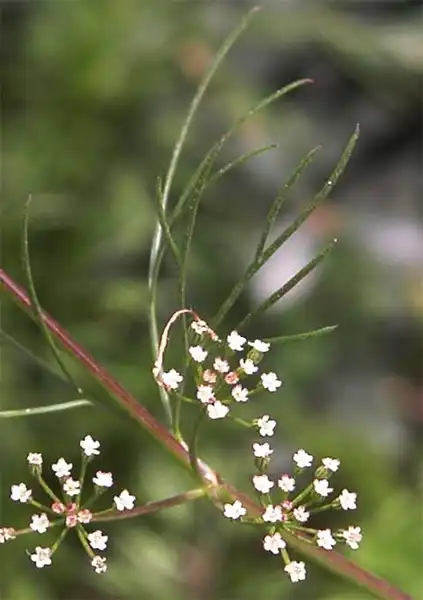
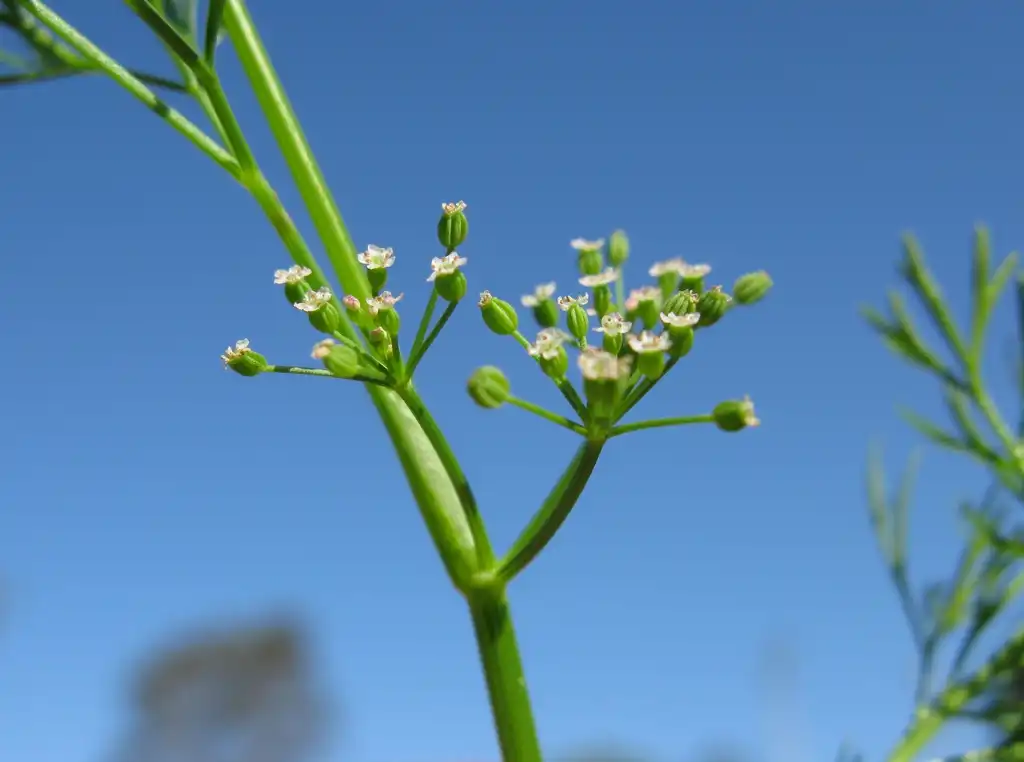
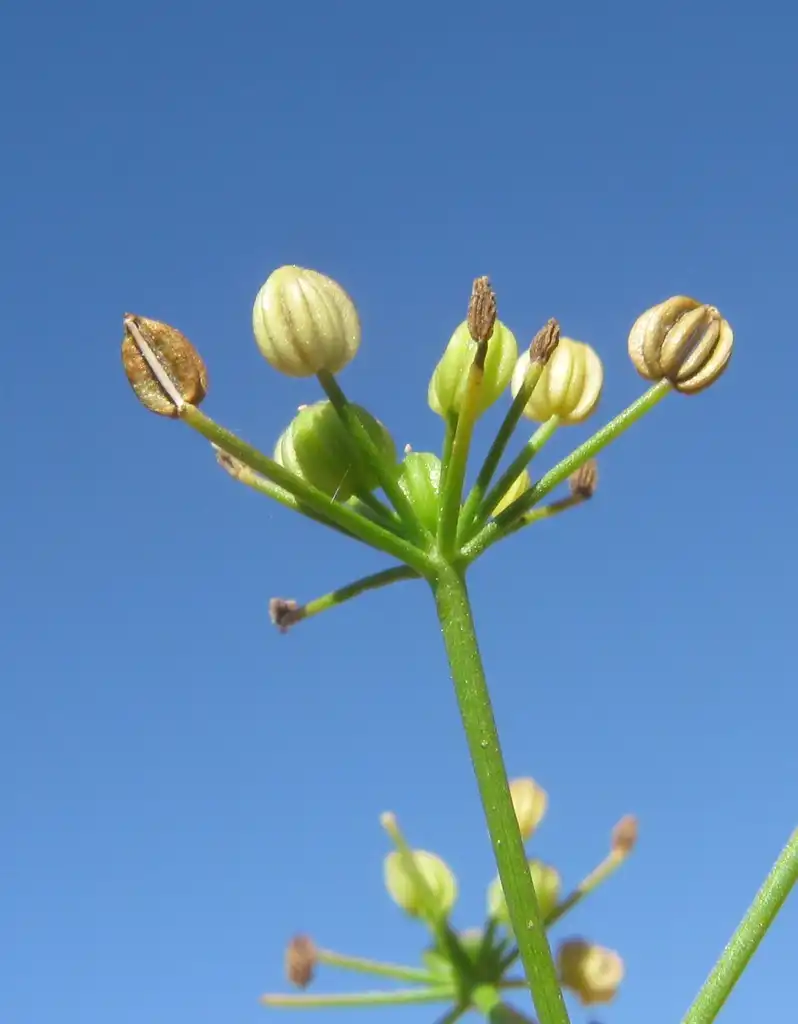
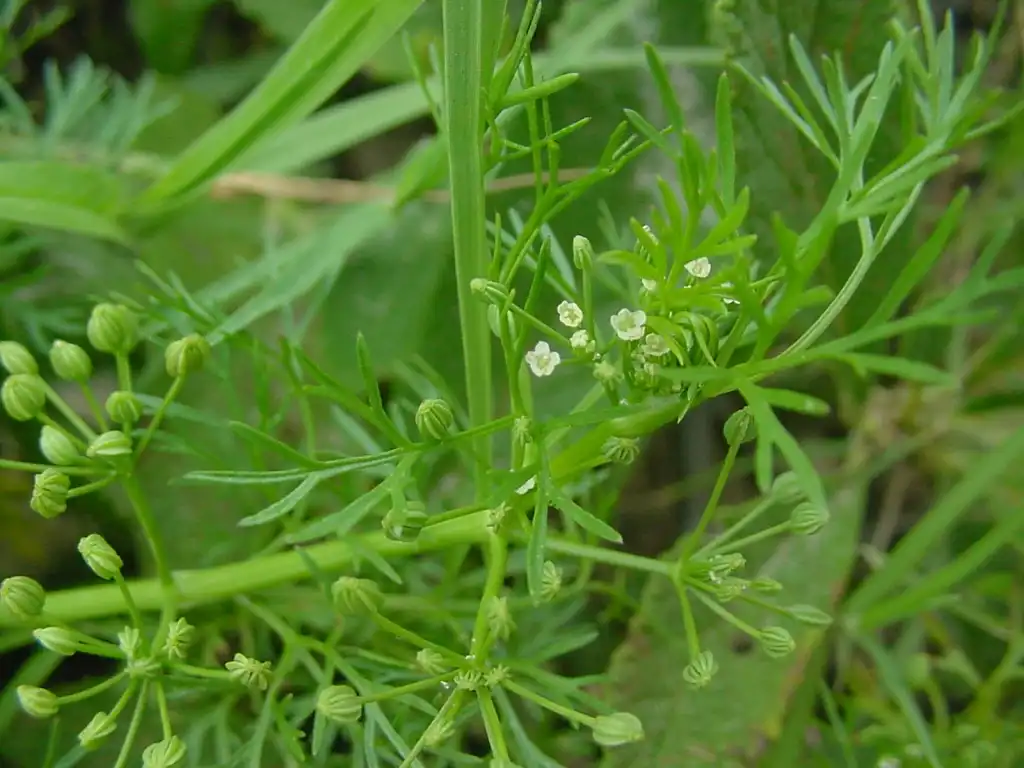
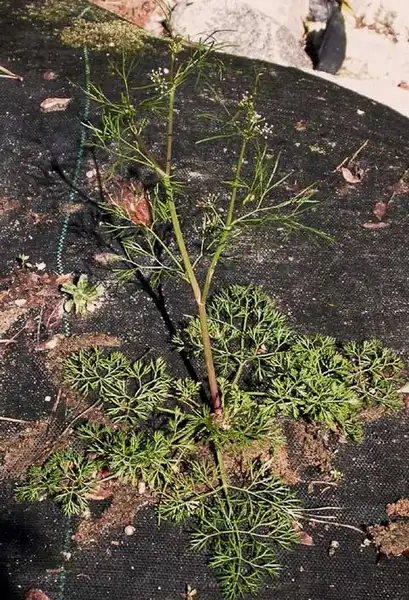
• Photo of Cyclospermum leptophyllum (Cyclospermum leptophyllums)

Plant Profile: Cyclospermum leptophyllum

Taxonomy: Cyclospermum leptophyllum

Names

Marsh Parsley

  • Photo of Cyclospermum leptophyllum (Cyclospermum leptophyllums)

Phonetic Spelling:sahy-kuh-los-pur-mum lep-toh-FE-lum

Genus:Cyclospermum

Species:leptophyllum

Family:Apiaceae

Marsh parsley, belonging to the Apiaceae family—commonly referred to as the carrot family—is a summer annual plant. It features delicately divided leaves and can grow into a branched mound reaching heights of up to 2 feet. The flowers are small, predominantly white, with a hint of pink. Young seedlings closely resemble those of wild carrots and typically sprout from mid-spring to mid-autumn, producing several generations each year. This plant thrives in moist environments, often found flourishing along irrigation ditches and in standing water within agricultural areas. Currently, there is no available information regarding the effectiveness of herbicides on this species.

Additionally, marsh parsley is scientifically known as Apium leptophyllum.

Cyclospermum leptophyllum Feature Summary

Cyclospermum leptophyllum Image Gallery

Tags

#weed
#weedy

Similar Plants

Cyclospermum leptophyllum Feature Summary

Attributes
Mexico to South Tropical America
Flowers
Flowers are small (less than half of 1 mm), white and tinged pink. Young seedlings strongly resemble wild carrot seedlings and emerge from mid-spring through mid-autumn with multiple generations per year.
Pink
White
< 1 inch
Leaves
The plant has finely-dissected leaves and forms a branched mound up to 2 feet tall.
< 1 inch
Whole Plant Traits
Annual
Weed
Erect
Ascending
Cultural Conditions
Moist
Frequent Standing Water
Landscape

Cyclospermum leptophyllum Attributes

Cyclospermum leptophyllum: Country Or Region Of Origin

Mexico to South Tropical America
Cyclospermum leptophyllum: Life Cycle

Annual
Biennial
Bulb
Perennial
Woody

Cyclospermum leptophyllum Flowers

Cyclospermum leptophyllum: Flower Description

Flowers are small (less than half of 1 mm), white and tinged pink. Young seedlings strongly resemble wild carrot seedlings and emerge from mid-spring through mid-autumn with multiple generations per year.

Cyclospermum leptophyllum: Flower Color

filter_vintage
Pink
filter_vintage
White

Cyclospermum leptophyllum: Flower Inflorescence

Catkin
Corymb
Cyme
Head
Insignificant
Panicle
Raceme
Solitary
Spadix
Spike
Umbel

Cyclospermum leptophyllum: Flower Bloom Time

Winter
Spring
Summer
Fall

Cyclospermum leptophyllum: Flower Size

1-3 inches
3-6 inches
< 1 inch
> 6 inches

Cyclospermum leptophyllum Leaves

Cyclospermum leptophyllum: Leaf Description

The plant has finely-dissected leaves and forms a branched mound up to 2 feet tall.

Cyclospermum leptophyllum: Leaf Shape

Acicular
Auriculate
Cordate
Cuneate
Deltoid
Elliptical
Filiform
Lanceolate
Linear
Oblanceolate
Oblong
Obovate
Obtuse
Orbicular
Ovate
Palmasect
Palmatifid
Peltate
Pinnatifid
Pinnatisect
Reniform
Rhomboidal
Spatulate
Subcordate
Subulate

Cyclospermum leptophyllum: Hairs Present

No
Yes

Cyclospermum leptophyllum: Leaf Width

< 1 inch
1-3 inches
3-6 inches
> 6 inches

Cyclospermum leptophyllum Whole Plant Traits

Cyclospermum leptophyllum: Plant Type

Annual
Bulb
Carnivorous
Edible
Epiphyte
Fern
Ground Cover
Herb
Herbaceous Perennial
Houseplant
Mushroom
Native Plant
Ornamental Grasses and Sedges
Perennial
Poisonous
Rose
Shrub
Succulent
Tree
Turfgrass
Vegetable
Vine
Water Plant
Weed
Wildflower

Cyclospermum leptophyllum: Habit/Form

Arching
Ascending
Broad
Cascading
Climbing
Clumping
Columnar
Conical
Creeping
Dense
Erect
Horizontal
Irregular
Mounding
Multi-stemmed
Multi-trunked
Open
Oval
Prostrate
Pyramidal
Rounded
Spreading
Vase
Weeping

Cyclospermum leptophyllum Cultural Conditions

Cyclospermum leptophyllum: Soil Drainage

Frequent Standing Water
Good Drainage
Moist
Occasional Flooding
Occasionally Dry
Occasionally Wet
Very Dry

Cyclospermum leptophyllum Stem

Cyclospermum leptophyllum: Stem Is Aromatic

No
Yes

Cyclospermum leptophyllum Landscape

Cyclospermum leptophyllum: Problems

Allelopathic
Contact Dermatitis
Frequent Disease Problems
Frequent Insect Problems
Invasive Species
Malodorous
Messy
Poisonous to Humans
Problem for Cats
Problem for Children
Problem for Dogs
Problem for Horses
Short-lived
Spines/Thorns
Weak Wood
Weedy