
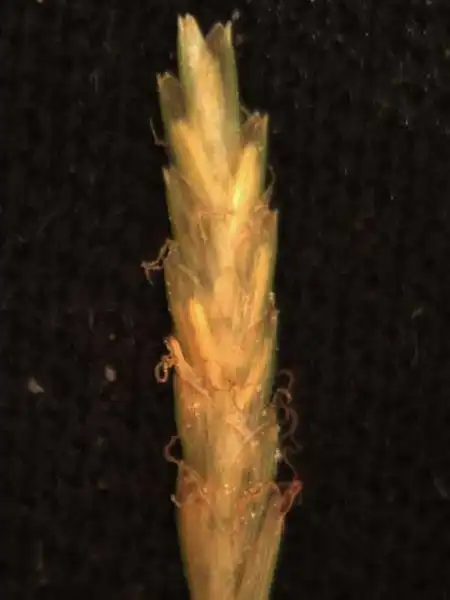
Cyperus esculentus: Uses (Ethnobotany)
Used homeopathically; almond-flavored tubers used for a drink.
Phonetic Spelling:sy-PEER-us es-kew-LEN-tus
Genus:Cyperus
Species:esculentus L.
Family:Cyperaceae
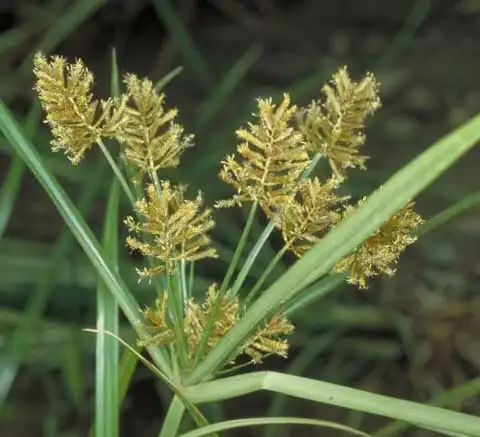
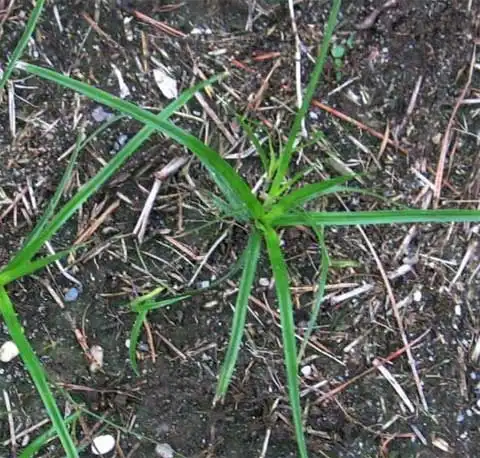
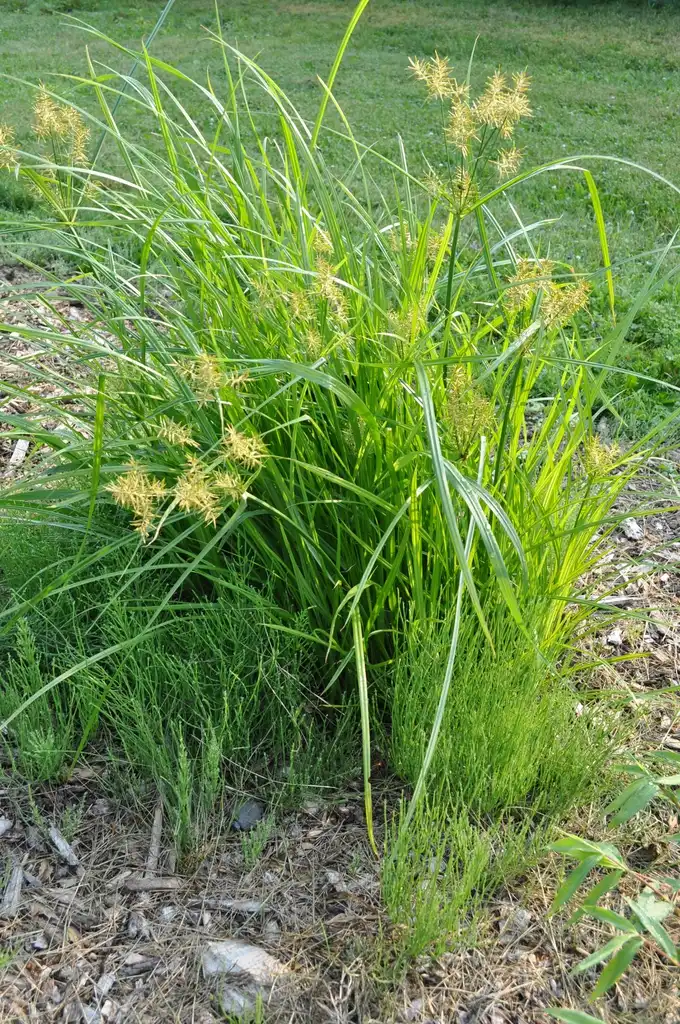
Yellow Nutsedge is a perennial weed characterized by its glossy green, grass-like appearance. This native sedge primarily propagates through rhizomes and tubers, although it can also produce viable seeds. In the fall, the plants die back to the ground, with new shoots re-emerging in the spring from the underground tubers. This species, along with other sedges, thrives in wet environments, favoring warm temperatures and full sunlight, yet it can adapt to a variety of habitats.
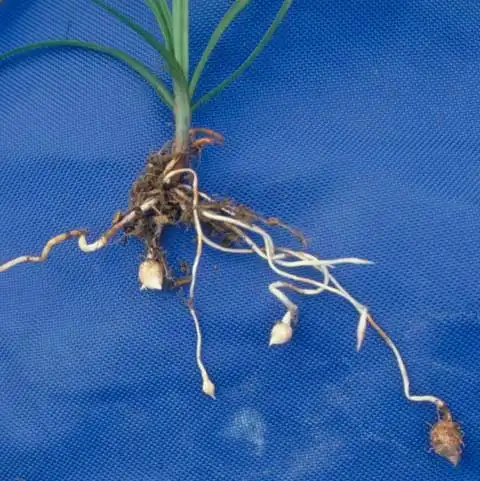
Similar to its Eurasian relative, Purple Nutsedge (Cyperus rotundus), Yellow Nutsedge poses a threat to crops in sunny, open fields and moist, disturbed soils, as it competes for nutrients with its long, invasive rhizomes. When uprooted, the plant reveals nut-shaped edible nodules that store nutrients. However, pulling it out can lead to broken roots, which may result in the growth of even more roots. To effectively manage this weed, it is advisable to remove young plants and expose the roots to sunlight to dry them out. Only specific preemergence herbicides are effective against Yellow Nutsedge, and it is important to note that Purple Nutsedge reacts differently to herbicides. The USDA Plants database classifies it as a noxious weed in states such as California, Colorado, Hawaii, Oregon, and Washington.
Regarding pests and diseases, Yellow Nutsedge is not known to suffer from any diseases. It is allelopathic, meaning it depletes soil nutrients.
For further details on Cyperus, additional resources are available.
Cyperus esculentus Feature Summary
Cyperus esculentus Image Gallery