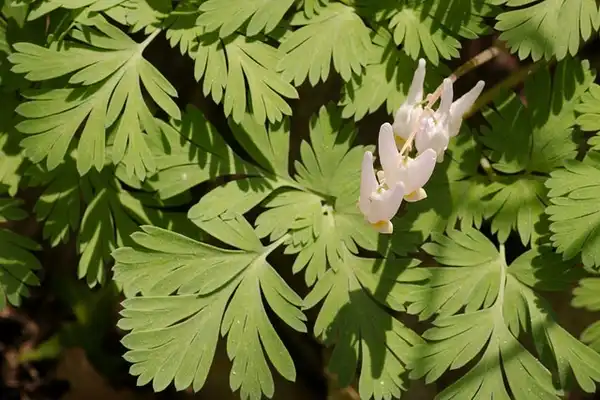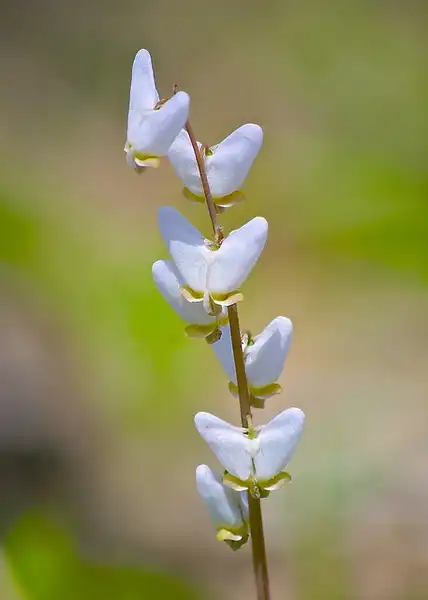
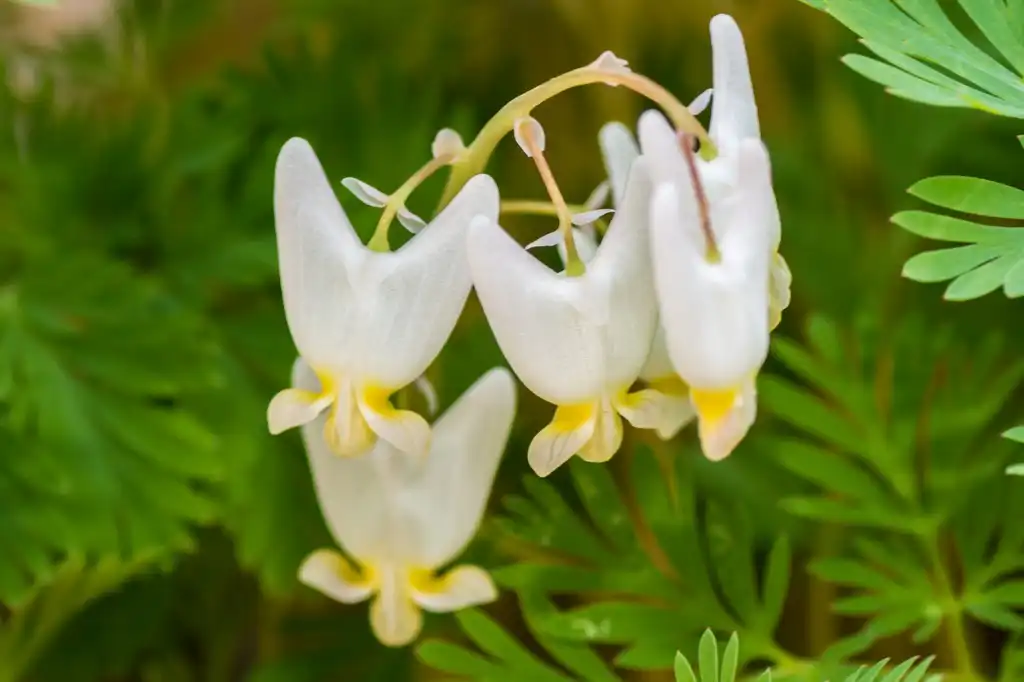
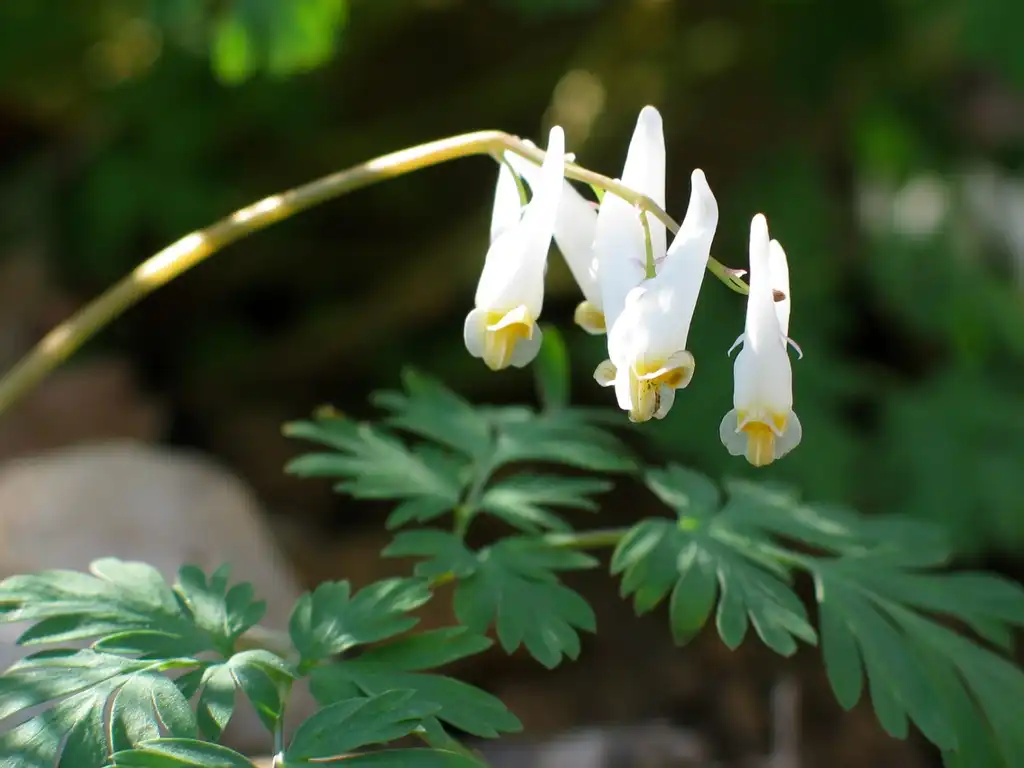
• Photo of Dicentra cucullaria (Dicentra cucullarias)

Plant Profile: Dicentra cucullaria

Taxonomy: Dicentra cucullaria

Names

Dutchman's Breeches, Dutchman's Britches

  • Photo of Dicentra cucullaria (Dicentra cucullarias)

Phonetic Spelling:dy-SEN-trah kuk-yoo-LAIR-ee-uh

Genus:Dicentra

Species:cucullaria

Family:Papaveraceae

Dutchman's Breeches is a perennial wildflower native to rich or rocky deciduous forests, moist ravines, and mountainous regions. This woodland perennial has the ability to spread extensively, thriving in humus-rich soils that range from acidic to neutral, and it can also tolerate clay soils.

In the spring, the plant showcases its fern-like basal leaves alongside a graceful, leafless arching stem adorned with a series of fragrant, pantaloon-shaped white flowers. It typically blooms in March, providing early visual interest in the garden. By summer, the plant enters a dormant phase. It is well-suited for woodland and shade gardens and pairs nicely with later-blooming perennials.

Propagation can be achieved through the division of crowns or root cuttings during spring or fall. The seeds require moist cold stratification for germination, which can be a slow and challenging process. Ants play a role in dispersing the seeds. It is important to note that all parts of this plant are toxic if ingested in large amounts.

Dicentra cucullaria Feature Summary

Dicentra cucullaria Image Gallery

Tags

#white
#showy flowers
#poisonous
#fragrant flowers
#white flowers
#shade tolerant
#spring flowers
#small mammals
#bumblebees
#NC native
#cascading
#native garden
#ornate
#native wildflower
#wildflower garden
#early spring flowers
#food source herbage
#food source nectar
#food source pollen
#bird friendly
#food source hard mast fruit
#mammals
#butterfly friendly
#bee friendly
#audubon
#woodlands

Similar Plants

Dicentra cucullaria Feature Summary

Attributes
E. Canada to N. & E. U.S.A.
AL , AR , CT , DC , GA , IA , ID , IL , IN , KS , KY , MA , MD , ME , MI , MN , MO , MS , NC , ND , NE , NH , NJ , NY , OH , OK , OR , PA , RI , SC , SD , TN , VA , VT , WA , WI , WV Canada: MB , NB , NS , ON , PE , QC
Perennial
Seed
Division
Root Cutting
Fruit
The oval seed capsules taper into points at both ends. These capsules split apart into 2 segments to release many seeds. Fruits appear from May to June.
Brown/Copper
Flowers
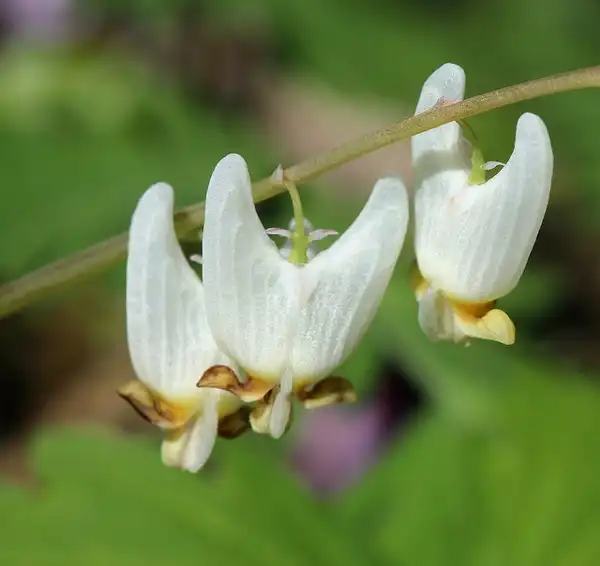
3/4 inch long white flowers bloom on 5-10 inch long arching leafless stems and resemble upside-down pantaloons. 2 inflated petals form spurs. Blooms March-May.
Pink
White
fused petals
< 1 inch
Leaves
The triangular-shaped greyish-green leaves are 3-6 inches long, basilar, stand upright on long stems and are deeply cut and fernlike.
Green
Gray/Silver
Compound (Pinnately , Bipinnately, Palmately)
3-6 inches
3-6 inches
Stem
Stems are tan to reddish-brown and upright
Brown/Copper
Red/Burgundy
Cream/Tan
Smooth (glabrous)
Poisonous to Humans
Trembling, staggering, vomiting, diarrhea, convulsions, labored breathing if eaten in large quantities. Skin irritation after repeated contact with the cell sap is mild and lasts a short time.
Several isoquinolone alkaloids.
Seeds
Stems
Sap/Juice
Flowers
Fruits
Roots
Whole Plant Traits
Native Plant
Poisonous
Wildflower
Erect
Cascading
Cultural Conditions
Partial Shade (Direct sunlight only part of the day, 2-6 hours)
Dappled Sunlight (Shade through upper canopy all day)
Acid (<6.0)
Neutral (6.0-8.0)
Good Drainage
Moist
Less than 12 inches
Coastal
Mountains
Piedmont
4a
4b
5b
5a
6a
6b
7a
7b
3a
3b
Clay
High Organic Matter
Loam (Silt)
Landscape
Butterfly Garden
Pollinator Garden
Native Garden
Shade Garden
Butterflies
Songbirds
Bees
Small Mammals
Poisonous to Humans

Dicentra cucullaria Attributes

Dicentra cucullaria: Country Or Region Of Origin

E. Canada to N. & E. U.S.A.
Dicentra cucullaria: Distribution

AL , AR , CT , DC , GA , IA , ID , IL , IN , KS , KY , MA , MD , ME , MI , MN , MO , MS , NC , ND , NE , NH , NJ , NY , OH , OK , OR , PA , RI , SC , SD , TN , VA , VT , WA , WI , WV Canada: MB , NB , NS , ON , PE , QC

Dicentra cucullaria: Life Cycle

Annual
Biennial
Bulb
Perennial
Woody

Dicentra cucullaria: Recommended Propagation Strategy

Division
Grafting
Layering
Leaf Cutting
Root Cutting
Seed
Stem Cutting

Dicentra cucullaria Fruit

Dicentra cucullaria: Fruit Description

The oval seed capsules taper into points at both ends. These capsules split apart into 2 segments to release many seeds. Fruits appear from May to June.

Dicentra cucullaria: Fruit Type

Achene
Aggregate
Berry
Capsule
Caryopsis
Drupe
Follicle
Legume
Nut
Pome
Samara
Schizocarp
Siliqua

Dicentra cucullaria: Fruit Color

grass
Brown/Copper

Dicentra cucullaria: Display/Harvest Time

Fall
Spring
Summer
Winter

Dicentra cucullaria Flowers

Dicentra cucullaria: Flower Description

3/4 inch long white flowers bloom on 5-10 inch long arching leafless stems and resemble upside-down pantaloons. 2 inflated petals form spurs. Blooms March-May.

Dicentra cucullaria: Flower Color

filter_vintage
Pink
filter_vintage
White

Dicentra cucullaria: Flower Inflorescence

Catkin
Corymb
Cyme
Head
Insignificant
Panicle
Raceme
Solitary
Spadix
Spike
Umbel

Dicentra cucullaria: Flower Value To Gardener

Edible
Fragrant
Good Cut
Good Dried
Long Bloom Season
Long-lasting
Showy

Dicentra cucullaria: Flower Bloom Time

Winter
Spring
Summer
Fall

Dicentra cucullaria: Flower Petals

2-3 rays/petals
4-5 petals/rays
6 petals/rays
7 - 20 petals/rays
asymmetrical petals
Bracts
Colored Sepals
fused petals
more than 20 petals/rays
Tepals

Dicentra cucullaria: Flower Shape

Bell
Cross
Crown
Cup
Dome
Funnel
Irregular
Lipped
Radial
Saucer
Star
Trumpet
Tubular
Urn
Wheel

Dicentra cucullaria: Flower Size

1-3 inches
3-6 inches
< 1 inch
> 6 inches

Dicentra cucullaria Leaves

Dicentra cucullaria: Leaf Description

The triangular-shaped greyish-green leaves are 3-6 inches long, basilar, stand upright on long stems and are deeply cut and fernlike.

Dicentra cucullaria: Woody Plant Leaf Characteristics

Broadleaf Evergreen
Deciduous
Needled Evergreen
Semi-evergreen

Dicentra cucullaria: Leaf Color

spa
Gray/Silver
spa
Green

Dicentra cucullaria: Leaf Type

Compound (Pinnately , Bipinnately, Palmately)
Fronds
Needles
Sheath
Simple

Dicentra cucullaria: Leaf Arrangement

Alternate
Opposite
Other/more complex
Rosulate
Whorled

Dicentra cucullaria: Leaf Shape

Acicular
Auriculate
Cordate
Cuneate
Deltoid
Elliptical
Filiform
Lanceolate
Linear
Oblanceolate
Oblong
Obovate
Obtuse
Orbicular
Ovate
Palmasect
Palmatifid
Peltate
Pinnatifid
Pinnatisect
Reniform
Rhomboidal
Spatulate
Subcordate
Subulate

Dicentra cucullaria: Leaf Margin

Crenate
Crenulate
Dentate
Denticulate
Doubly Crenate
Doubly Dentate
Doubly Serrate
Entire
Lobed
Serrate
Sinuate
Undulate

Dicentra cucullaria: Hairs Present

No
Yes

Dicentra cucullaria: Leaf Length

< 1 inch
1-3 inches
3-6 inches
> 6 inches

Dicentra cucullaria: Leaf Feel

Fleshy
Glossy
Leathery
Papery

Prickly

Rough
Rubbery
Slippery
Smooth
Soft
Velvety
Waxy

Dicentra cucullaria: Leaf Value To Gardener

Edible
Fragrant
Good Cut
Good Dried
Long-lasting
Showy

Dicentra cucullaria: Leaf Width

< 1 inch
1-3 inches
3-6 inches
> 6 inches

Dicentra cucullaria Stem

Dicentra cucullaria: Stem Description

Stems are tan to reddish-brown and upright

Dicentra cucullaria: Stem Color

grass
Brown/Copper
grass
Cream/Tan
grass
Red/Burgundy

Dicentra cucullaria: Stem Is Aromatic

No
Yes

Dicentra cucullaria: Stem Surface

Corky Ridges
Covered with a powdery bloom (glaucous)
Dull
Hairy (pubescent)
Polished
Smooth (glabrous)

Dicentra cucullaria Poisonous to Humans

Dicentra cucullaria: Poison Symptoms

Trembling, staggering, vomiting, diarrhea, convulsions, labored breathing if eaten in large quantities. Skin irritation after repeated contact with the cell sap is mild and lasts a short time.

Dicentra cucullaria: Poison Toxic Principle

Several isoquinolone alkaloids.

Dicentra cucullaria: Poison Severity

High
Low
Medium

Dicentra cucullaria: Causes Contact Dermatitis

No
Yes

Dicentra cucullaria: Poison Part

Bark
Flowers
Fruits
Leaves
Roots
Sap/Juice
Seeds
Stems

Dicentra cucullaria Whole Plant Traits

Dicentra cucullaria: Plant Type

Annual
Bulb
Carnivorous
Edible
Epiphyte
Fern
Ground Cover
Herb
Herbaceous Perennial
Houseplant
Mushroom
Native Plant
Ornamental Grasses and Sedges
Perennial
Poisonous
Rose
Shrub
Succulent
Tree
Turfgrass
Vegetable
Vine
Water Plant
Weed
Wildflower

Dicentra cucullaria: Woody Plant Leaf Characteristics

Broadleaf Evergreen
Deciduous
Needled Evergreen
Semi-evergreen

Dicentra cucullaria: Habit/Form

Arching
Ascending
Broad
Cascading
Climbing
Clumping
Columnar
Conical
Creeping
Dense
Erect
Horizontal
Irregular
Mounding
Multi-stemmed
Multi-trunked
Open
Oval
Prostrate
Pyramidal
Rounded
Spreading
Vase
Weeping

Dicentra cucullaria: Growth Rate

Slow
Medium
Rapid

Dicentra cucullaria: Maintenance

Low
Medium
High

Dicentra cucullaria: Texture

Fine
Medium
Coarse

Dicentra cucullaria Cultural Conditions

Dicentra cucullaria: Light

Dappled Sunlight (Shade through upper canopy all day)
Deep shade (Less than 2 hours to no direct sunlight)
Full sun (6 or more hours of direct sunlight a day)
Partial Shade (Direct sunlight only part of the day, 2-6 hours)

Dicentra cucullaria: Soil pH

Acid (<6.0)
Alkaline (>8.0)
Neutral (6.0-8.0)

Dicentra cucullaria: Soil Drainage

Frequent Standing Water
Good Drainage
Moist
Occasional Flooding
Occasionally Dry
Occasionally Wet
Very Dry

Dicentra cucullaria: Available Space To Plant

12 inches-3 feet
12-24 feet
24-60 feet
3 feet-6 feet
6-feet-12 feet
Less than 12 inches
more than 60 feet

Dicentra cucullaria: NC Region

Coastal
Mountains
Piedmont

Dicentra cucullaria: USDA Plant Hardiness Zone

thermostat
3a
thermostat
3b
thermostat
4a
thermostat
4b
thermostat
5a
thermostat
5b
thermostat
6a
thermostat
6b
thermostat
7a
thermostat
7b

Dicentra cucullaria: Soil Texture

Clay
High Organic Matter
Loam (Silt)
Sand
Shallow Rocky

Dicentra cucullaria Landscape

Dicentra cucullaria: Landscape Theme

Asian Garden
Butterfly Garden
Children's Garden
Cottage Garden
Cutting Garden
Drought Tolerant Garden
Edible Garden
English Garden
Fairy Garden
Garden for the Blind
Native Garden
Nighttime Garden
Pollinator Garden
Rain Garden
Rock Garden
Shade Garden
Water Garden
Winter Garden

Dicentra cucullaria: Resistance To Challenges

Black Walnut
Compaction
Deer
Diseases
Drought
Dry Soil
Erosion
Fire
Foot Traffic
Heat
Heavy Shade
Humidity
Insect Pests
Pollution
Poor Soil
Rabbits
Salt
Slugs
Squirrels
Storm damage
Urban Conditions
Voles
Wet Soil
Wind

Dicentra cucullaria: Landscape Location

Coastal
Container
Hanging Baskets
Houseplants
Lawn
Meadow
Naturalized Area
Near Septic
Patio
Pond
Pool/Hardscape
Recreational Play Area
Riparian
Rock Wall
Slope/Bank
Small Space
Vertical Spaces
Walkways
Woodland

Dicentra cucullaria: Attracts

Bats
Bees
Butterflies
Frogs
Hummingbirds
Moths
Pollinators
Predatory Insects
Reptiles
Small Mammals
Songbirds
Specialized Bees

Dicentra cucullaria: Problems

Allelopathic
Contact Dermatitis
Frequent Disease Problems
Frequent Insect Problems
Invasive Species
Malodorous
Messy
Poisonous to Humans
Problem for Cats
Problem for Children
Problem for Dogs
Problem for Horses
Short-lived
Spines/Thorns
Weak Wood
Weedy