Euphorbia milii: Country Or Region Of Origin
Madagascar
Phonetic Spelling:yoo-FOR-bee-ah MIL-ee-eye
Genus:Euphorbia
Species:milii
Family:Euphorbiaceae
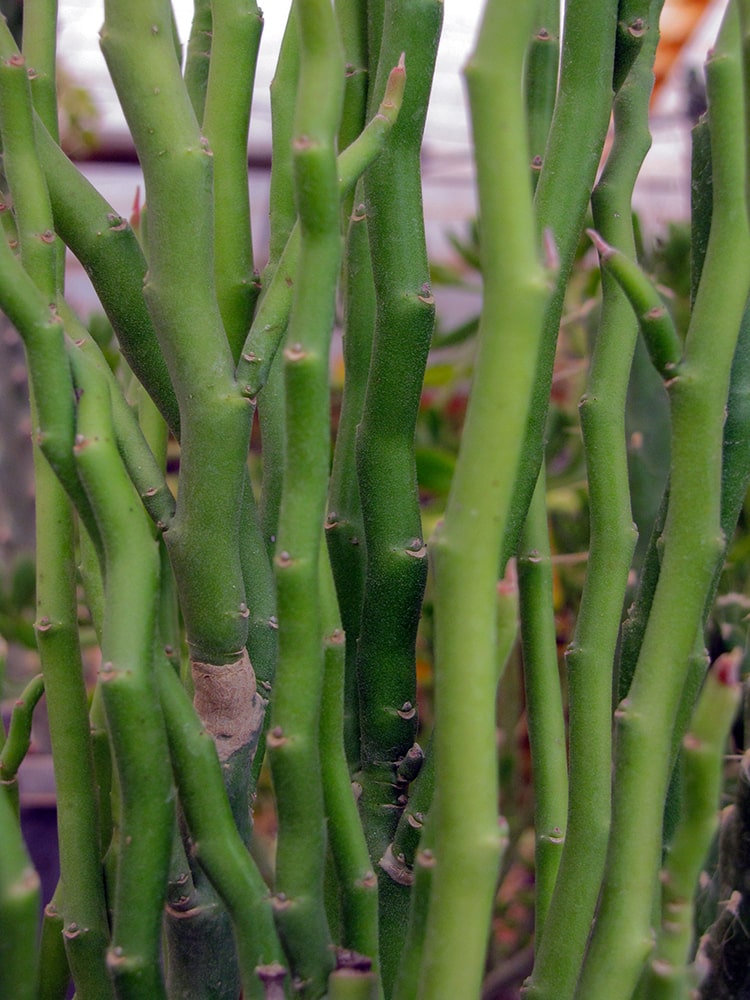
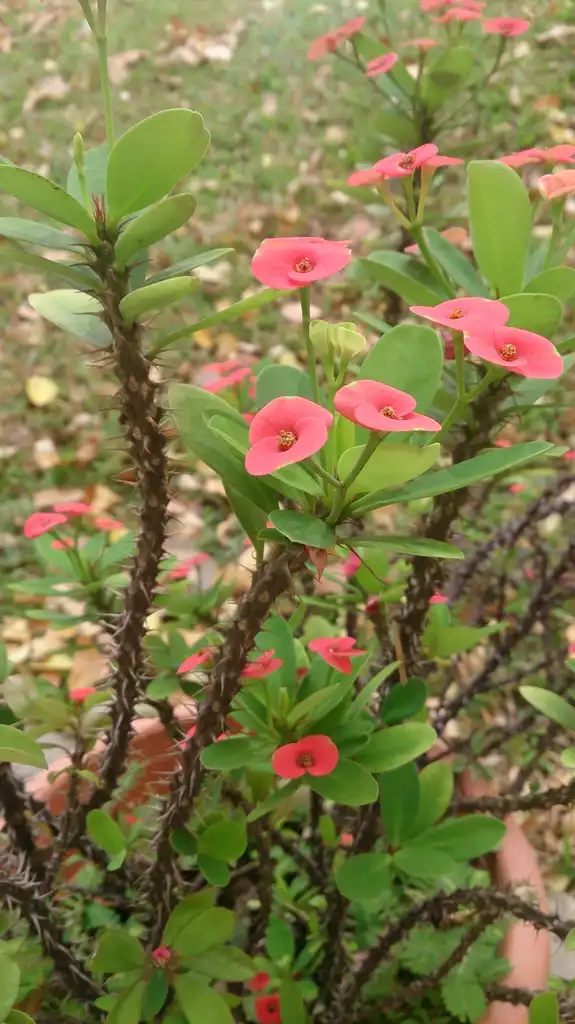
Euphorbia milii, commonly referred to as Crown of Thorns, is a perennial shrub that sheds its leaves, characterized by its vibrant green foliage and greenish flowers. These flowers are surrounded by striking, long-lasting bracts that can be red or yellow. The plant has a loose, spiny structure with thick, dark thorns, and its historical association with the Middle East has led some to believe that its stems were used to create the crown of thorns worn by Christ, which is the origin of its name. In its native Madagascar, it can reach heights of 5 to 6 feet, but in the United States, it typically grows to about 3 feet, or 2 feet when cultivated indoors.
Euphorbia milii thrives in well-drained soils with dry to moderate moisture levels and requires full sunlight. It is sensitive to wet, cold conditions and does not tolerate temperatures below 35 degrees Fahrenheit. This plant is well-suited for indoor environments, preferring a sunny spot in a soil-based potting mix. When grown outdoors in hot summer climates, it benefits from midday shade and moderate watering to enhance flowering. Propagation can be achieved through tip cuttings; however, caution is advised due to the plant's white latex sap, which can cause mild irritation upon contact with skin or eyes, so wearing gloves is recommended during handling.
This plant is easily recognized by its sticky, eye-catching paired-bract flowers on gray stems adorned with long spines. It naturally sheds leaves in a cyclical manner, which can create a bit of a mess and typically occurs before the plant enters its dormant phase in winter. The long spines pose a risk to careless gardeners, children, and pets. Crown of Thorns is often utilized as a decorative specimen in bright indoor spaces or as an annual plant in outdoor settings.
For optimal growth, Crown of Thorns prefers bright light, dry soil, and low humidity levels. When propagating from cuttings, it is important to allow the sap to dry before placing the cutting in a growing medium.
Regarding potential issues, there are no significant pests or diseases associated with this plant. However, like many indoor plants, it may be susceptible to problems such as leaf spots, stem and root rot, and botrytis blight. Insect pests that could affect it include scale, mealybugs, thrips, and mites.
Euphorbia milii Feature Summary