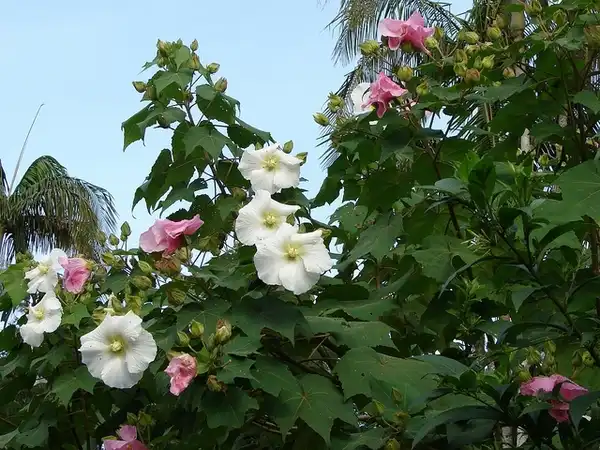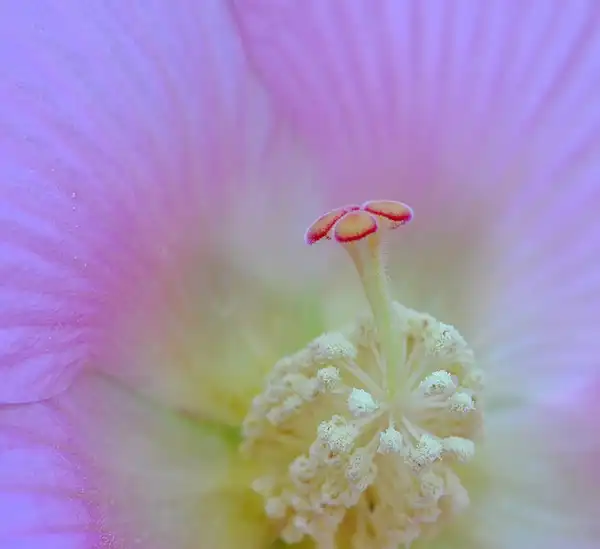
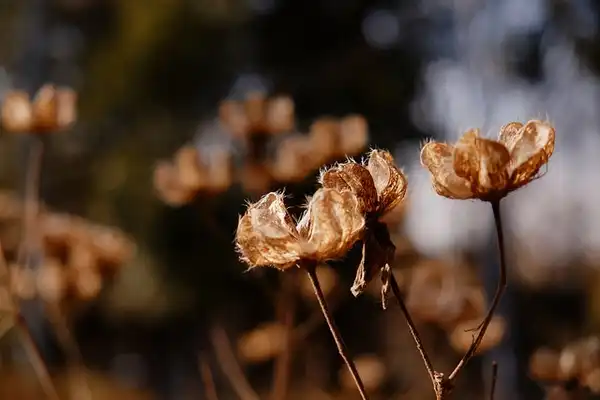
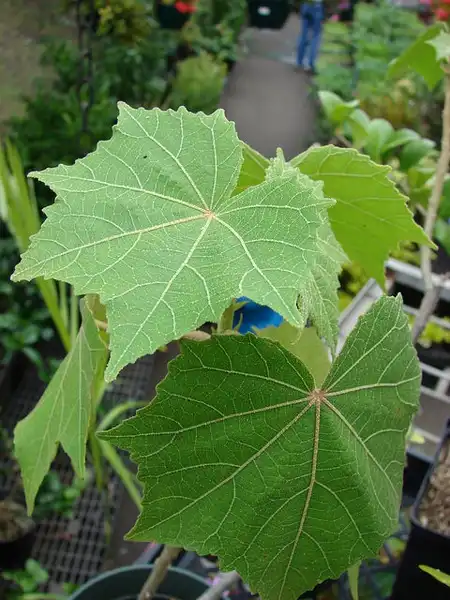
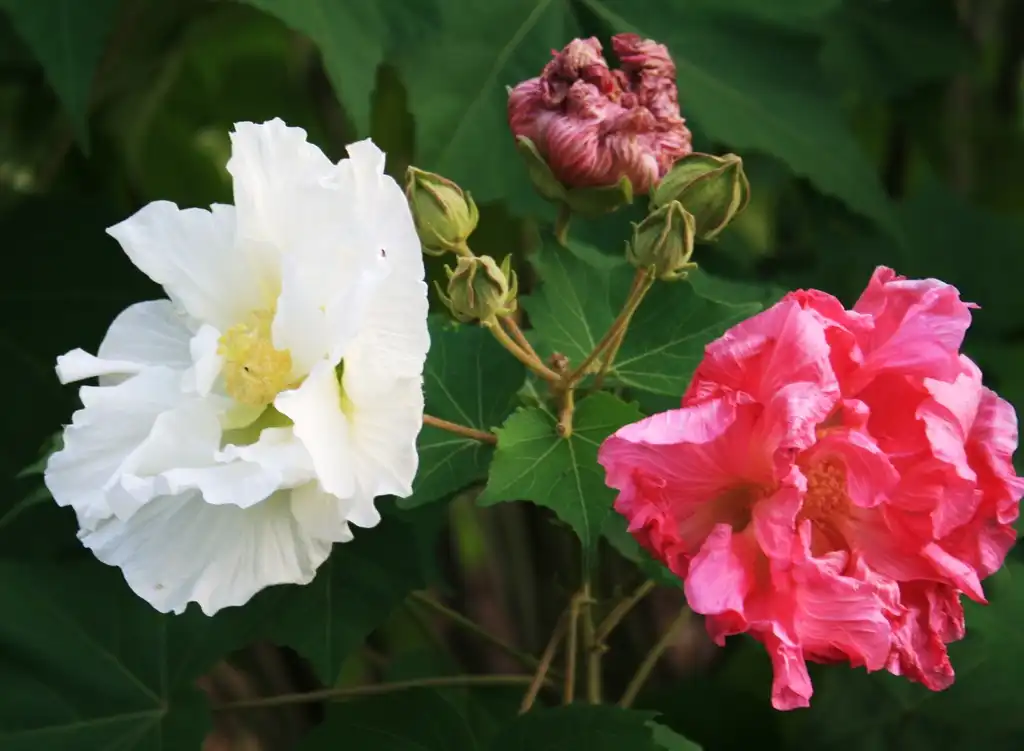
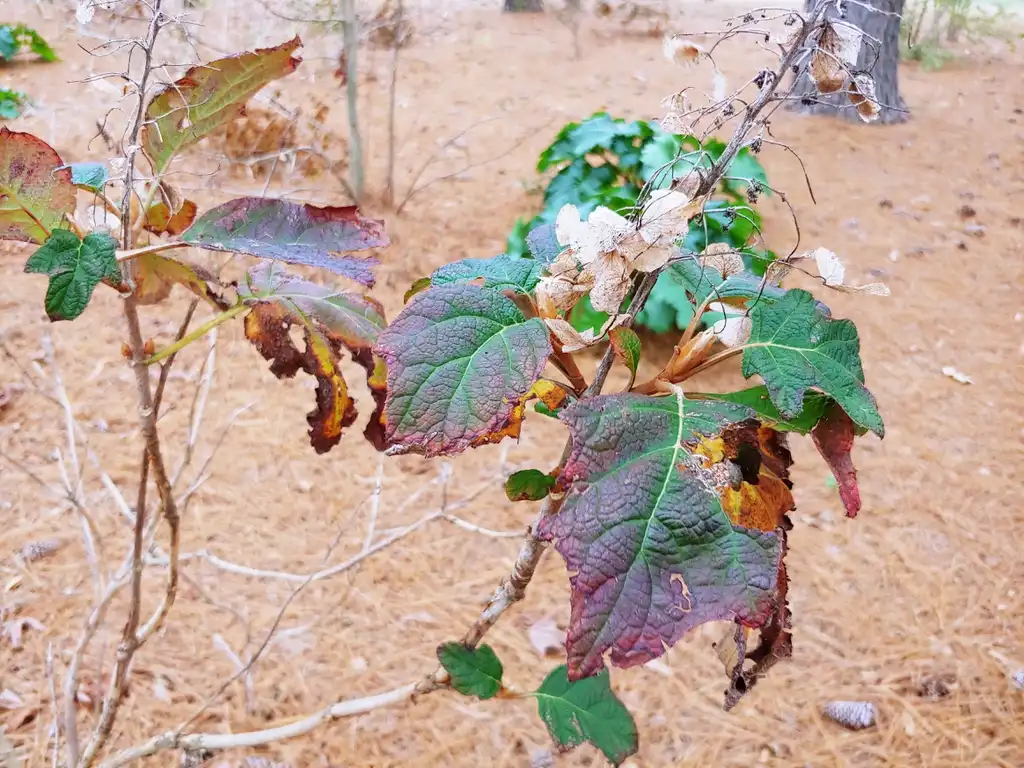
• Photo of Hibiscus mutabilis (Hibiscus mutabiliss)

Plant Profile: Hibiscus mutabilis

Taxonomy: Hibiscus mutabilis

Names

Confederate Rose, Cotton Rose

  • Photo of Hibiscus mutabilis (Hibiscus mutabiliss)

Phonetic Spelling:hi-BIS-kus mew-TAB-ill-iss

Genus:Hibiscus

Species:mutabilis

Family:Malvaceae

This plant, belonging to the Malvaceae family, is a sizable shrub or multi-stemmed tree characterized by its broad green leaves and striking flowers. In winter, its foliage falls away, leaving behind slender, unremarkable stems. However, as summer arrives, the emergence of softly hairy leaves adds a coarse texture, enhancing the plant's unique visual appeal. The flowers initially bloom white, transitioning through a spectrum of colors over three days until they reach a deep pink, eventually fading to a dark "blue-pink" as they wither. Notably, the shrub displays flowers in three distinct colors at the same time. Available in both single and double-flowered varieties, these blossoms can measure between 3 to 5 inches (8 to 13 cm) in diameter. Following the flowering period, a round, hairy capsule forms, which dries and releases fluffy seeds, earning the plant one of its common names, rose cotton, due to the resemblance of its buds to the bolls of other hibiscus family members.

For optimal growth, prune this plant in winter after it has bloomed. A drastic cut back to the ground can rejuvenate leggy specimens. It propagates easily through cuttings. When in bloom, this plant is highly sought after at local garden centers, thanks to its unusual and stunning flowers. It serves as an excellent specimen plant and can also complement a mixed shrub border effectively.

Seasons of Interest:

Leaves: Early Summer, vibrant green; Bloom: Late Summer/Early Fall; Fruit/Seed/Nut: Fall, featuring fuzzy pods and seeds.

Wildlife Value: The genus Hibiscus is known to support the specialized bee species Ptilothrix bombiformis.


Hibiscus mutabilis Feature Summary

Hibiscus mutabilis Image Gallery

Tags

#showy flowers
#deciduous
#drought tolerant
#specimen
#wildlife plant
#pink flowers
#showy
#nectar plant
#low maintenance
#specialized bees
#ncemgva2018
#pollinator plant
#bee friendly
#shrub borders

Similar Plants

Hibiscus mutabilis Feature Summary

Fruit
Flowers
May open white and change color to deep pink
Pink
White
4-5 petals/rays
3-6 inches
Leaves
Bright green, lobed
Compound (Pinnately , Bipinnately, Palmately)
3-6 inches
3-6 inches
Whole Plant Traits
Cultural Conditions
Full sun (6 or more hours of direct sunlight a day)
Occasionally Wet
Coastal
Piedmont
High Organic Matter
Loam (Silt)
Landscape
Butterfly Garden
Pollinators
Specialized Bees

Hibiscus mutabilis Fruit

Hibiscus mutabilis: Fruit Description

Fuzzy pod
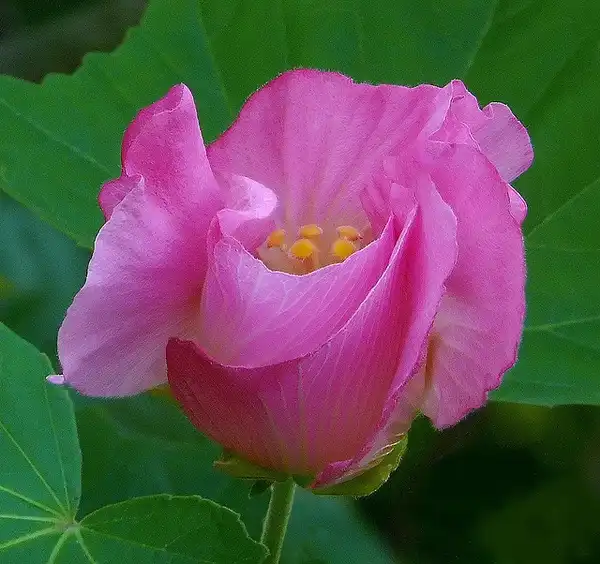
Hibiscus mutabilis Flowers

Hibiscus mutabilis: Flower Description

May open white and change color to deep pink

Hibiscus mutabilis: Flower Color

filter_vintage
Pink
filter_vintage
White

Hibiscus mutabilis: Flower Value To Gardener

Edible
Fragrant
Good Cut
Good Dried
Long Bloom Season
Long-lasting
Showy

Hibiscus mutabilis: Flower Bloom Time

Winter
Spring
Summer
Fall

Hibiscus mutabilis: Flower Petals

2-3 rays/petals
4-5 petals/rays
6 petals/rays
7 - 20 petals/rays
asymmetrical petals
Bracts
Colored Sepals
fused petals
more than 20 petals/rays
Tepals

Hibiscus mutabilis: Flower Shape

Bell
Cross
Crown
Cup
Dome
Funnel
Irregular
Lipped
Radial
Saucer
Star
Trumpet
Tubular
Urn
Wheel

Hibiscus mutabilis: Flower Size

1-3 inches
3-6 inches
< 1 inch
> 6 inches

Hibiscus mutabilis Leaves

Hibiscus mutabilis: Leaf Description

Bright green, lobed

Hibiscus mutabilis: Woody Plant Leaf Characteristics

Broadleaf Evergreen
Deciduous
Needled Evergreen
Semi-evergreen

Hibiscus mutabilis: Leaf Color

spa
Green

Hibiscus mutabilis: Leaf Type

Compound (Pinnately , Bipinnately, Palmately)
Fronds
Needles
Sheath
Simple

Hibiscus mutabilis: Leaf Margin

Crenate
Crenulate
Dentate
Denticulate
Doubly Crenate
Doubly Dentate
Doubly Serrate
Entire
Lobed
Serrate
Sinuate
Undulate

Hibiscus mutabilis: Hairs Present

No
Yes

Hibiscus mutabilis: Leaf Length

< 1 inch
1-3 inches
3-6 inches
> 6 inches

Hibiscus mutabilis: Leaf Width

< 1 inch
1-3 inches
3-6 inches
> 6 inches

Hibiscus mutabilis Attributes

Hibiscus mutabilis: Life Cycle

Annual
Biennial
Bulb
Perennial
Woody

Hibiscus mutabilis: Recommended Propagation Strategy

Division
Grafting
Layering
Leaf Cutting
Root Cutting
Seed
Stem Cutting

Hibiscus mutabilis Whole Plant Traits

Hibiscus mutabilis: Plant Type

Annual
Bulb
Carnivorous
Edible
Epiphyte
Fern
Ground Cover
Herb
Herbaceous Perennial
Houseplant
Mushroom
Native Plant
Ornamental Grasses and Sedges
Perennial
Poisonous
Rose
Shrub
Succulent
Tree
Turfgrass
Vegetable
Vine
Water Plant
Weed
Wildflower

Hibiscus mutabilis: Woody Plant Leaf Characteristics

Broadleaf Evergreen
Deciduous
Needled Evergreen
Semi-evergreen

Hibiscus mutabilis: Habit/Form

Arching
Ascending
Broad
Cascading
Climbing
Clumping
Columnar
Conical
Creeping
Dense
Erect
Horizontal
Irregular
Mounding
Multi-stemmed
Multi-trunked
Open
Oval
Prostrate
Pyramidal
Rounded
Spreading
Vase
Weeping

Hibiscus mutabilis: Growth Rate

Slow
Medium
Rapid

Hibiscus mutabilis: Maintenance

Low
Medium
High

Hibiscus mutabilis: Texture

Fine
Medium
Coarse

Hibiscus mutabilis Cultural Conditions

Hibiscus mutabilis: Light

Dappled Sunlight (Shade through upper canopy all day)
Deep shade (Less than 2 hours to no direct sunlight)
Full sun (6 or more hours of direct sunlight a day)
Partial Shade (Direct sunlight only part of the day, 2-6 hours)

Hibiscus mutabilis: Soil Drainage

Frequent Standing Water
Good Drainage
Moist
Occasional Flooding
Occasionally Dry
Occasionally Wet
Very Dry

Hibiscus mutabilis: Available Space To Plant

12 inches-3 feet
12-24 feet
24-60 feet
3 feet-6 feet
6-feet-12 feet
Less than 12 inches
more than 60 feet

Hibiscus mutabilis: NC Region

Coastal
Mountains
Piedmont

Hibiscus mutabilis: USDA Plant Hardiness Zone

thermostat
7a
thermostat
7b
thermostat
8a
thermostat
8b
thermostat
9a
thermostat
9b

Hibiscus mutabilis: Soil Texture

Clay
High Organic Matter
Loam (Silt)
Sand
Shallow Rocky

Hibiscus mutabilis Stem

Hibiscus mutabilis: Stem Is Aromatic

No
Yes

Hibiscus mutabilis Landscape

Hibiscus mutabilis: Landscape Theme

Asian Garden
Butterfly Garden
Children's Garden
Cottage Garden
Cutting Garden
Drought Tolerant Garden
Edible Garden
English Garden
Fairy Garden
Garden for the Blind
Native Garden
Nighttime Garden
Pollinator Garden
Rain Garden
Rock Garden
Shade Garden
Water Garden
Winter Garden

Hibiscus mutabilis: Design Feature

Accent
Barrier
Border
Flowering Tree
Foundation Planting
Hedge
Mass Planting
Screen/Privacy
Security
Shade Tree
Small groups
Small Tree
Specimen
Street Tree
Understory Tree

Hibiscus mutabilis: Attracts

Bats
Bees
Butterflies
Frogs
Hummingbirds
Moths
Pollinators
Predatory Insects
Reptiles
Small Mammals
Songbirds
Specialized Bees