Hibiscus sabdariffa: Country Or Region Of Origin
Africa
Phonetic Spelling:
Genus:Hibiscus
Species:sabdariffa
Family:Malvaceae
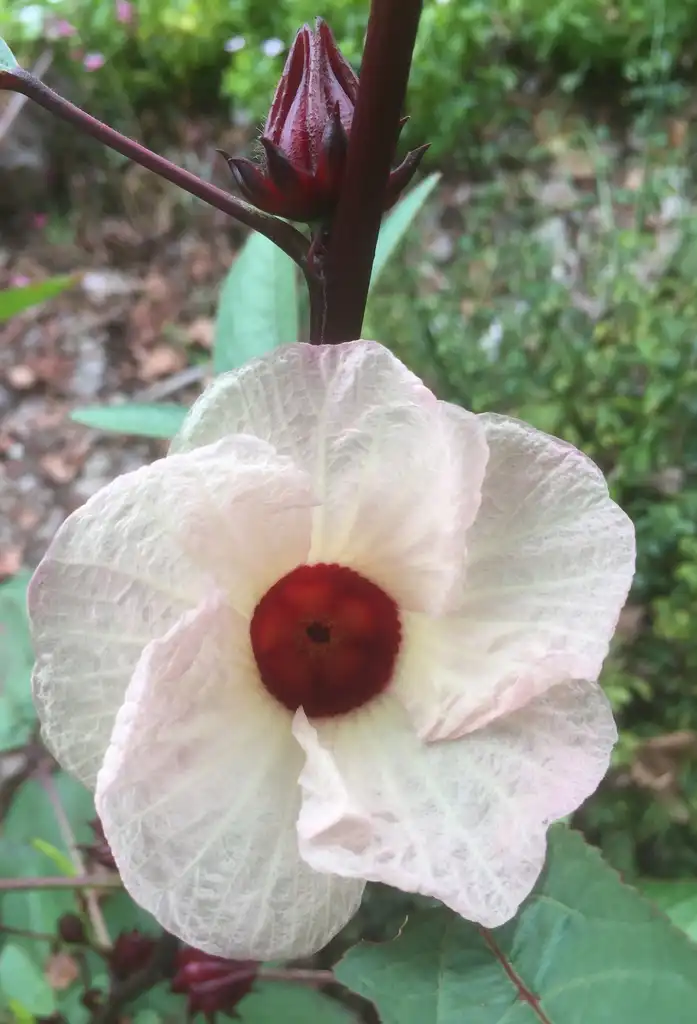
Roselle is a highly edible plant closely related to okra. In tropical and subtropical areas worldwide, its leaves are enjoyed as a vegetable, often likened to a spicy version of spinach. These leaves are commonly used in various culinary preparations, while the calyx and flowers serve as flavoring agents, color enhancers, and ingredients for teas. Additionally, the calyx is utilized in the production of wine, jam, juice, jelly, and syrup, and it can also be used as a spice.
The fiber extracted from Roselle stems, known as Rosella hemp, is robust and suitable for crafting sacks, twine, and cords.
The plant's growth cycle—whether it is treated as an annual or a perennial—depends on its location. In USDA Plant Hardiness Zones 8 to 11, Roselle can thrive as a herbaceous perennial, whereas in Zones 3 to 7, it grows rapidly as an annual. The blooming period typically occurs from mid to late October, with fruit maturation happening in November and December, influenced by the specific planting zones.
Roselle requires a lengthy growing season for its pods to fully mature. In cooler zones, the growing period may be insufficient for the plant to yield effectively, although these regions do offer enough warm months for growth.
As a short-day plant, Roselle needs at least 12 hours of darkness to encourage prolific flowering.
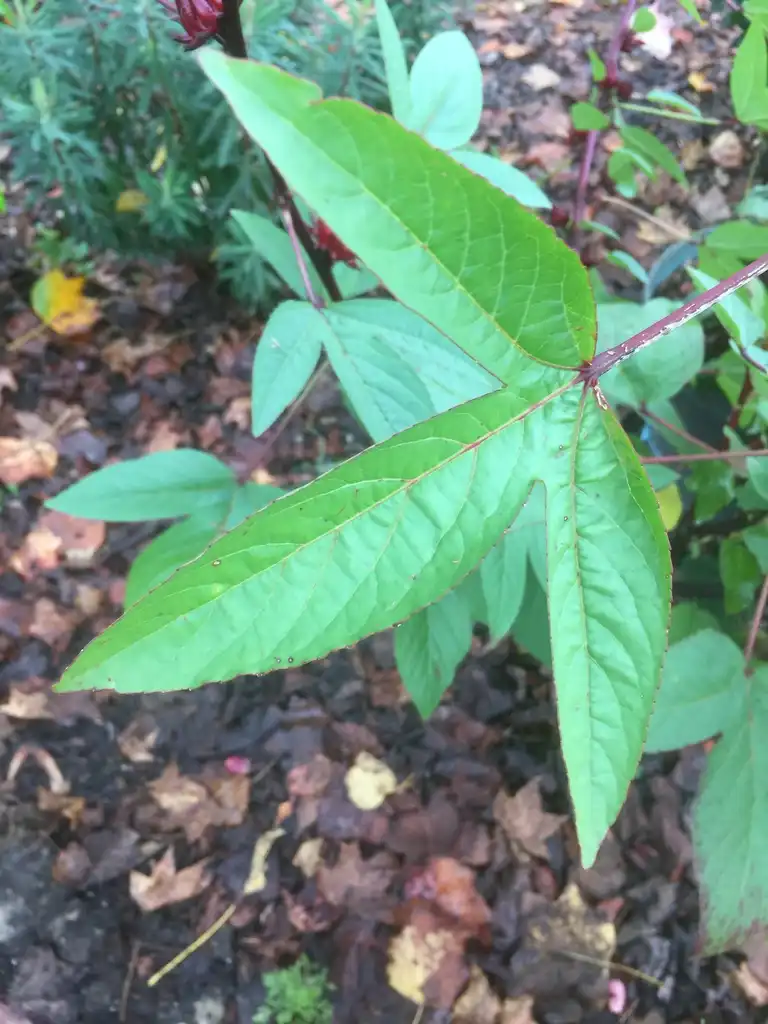
The young foliage initially appears as simple, single-lobed leaves, which develop into three to five lobed leaves as the plant matures.
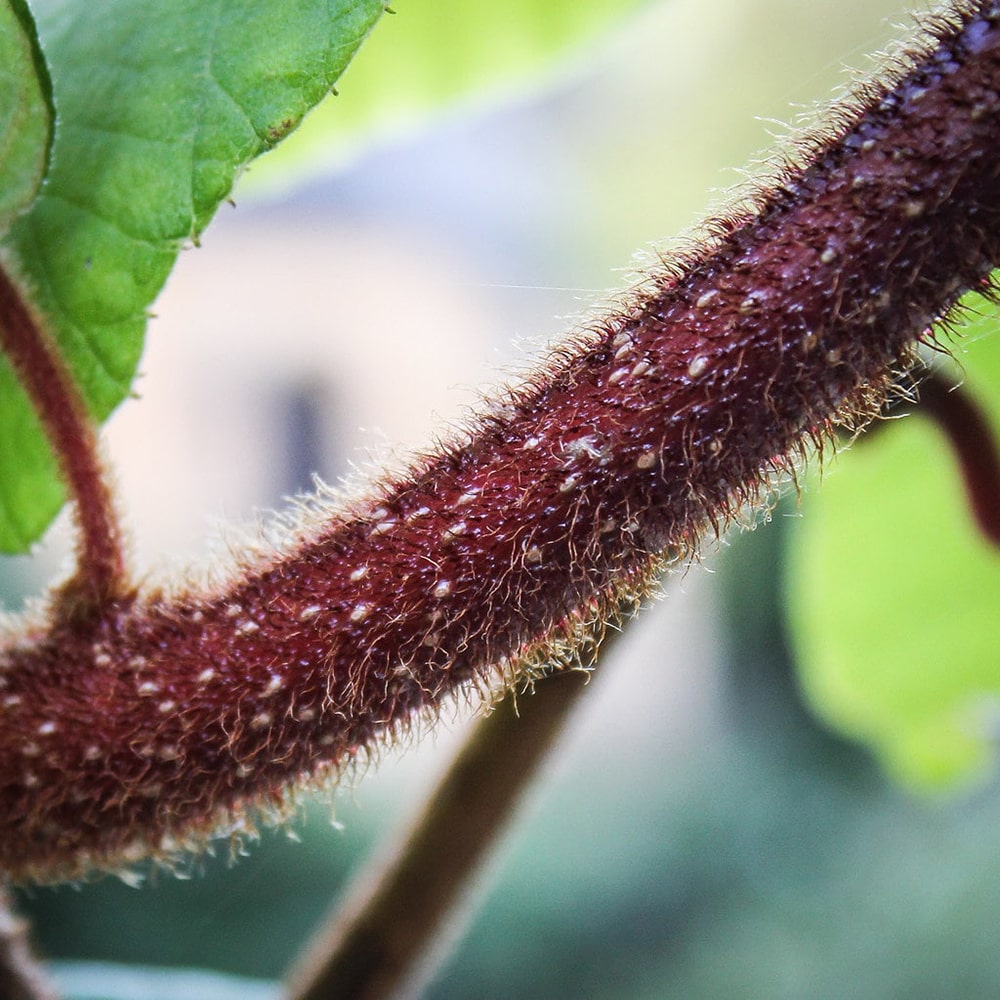
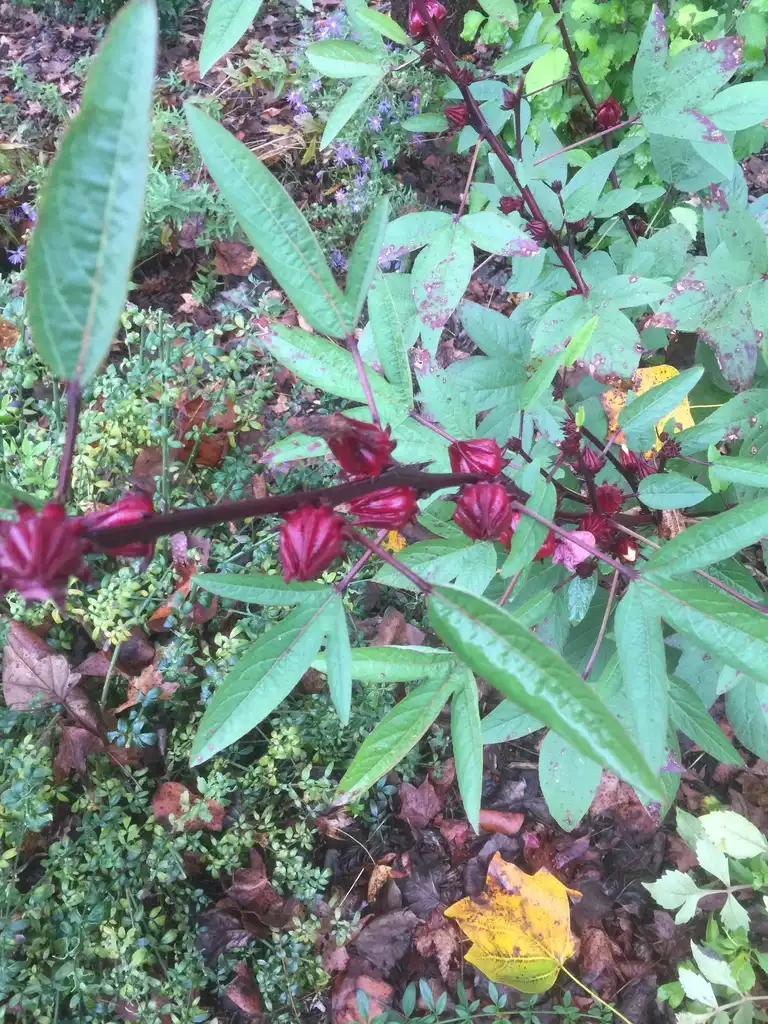
Roselle can be cultivated in containers or directly in the ground, and it germinates quickly. Its deep root system enhances its drought resistance, while its striking red stems and red-veined leaves add a vibrant touch to any garden.
In terms of care, Roselle requires full sun to thrive and will not grow well in shaded conditions.
Hibiscus sabdariffa Feature Summary
Hibiscus sabdariffa Image Gallery