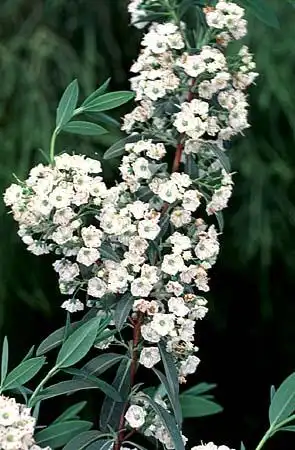
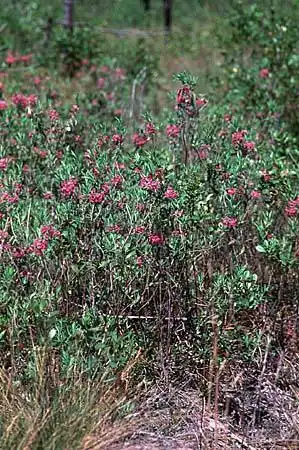
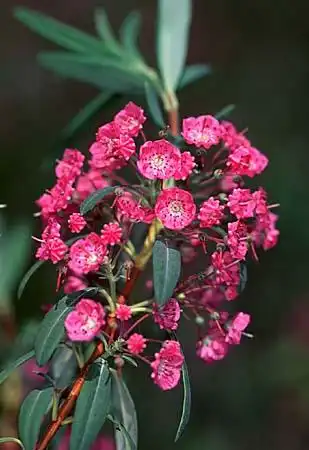
• Photo of Kalmia angustifolia var. carolina (Kalmia angustifolia var. carolinas)

Plant Profile: Kalmia angustifolia var. carolina

Names

Carolina Wicky, Lambkill, Sheep Laurel, Southern Sheepkill, Swamp Laurel, Wicky

  • Photo of Kalmia angustifolia var. carolina (Kalmia angustifolia var. carolinas)

Phonetic Spelling:KAL-mee-ah an-gus-tih-FOH-lee-ah kair-oh-lin-ee-AN-uh

Genus:Kalmia

Species:angustifolia

Family:Ericaceae

This small, compact, tufted evergreen shrub is indigenous to the southeastern United States, thriving in moist pinelands, swamps, and occasionally in rocky high-elevation areas. It can also be found in southeastern North Carolina. The leaves are simple and can be arranged oppositely or in whorls of three. The flowers, which are pinkish and form short lateral clusters, are saucer-shaped with five shallow lobes, and initially, the ten anthers are nestled in small pockets. The fruit produced is a capsule.

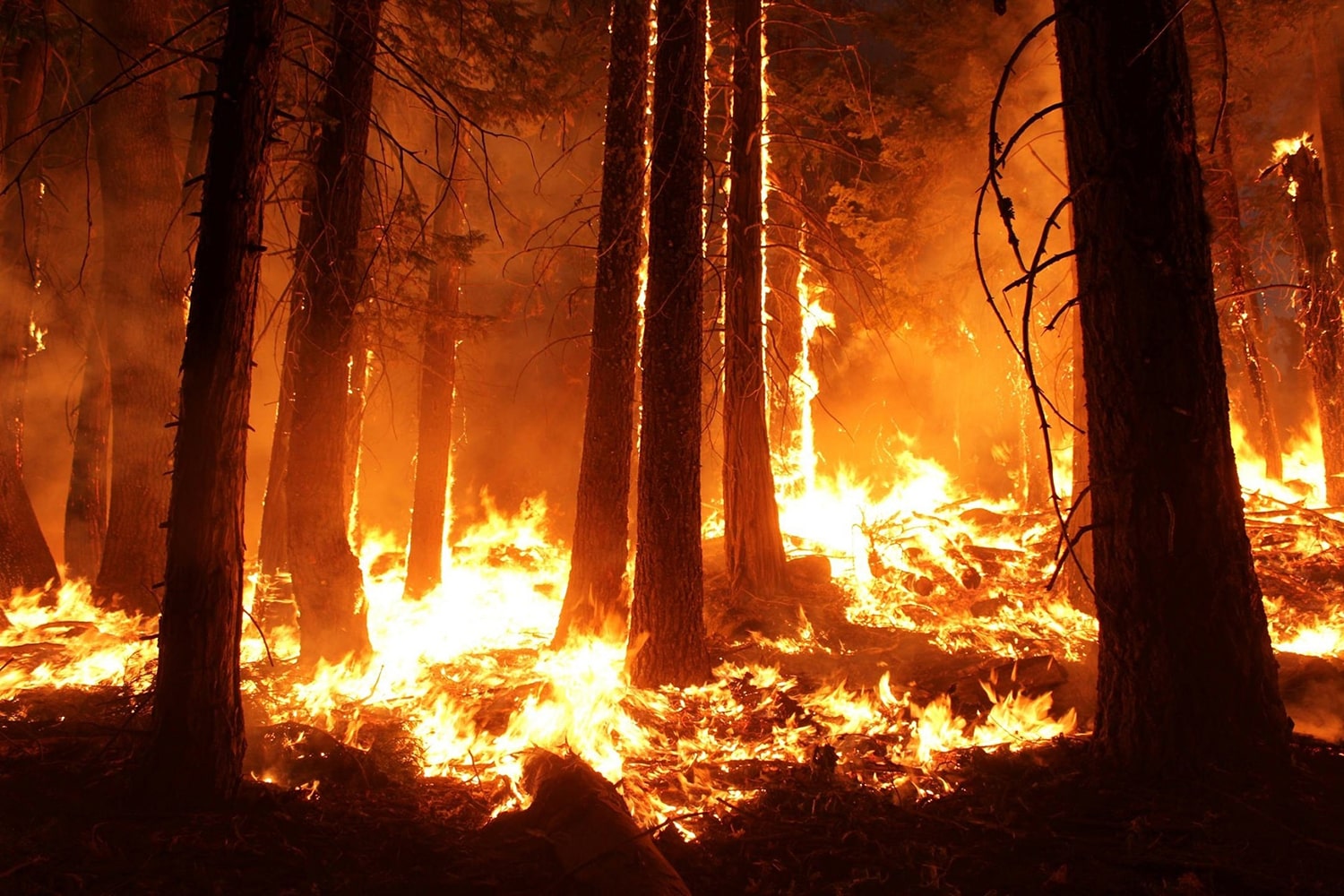
Fire Risk: This plant is highly flammable and should not be planted within the defensible space around your home. It is advisable to choose plants with a low flammability rating for areas closest to your residence.

For further details on Kalmia angustifolia, please refer to additional resources.

Kalmia angustifolia var. carolina Feature Summary

Kalmia angustifolia var. carolina Image Gallery

Tags

#evergreen
#poisonous
#full sun tolerant
#shrub
#pink flowers
#fire
#high flammability
#NC native
#food source nectar
#food source pollen
#Piedmont Mountains FAC
#food source hard mast fruit
#audubon

Similar Plants

Kalmia angustifolia var. carolina Feature Summary

Attributes
high flammability
Fruit
Fruits are available between September and October.
Flowers
0.5 in. rose-pink to purplish crimson flowers in spring and early summer (April - May). Grows in short lateral clusters, each saucer-shaped with 5 shallow lobes, the 10 anthers at first stuck in small pockets.
Pink
Purple/Lavender
Red/Burgundy
Spring
Summer
4-5 petals/rays
fused petals
< 1 inch
Leaves
Opposite to whorled simple leaves; blue-green color; 1-2.5 in. long.
Green
Blue
Opposite
Whorled
1-3 inches
Poisonous to Humans
HIGHLY TOXIC, MAY BE FATAL IF EATEN! Salivation, watering of eyes and nose, slow pulse, nausea, vomiting, sweating, abdominal pain, headache, tingling of skin, lack of coordination, convulsions, and paralysis.
Andromedotoxin, a resinoid; arbutin, a glycoside
Seeds
Leaves
Stems
Sap/Juice
Flowers
Bark
Fruits
Roots
Whole Plant Traits
Shrub
Native Plant
Poisonous
Rounded
Spreading
Medium
Cultural Conditions
Full sun (6 or more hours of direct sunlight a day)
Partial Shade (Direct sunlight only part of the day, 2-6 hours)
Acid (<6.0)
Good Drainage
Occasionally Wet
Coastal
Mountains
Landscape
Woodland
Naturalized Area
Butterflies
Pollinators
Songbirds
Hummingbirds
Poisonous to Humans

Kalmia angustifolia var. carolina Attributes

Kalmia angustifolia var. carolina: Country Or Region Of Origin

South East U.S.A
Kalmia angustifolia var. carolina: Life Cycle

Annual
Biennial
Bulb
Perennial
Woody

Kalmia angustifolia var. carolina: Fire Risk Rating

extreme flammability
high flammability
low flammability
medium flammability

Kalmia angustifolia var. carolina Fruit

Kalmia angustifolia var. carolina: Fruit Description

Fruits are available between September and October.

Kalmia angustifolia var. carolina: Fruit Type

Achene
Aggregate
Berry
Capsule
Caryopsis
Drupe
Follicle
Legume
Nut
Pome
Samara
Schizocarp
Siliqua

Kalmia angustifolia var. carolina: Display/Harvest Time

Fall
Spring
Summer
Winter

Kalmia angustifolia var. carolina Flowers

Kalmia angustifolia var. carolina: Flower Description

0.5 in. rose-pink to purplish crimson flowers in spring and early summer (April - May). Grows in short lateral clusters, each saucer-shaped with 5 shallow lobes, the 10 anthers at first stuck in small pockets.

Kalmia angustifolia var. carolina: Flower Color

filter_vintage
Pink
filter_vintage
Purple/Lavender
filter_vintage
Red/Burgundy

Kalmia angustifolia var. carolina: Flower Value To Gardener

Edible
Fragrant
Good Cut
Good Dried
Long Bloom Season
Long-lasting
Showy

Kalmia angustifolia var. carolina: Flower Bloom Time

Winter
Spring
Summer
Fall

Kalmia angustifolia var. carolina: Flower Petals

2-3 rays/petals
4-5 petals/rays
6 petals/rays
7 - 20 petals/rays
asymmetrical petals
Bracts
Colored Sepals
fused petals
more than 20 petals/rays
Tepals

Kalmia angustifolia var. carolina: Flower Shape

Bell
Cross
Crown
Cup
Dome
Funnel
Irregular
Lipped
Radial
Saucer
Star
Trumpet
Tubular
Urn
Wheel

Kalmia angustifolia var. carolina: Flower Size

1-3 inches
3-6 inches
< 1 inch
> 6 inches

Kalmia angustifolia var. carolina Leaves

Kalmia angustifolia var. carolina: Leaf Description

Opposite to whorled simple leaves; blue-green color; 1-2.5 in. long.

Kalmia angustifolia var. carolina: Woody Plant Leaf Characteristics

Broadleaf Evergreen
Deciduous
Needled Evergreen
Semi-evergreen

Kalmia angustifolia var. carolina: Leaf Color

spa
Blue
spa
Green

Kalmia angustifolia var. carolina: Leaf Type

Compound (Pinnately , Bipinnately, Palmately)
Fronds
Needles
Sheath
Simple

Kalmia angustifolia var. carolina: Leaf Arrangement

Alternate
Opposite
Other/more complex
Rosulate
Whorled

Kalmia angustifolia var. carolina: Hairs Present

No
Yes

Kalmia angustifolia var. carolina: Leaf Length

< 1 inch
1-3 inches
3-6 inches
> 6 inches

Kalmia angustifolia var. carolina Poisonous to Humans

Kalmia angustifolia var. carolina: Poison Symptoms

HIGHLY TOXIC, MAY BE FATAL IF EATEN! Salivation, watering of eyes and nose, slow pulse, nausea, vomiting, sweating, abdominal pain, headache, tingling of skin, lack of coordination, convulsions, and paralysis.

Kalmia angustifolia var. carolina: Poison Toxic Principle

Andromedotoxin, a resinoid; arbutin, a glycoside

Kalmia angustifolia var. carolina: Poison Severity

High
Low
Medium

Kalmia angustifolia var. carolina: Causes Contact Dermatitis

No
Yes

Kalmia angustifolia var. carolina: Poison Part

Bark
Flowers
Fruits
Leaves
Roots
Sap/Juice
Seeds
Stems

Kalmia angustifolia var. carolina Whole Plant Traits

Kalmia angustifolia var. carolina: Plant Type

Annual
Bulb
Carnivorous
Edible
Epiphyte
Fern
Ground Cover
Herb
Herbaceous Perennial
Houseplant
Mushroom
Native Plant
Ornamental Grasses and Sedges
Perennial
Poisonous
Rose
Shrub
Succulent
Tree
Turfgrass
Vegetable
Vine
Water Plant
Weed
Wildflower

Kalmia angustifolia var. carolina: Woody Plant Leaf Characteristics

Broadleaf Evergreen
Deciduous
Needled Evergreen
Semi-evergreen

Kalmia angustifolia var. carolina: Habit/Form

Arching
Ascending
Broad
Cascading
Climbing
Clumping
Columnar
Conical
Creeping
Dense
Erect
Horizontal
Irregular
Mounding
Multi-stemmed
Multi-trunked
Open
Oval
Prostrate
Pyramidal
Rounded
Spreading
Vase
Weeping

Kalmia angustifolia var. carolina: Texture

Fine
Medium
Coarse

Kalmia angustifolia var. carolina Cultural Conditions

Kalmia angustifolia var. carolina: Light

Dappled Sunlight (Shade through upper canopy all day)
Deep shade (Less than 2 hours to no direct sunlight)
Full sun (6 or more hours of direct sunlight a day)
Partial Shade (Direct sunlight only part of the day, 2-6 hours)

Kalmia angustifolia var. carolina: Soil pH

Acid (<6.0)
Alkaline (>8.0)
Neutral (6.0-8.0)

Kalmia angustifolia var. carolina: Soil Drainage

Frequent Standing Water
Good Drainage
Moist
Occasional Flooding
Occasionally Dry
Occasionally Wet
Very Dry


Kalmia angustifolia var. carolina: Available Space To Plant

12 inches-3 feet
12-24 feet
24-60 feet
3 feet-6 feet
6-feet-12 feet
Less than 12 inches
more than 60 feet

Kalmia angustifolia var. carolina: NC Region

Coastal
Mountains
Piedmont

Kalmia angustifolia var. carolina: USDA Plant Hardiness Zone

thermostat
5a
thermostat
5b
thermostat
6a
thermostat
6b
thermostat
7a
thermostat
7b
thermostat
8a
thermostat
8b

Kalmia angustifolia var. carolina Stem

Kalmia angustifolia var. carolina: Stem Is Aromatic

No
Yes

Kalmia angustifolia var. carolina Landscape

Kalmia angustifolia var. carolina: Landscape Location

Coastal
Container
Hanging Baskets
Houseplants
Lawn
Meadow
Naturalized Area
Near Septic
Patio
Pond
Pool/Hardscape
Recreational Play Area
Riparian
Rock Wall
Slope/Bank
Small Space
Vertical Spaces
Walkways
Woodland

Kalmia angustifolia var. carolina: Attracts

Bats
Bees
Butterflies
Frogs
Hummingbirds
Moths
Pollinators
Predatory Insects
Reptiles
Small Mammals
Songbirds
Specialized Bees

Kalmia angustifolia var. carolina: Problems

Allelopathic
Contact Dermatitis
Frequent Disease Problems
Frequent Insect Problems
Invasive Species
Malodorous
Messy
Poisonous to Humans
Problem for Cats
Problem for Children
Problem for Dogs
Problem for Horses
Short-lived
Spines/Thorns
Weak Wood
Weedy