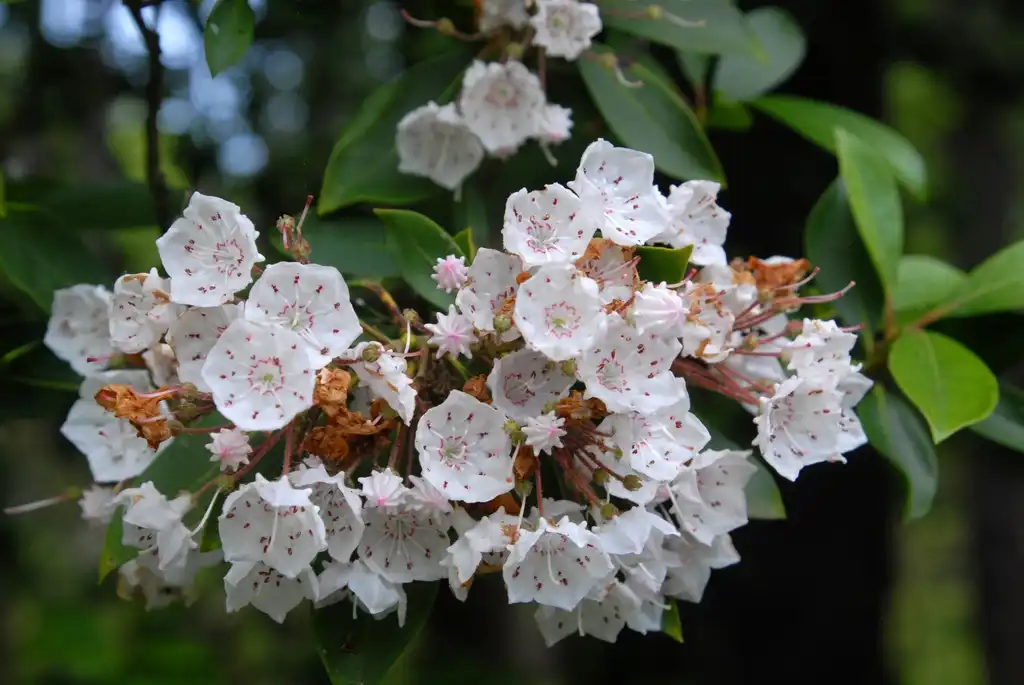
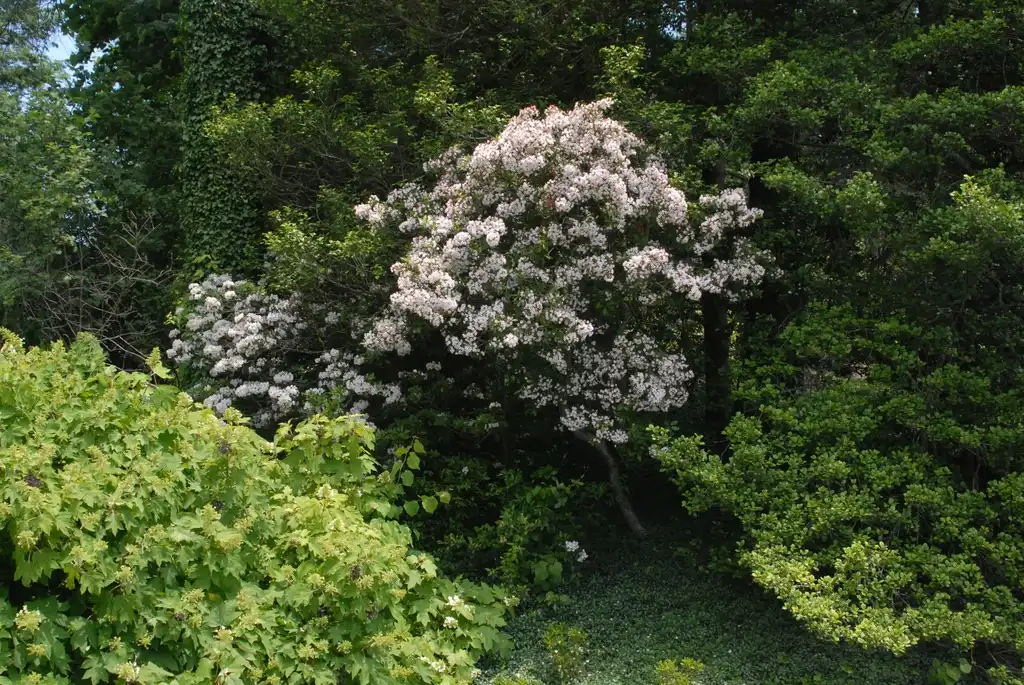
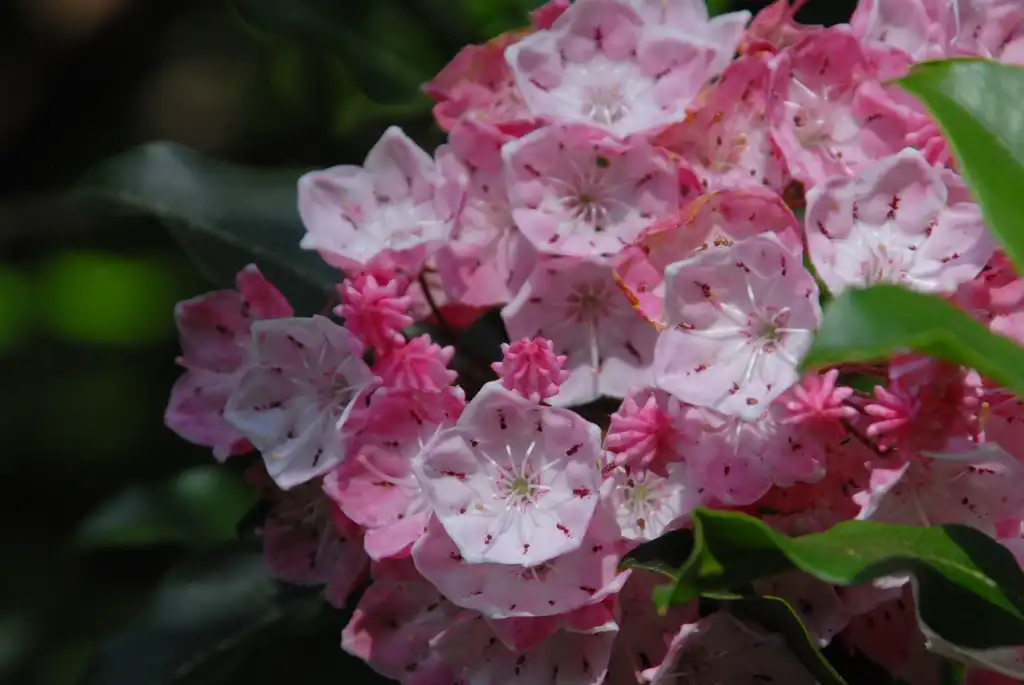
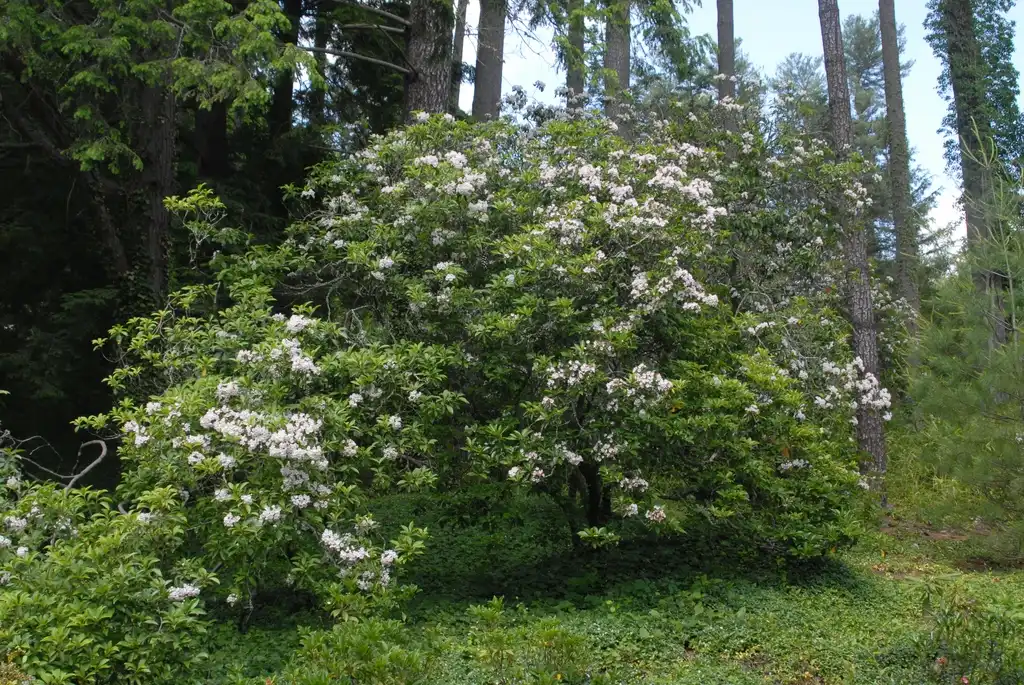
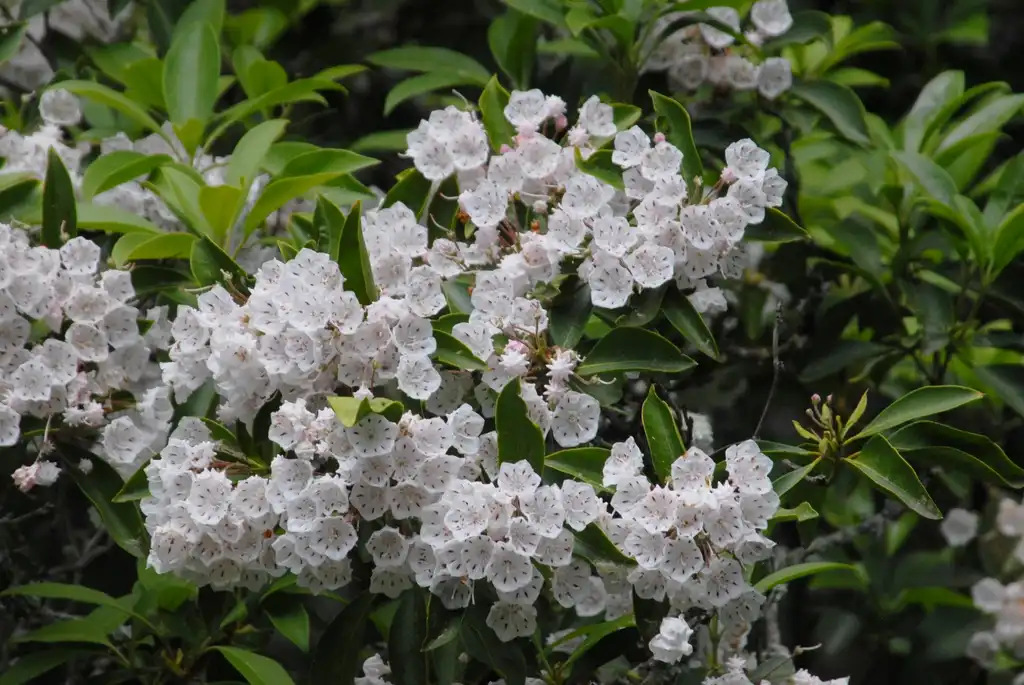
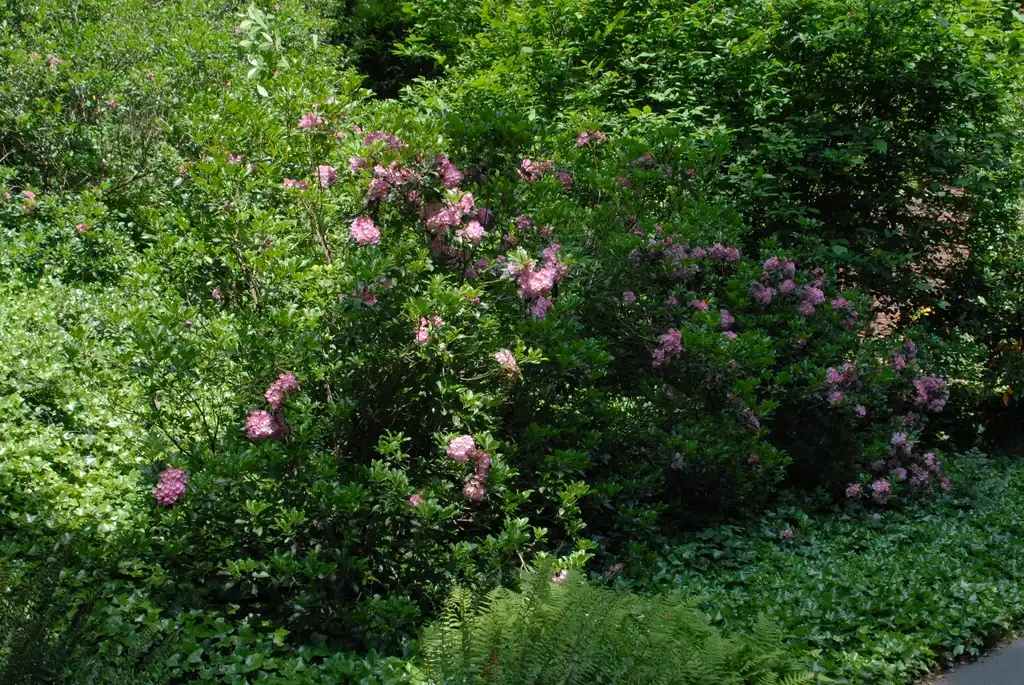
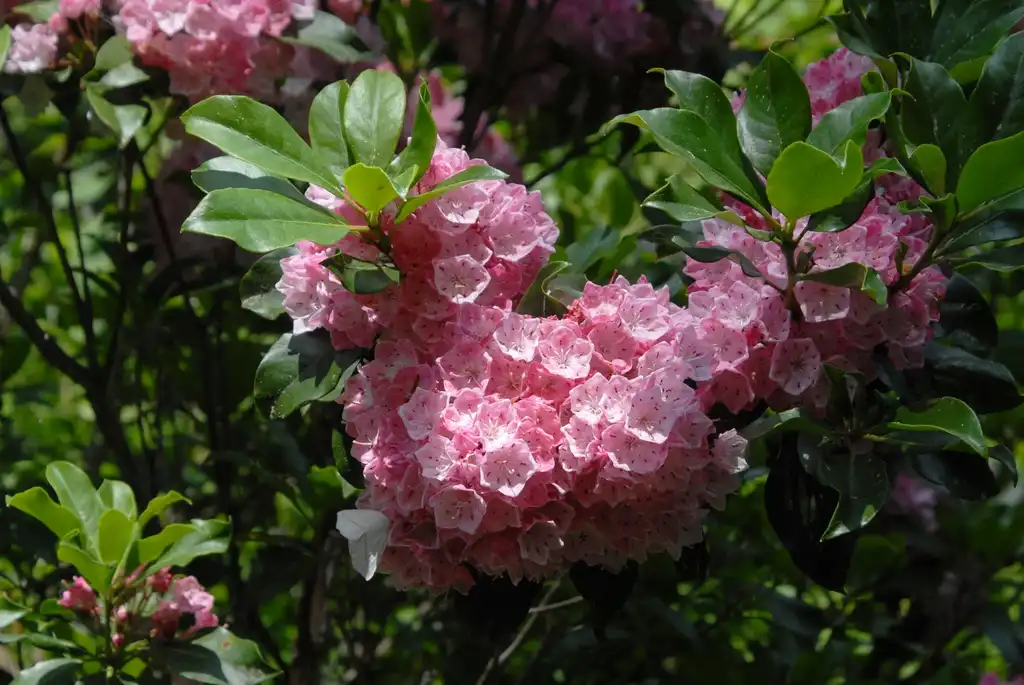
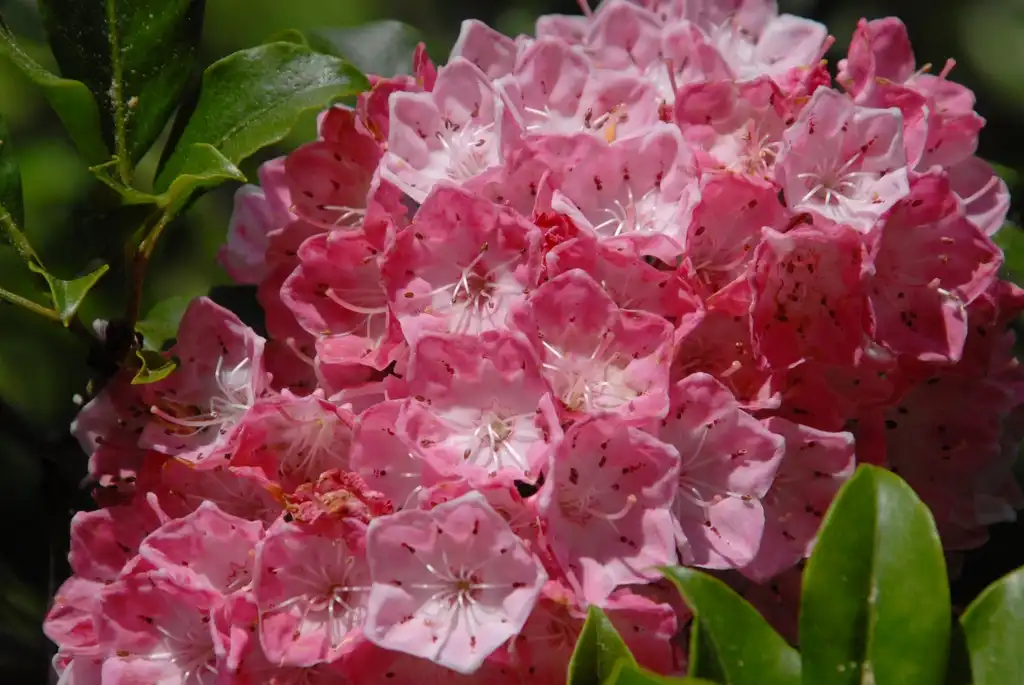
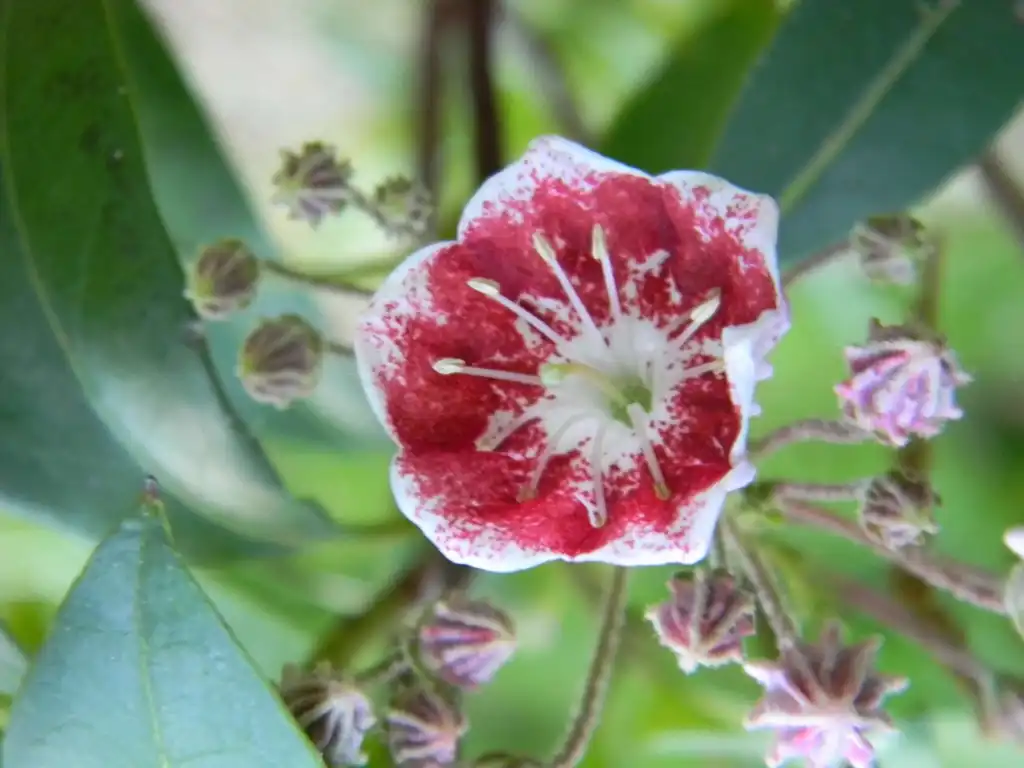
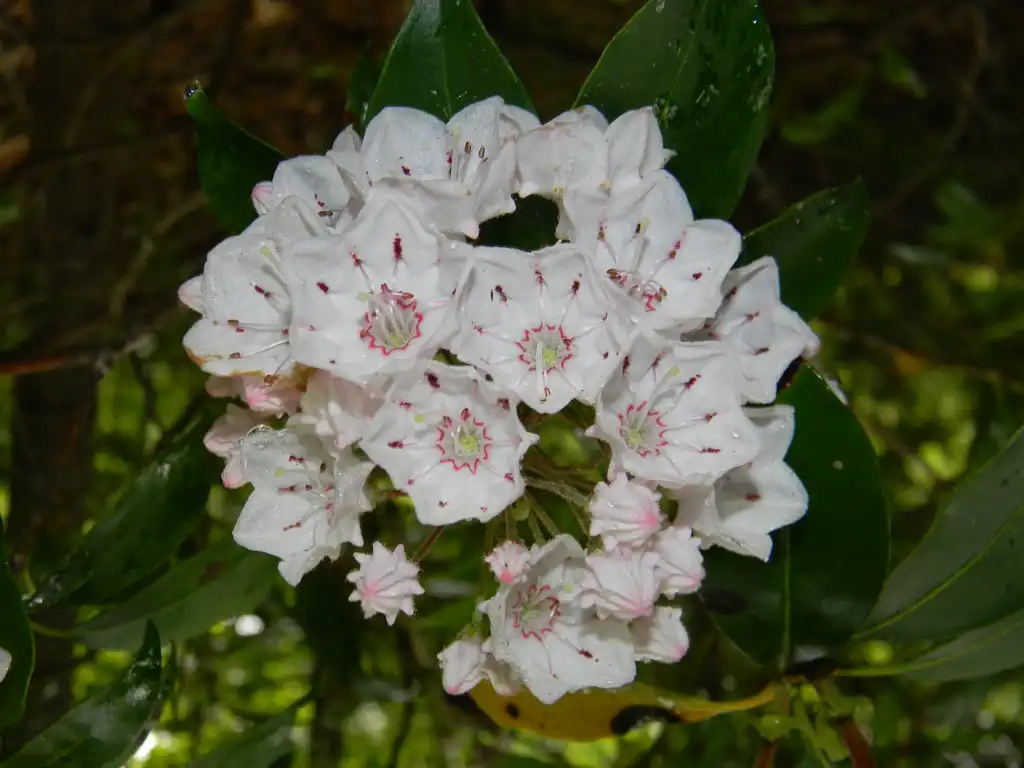
• Photo of Kalmia latifolia (Kalmia latifolias)

Plant Profile: Kalmia latifolia

Taxonomy: Kalmia latifolia

Names

Calico Bush, Ivy Bush, Laurel, Mountain Ivy, Mountain Laurel, Sheepkill, Spoonwood

  • Photo of Kalmia latifolia (Kalmia latifolias)

Phonetic Spelling:KAL-mee-ah lah-tih-FOH-lee-ah

Genus:Kalmia

Species:latifolia

Family:Ericaceae

Kalmia latifolia, commonly known as Mountain Laurel, is a robust, broadleaf evergreen shrub or small tree indigenous to Eastern North America, ranging from New England down to southern Indiana, Louisiana, and the Florida panhandle. It thrives in diverse environments, including open rocky or sandy woodlands, cool meadows, mountain slopes, acidic forests, and the edges of woodlands. This plant typically reaches heights of 6 to 10 feet and is celebrated for its stunning spring blooms and attractive foliage throughout the year.

In its natural growth form, Mountain Laurel usually appears as a dense, rounded shrub, but as it matures, it can develop twisted branches. It flowers from late spring to early summer, with buds, fruit, and inflorescences visible year-round. The flowers feature touch-sensitive anthers housed in pockets within the corolla, which release pollen when triggered. Although it generally grows as a shrub, in certain conditions—especially on slopes in the Appalachian Mountains—it can occasionally reach heights of up to 32 feet.

For optimal growth, Mountain Laurel prefers cool, moist, rich, acidic, humusy, and well-drained soils, ideally in partial shade. Applying mulch helps retain moisture and keeps the root zone cool. While this plant can tolerate a range of light conditions from full sun to full shade, it thrives best in partial shade, receiving morning sun with shade in the early to mid-afternoon. To enhance drainage, consider planting it in raised beds. It does not perform well in heavy clay or overly wet soils. This species has a slow growth rate and is prone to various pests and diseases. It is advisable to remove spent flower clusters promptly after blooming and to prune lightly post-bloom to encourage bushier growth.

The genus name was given by Linnaeus in honor of Swedish botanist Peter Kalm (1716-1779), who studied plant life in parts of eastern North America between 1747 and 1751. Kalmia latifolia is recognized as the state flower of Connecticut and comes in numerous cultivars, including heat-tolerant varieties and dwarf forms.

**WARNING: HIGHLY TOXIC; INGESTION MAY BE FATAL!**

**Fire Risk:** This plant has a high flammability rating and should not be planted within the defensible space around your home. Opt for plants with low flammability ratings for areas closest to your residence.

**Insect and Disease Issues:** Mountain Laurel is vulnerable to leaf spots and blights, as well as pests such as borers, scale, whiteflies, and lace bugs.

**Quick Identification Tips:**

Kalmia latifolia Feature Summary

Kalmia latifolia Image Gallery

Tags

#contorted trunk
#hummingbirds
#evergreen
#poisonous
#interesting bark
#wildlife plant
#showy
#native shrub
#cover plant
#dwarf
#playground
#cpp
#fire
#high flammability
#NC native
#children's garden
#native garden
#naturalizes
#pollinator plant
#fantz
#cover
#food source herbage
#food source nectar
#food source pollen
#bird friendly
#nectar plant late spring
#food source hard mast fruit
#mammals
#butterfly friendly
#nectar plant early summer
#nectar plant mid-spring
#Piedmont Mountains FACU
#Coastal FACU
#problem for cats
#pollinator garden
#problem for dogs
#problem for horses
#audubon

Similar Plants

Kalmia latifolia is often confused with:

Kalmia latifolia Feature Summary

Attributes
open rocky or sandy woods, cool meadows, balds, mountain slopes
It provides winter cover. Hummingbirds, butterflies and other pollinators are attracted to the flowers. Although the foilage is toxic to domestic livestock, white-tailed deer browse the leaves and twigs during the winter and early spring.
Wildlife Food Source
high flammability
Fruit
Plant produces 5-valved, dihiscent capsules (3/16") that are non-showy and brown in color that persist into winter. Fruits are available from September to October.
Brown/Copper
< 1 inch
Flowers
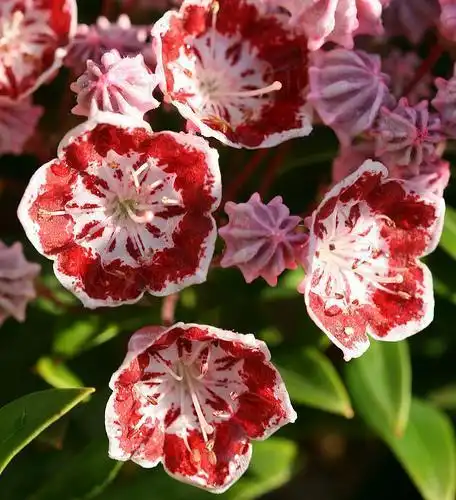
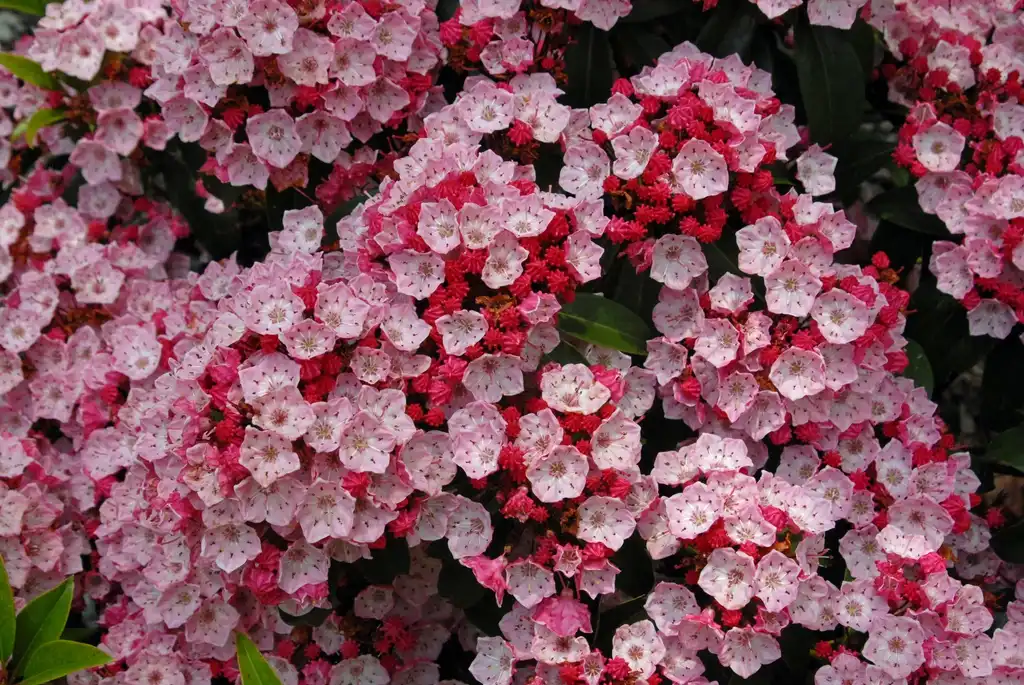
Flowers appear on the Mountain laurel in terminal clusters (corymbs 4" to 6” in diameter), typically covering the shrub in late April-July for several weeks with an often exceptional bloom. Each flower (to 1” across) is cup-shaped with five sides and ranges in color from rose to white with purple markings inside of the corolla. There are 5 calyx lobes that are corolla campanulate. 5 lobes are pleated with 10 anthers that emerge at bloom (stamens included) but are at first tucked in small pockets.
Pink
Purple/Lavender
White
Spring
Summer
4-5 petals/rays
< 1 inch
Leaves
The Mountain laurel has elliptic to lanceolate or oblanceolate, simple, alternate, acute to short acuminate, cuneate, coriacious, entire, leathery, and congested glossy evergreen leaves (2" to 5” long) which are dark green above and yellow-green beneath and reminiscent to the leaves of rhododendrons. The leaves are occasionally opposite or whorled. New growth is yellow-green, yellows with age and falls off.
Opposite
Alternate
Whorled
Elliptical
Lanceolate
Oblanceolate
3-6 inches
Glossy
Leathery
Showy
Long-lasting
< 1 inch
Bark
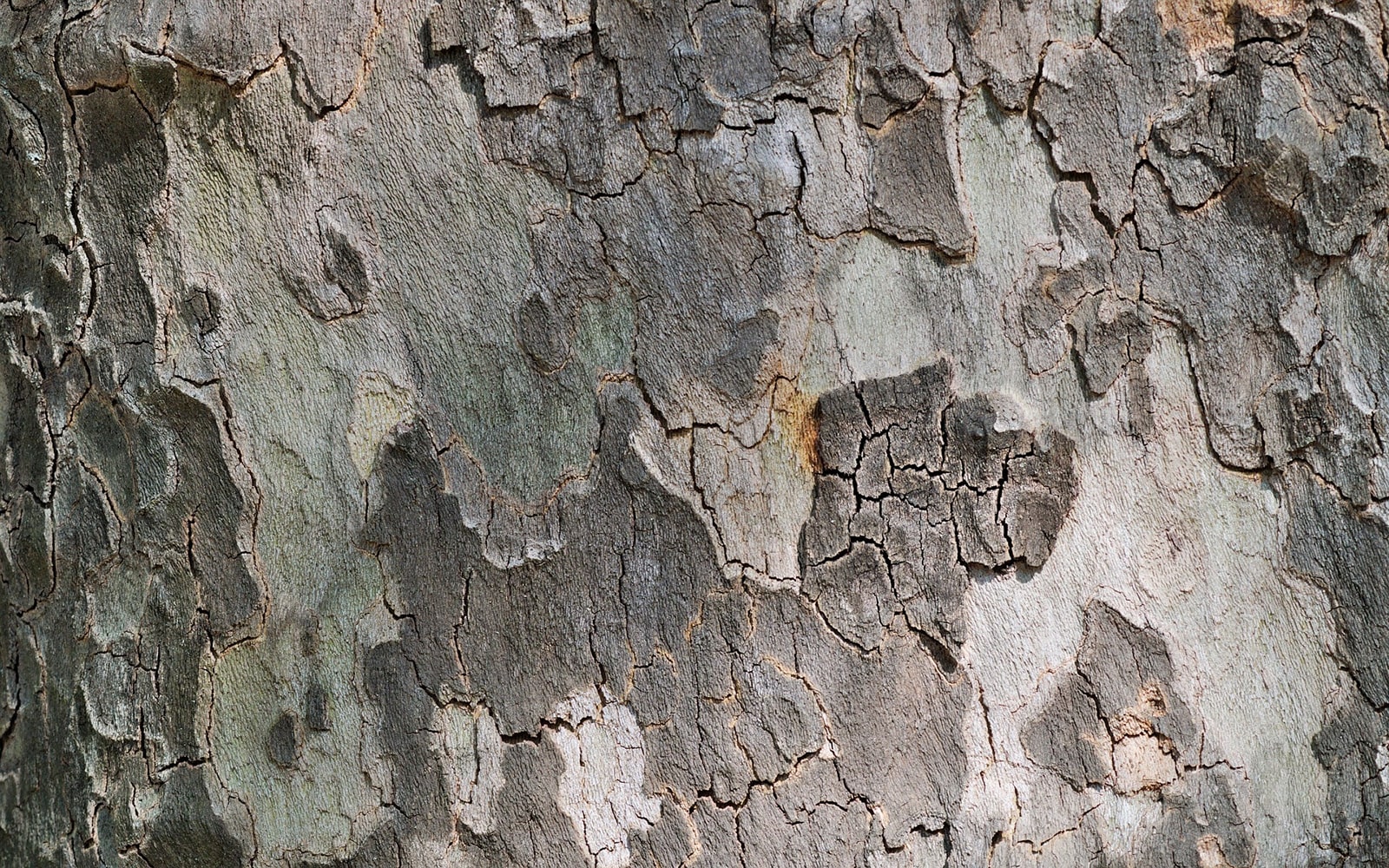
The bark is thin, smooth and dark red-brown in color in young trees. The barks shreds and splits as the tree ages. The trunk is contorted with cinnamon bark.
Stem
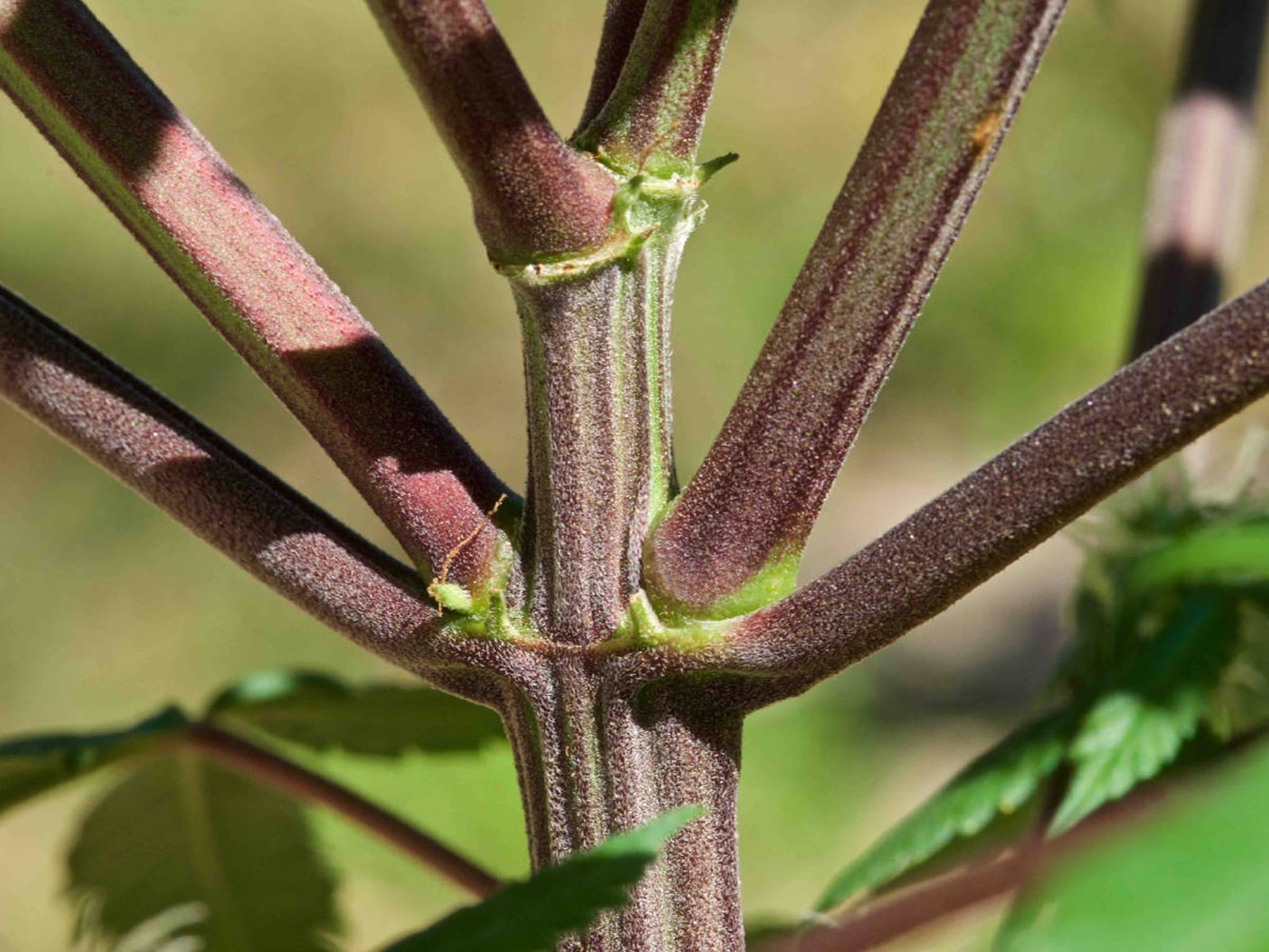
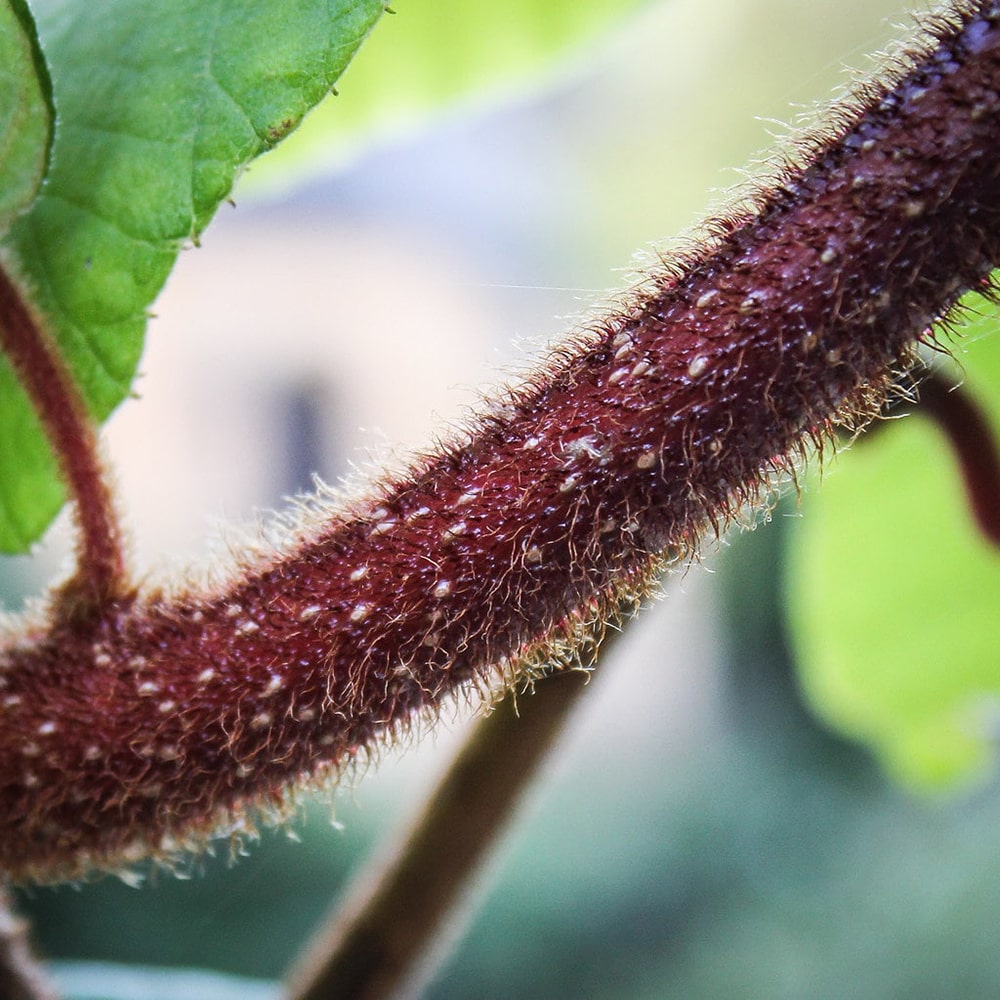
Stems are sympodial and initially bronze and sticky. As they mature, they turn turn red green or brown and become crooked and gnarly. Epidermis and gray-brown bark crack to reveal lighter colors in older stems. Pith is solid and light green.
Brown/Copper
Green
Red/Burgundy
Poisonous to Humans
Typically not very palatable to horses unless it is the only forage available, but sheep and goats may graze readily on the plant. The toxic principle interferes with normal skeletal muscle, cardiac muscle, and nerve function. Clinical effects typically occur within a few hours after ingestion, and can include acute digestive upset, excessive drooling, loss of appetite, frequent bowel movements/diarrhea, colic, sweating, abdominal pain, depression, weakness, loss of coordination, stupor, watering of eyes and nose, nausea, cardiac failure, vomiting, leg paralysis, weak heart rate, and recumbency for 2 or more days; at this point, improvement may be seen or the animal may become comatose and die.
Andromedotoxin, a resinoid; arbutin, a glycoside, Grayanotoxins
Seeds
Leaves
Stems
Flowers
Bark
Fruits
Roots
Whole Plant Traits
Shrub
Native Plant
Poisonous
Multi-stemmed
Rounded
Dense
Open
Medium
Cultural Conditions
Full sun (6 or more hours of direct sunlight a day)
Partial Shade (Direct sunlight only part of the day, 2-6 hours)
Dappled Sunlight (Shade through upper canopy all day)
Acid (<6.0)
Good Drainage
Moist
Occasionally Dry
12-24 feet
6-feet-12 feet
Coastal
Mountains
Piedmont
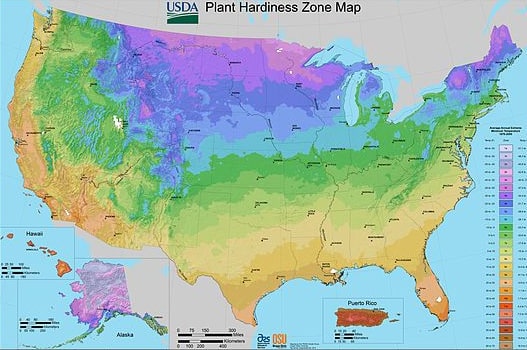
4a
4b
5b
5a
6a
6b
7a
7b
8b
8a
9a
9b
High Organic Matter
Loam (Silt)
Sand
Shallow Rocky
Landscape
Butterfly Garden
Pollinator Garden
Children's Garden
Native Garden
Shade Tree
Accent
Flowering Tree
Recreational Play Area
Woodland
Meadow
Naturalized Area
Coastal
Butterflies
Pollinators
Small Mammals
Hummingbirds
Poisonous to Humans
Problem for Cats
Problem for Dogs
Problem for Horses

Kalmia latifolia Attributes

Kalmia latifolia: Country Or Region Of Origin

Eastern U.S.A
Kalmia latifolia: Distribution

open rocky or sandy woods, cool meadows, balds, mountain slopes

Kalmia latifolia: Wildlife Value

It provides winter cover. Hummingbirds, butterflies and other pollinators are attracted to the flowers. Although the foilage is toxic to domestic livestock, white-tailed deer browse the leaves and twigs during the winter and early spring.

Kalmia latifolia: Particularly Resistant To (Insects/Diseases/Other Problems)

Highly resistant to damage from deer.

Kalmia latifolia: Life Cycle

Annual
Biennial
Bulb
Perennial
Woody

Kalmia latifolia: Play Value

Attractive Flowers
Attracts Pollinators
Buffer
Colorful
Defines Paths
Easy to Grow
Edible fruit
Fragrance
Pieces Used in Games
Screening
Shade
Sound
Textural
Wildlife Cover/Habitat
Wildlife Food Source
Wildlife Larval Host
Wildlife Nesting
Wind Break
Wind Shimmer

Kalmia latifolia: Fire Risk Rating

extreme flammability
high flammability
low flammability
medium flammability

Kalmia latifolia Fruit

Kalmia latifolia: Fruit Description

Plant produces 5-valved, dihiscent capsules (3/16") that are non-showy and brown in color that persist into winter. Fruits are available from September to October.

Kalmia latifolia: Fruit Type

Achene
Aggregate
Berry
Capsule
Caryopsis
Drupe
Follicle
Legume
Nut
Pome
Samara
Schizocarp
Siliqua

Kalmia latifolia: Fruit Color

grass
Brown/Copper

Kalmia latifolia: Display/Harvest Time

Fall
Spring
Summer
Winter

Kalmia latifolia: Fruit Length

< 1 inch
1-3 inches
> 3 inches

Kalmia latifolia: Fruit Width

< 1 inch
1-3 inches
> 3 inches

Kalmia latifolia Flowers

Kalmia latifolia: Flower Description

Flowers appear on the Mountain laurel in terminal clusters (corymbs 4" to 6” in diameter), typically covering the shrub in late April-July for several weeks with an often exceptional bloom. Each flower (to 1” across) is cup-shaped with five sides and ranges in color from rose to white with purple markings inside of the corolla. There are 5 calyx lobes that are corolla campanulate. 5 lobes are pleated with 10 anthers that emerge at bloom (stamens included) but are at first tucked in small pockets.

Kalmia latifolia: Flower Color

filter_vintage
Pink
filter_vintage
Purple/Lavender
filter_vintage
White

Kalmia latifolia: Flower Inflorescence

Catkin
Corymb
Cyme
Head
Insignificant
Panicle
Raceme
Solitary
Spadix
Spike
Umbel

Kalmia latifolia: Flower Value To Gardener

Edible
Fragrant
Good Cut
Good Dried
Long Bloom Season
Long-lasting
Showy

Kalmia latifolia: Flower Bloom Time

Winter
Spring
Summer
Fall

Kalmia latifolia: Flower Petals

2-3 rays/petals
4-5 petals/rays
6 petals/rays
7 - 20 petals/rays
asymmetrical petals
Bracts
Colored Sepals
fused petals
more than 20 petals/rays
Tepals

Kalmia latifolia: Flower Shape

Bell
Cross
Crown
Cup
Dome
Funnel
Irregular
Lipped
Radial
Saucer
Star
Trumpet
Tubular
Urn
Wheel

Kalmia latifolia: Flower Size

1-3 inches
3-6 inches
< 1 inch
> 6 inches

Kalmia latifolia Leaves

Kalmia latifolia: Leaf Description

The Mountain laurel has elliptic to lanceolate or oblanceolate, simple, alternate, acute to short acuminate, cuneate, coriacious, entire, leathery, and congested glossy evergreen leaves (2" to 5” long) which are dark green above and yellow-green beneath and reminiscent to the leaves of rhododendrons. The leaves are occasionally opposite or whorled. New growth is yellow-green, yellows with age and falls off.

Kalmia latifolia: Woody Plant Leaf Characteristics

Broadleaf Evergreen
Deciduous
Needled Evergreen
Semi-evergreen

Kalmia latifolia: Leaf Color

spa
Green

Kalmia latifolia: Leaf Type

Compound (Pinnately , Bipinnately, Palmately)
Fronds
Needles
Sheath
Simple

Kalmia latifolia: Leaf Arrangement

Alternate
Opposite
Other/more complex
Rosulate
Whorled

Kalmia latifolia: Leaf Shape

Acicular
Auriculate
Cordate
Cuneate
Deltoid
Elliptical
Filiform
Lanceolate
Linear
Oblanceolate
Oblong
Obovate
Obtuse
Orbicular
Ovate
Palmasect
Palmatifid
Peltate
Pinnatifid
Pinnatisect
Reniform
Rhomboidal
Spatulate
Subcordate
Subulate

Kalmia latifolia: Hairs Present

No
Yes

Kalmia latifolia: Leaf Length

< 1 inch
1-3 inches
3-6 inches
> 6 inches

Kalmia latifolia: Leaf Feel

Fleshy
Glossy
Leathery
Papery
Prickly
Rough
Rubbery
Slippery
Smooth
Soft
Velvety
Waxy

Kalmia latifolia: Leaf Value To Gardener

Edible
Fragrant
Good Cut
Good Dried
Long-lasting
Showy

Kalmia latifolia: Leaf Width

< 1 inch
1-3 inches
3-6 inches
> 6 inches

Kalmia latifolia Bark

Kalmia latifolia: Bark Description

The bark is thin, smooth and dark red-brown in color in young trees. The barks shreds and splits as the tree ages. The trunk is contorted with cinnamon bark.

Kalmia latifolia Stem

Kalmia latifolia: Stem Description

Stems are sympodial and initially bronze and sticky. As they mature, they turn turn red green or brown and become crooked and gnarly. Epidermis and gray-brown bark crack to reveal lighter colors in older stems. Pith is solid and light green.

Kalmia latifolia: Stem Color

grass
Brown/Copper
grass
Green
grass
Red/Burgundy

Kalmia latifolia: Stem Is Aromatic

No
Yes

Kalmia latifolia Poisonous to Humans

Kalmia latifolia: Poison Symptoms

Typically not very palatable to horses unless it is the only forage available, but sheep and goats may graze readily on the plant. The toxic principle interferes with normal skeletal muscle, cardiac muscle, and nerve function. Clinical effects typically occur within a few hours after ingestion, and can include acute digestive upset, excessive drooling, loss of appetite, frequent bowel movements/diarrhea, colic, sweating, abdominal pain, depression, weakness, loss of coordination, stupor, watering of eyes and nose, nausea, cardiac failure, vomiting, leg paralysis, weak heart rate, and recumbency for 2 or more days; at this point, improvement may be seen or the animal may become comatose and die.

Kalmia latifolia: Poison Toxic Principle

Andromedotoxin, a resinoid; arbutin, a glycoside, Grayanotoxins

Kalmia latifolia: Poison Severity

High
Low
Medium

Kalmia latifolia: Causes Contact Dermatitis

No
Yes

Kalmia latifolia: Poison Part

Bark
Flowers
Fruits
Leaves
Roots
Sap/Juice
Seeds
Stems

Kalmia latifolia Whole Plant Traits

Kalmia latifolia: Plant Type

Annual
Bulb
Carnivorous
Edible
Epiphyte
Fern
Ground Cover
Herb
Herbaceous Perennial
Houseplant
Mushroom
Native Plant
Ornamental Grasses and Sedges
Perennial
Poisonous
Rose
Shrub
Succulent
Tree
Turfgrass
Vegetable
Vine
Water Plant
Weed
Wildflower

Kalmia latifolia: Woody Plant Leaf Characteristics

Broadleaf Evergreen
Deciduous
Needled Evergreen
Semi-evergreen

Kalmia latifolia: Habit/Form

Arching
Ascending
Broad
Cascading
Climbing
Clumping
Columnar
Conical
Creeping
Dense
Erect
Horizontal
Irregular
Mounding
Multi-stemmed
Multi-trunked
Open
Oval
Prostrate
Pyramidal
Rounded
Spreading
Vase
Weeping

Kalmia latifolia: Texture

Fine
Medium
Coarse

Kalmia latifolia Cultural Conditions

Kalmia latifolia: Light

Dappled Sunlight (Shade through upper canopy all day)
Deep shade (Less than 2 hours to no direct sunlight)
Full sun (6 or more hours of direct sunlight a day)
Partial Shade (Direct sunlight only part of the day, 2-6 hours)

Kalmia latifolia: Soil pH

Acid (<6.0)
Alkaline (>8.0)
Neutral (6.0-8.0)

Kalmia latifolia: Soil Drainage

Frequent Standing Water
Good Drainage
Moist
Occasional Flooding
Occasionally Dry
Occasionally Wet
Very Dry

Kalmia latifolia: Available Space To Plant

12 inches-3 feet
12-24 feet
24-60 feet
3 feet-6 feet
6-feet-12 feet
Less than 12 inches
more than 60 feet

Kalmia latifolia: NC Region

Coastal
Mountains
Piedmont

Kalmia latifolia: USDA Plant Hardiness Zone

thermostat
4a
thermostat
4b
thermostat
5a
thermostat
5b
thermostat
6a
thermostat
6b
thermostat
7a
thermostat
7b
thermostat
8a
thermostat
8b
thermostat
9a
thermostat
9b

Kalmia latifolia: Soil Texture

Clay
High Organic Matter
Loam (Silt)
Sand
Shallow Rocky

Kalmia latifolia Landscape

Kalmia latifolia: Landscape Theme

Asian Garden
Butterfly Garden
Children's Garden
Cottage Garden
Cutting Garden
Drought Tolerant Garden
Edible Garden
English Garden
Fairy Garden
Garden for the Blind
Native Garden
Nighttime Garden
Pollinator Garden
Rain Garden
Rock Garden
Shade Garden
Water Garden
Winter Garden

Kalmia latifolia: Design Feature

Accent
Barrier
Border
Flowering Tree
Foundation Planting
Hedge
Mass Planting
Screen/Privacy
Security
Shade Tree
Small groups
Small Tree
Specimen
Street Tree
Understory Tree

Kalmia latifolia: Resistance To Challenges

Black Walnut
Compaction
Deer
Diseases
Drought
Dry Soil
Erosion
Fire
Foot Traffic
Heat
Heavy Shade
Humidity
Insect Pests
Pollution
Poor Soil
Rabbits
Salt
Slugs
Squirrels
Storm damage
Urban Conditions
Voles
Wet Soil
Wind

Kalmia latifolia: Landscape Location

Coastal
Container
Hanging Baskets
Houseplants
Lawn
Meadow
Naturalized Area
Near Septic
Patio
Pond
Pool/Hardscape
Recreational Play Area
Riparian
Rock Wall
Slope/Bank
Small Space
Vertical Spaces
Walkways
Woodland

Kalmia latifolia: Attracts

Bats
Bees
Butterflies
Frogs
Hummingbirds
Moths
Pollinators
Predatory Insects
Reptiles
Small Mammals
Songbirds
Specialized Bees

Kalmia latifolia: Problems

Allelopathic
Contact Dermatitis
Frequent Disease Problems
Frequent Insect Problems
Invasive Species
Malodorous
Messy
Poisonous to Humans
Problem for Cats
Problem for Children
Problem for Dogs
Problem for Horses
Short-lived
Spines/Thorns
Weak Wood
Weedy