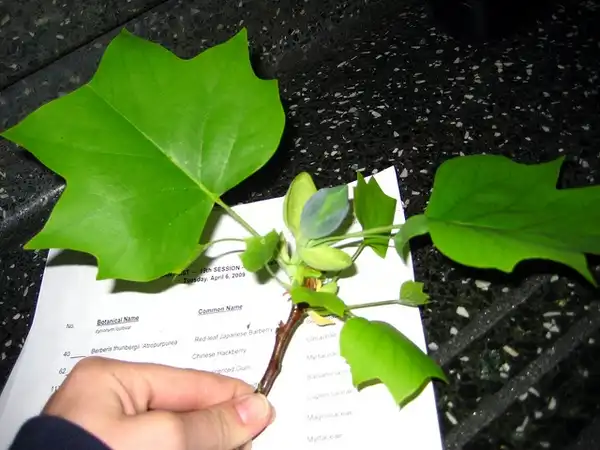
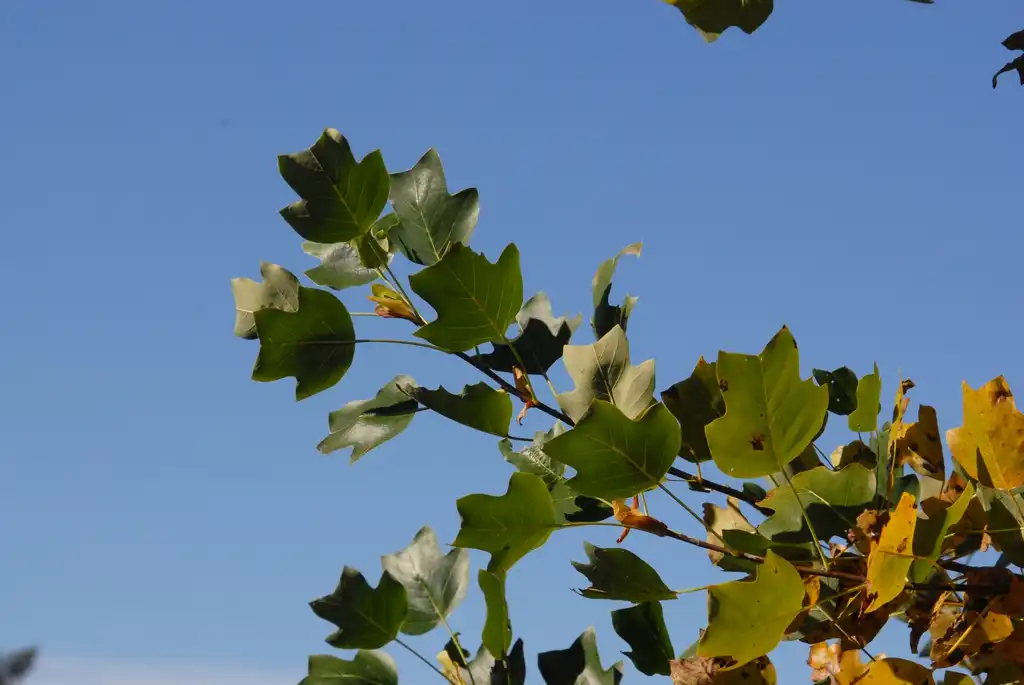
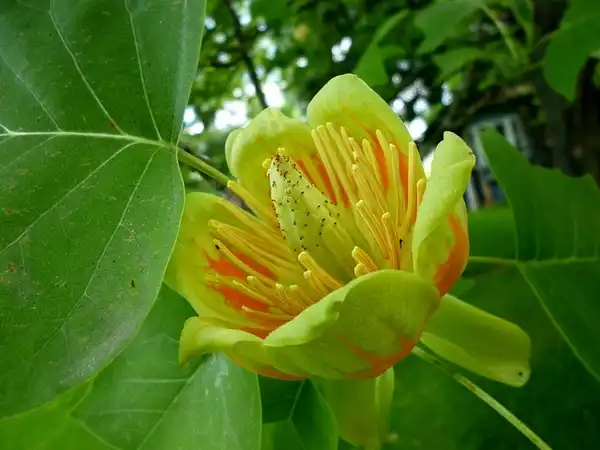
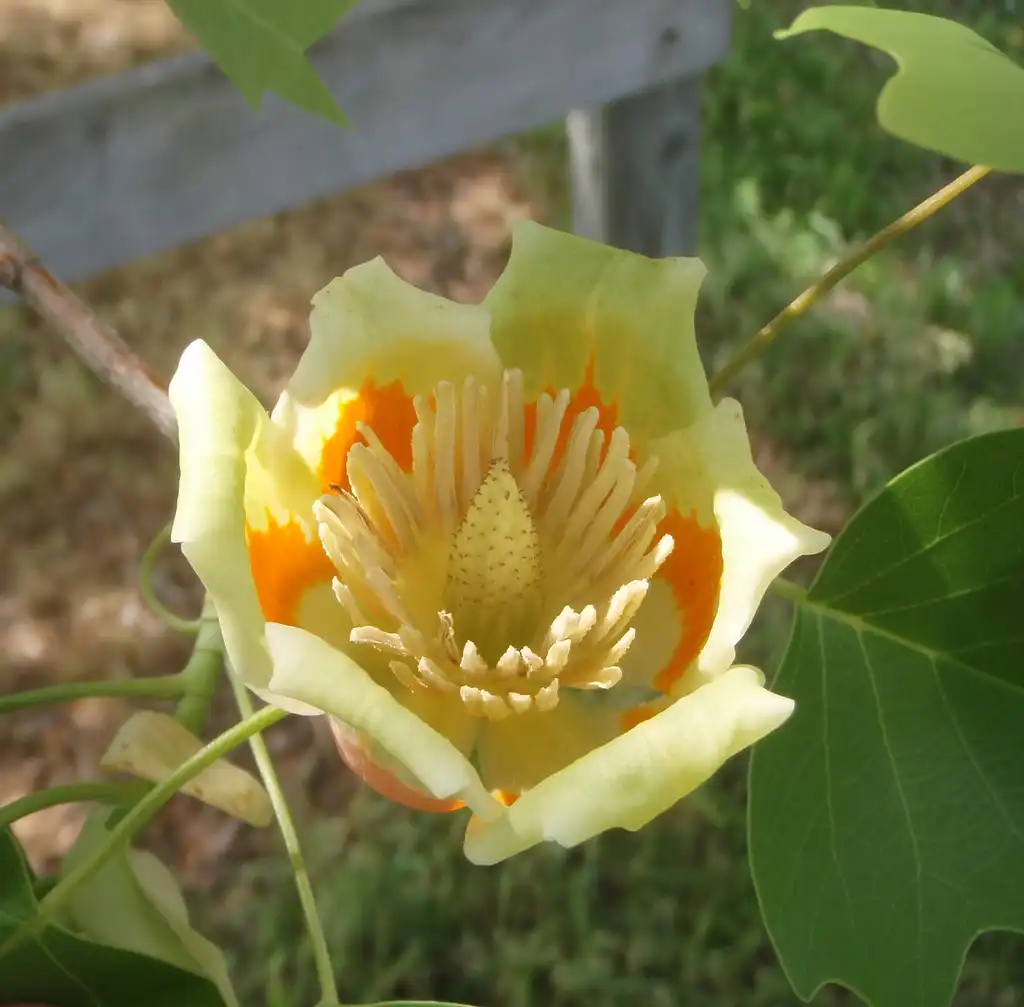
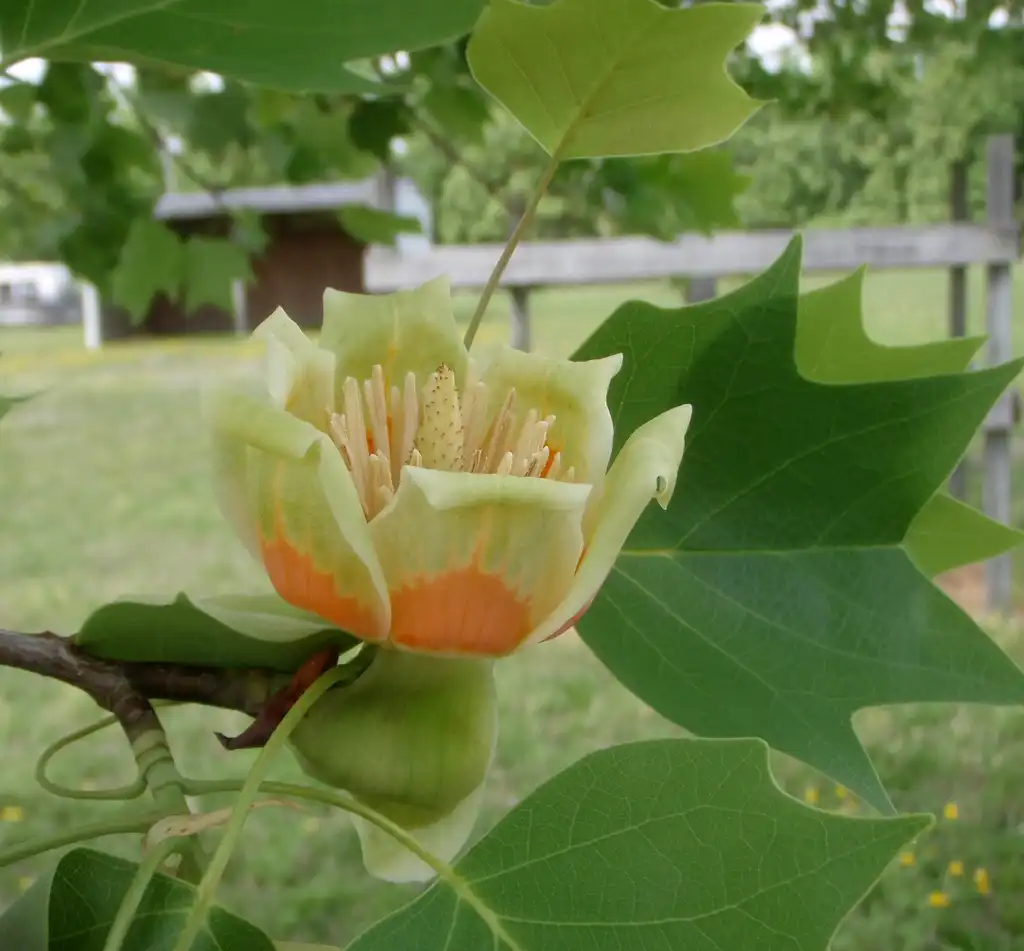
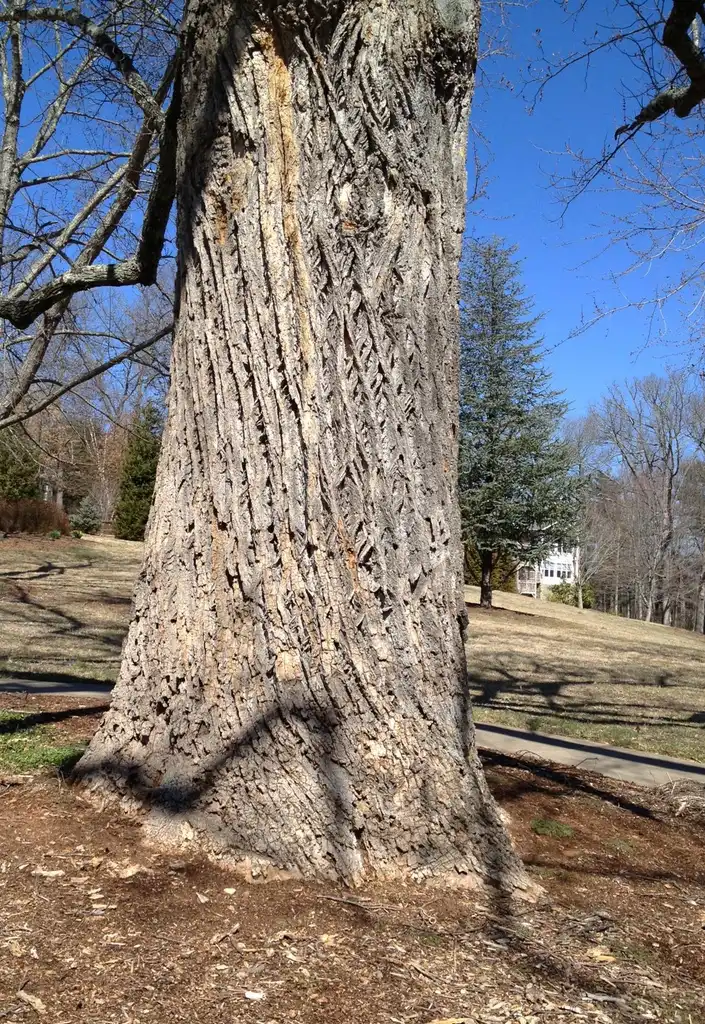
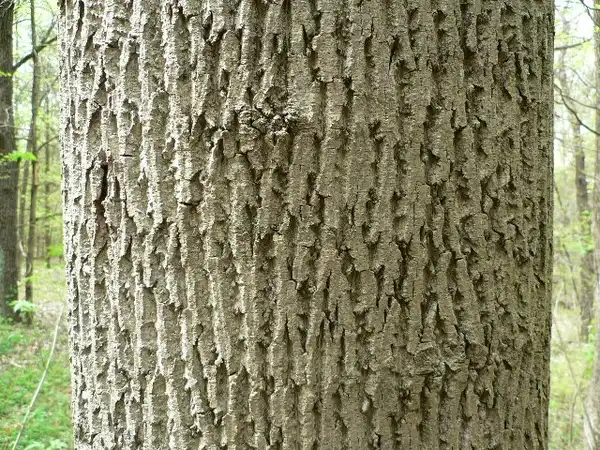
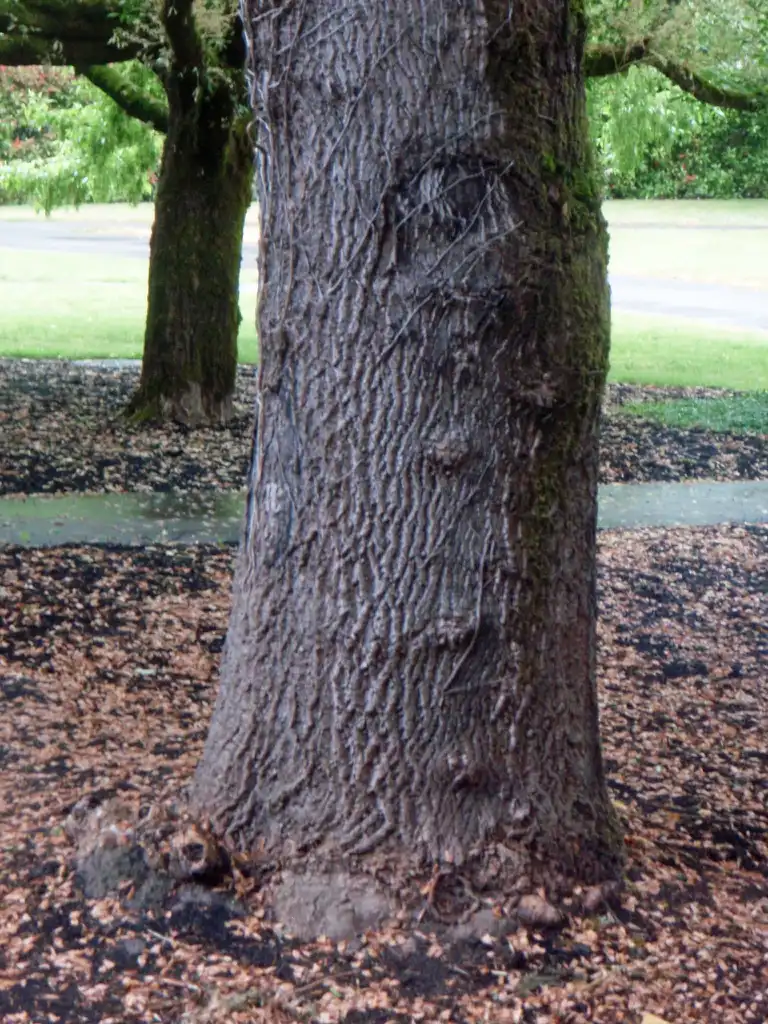
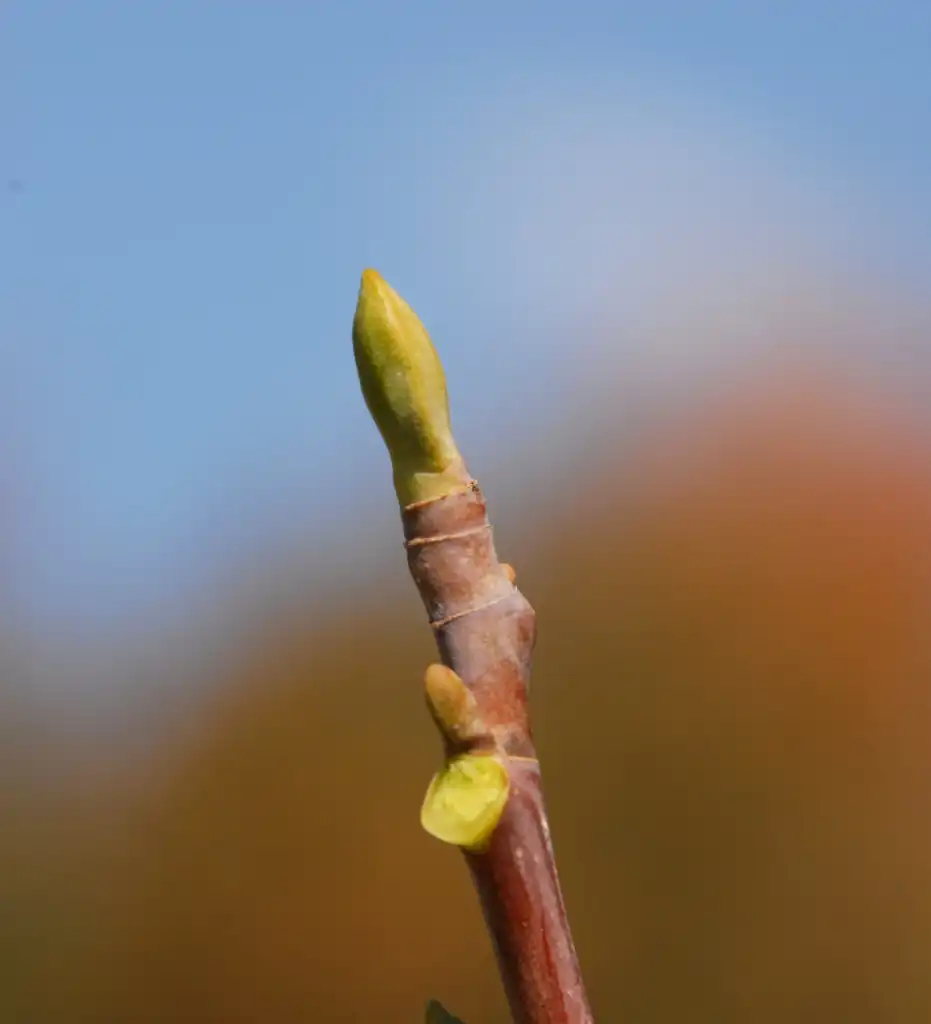
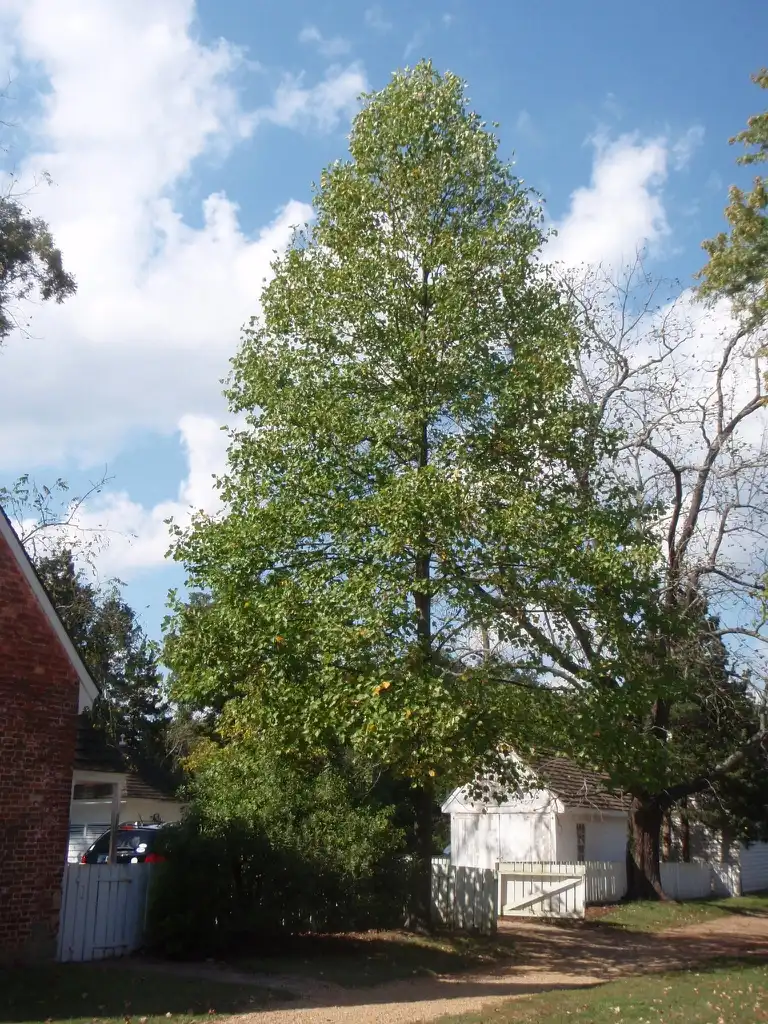
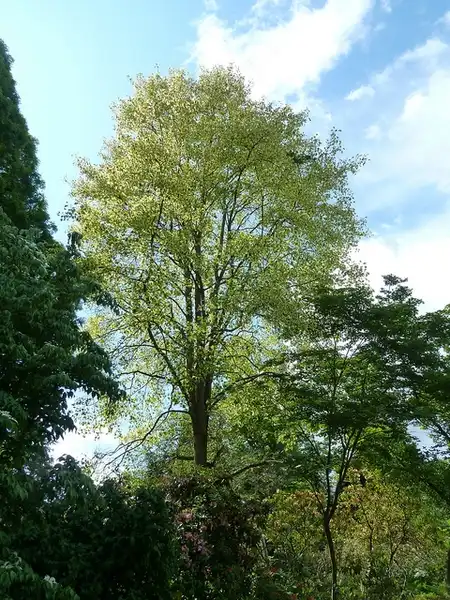
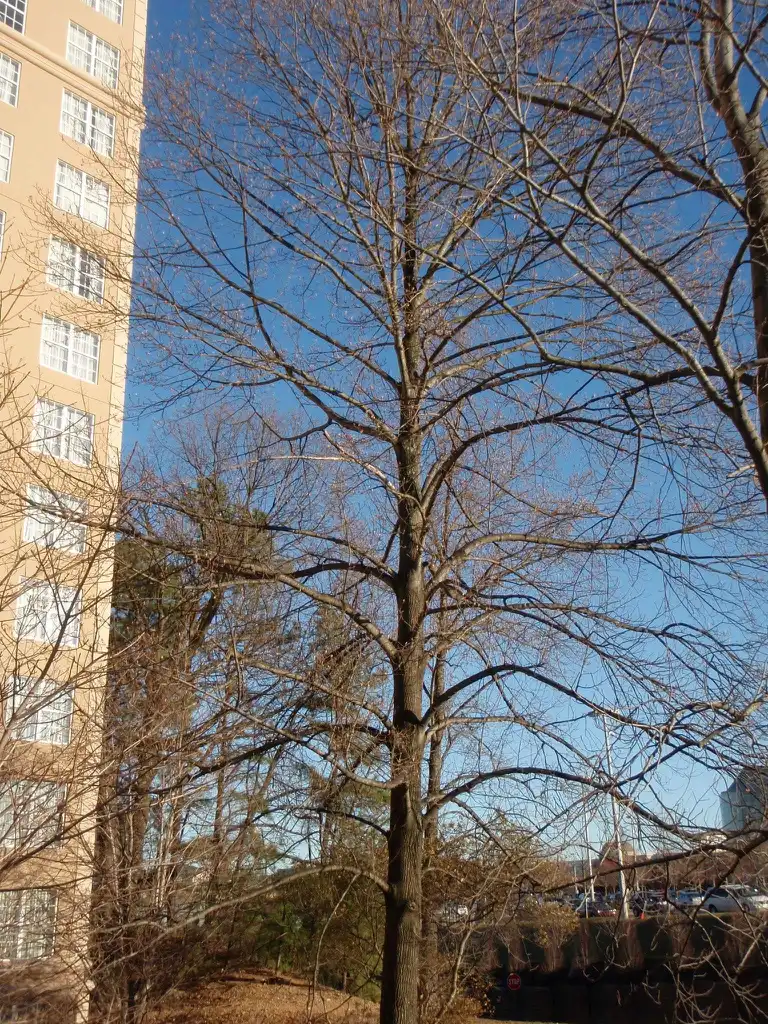
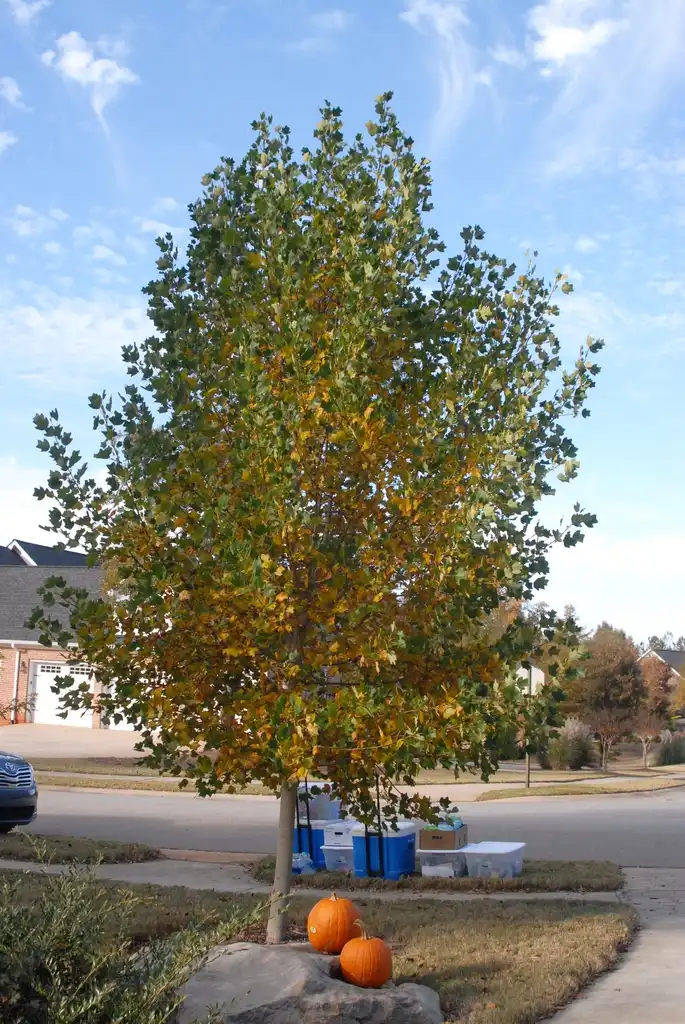
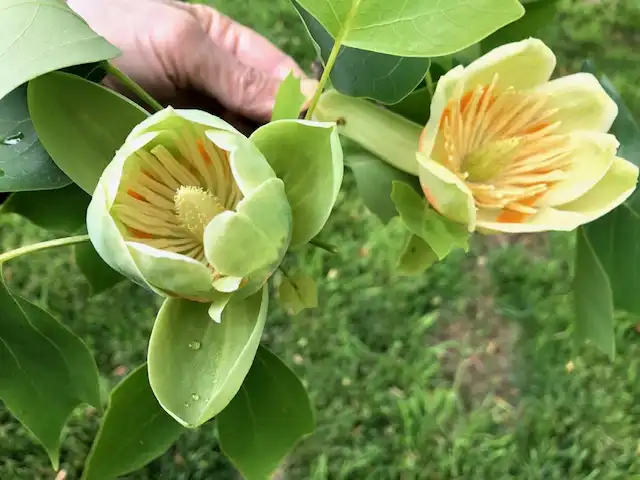
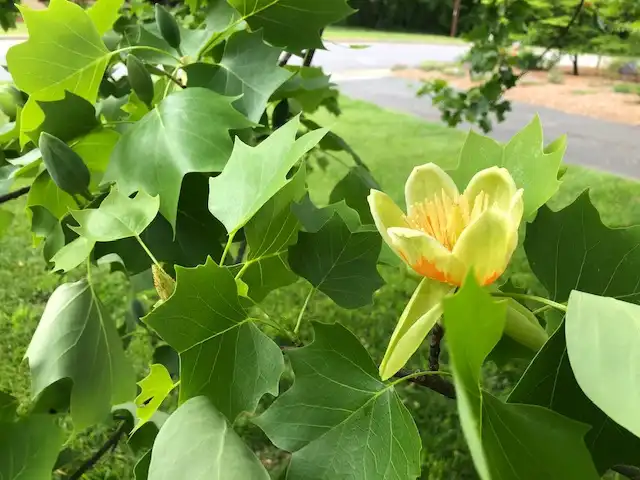
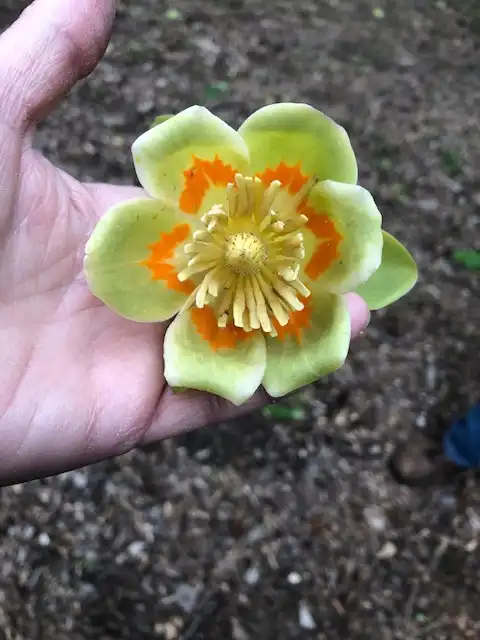
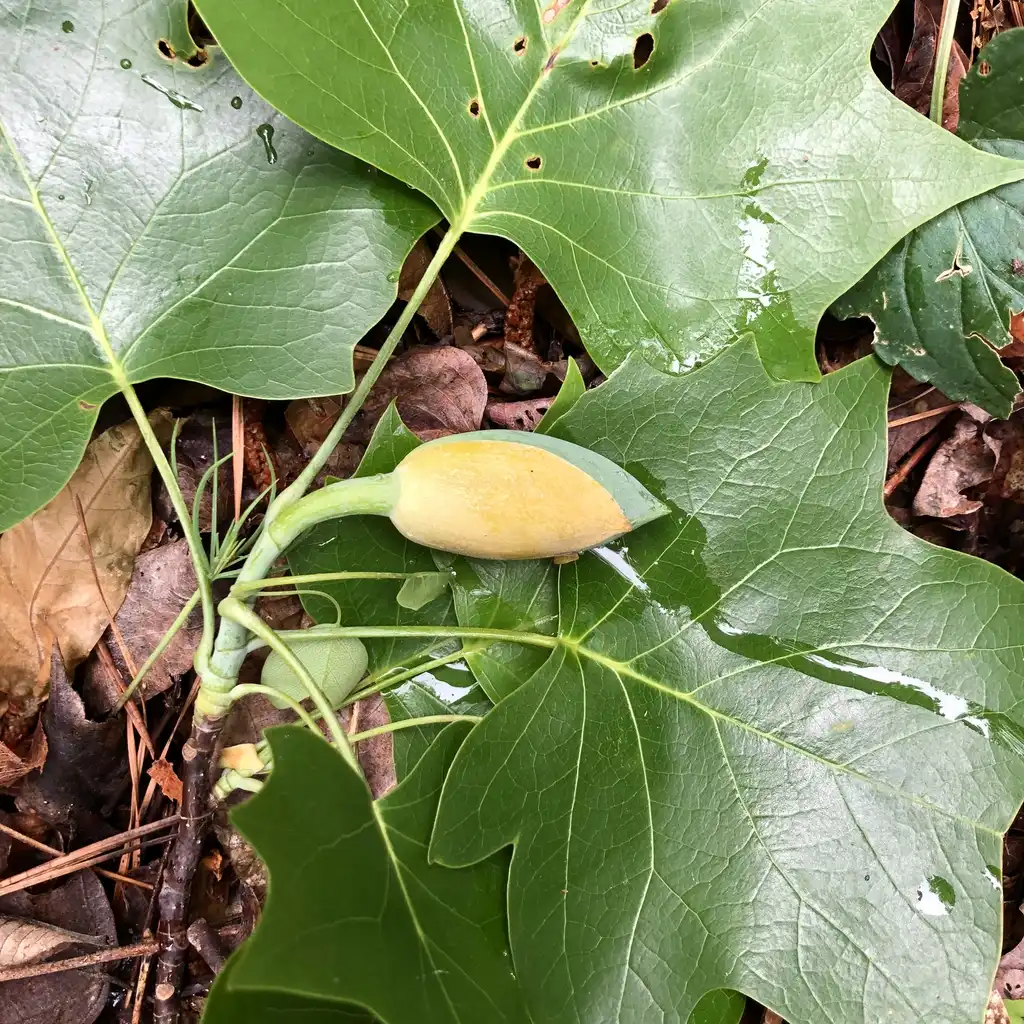
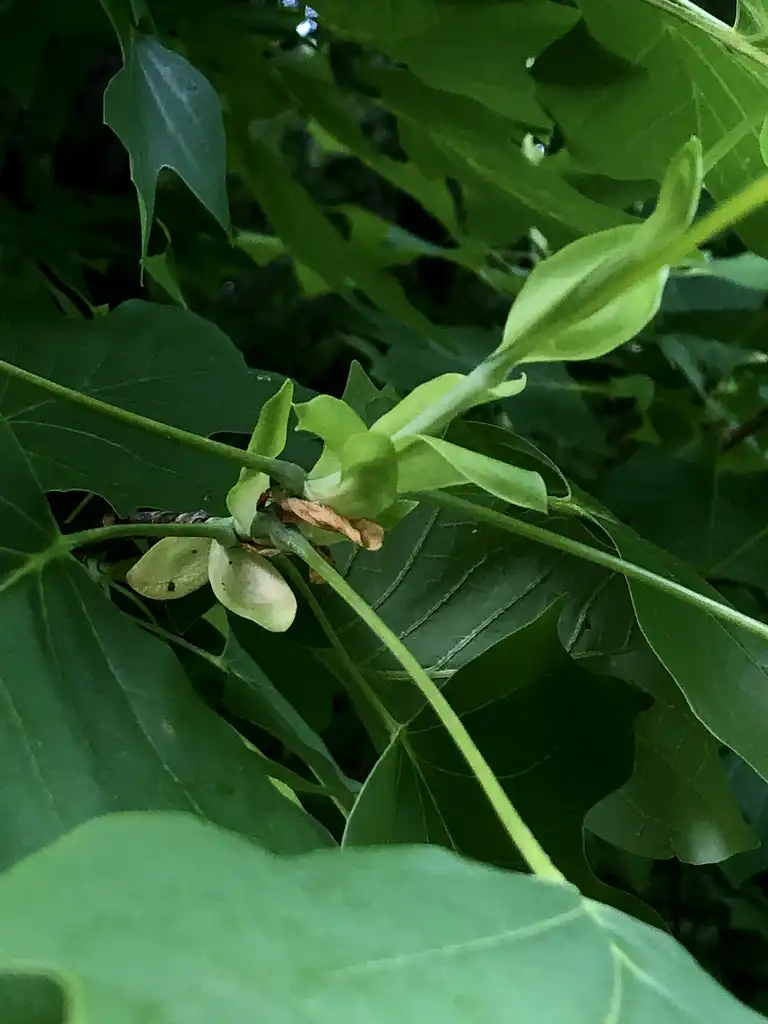
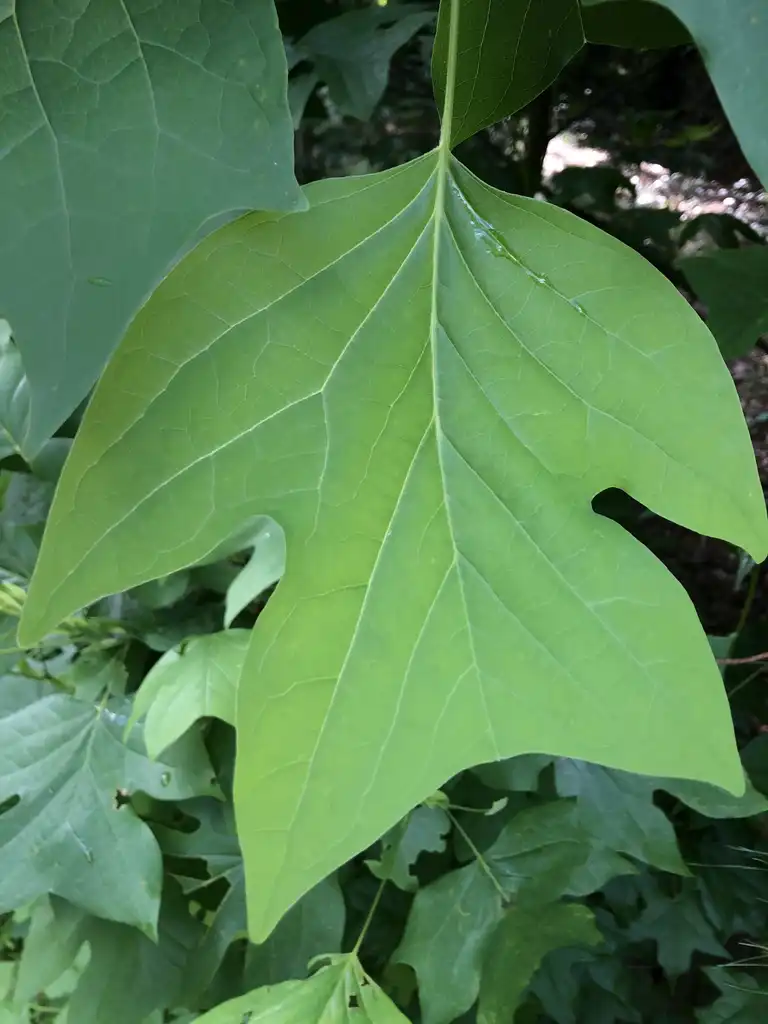
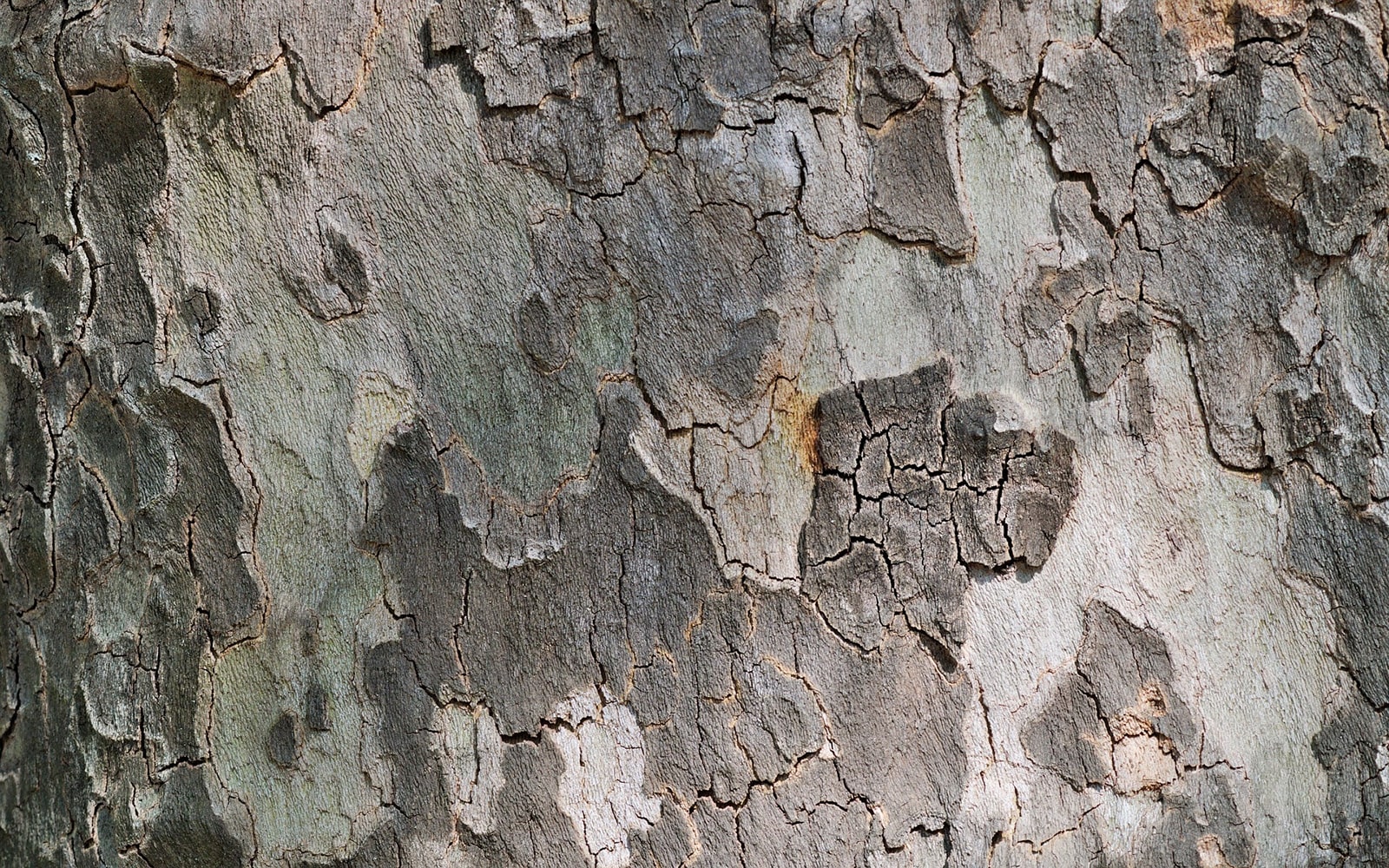
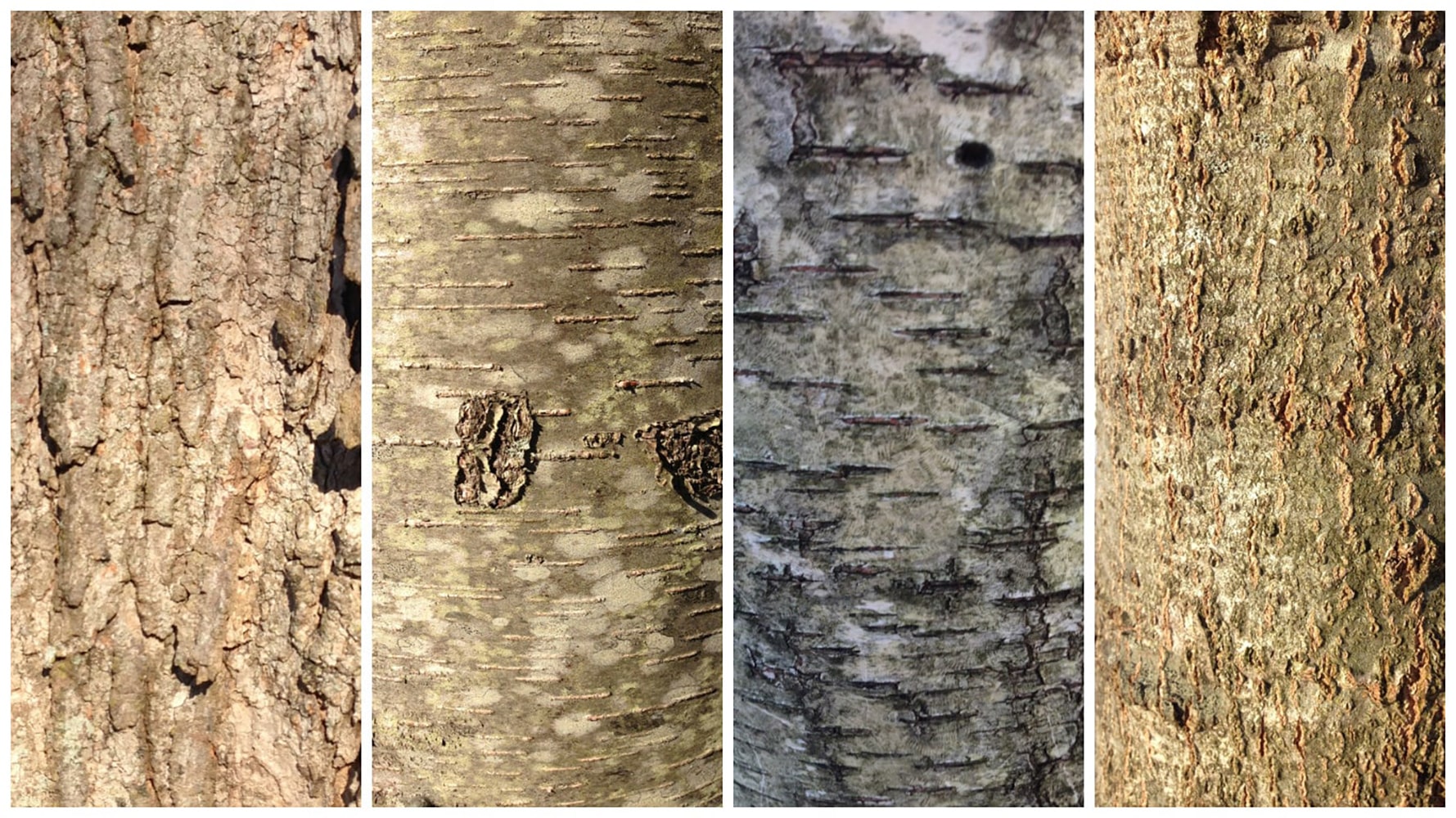
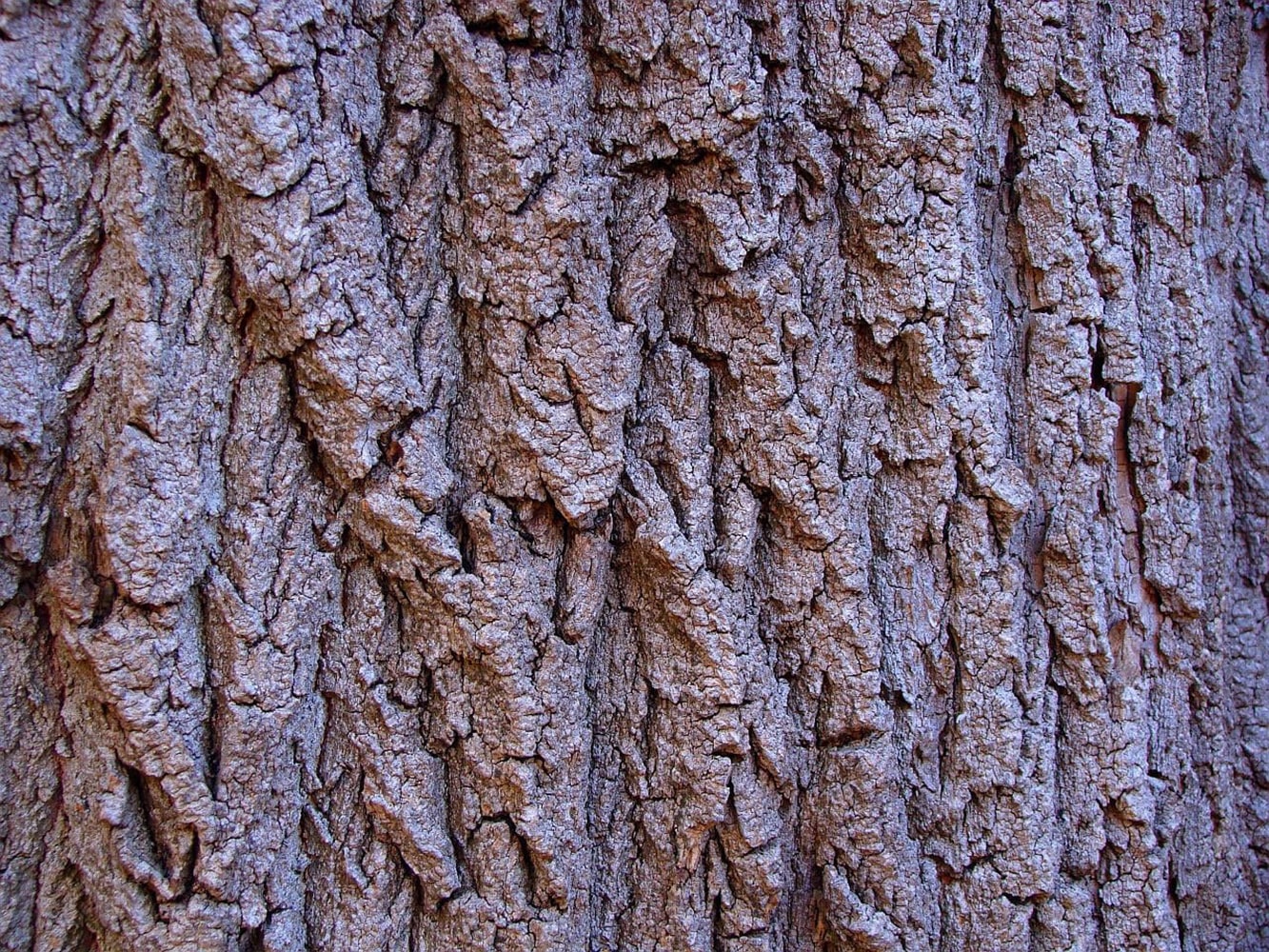
Liriodendron tulipifera, commonly known as Yellow Poplar, is a deciduous tree that can reach heights of 90 to 120 feet. It derives its name from its distinctive greenish-yellow heartwood and its striking tulip-shaped flowers. The tree features alternate, palmately veined leaves that are divided into four lobes with smooth edges. Young specimens have smooth, dark green bark, which matures into a more textured appearance with wide, white furrows and flat ridges as the tree ages. In late spring, the tree produces flowers measuring about 2.5 inches, characterized by yellow-green petals and an orange corolla. By late fall, it generates an aggregate of overlapping samaras that disperse upon maturity. Mature trunks can attain diameters of 4 to 6 feet, typically growing in a columnar form with few lower branches; the greenish-yellow heartwood begins to form when the trunk reaches approximately 2 feet in diameter. In exceptional cases, the tree can grow up to 200 feet tall with trunk diameters of 8 to 10 feet. The crown of the Yellow Poplar is compact and pyramidal, often tapering sharply at the apex.
This species thrives in moist, well-drained soils under full sunlight and prefers slightly acidic conditions, although it can adapt to various pH levels. It is sensitive to heat and drought and has a low tolerance for soil compaction, requiring ample space for planting. The tree flourishes best in natural settings and can display stunning fall foliage ranging from yellow to golden yellow, although its leaves may drop prematurely. It is susceptible to various pests and diseases, and numerous cultivars, including smaller varieties, are available. Yellow Poplar is prevalent throughout North Carolina, particularly in deep, moist soils near streams and in lower mountain coves.
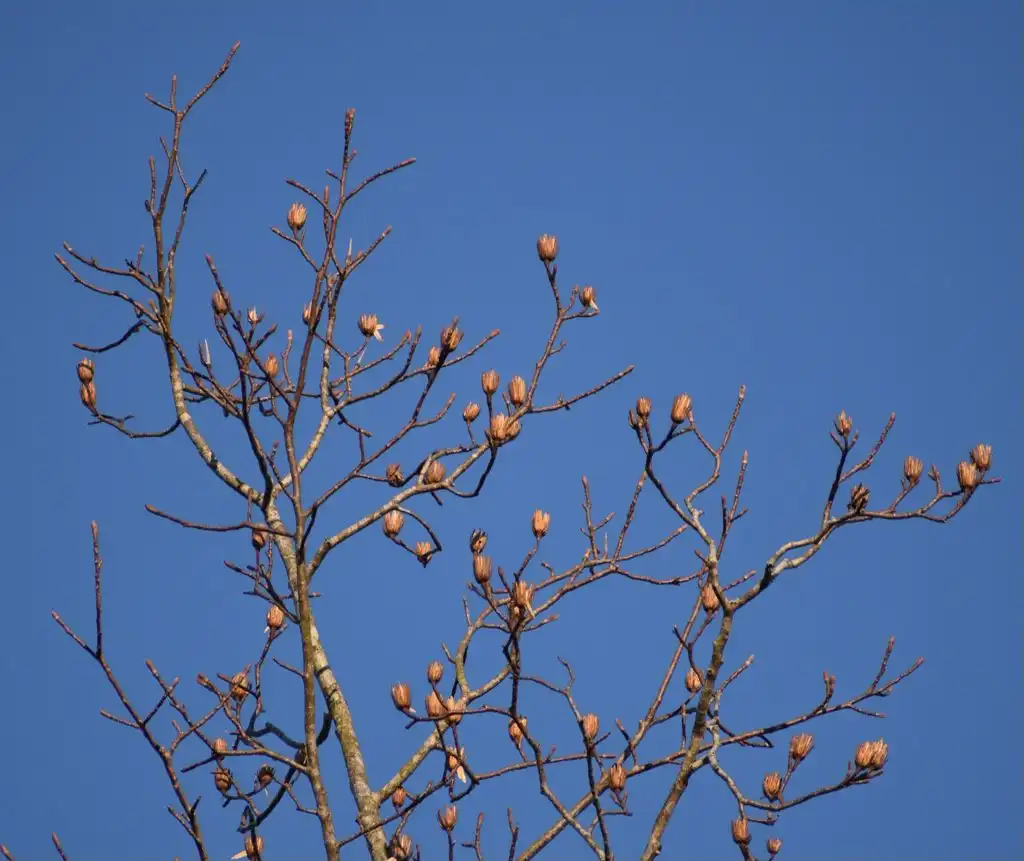
The flowers of the Yellow Poplar give way to dry, scaly, oblong, cone-shaped brown fruits, each containing numerous winged seeds. This tree naturally inhabits mesic forests, cove forests at elevations of at least 1500 feet, bottomland forests, and swamps.
Liriodendron tulipifera can be pruned to maintain a shrub-like size by cutting it back to the ground every 2 to 3 years.
**Fire Risk:** This species has a low flammability rating.
**Seasons of Interest:**
- **Leaves:** Fall
- **Bloom:** Spring
- **Fruit/Seed/Nut:** Fall
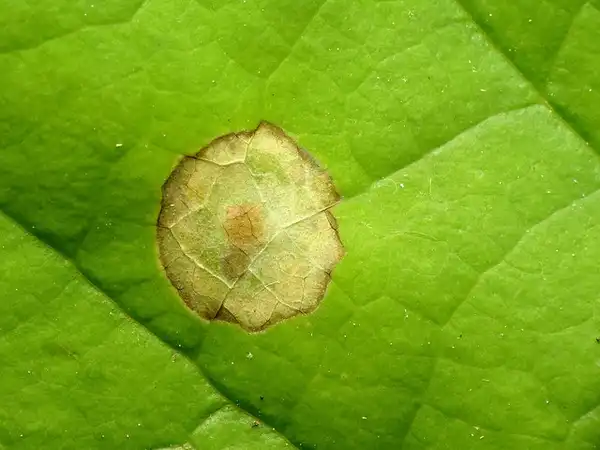
**Insect, Disease, and Other Plant Issues:** Potential problems include scale infestations, large aphid populations that produce honeydew on leaves (leading to sooty mold), and diseases such as Verticillium wilt, mold, mildew, and canker. Its rapid growth can result in weak wood, making it vulnerable to limb breakage during high winds or from ice and snow. Additionally, its shallow root system limits the types of plants that can be grown beneath its canopy, and rabbits may feed on the buds and inner bark of younger trees.