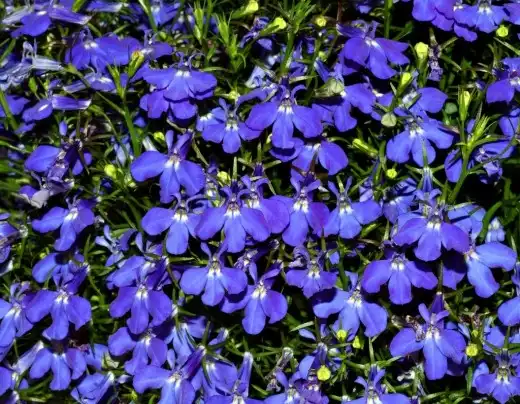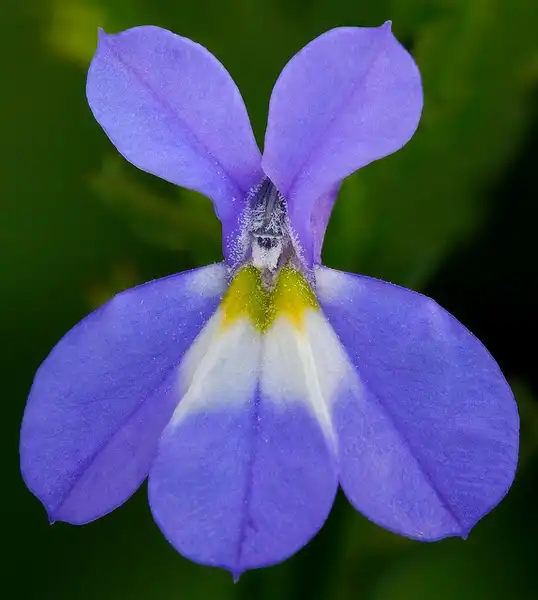
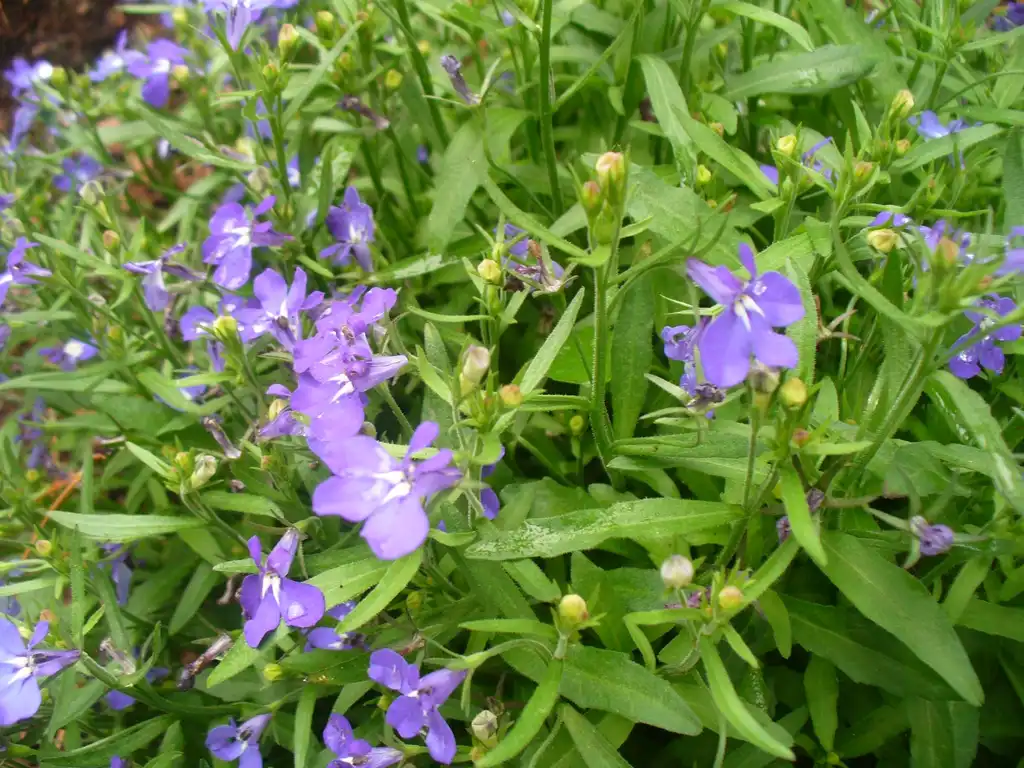
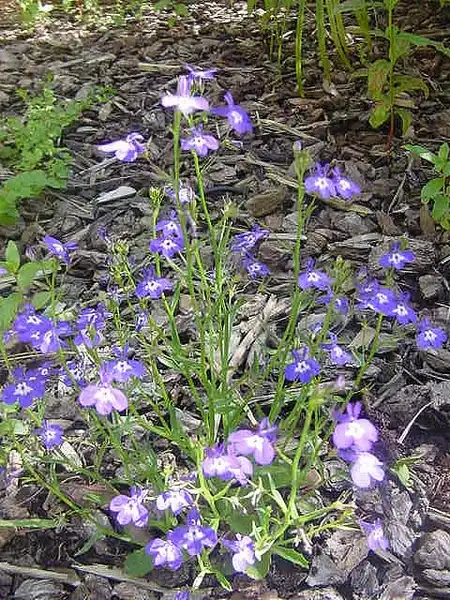
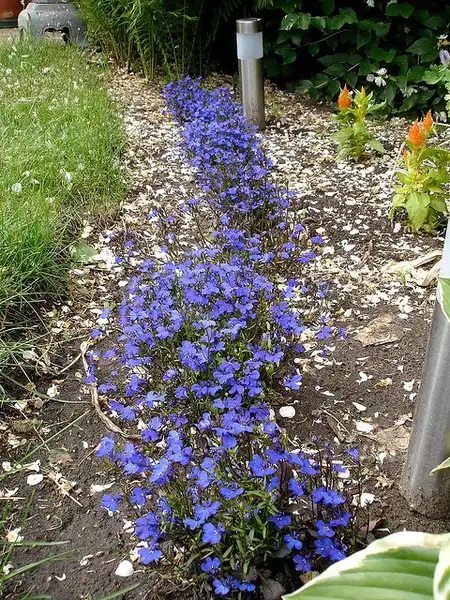
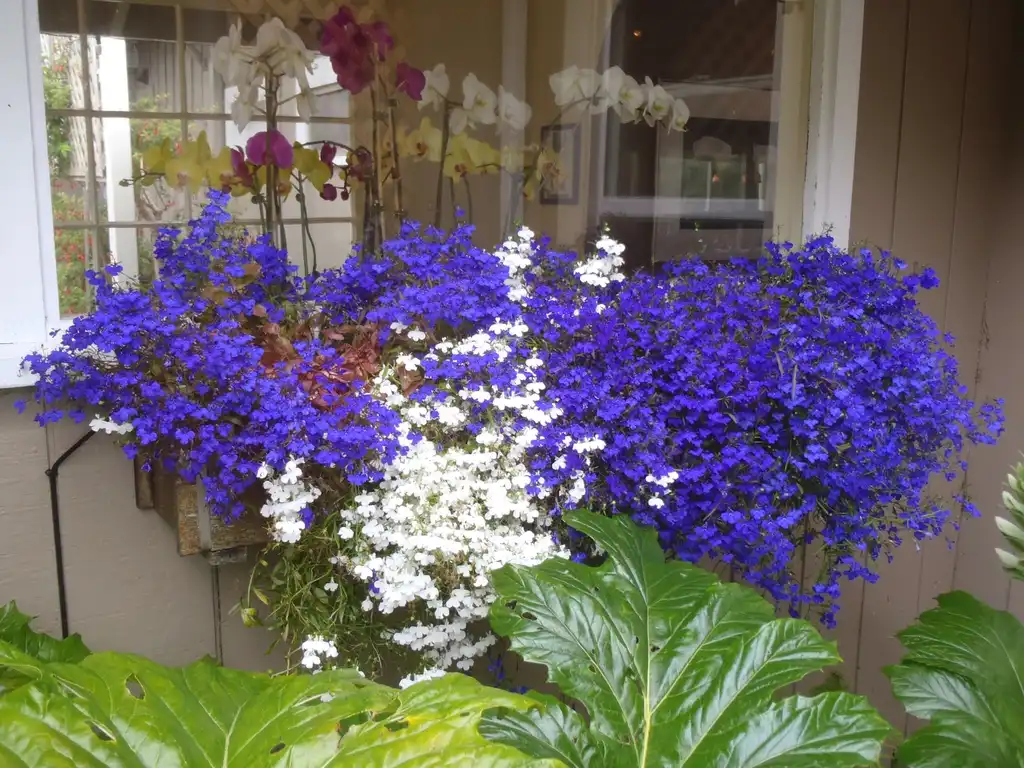
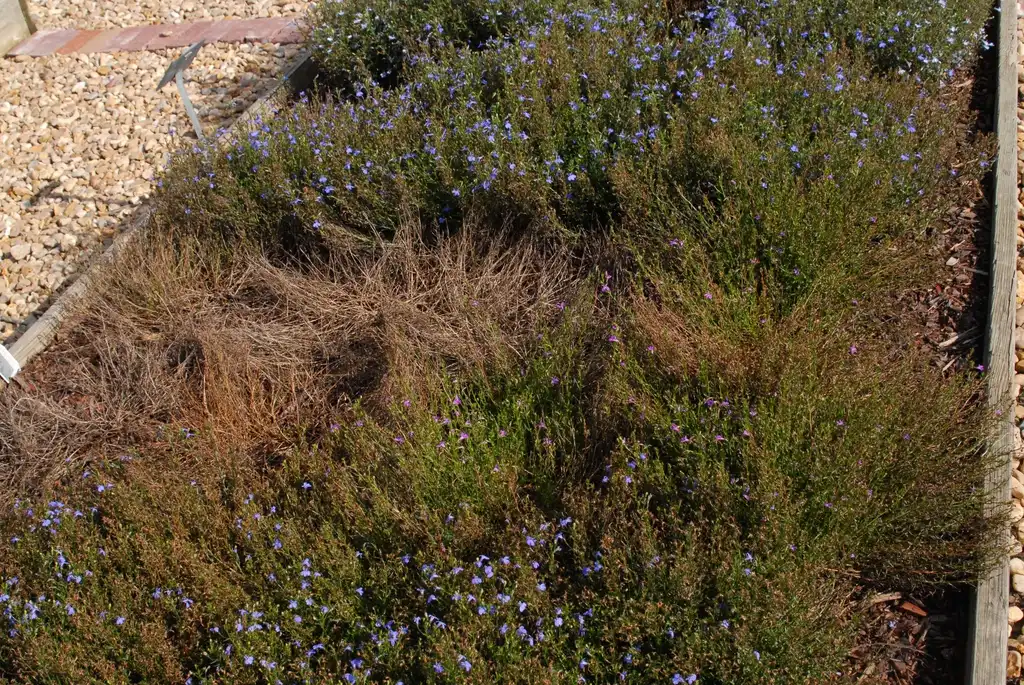
• Photo of Lobelia erinus (Lobelia erinuss)

Plant Profile: Lobelia erinus

Taxonomy: Lobelia erinus

Names

Lobelia

  • Photo of Lobelia erinus (Lobelia erinuss)

Phonetic Spelling:low-BEE-lee-a EAR-in-us

Genus:Lobelia

Species:erinus

Family:Campanulaceae

A variety of cultivars are available, including ‘Blue Moon’ with its deep blue blooms, and ‘Cambridge Blue’, which features soft, clear blue flowers on compact plants that grow 4 to 6 inches tall. ‘Crystal Palace’ showcases dark blue flowers against bronze-green foliage on similarly compact plants, while ‘Paper Moon’ offers pure white flowers. ‘Rosamunde’ presents carmine red flowers adorned with a white eye, and both ‘White Lady’ and ‘Snowball’ boast pristine white blossoms. For those seeking trailing varieties suitable for hanging baskets or elevated planters, options like ‘Blue Cascade’, the ‘Fountain’ series, ‘Hamburgia’, and ‘Sapphire’ are ideal. Notably, ‘Sapphire’ features purple flowers with a white eye and is recognized as one of the finest trailing lobelias. To promote new blooms, it is advisable to prune the plants after each flowering cycle.

Be cautious of issues such as damping-off, stem rot, and root rot, which can occur in overly damp conditions.

This plant exhibits low drought tolerance.

All parts of the plant are toxic.

Ingestion is the mode of toxicity.

Symptoms of poisoning may include nausea, vomiting, diarrhea, excessive salivation, fatigue, weakness, pupil dilation, convulsions, and potentially coma.

The toxic components include alkaloids such as lobelamine and lobeline, along with a volatile oil.

The toxicity is significant only if large quantities are consumed.

This plant can be found in forests or natural areas, thriving in moist woods and fields, as well as along stream edges; it is also commonly cultivated in flower gardens among herbaceous annuals and perennials.

For further details on Lobelia, additional information is available.

Lobelia erinus Feature Summary

Lobelia erinus Image Gallery

Tags

#white
#poisonous
#full sun tolerant
#annual
#blue
#perennial
#violet
#fall interest
#summer flowers
#spring interest
#pollinator plant
#butterfly friendly
#partial shade tolerant

Similar Plants

Lobelia erinus Feature Summary

Fruit
inconspicuous and not showy
Flowers
Flowers are white, scarlet, or blue, 5-parted, tubular and irregular-shaped with 2 lips
Pink
Purple/Lavender
White
Blue
4-5 petals/rays
6 petals/rays
Poisonous to Humans
Nausea, vomiting, diarrhea, salivation, exhaustion and weakness, dilation of pupils, convulsions, and coma
Alkaloids lobelamine, lobeline, and others, plus a volatile oil
Seeds
Leaves
Sap/Juice
Flowers
Fruits
Roots
Attributes
Whole Plant Traits
Annual
Poisonous
Cultural Conditions
Full sun (6 or more hours of direct sunlight a day)
Partial Shade (Direct sunlight only part of the day, 2-6 hours)
Leaves
Landscape
Butterflies
Pollinators
Poisonous to Humans

Lobelia erinus Fruit

Lobelia erinus: Fruit Description

inconspicuous and not showy
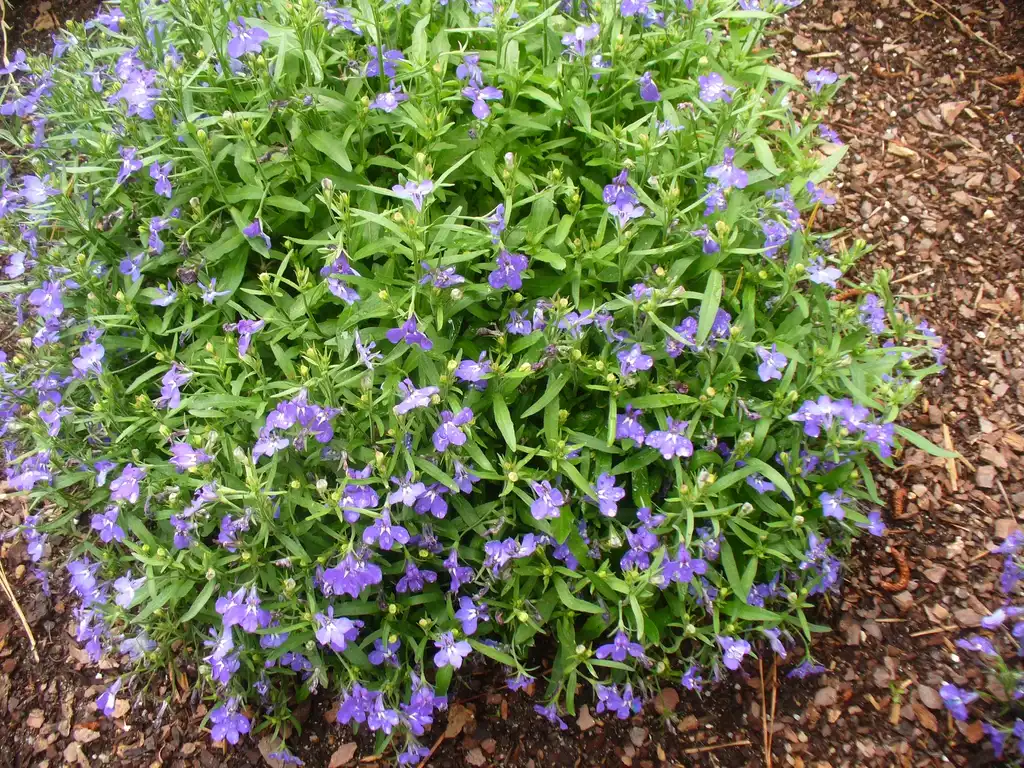
Lobelia erinus: Fruit Type

Achene
Aggregate
Berry
Capsule
Caryopsis
Drupe
Follicle
Legume
Nut
Pome
Samara
Schizocarp
Siliqua

Lobelia erinus Flowers

Lobelia erinus: Flower Description

Flowers are white, scarlet, or blue, 5-parted, tubular and irregular-shaped with 2 lips

Lobelia erinus: Flower Color

filter_vintage
Blue
filter_vintage
Pink
filter_vintage
Purple/Lavender
filter_vintage
White

Lobelia erinus: Flower Bloom Time

Winter
Spring
Summer
Fall

Lobelia erinus: Flower Petals

2-3 rays/petals
4-5 petals/rays
6 petals/rays
7 - 20 petals/rays
asymmetrical petals
Bracts
Colored Sepals
fused petals
more than 20 petals/rays
Tepals

Lobelia erinus: Flower Shape

Bell
Cross
Crown
Cup
Dome
Funnel
Irregular
Lipped
Radial
Saucer
Star
Trumpet
Tubular
Urn
Wheel

Lobelia erinus Poisonous to Humans

Lobelia erinus: Poison Symptoms

Nausea, vomiting, diarrhea, salivation, exhaustion and weakness, dilation of pupils, convulsions, and coma

Lobelia erinus: Poison Toxic Principle

Alkaloids lobelamine, lobeline, and others, plus a volatile oil

Lobelia erinus: Poison Severity

High
Low
Medium

Lobelia erinus: Causes Contact Dermatitis

No
Yes

Lobelia erinus: Poison Part

Bark
Flowers
Fruits
Leaves
Roots
Sap/Juice
Seeds
Stems

Lobelia erinus Attributes

Lobelia erinus: Life Cycle

Annual
Biennial
Bulb
Perennial
Woody

Lobelia erinus Whole Plant Traits

Lobelia erinus: Plant Type

Annual
Bulb
Carnivorous
Edible
Epiphyte
Fern
Ground Cover
Herb
Herbaceous Perennial
Houseplant
Mushroom
Native Plant
Ornamental Grasses and Sedges
Perennial
Poisonous
Rose
Shrub
Succulent
Tree
Turfgrass
Vegetable
Vine
Water Plant
Weed
Wildflower

Lobelia erinus: Habit/Form

Arching
Ascending
Broad
Cascading
Climbing
Clumping
Columnar
Conical
Creeping
Dense
Erect
Horizontal
Irregular
Mounding
Multi-stemmed
Multi-trunked
Open
Oval
Prostrate
Pyramidal
Rounded
Spreading
Vase
Weeping

Lobelia erinus Cultural Conditions

Lobelia erinus: Light

Dappled Sunlight (Shade through upper canopy all day)
Deep shade (Less than 2 hours to no direct sunlight)
Full sun (6 or more hours of direct sunlight a day)
Partial Shade (Direct sunlight only part of the day, 2-6 hours)

Lobelia erinus Leaves

Lobelia erinus: Leaf Color

spa
Green

Lobelia erinus: Leaf Type

Compound (Pinnately , Bipinnately, Palmately)
Fronds
Needles
Sheath
Simple

Lobelia erinus: Leaf Arrangement

Alternate
Opposite
Other/more complex
Rosulate
Whorled

Lobelia erinus: Leaf Shape

Acicular
Auriculate
Cordate
Cuneate
Deltoid
Elliptical
Filiform
Lanceolate
Linear
Oblanceolate
Oblong
Obovate
Obtuse
Orbicular
Ovate
Palmasect
Palmatifid
Peltate
Pinnatifid
Pinnatisect
Reniform
Rhomboidal
Spatulate
Subcordate
Subulate

Lobelia erinus: Leaf Margin

Crenate
Crenulate
Dentate
Denticulate
Doubly Crenate
Doubly Dentate
Doubly Serrate
Entire
Lobed
Serrate
Sinuate
Undulate

Lobelia erinus: Hairs Present

No
Yes

Lobelia erinus: Leaf Length

< 1 inch
1-3 inches
3-6 inches
> 6 inches

Lobelia erinus Stem

Lobelia erinus: Stem Is Aromatic

No
Yes

Lobelia erinus Landscape

Lobelia erinus: Attracts

Bats
Bees
Butterflies
Frogs
Hummingbirds
Moths
Pollinators
Predatory Insects
Reptiles
Small Mammals
Songbirds
Specialized Bees

Lobelia erinus: Problems

Allelopathic
Contact Dermatitis
Frequent Disease Problems
Frequent Insect Problems
Invasive Species
Malodorous
Messy
Poisonous to Humans
Problem for Cats
Problem for Children
Problem for Dogs
Problem for Horses
Short-lived
Spines/Thorns
Weak Wood
Weedy