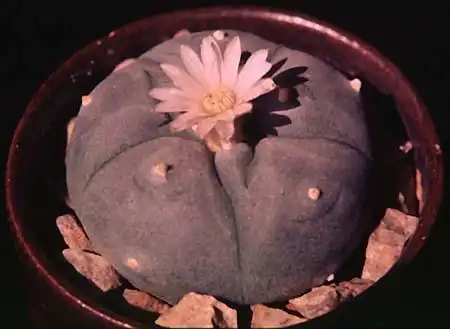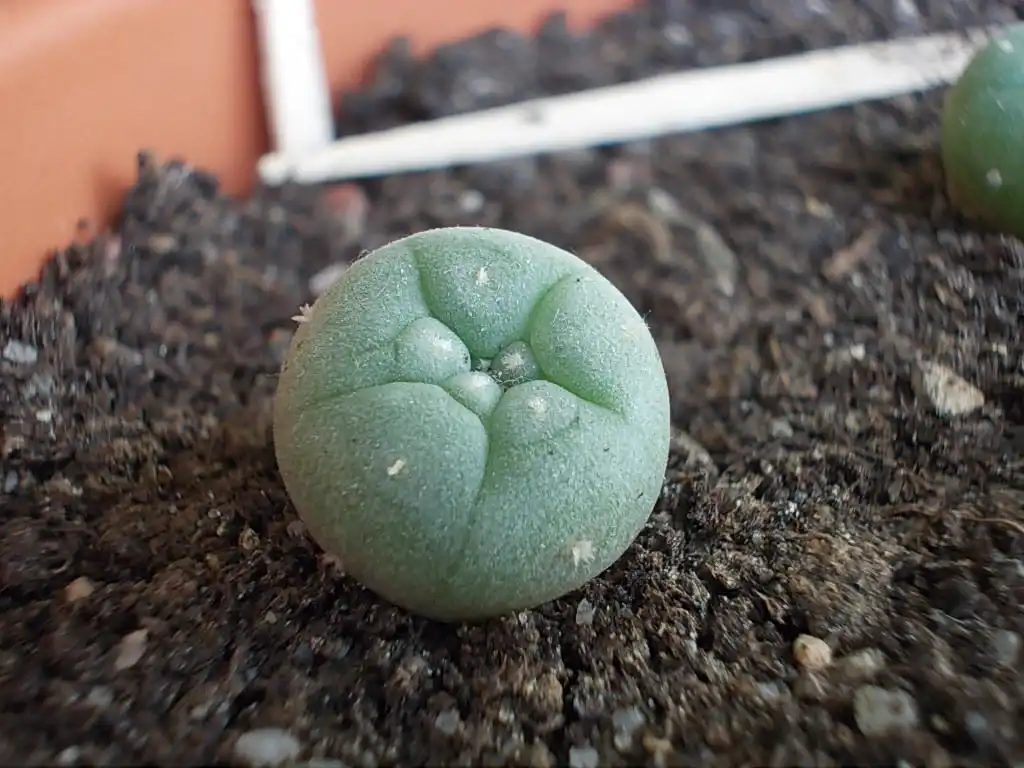
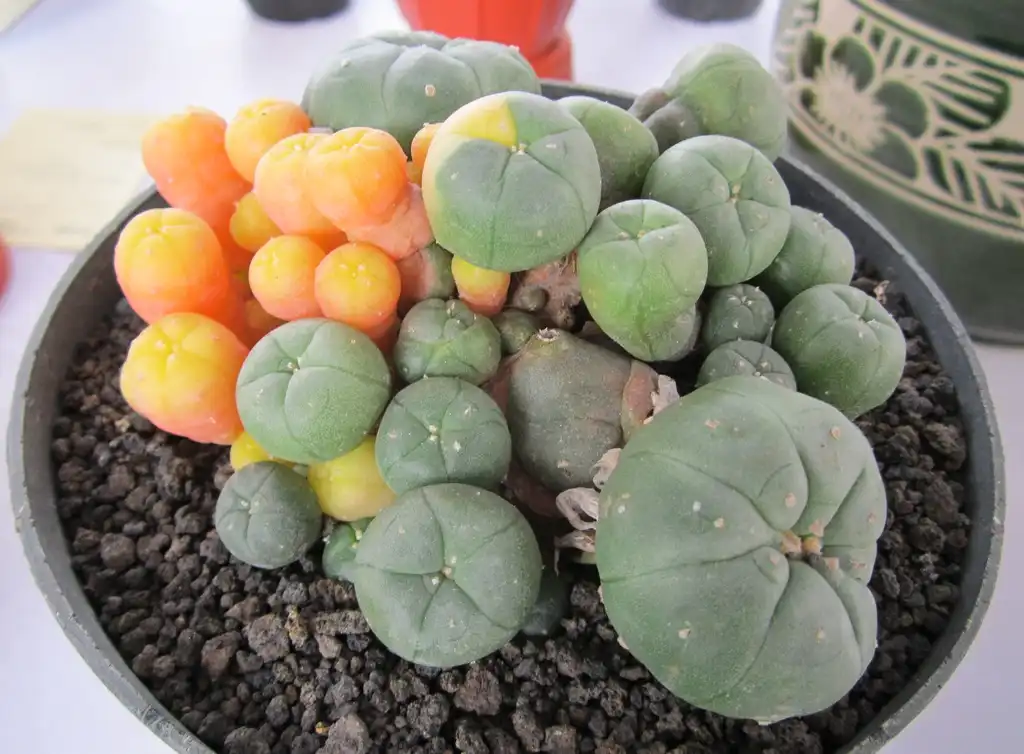
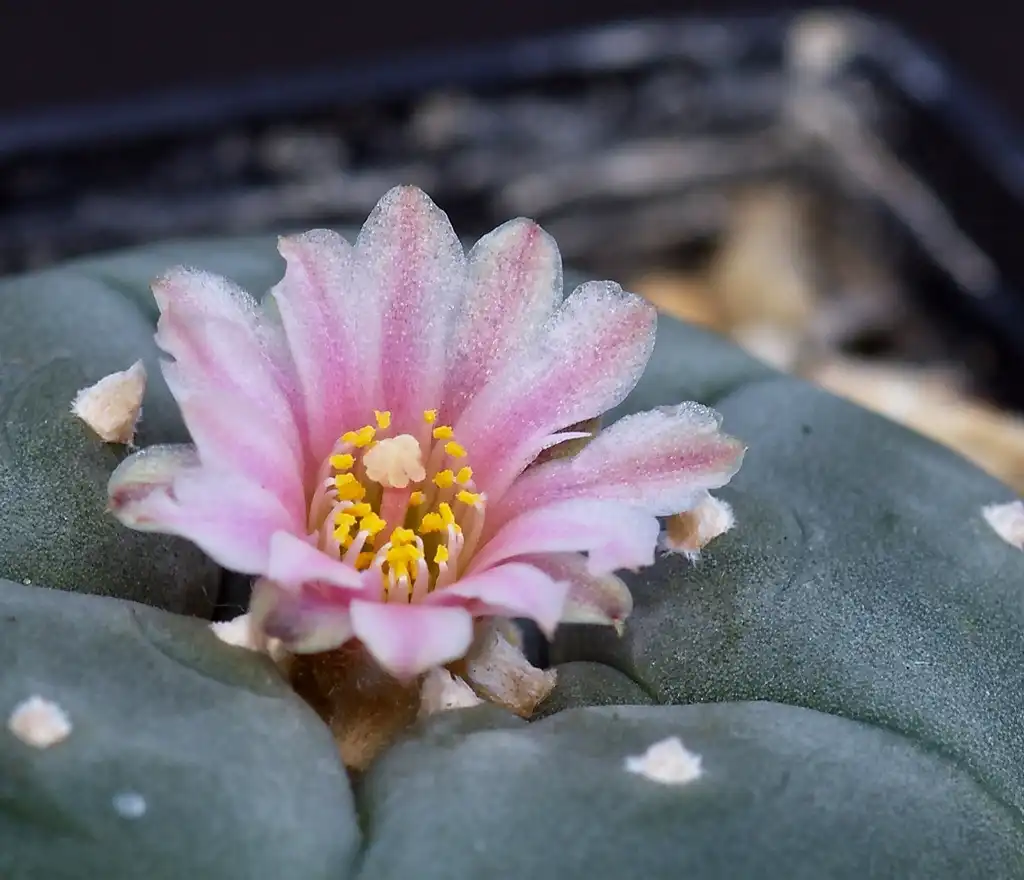
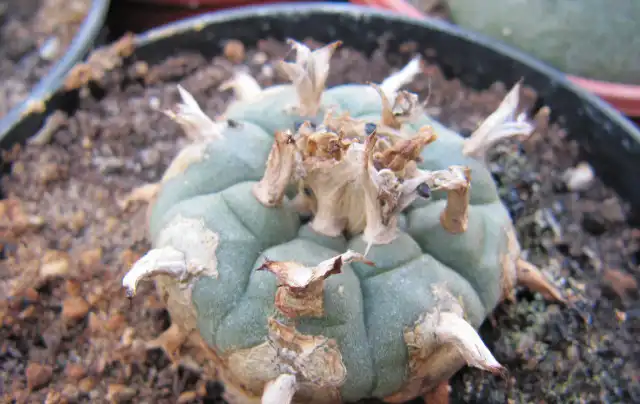
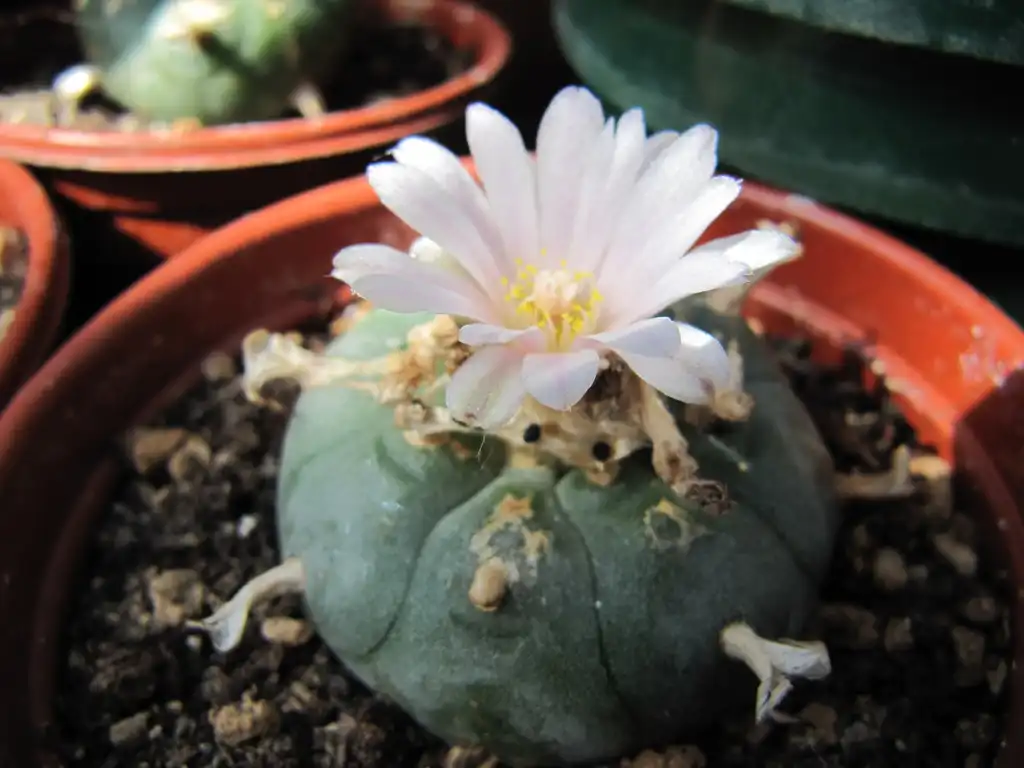
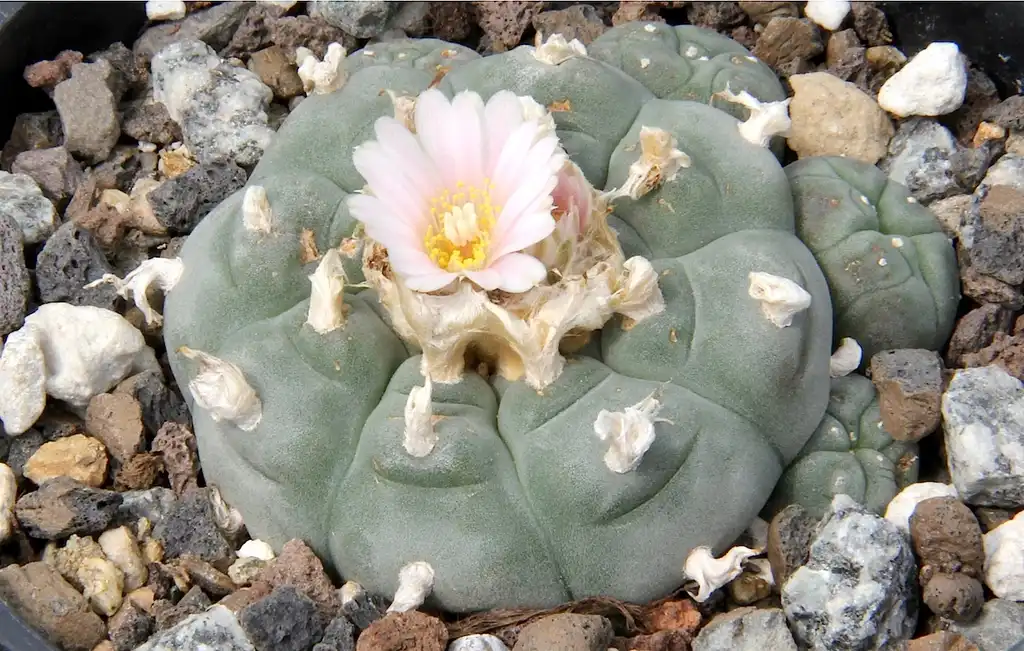
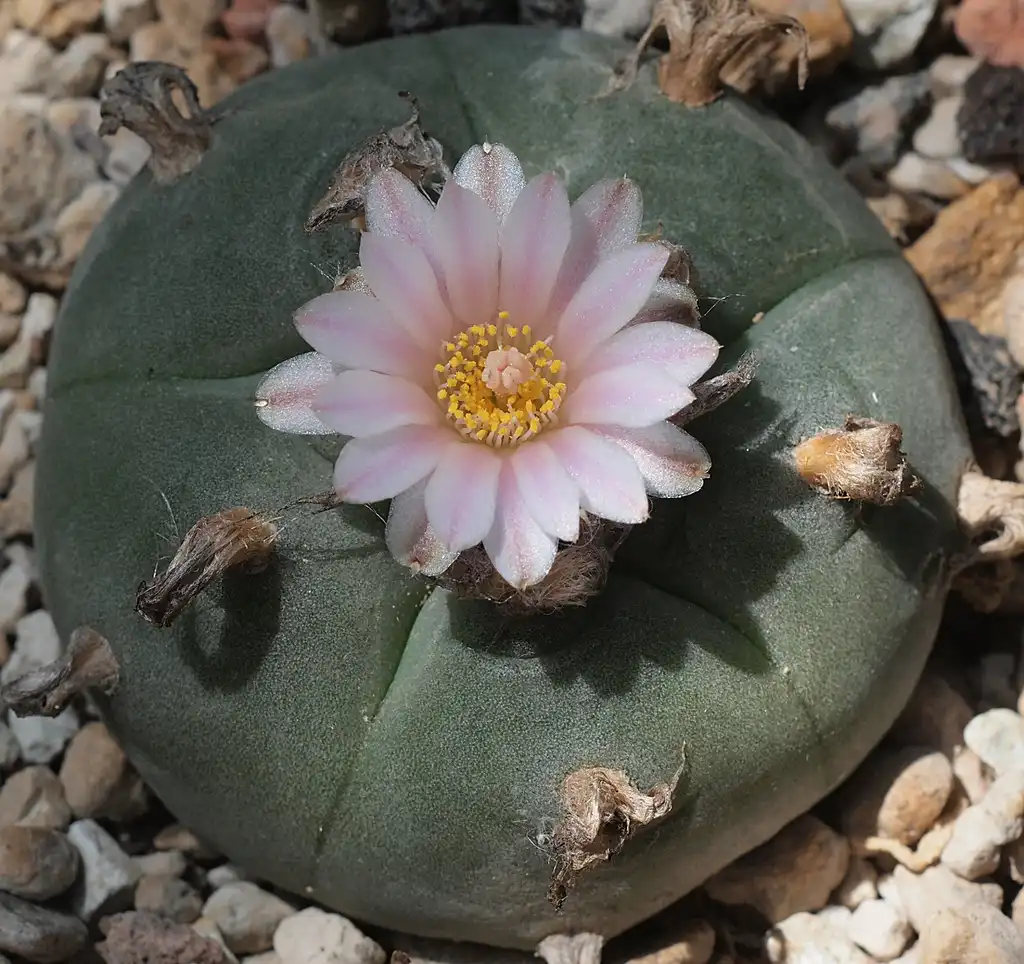
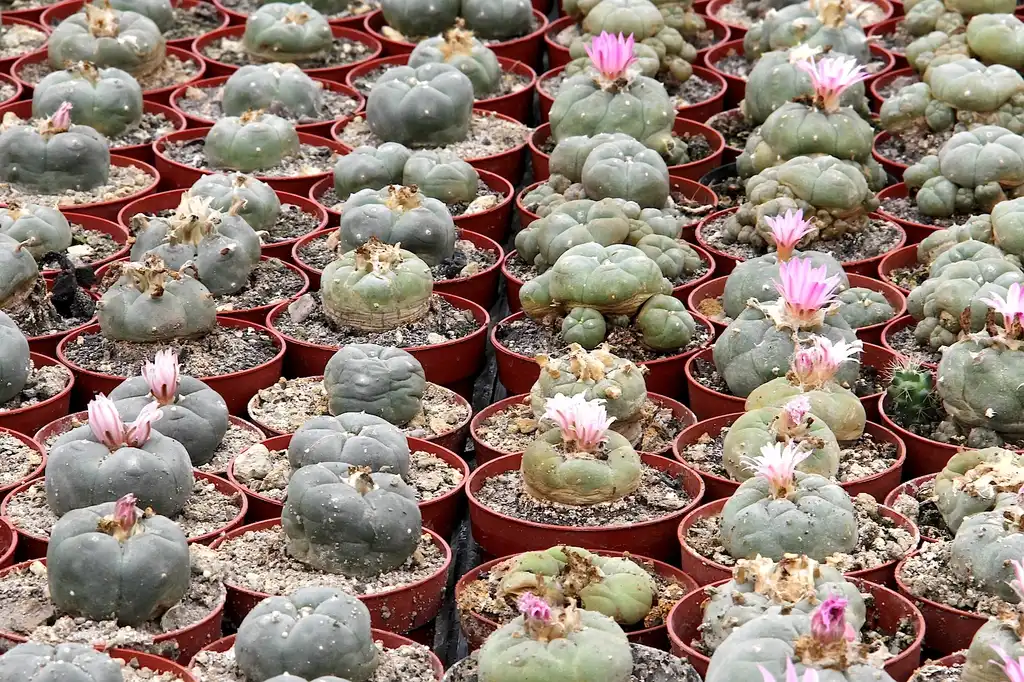
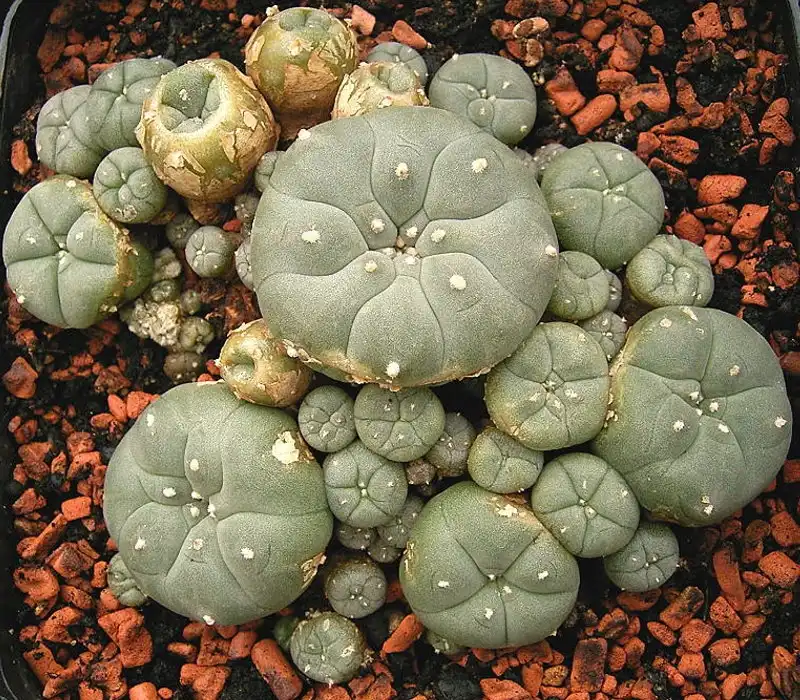
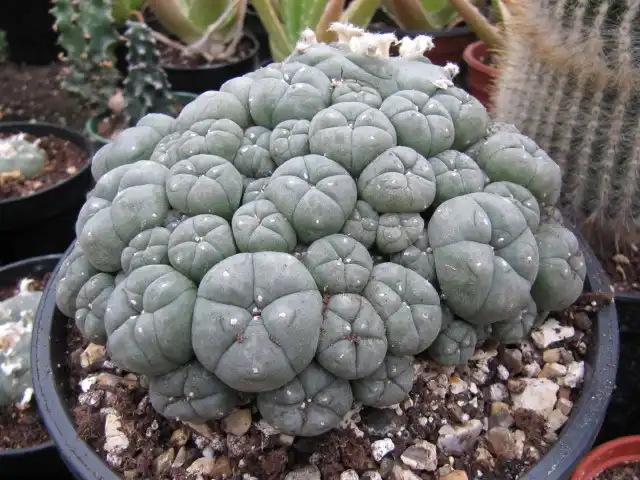
• Photo of Lophophora williamsii (Lophophora williamsiis)

Plant Profile: Lophophora williamsii

Taxonomy: Lophophora williamsii

Names

Mescal, Mescal Buttons, Peyote

  • Photo of Lophophora williamsii (Lophophora williamsiis)

Phonetic Spelling:loh-foh-FOR-ah wil-YAMS-ee-eye

Genus:Lophophora

Species:williamsii

Family:Cactaceae

This small, rounded cactus is spineless and fleshy, characterized by its hemispherical shape and a tuft of yellow-white hairs at the top. It typically thrives in gravelly clay and loamy soils found on gentle slopes, requiring partial shade for optimal growth. Additionally, it is prohibited in many regions of the western world.

Lophophora williamsii Feature Summary

Lophophora williamsii Image Gallery

Tags

#cultivars
#poisonous
#succulent
#pink flowers
#slow growing
#illegal
#hallucinogenic
#partial shade tolerant

Similar Plants

Lophophora williamsii Feature Summary

Attributes
Used in Native American ceremonies
Southwestern USA, Mexico
Southern Texas and northern Mexico.
Perennial
Fruit
Flowers
0.5 to 1-inch flowers from the center of the plant
Pink
White
Gold/Yellow
7 - 20 petals/rays
Stem
Low rounded sections bearing a tuft of yellow-white hairs at the summit
Green
Gold/Yellow
White
Blue
Poisonous to Humans
CAUSES ONLY LOW TOXICITY IF EATEN. Fresh or dried pieces of all parts above-ground ("peyote buttons") cause illusions, hallucinations, headache, pupil dilation, blurred vision, muscular relaxation, dizziness, circulatory depression, and severe stomach pain with vomiting and diarrhea.
Alkaloids mescaline, lophophorine, and others
Whole Plant Traits
Poisonous
Succulent
Cultural Conditions
Partial Shade (Direct sunlight only part of the day, 2-6 hours)
Good Drainage
Clay
Loam (Silt)
Shallow Rocky
Landscape
Poisonous to Humans

Lophophora williamsii Attributes

Lophophora williamsii: Uses (Ethnobotany)

Used in Native American ceremonies
Lophophora williamsii: Country Or Region Of Origin

Southwestern USA, Mexico

Lophophora williamsii: Distribution

Southern Texas and northern Mexico.

Lophophora williamsii: Life Cycle

Annual
Biennial
Bulb
Perennial
Woody

Lophophora williamsii Fruit

Lophophora williamsii: Fruit Description

Pink when ripe

Lophophora williamsii: Fruit Type

Achene
Aggregate
Berry
Capsule
Caryopsis
Drupe
Follicle
Legume
Nut
Pome
Samara
Schizocarp
Siliqua

Lophophora williamsii: Fruit Color

grass
Pink

Lophophora williamsii Flowers

Lophophora williamsii: Flower Description

0.5 to 1-inch flowers from the center of the plant

Lophophora williamsii: Flower Color

filter_vintage
Gold/Yellow
filter_vintage
Pink
filter_vintage
White

Lophophora williamsii: Flower Inflorescence

Catkin
Corymb
Cyme
Head
Insignificant
Panicle
Raceme
Solitary
Spadix
Spike
Umbel

Lophophora williamsii: Flower Petals

2-3 rays/petals
4-5 petals/rays
6 petals/rays
7 - 20 petals/rays
asymmetrical petals
Bracts
Colored Sepals
fused petals
more than 20 petals/rays
Tepals

Lophophora williamsii: Flower Shape

Bell
Cross
Crown
Cup
Dome
Funnel
Irregular
Lipped
Radial
Saucer
Star
Trumpet
Tubular
Urn
Wheel

Lophophora williamsii Stem

Lophophora williamsii: Stem Description

Low rounded sections bearing a tuft of yellow-white hairs at the summit

Lophophora williamsii: Stem Color

grass
Blue
grass
Gold/Yellow
grass
Green
grass
White

Lophophora williamsii: Stem Is Aromatic

No
Yes

Lophophora williamsii Poisonous to Humans

Lophophora williamsii: Poison Symptoms

CAUSES ONLY LOW TOXICITY IF EATEN. Fresh or dried pieces of all parts above-ground ("peyote buttons") cause illusions, hallucinations, headache, pupil dilation, blurred vision, muscular relaxation, dizziness, circulatory depression, and severe stomach pain with vomiting and diarrhea.

Lophophora williamsii: Poison Toxic Principle

Alkaloids mescaline, lophophorine, and others

Lophophora williamsii: Poison Severity

High
Low
Medium

Lophophora williamsii: Causes Contact Dermatitis

No
Yes

Lophophora williamsii: Poison Part

Bark
Flowers
Fruits
Leaves
Roots
Sap/Juice
Seeds
Stems

Lophophora williamsii Whole Plant Traits

Lophophora williamsii: Plant Type

Annual
Bulb
Carnivorous
Edible
Epiphyte
Fern
Ground Cover
Herb
Herbaceous Perennial
Houseplant
Mushroom
Native Plant
Ornamental Grasses and Sedges
Perennial
Poisonous
Rose
Shrub
Succulent
Tree
Turfgrass
Vegetable
Vine
Water Plant
Weed
Wildflower

Lophophora williamsii: Habit/Form

Arching
Ascending
Broad
Cascading
Climbing
Clumping
Columnar
Conical
Creeping
Dense
Erect
Horizontal
Irregular
Mounding
Multi-stemmed
Multi-trunked
Open
Oval
Prostrate
Pyramidal
Rounded
Spreading
Vase
Weeping

Lophophora williamsii: Growth Rate

Slow
Medium
Rapid

Lophophora williamsii Cultural Conditions

Lophophora williamsii: Light

Dappled Sunlight (Shade through upper canopy all day)
Deep shade (Less than 2 hours to no direct sunlight)
Full sun (6 or more hours of direct sunlight a day)
Partial Shade (Direct sunlight only part of the day, 2-6 hours)

Lophophora williamsii: Soil Drainage

Frequent Standing Water
Good Drainage
Moist
Occasional Flooding
Occasionally Dry
Occasionally Wet
Very Dry

Lophophora williamsii: Soil Texture

Clay
High Organic Matter
Loam (Silt)
Sand
Shallow Rocky

Lophophora williamsii Leaves

Lophophora williamsii: Hairs Present

No
Yes

Lophophora williamsii Landscape

Lophophora williamsii: Problems

Allelopathic
Contact Dermatitis
Frequent Disease Problems
Frequent Insect Problems
Invasive Species
Malodorous
Messy
Poisonous to Humans
Problem for Cats
Problem for Children
Problem for Dogs
Problem for Horses
Short-lived
Spines/Thorns
Weak Wood
Weedy