Magnolia kobus: Country Or Region Of Origin
Korea and Japan
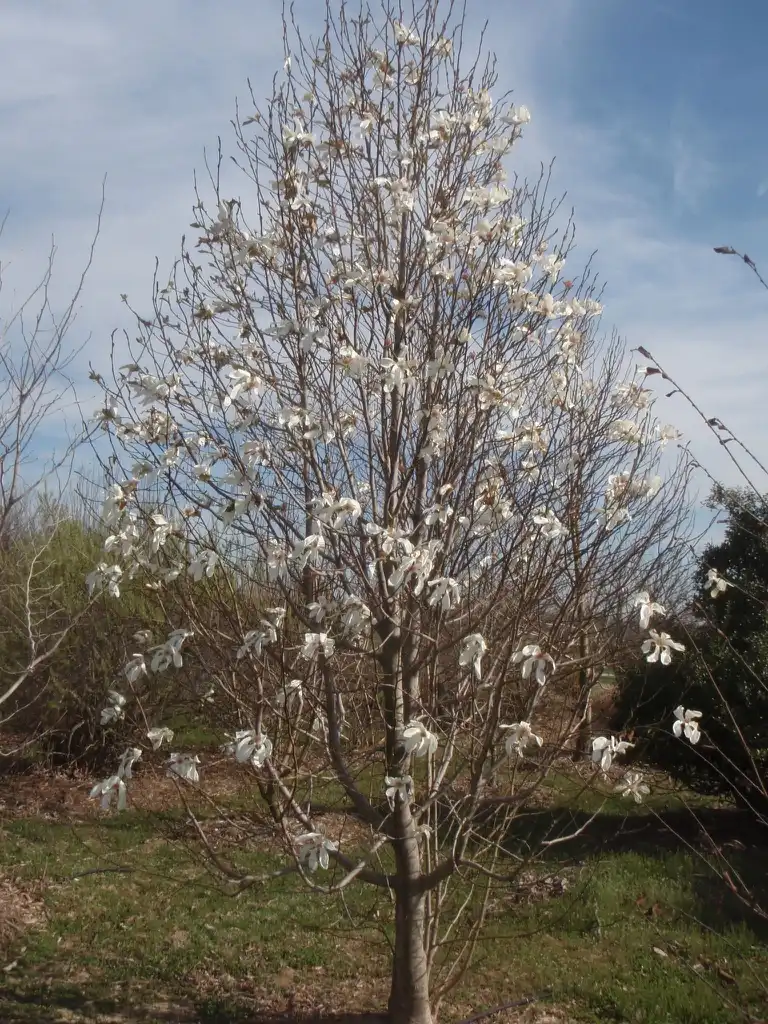
Phonetic Spelling:mag-NO-lee-ah KOE-bus
Genus:Magnolia
Species:kobus
Family:Magnoliaceae
This magnolia is among the first to bloom in spring, although it tends to struggle with flowering during its early years. It thrives in moist, nutrient-rich, well-drained loamy soils and prefers full sun to partial shade. The tree is adaptable to high pH levels, cold temperatures, and a variety of soil types, but it does not fare well in extreme soil conditions, whether too dry or too wet. Additionally, it is sensitive to most urban pollutants. Propagation through cuttings is straightforward, and the tree is generally free from pests. For optimal growth, it should be planted in a sheltered area away from strong winds, and it’s advisable to avoid southern exposures in full sun, as this can cause the buds to open prematurely in late winter. This species is recognized for its early spring blooms.
As a deciduous tree, it has a pyramidal shape in its youth, eventually developing into a broad, dense, conical or domed form that can reach heights of up to 49 inches. It is particularly noted for its fragrant, goblet- to cup-shaped white flowers, often tinged with pink, which bloom from late winter to early spring (March or April) before the leaves appear. It may take as long as 30 years for the tree to achieve its full flowering potential from seed. The leaves remain attractive throughout the growing season, though they offer little in terms of fall color, typically turning a mediocre yellowish-brown. Young trees often produce few flowers and may require up to 25 years to reach their peak flowering capability. In the fall, red seeds develop in pods (up to 3 inches long) that split open, attracting birds. The Kobus Magnolia bears resemblance to the star magnolia (Magnolia stellata), but is generally larger.
Quick Identification Tips:
Magnolia kobus Feature Summary