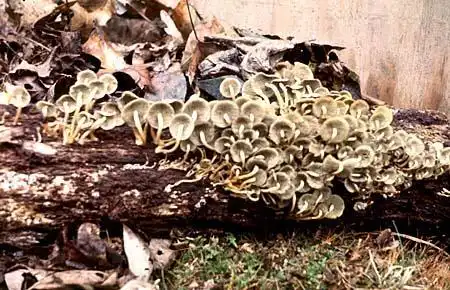
• Photo of Naematoloma fasciculare (Naematoloma fasciculares)

Plant Profile: Naematoloma fasciculare

Names

Sulfur Tuft

  • Photo of Naematoloma fasciculare (Naematoloma fasciculares)

Phonetic Spelling:nay-MAH-toh-LOH-muh fas-sik-yoo-LAIR-ee

Genus:Naematoloma

Species:fasciculare

Family:Strophariaceae

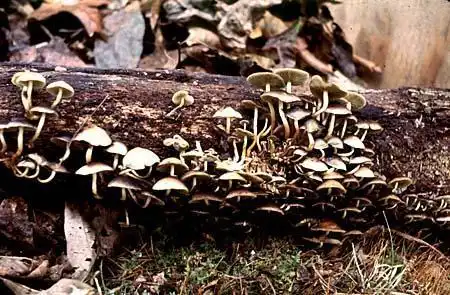
This mushroom typically grows in forests or natural environments, often appearing in dense clusters of 20 to 30 fruiting bodies. It can be found on logs and stumps from various tree species or directly on the soil, likely due to buried wood.

While it is not advisable to consume this mushroom, its distinctively bitter flavor, along with its growth habits and preferred habitats, makes it relatively easy to recognize. There are several similar species that do not have the bitter taste and are safe to eat, so caution is essential when distinguishing between them.

Identification Guide:

CAP: The cap is yellow, orange-yellow, or greenish-yellow, smooth in texture, and can reach up to 3 inches in diameter.

GILLS: The gills are attached to the stem, initially greenish-yellow and turning purplish-yellow as the spores mature.

STALK: The stalk is slender, measuring up to 1/3 inch in thickness, and changes from yellow to a brownish-yellow hue.

ANNULUS: The annulus is thin and fibrous, leaving only a fibrous ring on the stalk.

SPORE PRINT: The spore print is purple-brown.

TASTE: The flavor is extremely bitter.

Naematoloma fasciculare Feature Summary

Naematoloma fasciculare Image Gallery

Tags

#poisonous
#mushrooms

Similar Plants

Naematoloma fasciculare Feature Summary

Attributes
Poisonous to Humans
HIGHLY TOXIC, MAY BE FATAL IF EATEN! Abdominal pain and diarrhea. Extent and seriousness of poisoning by this fungus is not clear. An European case reported six deaths attributed to the ingestion of this fungus.
Steroid depsipeptides fasciculol E and fasciculol F
Leaves
Stems
Fruits
Whole Plant Traits
Poisonous
Mushroom
Landscape
Woodland
Naturalized Area
Poisonous to Humans

Naematoloma fasciculare Attributes

Naematoloma fasciculare: Country Or Region Of Origin

USA, NC
Naematoloma fasciculare: Distribution

Throughout NC

Naematoloma fasciculare Poisonous to Humans

Naematoloma fasciculare: Poison Symptoms

HIGHLY TOXIC, MAY BE FATAL IF EATEN! Abdominal pain and diarrhea. Extent and seriousness of poisoning by this fungus is not clear. An European case reported six deaths attributed to the ingestion of this fungus.

Naematoloma fasciculare: Poison Toxic Principle

Steroid depsipeptides fasciculol E and fasciculol F

Naematoloma fasciculare: Poison Severity

High
Low
Medium

Naematoloma fasciculare: Causes Contact Dermatitis

No
Yes

Naematoloma fasciculare: Poison Part

Bark
Flowers
Fruits
Leaves
Roots
Sap/Juice
Seeds
Stems

Naematoloma fasciculare Whole Plant Traits

Naematoloma fasciculare: Plant Type

Annual
Bulb
Carnivorous
Edible
Epiphyte
Fern
Ground Cover
Herb
Herbaceous Perennial
Houseplant
Mushroom
Native Plant
Ornamental Grasses and Sedges
Perennial
Poisonous
Rose
Shrub
Succulent
Tree
Turfgrass
Vegetable
Vine
Water Plant
Weed
Wildflower

Naematoloma fasciculare: Habit/Form

Arching
Ascending
Broad
Cascading
Climbing
Clumping
Columnar
Conical
Creeping
Dense
Erect
Horizontal
Irregular
Mounding
Multi-stemmed
Multi-trunked
Open
Oval
Prostrate
Pyramidal
Rounded
Spreading
Vase
Weeping

Naematoloma fasciculare Leaves

Naematoloma fasciculare: Hairs Present

No
Yes

Naematoloma fasciculare Stem

Naematoloma fasciculare: Stem Is Aromatic

No
Yes

Naematoloma fasciculare Landscape

Naematoloma fasciculare: Landscape Location

Coastal
Container
Hanging Baskets
Houseplants
Lawn
Meadow
Naturalized Area
Near Septic
Patio
Pond
Pool/Hardscape
Recreational Play Area
Riparian
Rock Wall
Slope/Bank
Small Space
Vertical Spaces
Walkways
Woodland

Naematoloma fasciculare: Problems

Allelopathic
Contact Dermatitis
Frequent Disease Problems
Frequent Insect Problems
Invasive Species
Malodorous
Messy
Poisonous to Humans
Problem for Cats
Problem for Children
Problem for Dogs
Problem for Horses
Short-lived
Spines/Thorns
Weak Wood
Weedy