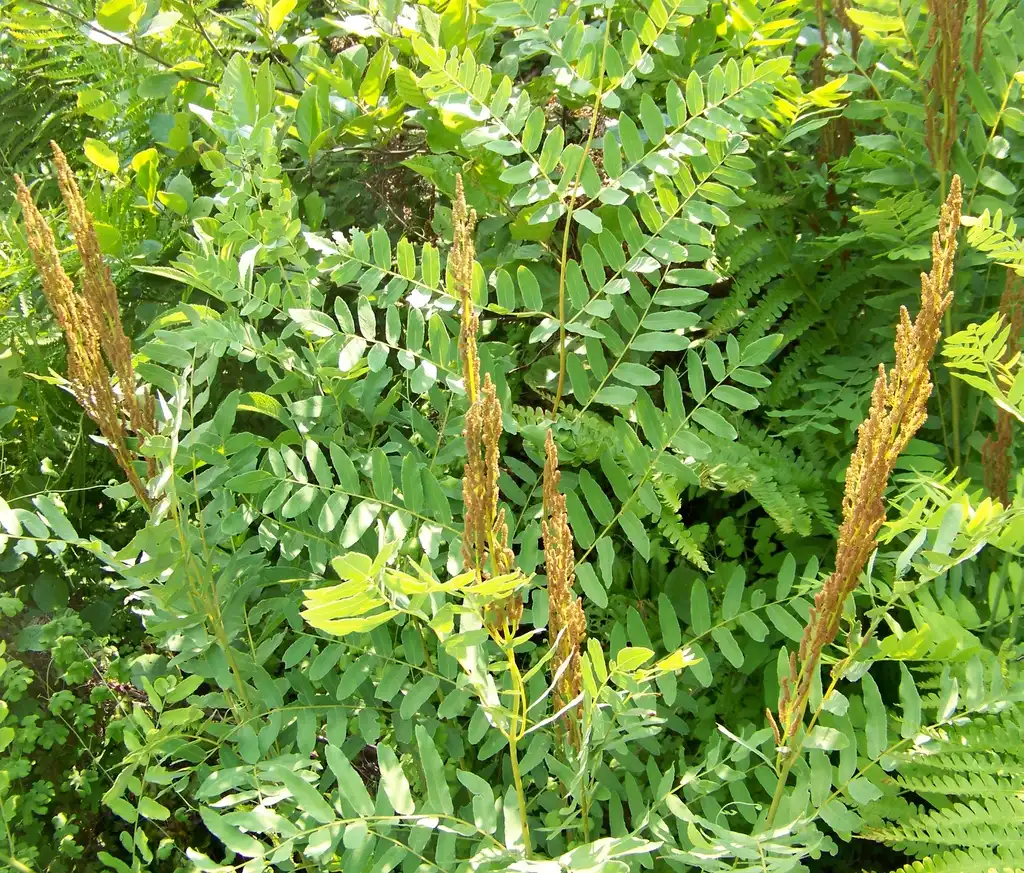
• Photo of Osmunda spectabilis (Osmunda spectabiliss)

Plant Profile: Osmunda spectabilis

Names

Royal Fern

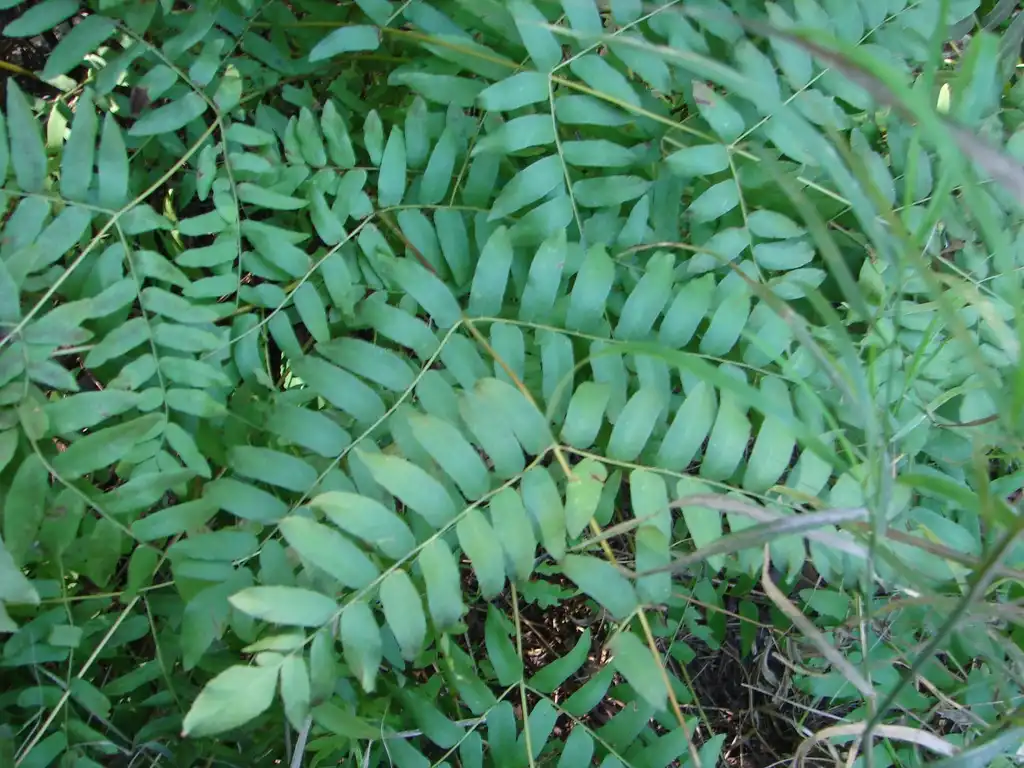
  • Photo of Osmunda spectabilis (Osmunda spectabiliss)

Phonetic Spelling:os-MUN-duh speck-TAB-ih-liss

Genus:Osmunda

Species:spectabilis

Family:Osmundaceae

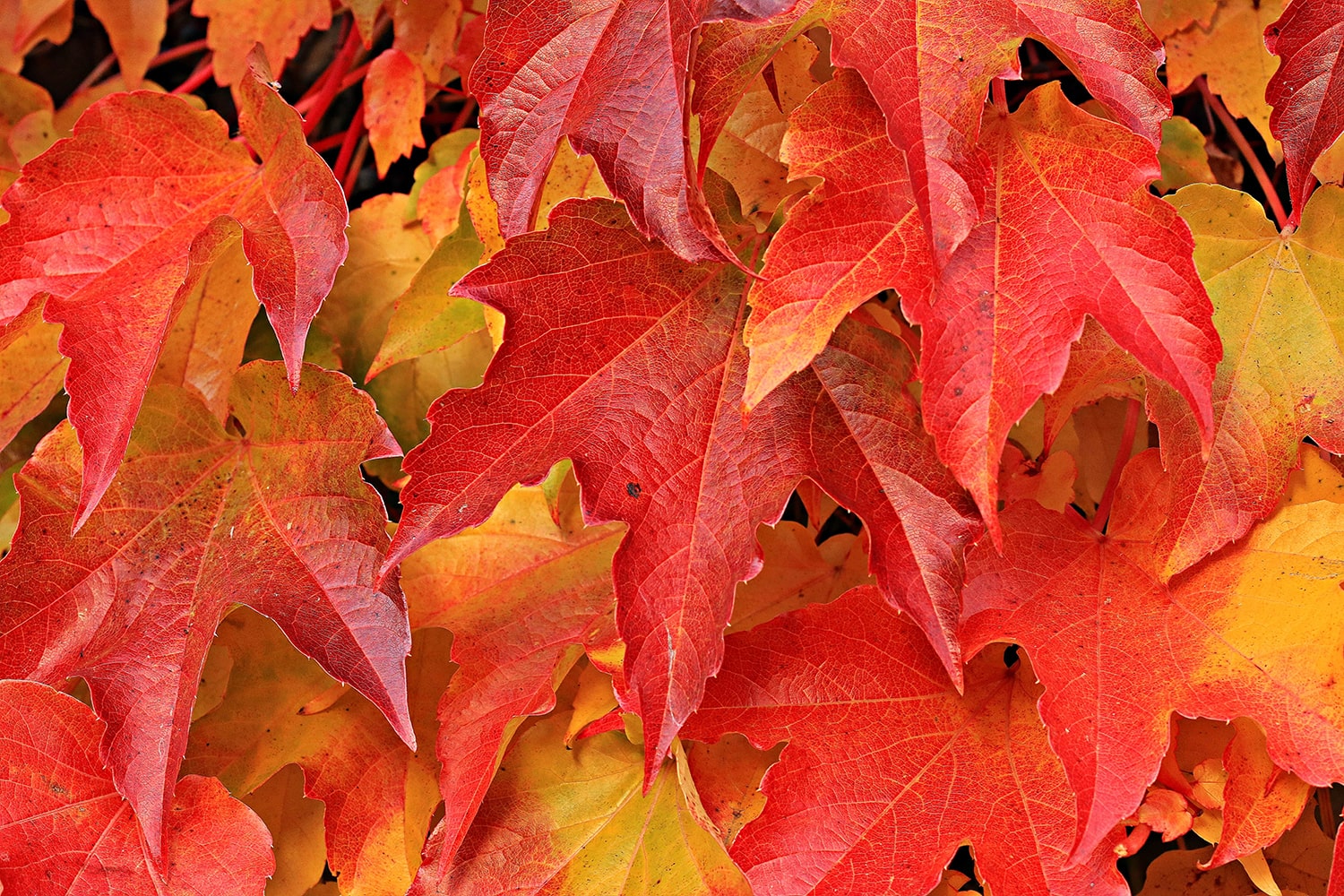
The Royal Fern is a deciduous species indigenous to the moist, acidic, and nutrient-rich soils found in shaded woodlands, marshes, floodplains, swamp forests, and various wetlands across North and South America. This fern tends to grow in clumps and serves as a refuge for small mammals. In the fall, it showcases a stunning yellow-bronze hue.

Osmunda spectabilis Feature Summary

Osmunda spectabilis Image Gallery

Tags

#fern
#small mammals
#NC native
#deer resistant
#native fern
#Coastal OBL
#food source herbage
#Piedmont Mountains OBL
#bird friendly
#audubon

Similar Plants

Osmunda spectabilis Feature Summary

Fruit
No fruits. This plants reproduces via spores.
Flowers
Whole Plant Traits
Native Plant
Fern
Cultural Conditions
Full sun (6 or more hours of direct sunlight a day)
Partial Shade (Direct sunlight only part of the day, 2-6 hours)
Dappled Sunlight (Shade through upper canopy all day)
Deep shade (Less than 2 hours to no direct sunlight)
Good Drainage
Moist
Frequent Standing Water
Coastal
Mountains
Piedmont
Leaves
Compound (Pinnately , Bipinnately, Palmately)
Fronds
Landscape
Native Garden
Shade Garden
Songbirds
Small Mammals

Osmunda spectabilis Attributes

Osmunda spectabilis: Country Or Region Of Origin

North and South America
Osmunda spectabilis: Particularly Resistant To (Insects/Diseases/Other Problems)

Heavy shade, Deer

Osmunda spectabilis: Life Cycle

Annual
Biennial
Bulb
Perennial
Woody

Osmunda spectabilis Fruit

Osmunda spectabilis: Fruit Description

No fruits. This plants reproduces via spores.

Osmunda spectabilis Flowers

Osmunda spectabilis: Flower Description

No flowers.

Osmunda spectabilis Whole Plant Traits

Osmunda spectabilis: Plant Type

Annual
Bulb
Carnivorous
Edible
Epiphyte
Fern
Ground Cover
Herb
Herbaceous Perennial
Houseplant
Mushroom
Native Plant
Ornamental Grasses and Sedges
Perennial
Poisonous
Rose
Shrub
Succulent
Tree
Turfgrass
Vegetable
Vine
Water Plant
Weed
Wildflower

Osmunda spectabilis Cultural Conditions

Osmunda spectabilis: Light

Dappled Sunlight (Shade through upper canopy all day)
Deep shade (Less than 2 hours to no direct sunlight)
Full sun (6 or more hours of direct sunlight a day)
Partial Shade (Direct sunlight only part of the day, 2-6 hours)

Osmunda spectabilis: Soil Drainage

Frequent Standing Water
Good Drainage
Moist
Occasional Flooding
Occasionally Dry
Occasionally Wet
Very Dry

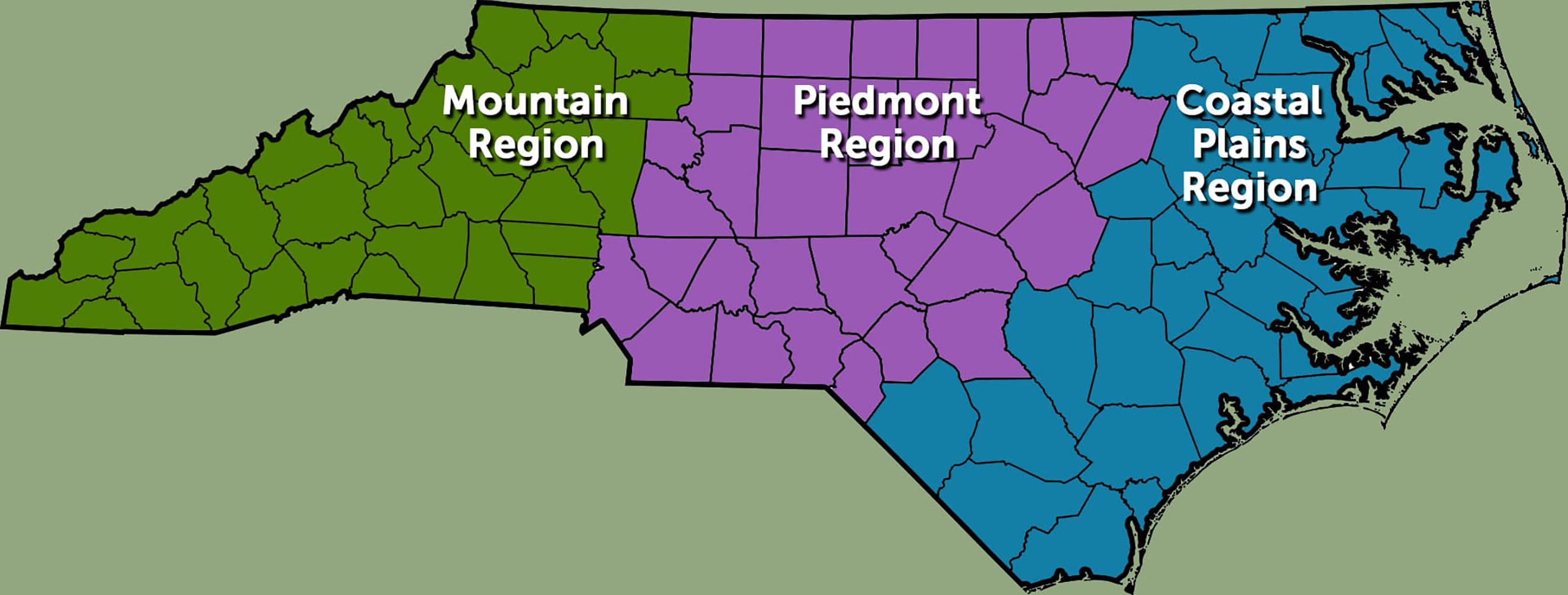
Osmunda spectabilis: NC Region

Coastal
Mountains
Piedmont

Osmunda spectabilis Leaves

Osmunda spectabilis: Deciduous Leaf Fall Color

spa
Gold/Yellow

Osmunda spectabilis: Leaf Type

Compound (Pinnately , Bipinnately, Palmately)
Fronds
Needles
Sheath
Simple

Osmunda spectabilis: Hairs Present

No
Yes

Osmunda spectabilis Stem

Osmunda spectabilis: Stem Is Aromatic

No
Yes

Osmunda spectabilis Landscape

Osmunda spectabilis: Landscape Theme

Asian Garden
Butterfly Garden
Children's Garden
Cottage Garden
Cutting Garden
Drought Tolerant Garden
Edible Garden
English Garden
Fairy Garden
Garden for the Blind
Native Garden
Nighttime Garden
Pollinator Garden
Rain Garden
Rock Garden
Shade Garden
Water Garden
Winter Garden

Osmunda spectabilis: Resistance To Challenges

Black Walnut
Compaction
Deer
Diseases
Drought
Dry Soil
Erosion
Fire
Foot Traffic
Heat
Heavy Shade
Humidity
Insect Pests
Pollution
Poor Soil
Rabbits
Salt
Slugs
Squirrels
Storm damage
Urban Conditions
Voles
Wet Soil
Wind

Osmunda spectabilis: Attracts

Bats
Bees
Butterflies
Frogs
Hummingbirds
Moths
Pollinators
Predatory Insects
Reptiles
Small Mammals
Songbirds
Specialized Bees