American Hop-hornbeam, Eastern Hop Hornbeam, Hop Hornbeam, Hop Horn Beam, Ironwood, Leverwood, Wooly Hop hornbeam
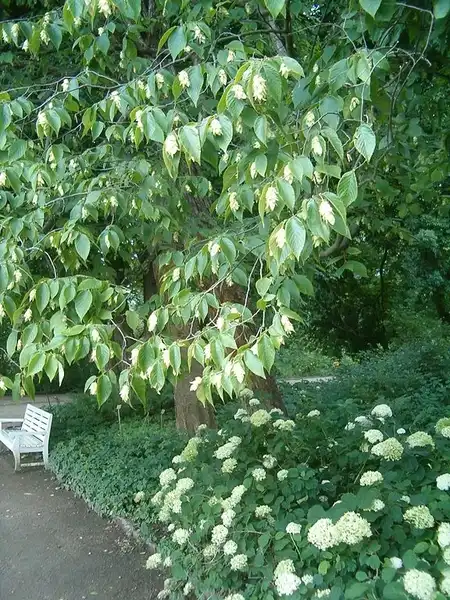
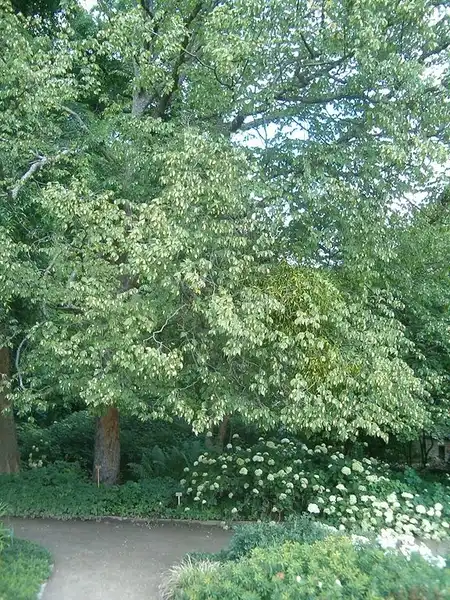
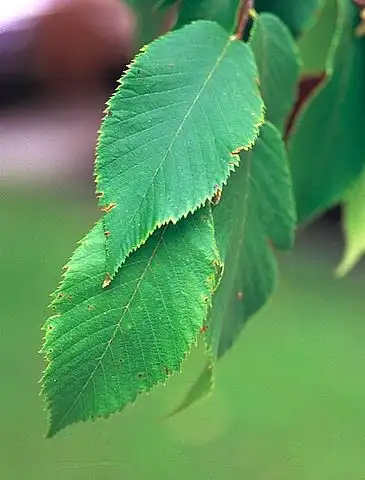
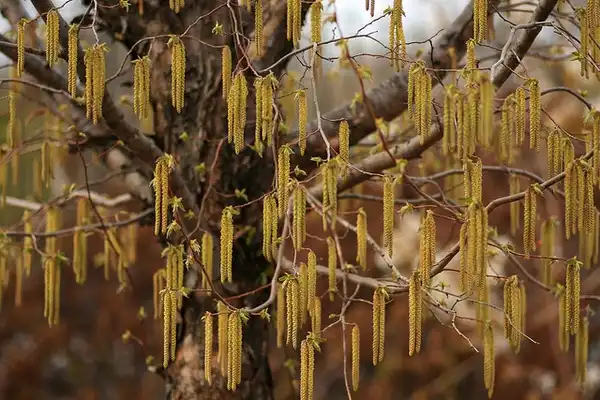
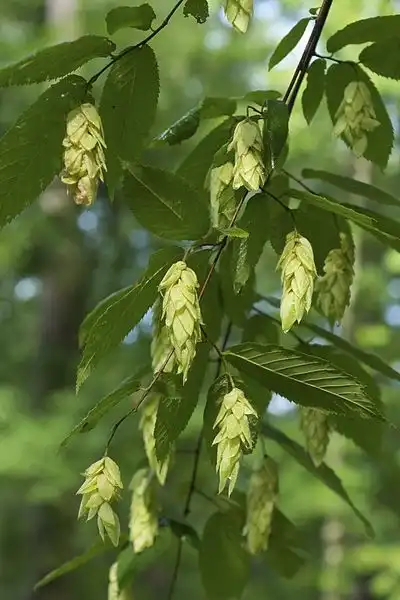
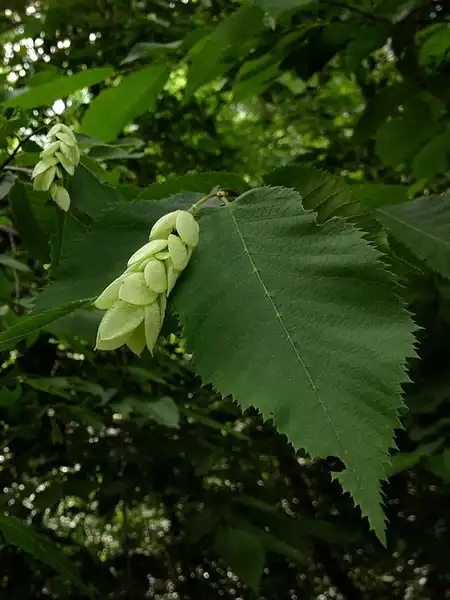
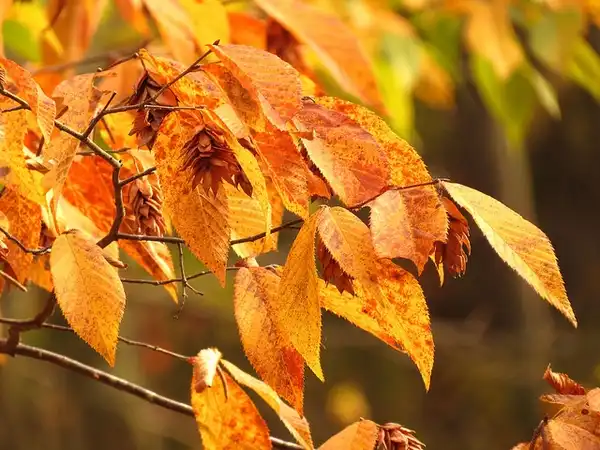
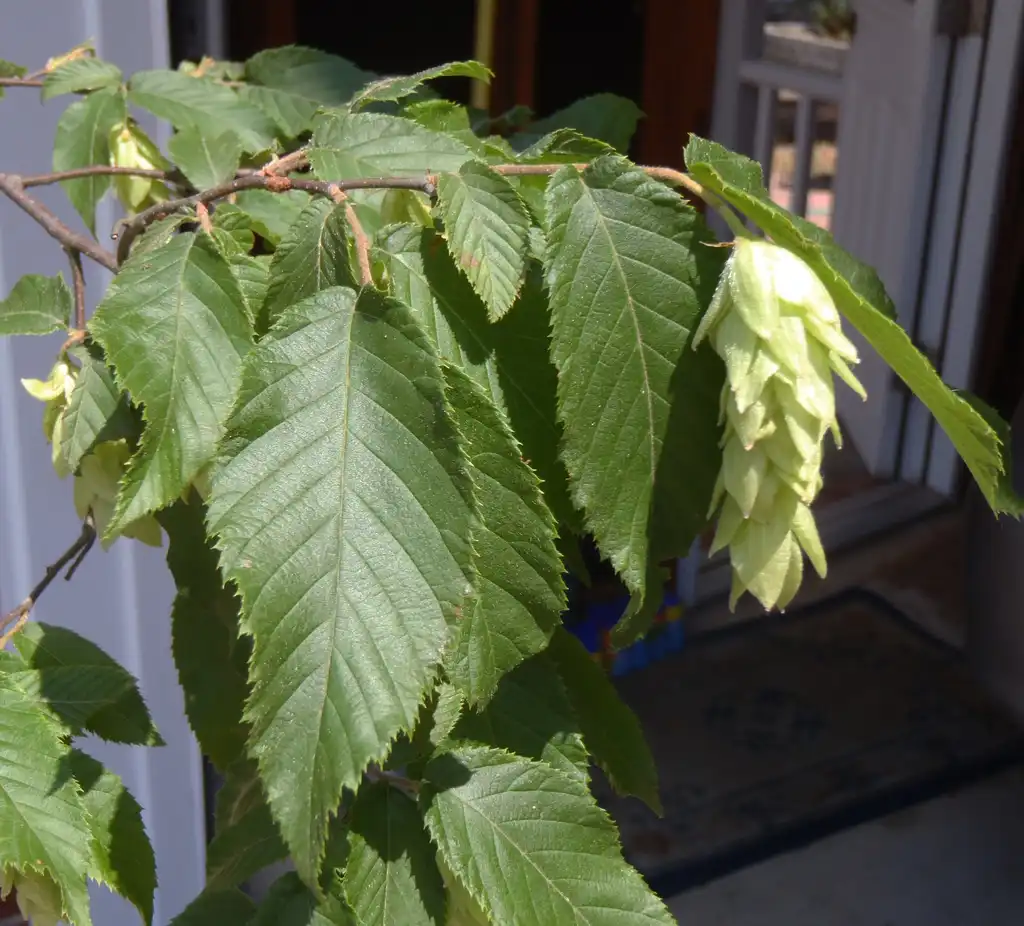
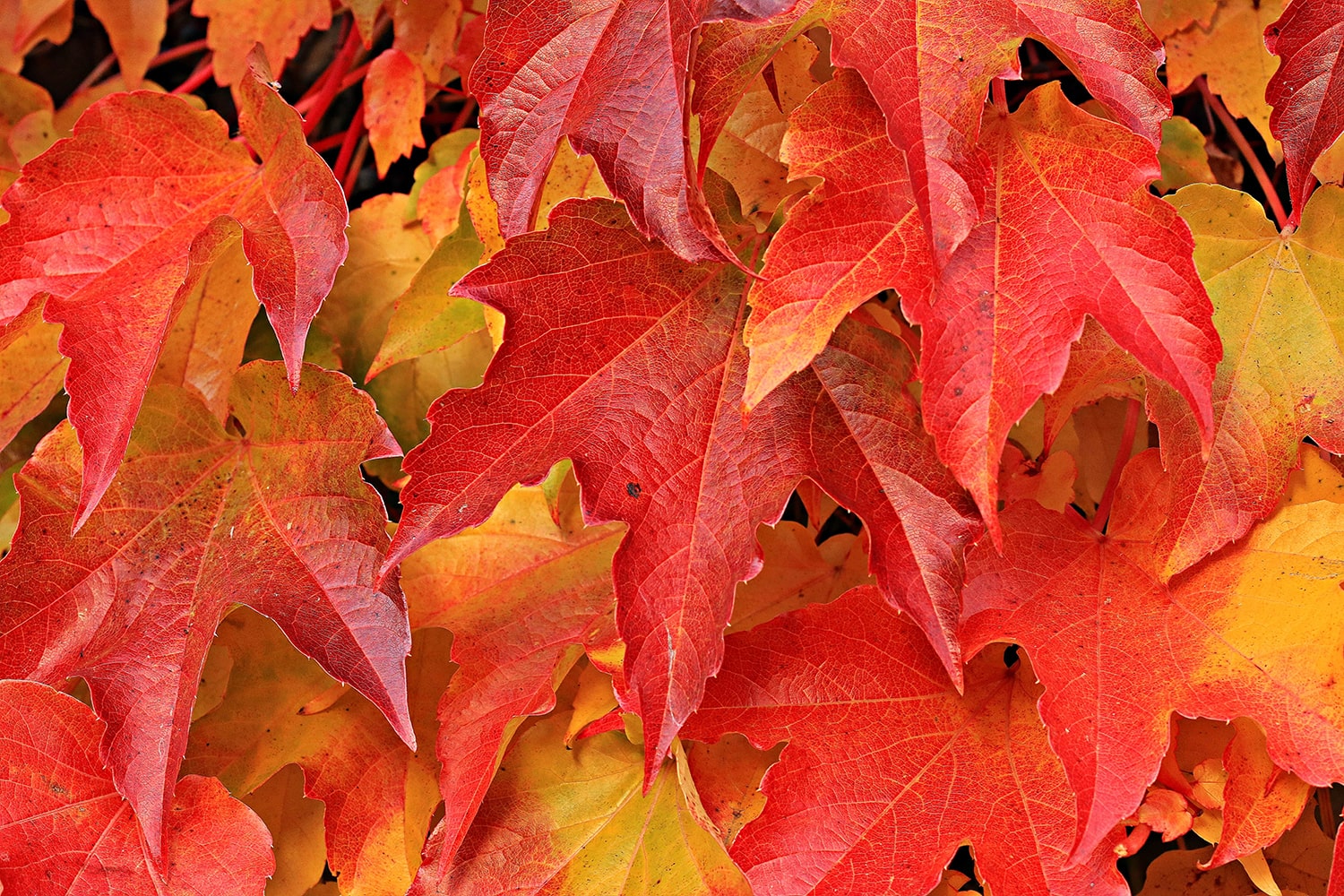
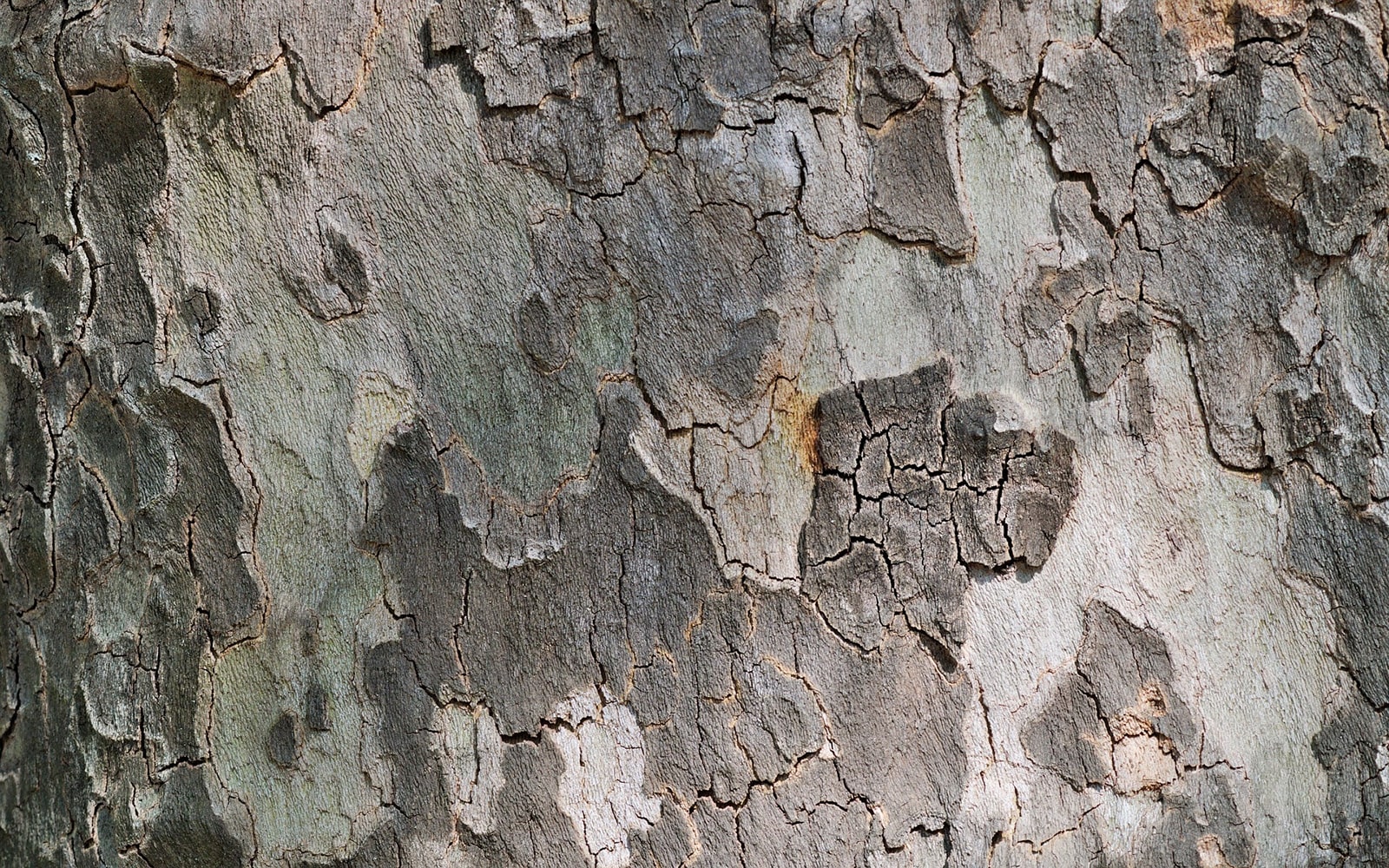
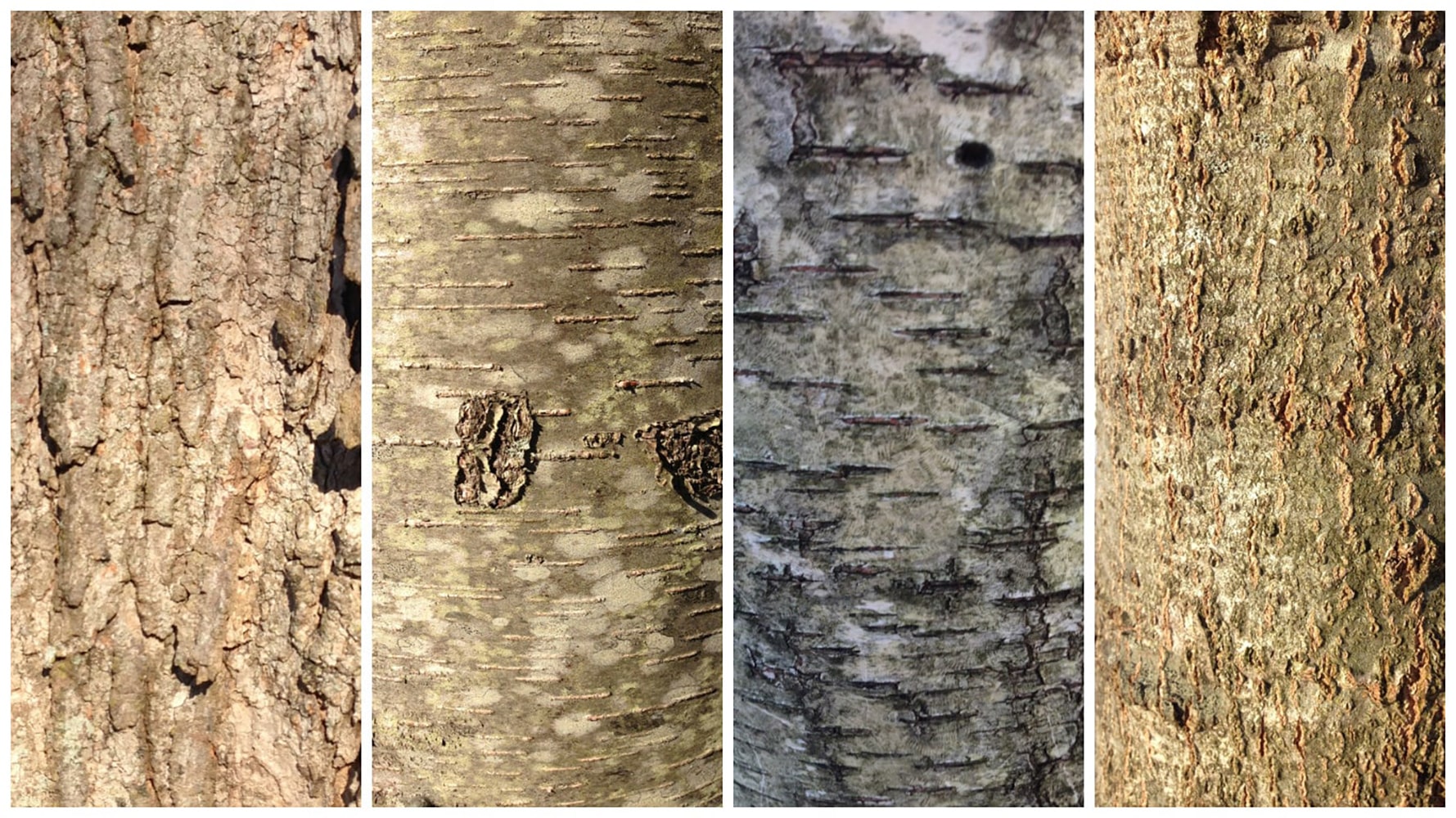
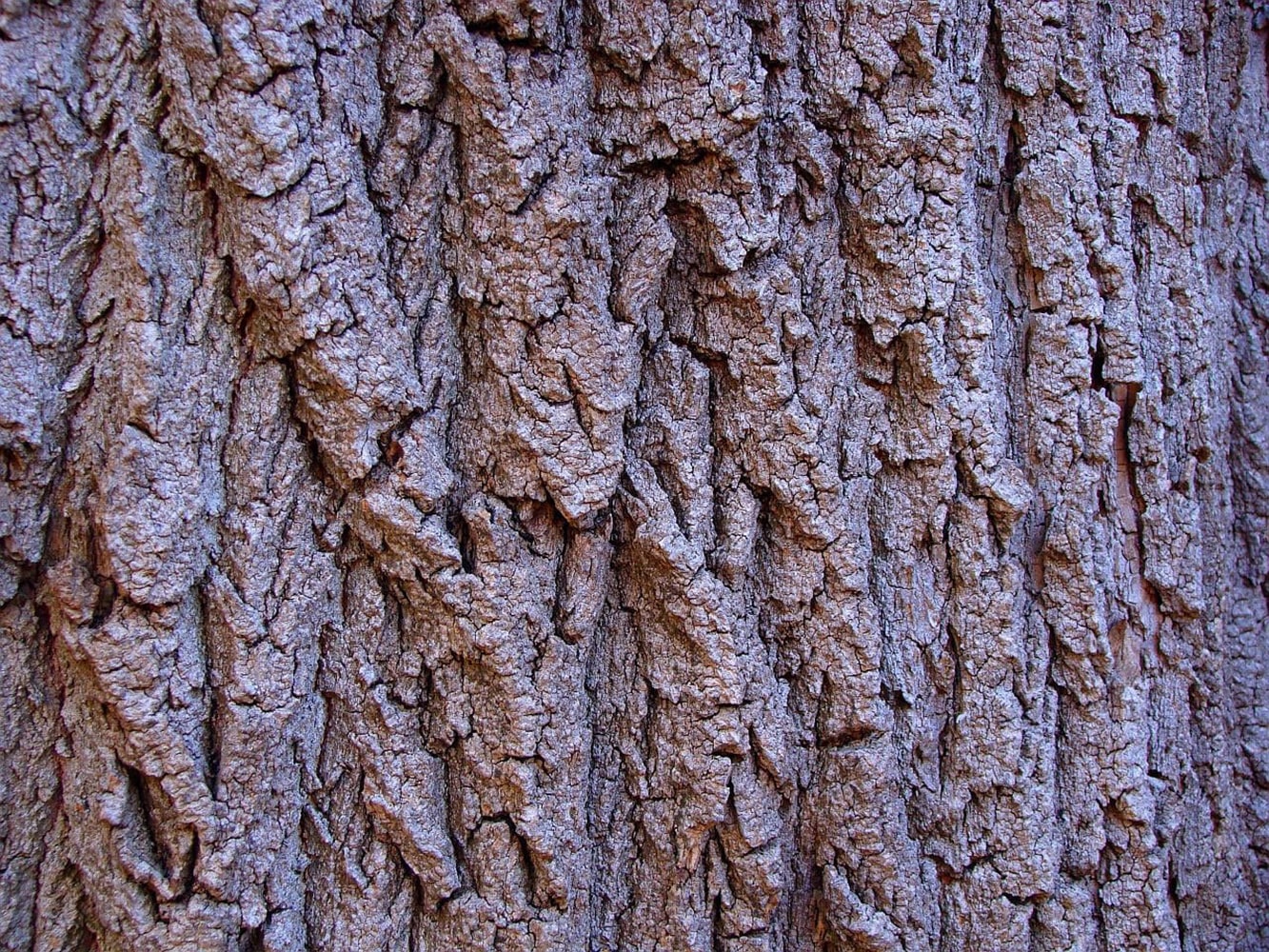
Ostrya virginiana, commonly known as Hop Hornbeam, is a slender deciduous tree that typically reaches heights of 20 to 35 feet and has a trunk diameter of 7 to 10 inches, though some individuals can grow up to 50 feet tall with a diameter of 2 feet. This species thrives in dry, rocky forest environments. Its leaves are arranged alternately, featuring a doubly serrated edge and a fuzzy petiole. The bark of young trees is smooth and reddish-brown, adorned with horizontal lenticels, while older trees develop small plates and loose scales. In the spring, the tree produces clusters of slender, cylindrical flowers that are yellow-green and come in male and female forms. Additionally, it bears small, ribbed nutlets.
As a native deciduous shade tree belonging to the Betulaceae family, Hop Hornbeam can spread its canopy between 20 to 30 feet. Its common name derives from the density of its wood and the hop-like appearance of its fruit. This tree is often found scattered throughout the upland and mountainous areas of North Carolina, with some larger specimens thriving in deep, well-drained soils within mixed hardwood stands in bottomland regions. The leaves can resemble those of birch trees, and its overall shape may be mistaken for that of an elm. The shaggy bark adds winter interest, and a row of Eastern hop hornbeam can be pruned to form an attractive hedge.
This tree is relatively easy to cultivate and adapts well to various soil types, particularly favoring rich loam. It requires minimal light and prefers deep, open loamy conditions. Although it grows slowly, Eastern hop hornbeam serves as a small to medium understory tree. It is drought-tolerant and can thrive in heavy clay soils, making it a low-maintenance option suitable for urban landscapes. It can be planted in lawns, along driveways, streets, or within woodland gardens. However, it is important to note that this tree does not tolerate salt and is not suited for coastal environments.
In terms of pests, Hop Hornbeam does not face significant threats from insects or diseases, although gypsy moths can occasionally pose a problem.