Plant Profile: Plectranthus forsteri 'Marginatus'

Names

Swedish Ivy

  • Photo of Plectranthus forsteri 'Marginatus' (Plectranthus forsteri 'Marginatus's)

Phonetic Spelling:plek-TRAN-thus FOR-ster-eye mar-jin-AH-tus

Genus:Plectranthus

Species:forsteri

Family:Lamiaceae

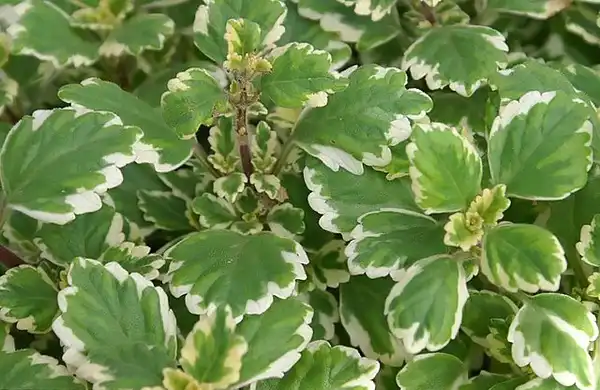
This appealing herbaceous perennial belongs to the Lamiaceae family and features variegated, aromatic leaves. When the leaves are bruised, they release a subtle citrus scent. In colder regions, it is often cultivated as a container annual, while it demonstrates drought resistance once it is well-established. Additionally, it can thrive as a houseplant in bright, predominantly sunny locations. The plant is prized for its vibrant green foliage adorned with ruffled white edges.

It thrives best in rich, humus-rich soils that are dry to medium in moisture and well-drained, ideally in partial shade. Optimal growth occurs in areas that receive either partial shade or dappled sunlight, along with consistent moisture. It is advisable to avoid planting in poorly drained clay soils.

This particular variety is especially recognized for its striking foliage.

In terms of pests and diseases, it faces no significant issues. However, keep an eye out for mealybugs, scale, and mites. In frost-free regions, this plant may become quite vigorous in the garden.

Plectranthus forsteri 'Marginatus' Feature Summary

Plectranthus forsteri 'Marginatus' Image Gallery

Tags

#showy flowers
#houseplant
#drought tolerant
#fragrant leaves
#variegated leaves
#winter interest
#deer resistant
#groundcover
#dry soils tolerant
#partial shade tolerant
#container plants

Similar Plants

Plectranthus forsteri 'Marginatus' is often confused with:

Plectranthus forsteri 'Marginatus' Feature Summary

Flowers
Pale pink to white tubular, two-lipped, in 6" racemes. Not showy.
Pink
White
Leaves
Scallop-edged, light green leaves. Variegated with creamy white margins on reddish upright stems that eventually lay down and trail along the ground as they get older.
Green
White
3-6 inches
Attributes
Whole Plant Traits
Perennial
Ground Cover
Spreading
Medium
Cultural Conditions
Partial Shade (Direct sunlight only part of the day, 2-6 hours)
Dappled Sunlight (Shade through upper canopy all day)
Good Drainage
Landscape
Winter Garden
Border
Foundation Planting
Mass Planting
Accent
Small groups
Container
Naturalized Area
Houseplants
Hanging Baskets

Plectranthus forsteri 'Marginatus' Flowers

Plectranthus forsteri 'Marginatus': Flower Description

Pale pink to white tubular, two-lipped, in 6" racemes. Not showy.
Plectranthus forsteri 'Marginatus': Flower Color

filter_vintage
Pink
filter_vintage
White

Plectranthus forsteri 'Marginatus': Flower Inflorescence

Catkin
Corymb
Cyme
Head
Insignificant
Panicle
Raceme
Solitary
Spadix
Spike
Umbel

Plectranthus forsteri 'Marginatus': Flower Bloom Time

Winter
Spring
Summer
Fall

Plectranthus forsteri 'Marginatus': Flower Shape

Bell
Cross
Crown
Cup
Dome
Funnel
Irregular
Lipped
Radial
Saucer
Star
Trumpet
Tubular
Urn
Wheel

Plectranthus forsteri 'Marginatus' Leaves

Plectranthus forsteri 'Marginatus': Leaf Description

Scallop-edged, light green leaves. Variegated with creamy white margins on reddish upright stems that eventually lay down and trail along the ground as they get older.

Plectranthus forsteri 'Marginatus': Leaf Color

spa
Green
spa
White

Plectranthus forsteri 'Marginatus': Hairs Present

No
Yes

Plectranthus forsteri 'Marginatus': Leaf Length

< 1 inch
1-3 inches
3-6 inches
> 6 inches

Plectranthus forsteri 'Marginatus': Leaf Value To Gardener

Edible
Fragrant
Good Cut
Good Dried
Long-lasting
Showy

Plectranthus forsteri 'Marginatus' Attributes

Plectranthus forsteri 'Marginatus': Life Cycle

Annual
Biennial
Bulb
Perennial
Woody

Plectranthus forsteri 'Marginatus': Recommended Propagation Strategy

Division
Grafting
Layering
Leaf Cutting
Root Cutting
Seed
Stem Cutting

Plectranthus forsteri 'Marginatus' Whole Plant Traits

Plectranthus forsteri 'Marginatus': Plant Type

Annual
Bulb
Carnivorous
Edible
Epiphyte
Fern
Ground Cover
Herb
Herbaceous Perennial
Houseplant
Mushroom
Native Plant
Ornamental Grasses and Sedges
Perennial
Poisonous
Rose
Shrub
Succulent
Tree
Turfgrass
Vegetable
Vine
Water Plant
Weed
Wildflower

Plectranthus forsteri 'Marginatus': Habit/Form

Arching
Ascending
Broad
Cascading
Climbing
Clumping
Columnar
Conical
Creeping
Dense
Erect
Horizontal
Irregular
Mounding
Multi-stemmed
Multi-trunked
Open
Oval
Prostrate
Pyramidal
Rounded
Spreading
Vase
Weeping

Plectranthus forsteri 'Marginatus': Texture

Fine
Medium
Coarse

Plectranthus forsteri 'Marginatus' Cultural Conditions

Plectranthus forsteri 'Marginatus': Light

Dappled Sunlight (Shade through upper canopy all day)
Deep shade (Less than 2 hours to no direct sunlight)
Full sun (6 or more hours of direct sunlight a day)
Partial Shade (Direct sunlight only part of the day, 2-6 hours)

Plectranthus forsteri 'Marginatus': Soil Drainage

Frequent Standing Water
Good Drainage
Moist
Occasional Flooding
Occasionally Dry
Occasionally Wet
Very Dry

Plectranthus forsteri 'Marginatus': Available Space To Plant

12 inches-3 feet
12-24 feet
24-60 feet
3 feet-6 feet
6-feet-12 feet
Less than 12 inches
more than 60 feet

Plectranthus forsteri 'Marginatus': USDA Plant Hardiness Zone

thermostat
10a
thermostat
10b
thermostat
11a
thermostat
11b

Plectranthus forsteri 'Marginatus' Stem

Plectranthus forsteri 'Marginatus': Stem Is Aromatic

No
Yes

Plectranthus forsteri 'Marginatus' Landscape

Plectranthus forsteri 'Marginatus': Landscape Theme

Asian Garden
Butterfly Garden
Children's Garden
Cottage Garden
Cutting Garden
Drought Tolerant Garden
Edible Garden
English Garden
Fairy Garden
Garden for the Blind
Native Garden
Nighttime Garden
Pollinator Garden
Rain Garden
Rock Garden
Shade Garden
Water Garden
Winter Garden

Plectranthus forsteri 'Marginatus': Design Feature

Accent
Barrier
Border
Flowering Tree
Foundation Planting
Hedge
Mass Planting
Screen/Privacy
Security
Shade Tree
Small groups
Small Tree
Specimen
Street Tree
Understory Tree

Plectranthus forsteri 'Marginatus': Landscape Location

Coastal
Container
Hanging Baskets
Houseplants
Lawn
Meadow
Naturalized Area
Near Septic
Patio
Pond
Pool/Hardscape
Recreational Play Area
Riparian
Rock Wall
Slope/Bank
Small Space
Vertical Spaces
Walkways
Woodland