Rhus michauxii: Country Or Region Of Origin
North Carolina and South Carolina
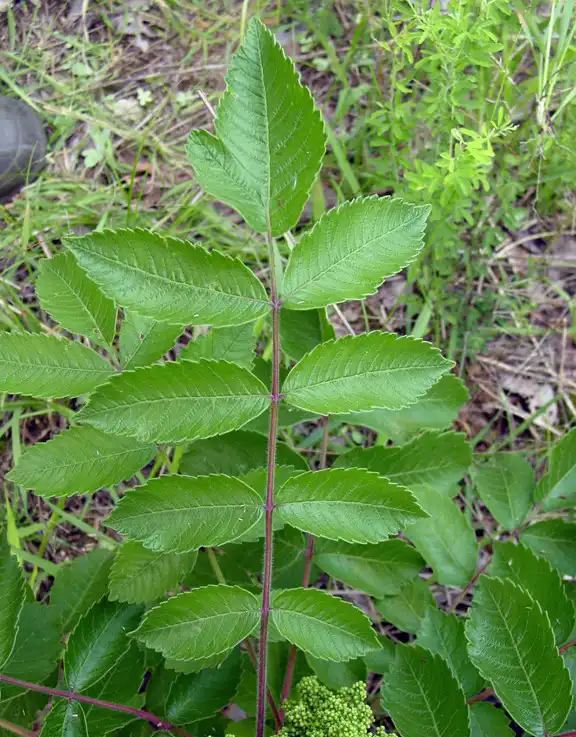
Phonetic Spelling:RHOOS miss-SHOWKS-ee-eye
Genus:Rhus
Species:michauxii
Family:Anacardiaceae
Michaux's Sumac is a plant that is historically found only in the Inner Coastal Plain and lower Piedmont regions of North Carolina, South Carolina, and Georgia. It thrives in dry, open environments such as rocky or sandy woodlands situated over calcium, magnesium, or iron-rich bedrock. This species often grows in disturbed areas, including highway rights-of-way, roadsides, sites affected by fire, and the peripheries of maintained clearings.
The plant propagates through suckers, which can extend up to 20 feet, allowing it to form dense colonies. Notably, Michaux's Sumac has separate male and female flowers on different plants. However, due to habitat fragmentation, these male and female plants are frequently isolated from one another, hindering sexual reproduction. There have been no documented pollinators for this species. To ensure its survival, existing populations are under protection and management, as it is classified as an endangered species by both federal and state authorities.
In terms of pests and diseases, Michaux's Sumac is not recommended for residential landscaping.
Rhus michauxii Feature Summary