The Rubus genus encompasses blackberries, dewberries, and raspberries, with most species characterized by their prickly or bristly stems and compound leaves. Notably, flowers and fruits typically develop on last year's canes rather than new growth, necessitating careful pruning to avoid removing the canes that will produce berries in the following season. There are variations among species; for instance, some grow as upright or arching shrubs reaching heights of up to 8 feet, while others spread along the ground like vines. Dewberries bear fruit in the spring, whereas blackberries and raspberries yield their harvest in the summer. Overall, the Rubus genus includes some of the most vital plants for wildlife in the southeastern United States.
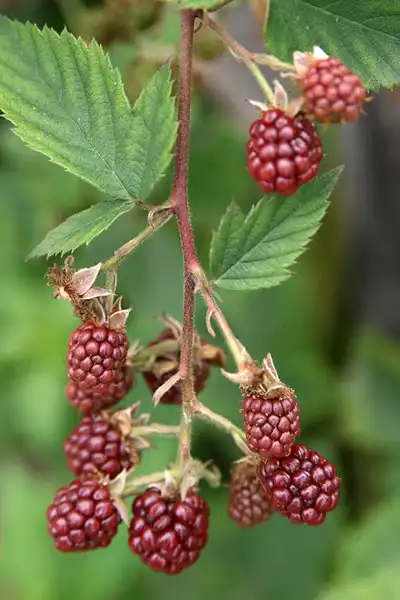
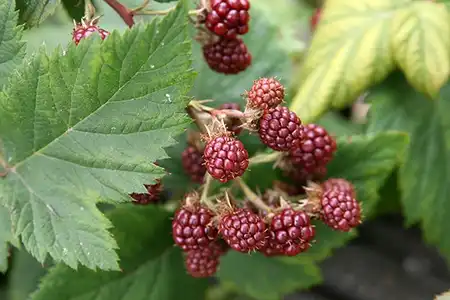
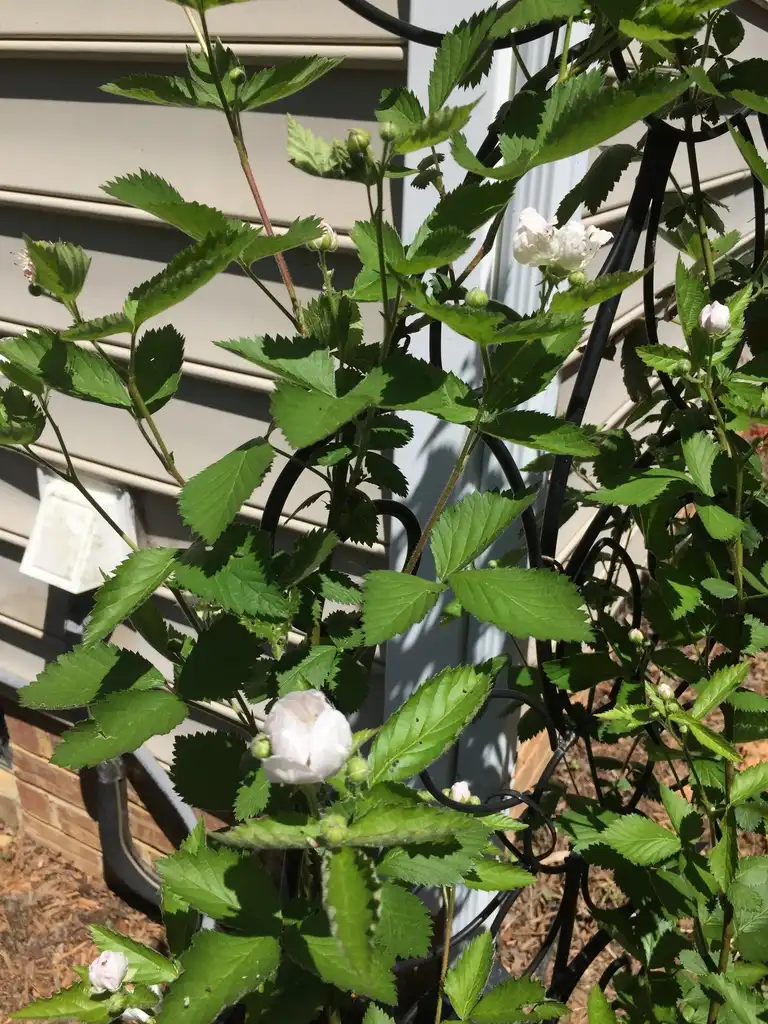
The smooth blackberry is distinguished by its nearly smooth stems, devoid of prickles and spines. Its leaves are also smooth, featuring only a few hairs on the underside. The fruit is delicious whether eaten fresh or used in pies and jams, offering a sweet, juicy flavor that stands out among other blackberry varieties. This plant propagates through rhizomes, typically located 3 to 4 inches beneath the soil. Thriving in relatively barren environments and capable of sprouting after fires, the smooth blackberry is often employed in the reclamation of disturbed areas. It commonly grows in understory habitats, including forest edges, meadows, fields, ridges, riverbanks, shrub thickets, and wetland margins. Its distribution ranges from Newfoundland to Ontario and along the Atlantic Coast down to Georgia, extending inland to Kentucky and Tennessee. It can also be found in mature spruce-fir forests in North Carolina and is prevalent at higher elevations in mountainous regions.
Dense thickets of these shrubs offer excellent nesting cover for birds, creating nearly impenetrable habitats for various wildlife, including birds, rabbits, and other animals. Game birds, songbirds, raccoons, chipmunks, and squirrels all enjoy the fruits. The flowers' nectar and pollen attract a variety of insects, particularly both long-tongued and short-tongued bees. This plant shows moderate resistance to deer damage and provides year-round cover. Its blooms also draw butterflies and other insects, while the fruits are favored by songbirds, small mammals, foxes, raccoons, and black bears. In winter, birds and small mammals consume the seeds left behind from decaying fruit, while white-tailed deer and rabbits feed on the leaves.
Regarding pests and diseases, plants in this genus are particularly vulnerable to honey fungus. However, they generally do not face significant insect or disease issues, though they can become invasive and challenging to eradicate. Due to their aggressive growth and ease of spread, caution is advised when choosing a planting location, and herbicides may be necessary for complete removal.