Rubus odoratus: Country Or Region Of Origin
Eastern United States
Phonetic Spelling:ROO-bus oh-dor-AY-tuss
Genus:Rubus
Species:odoratus
Family:Rosaceae
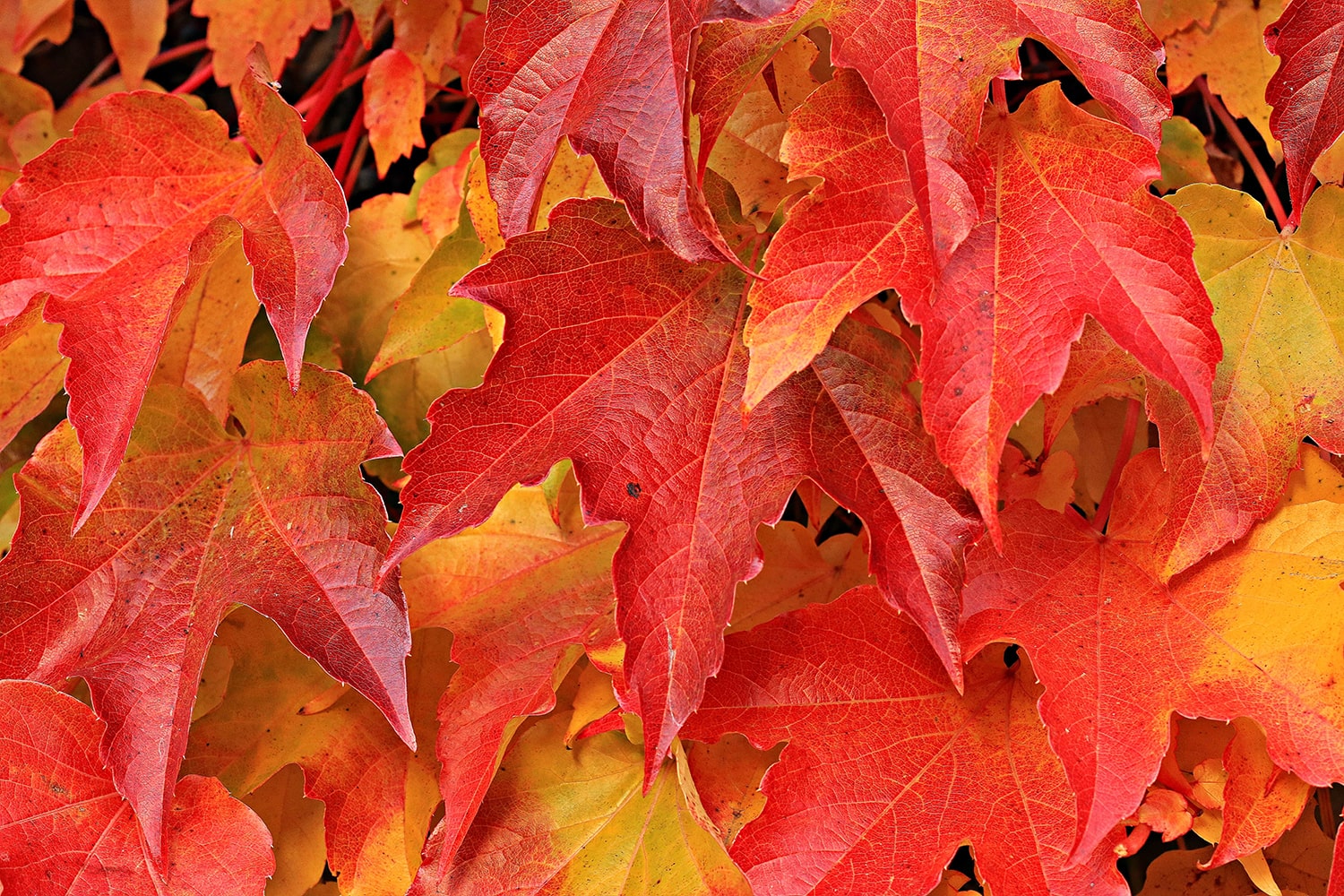
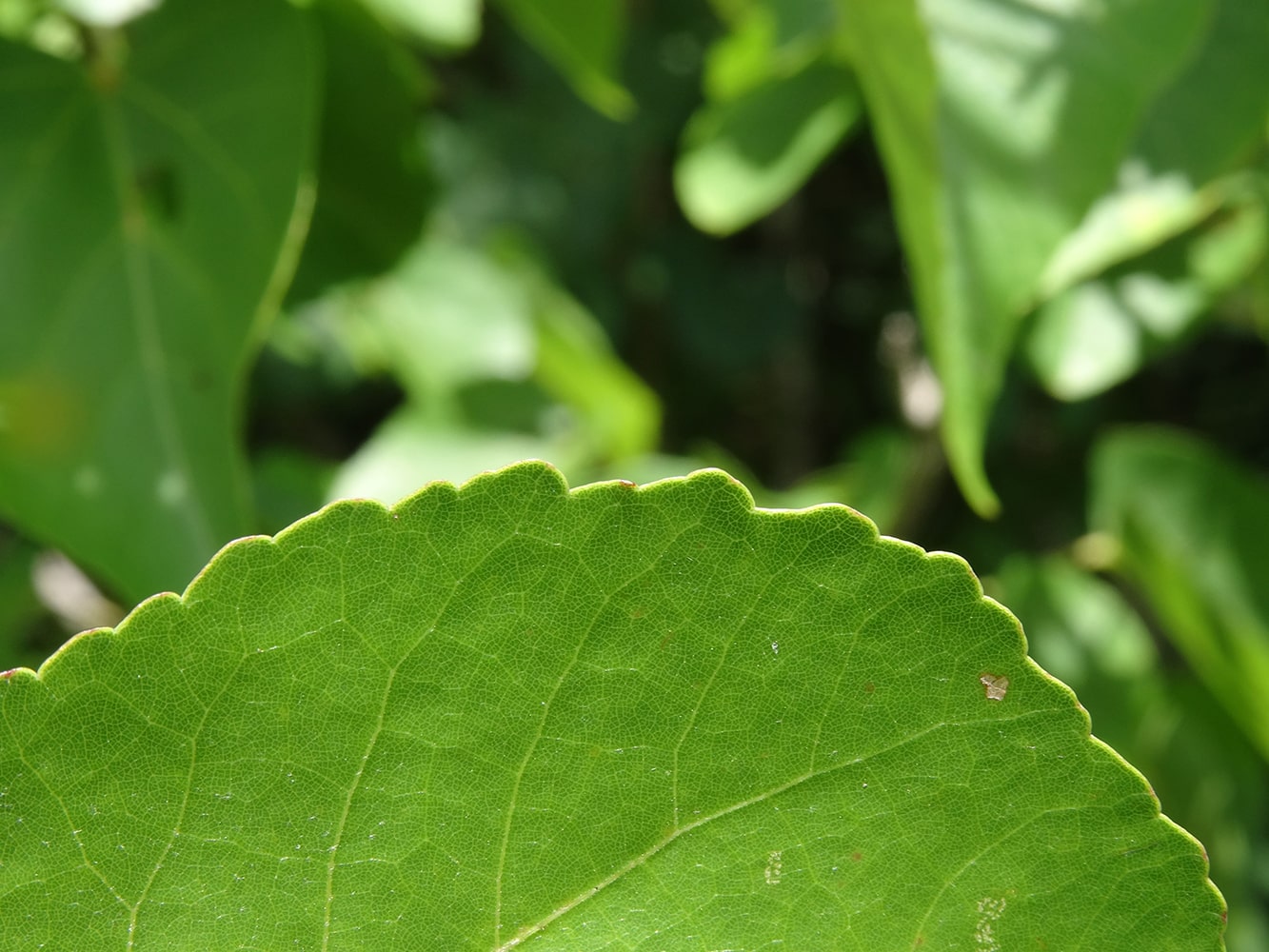
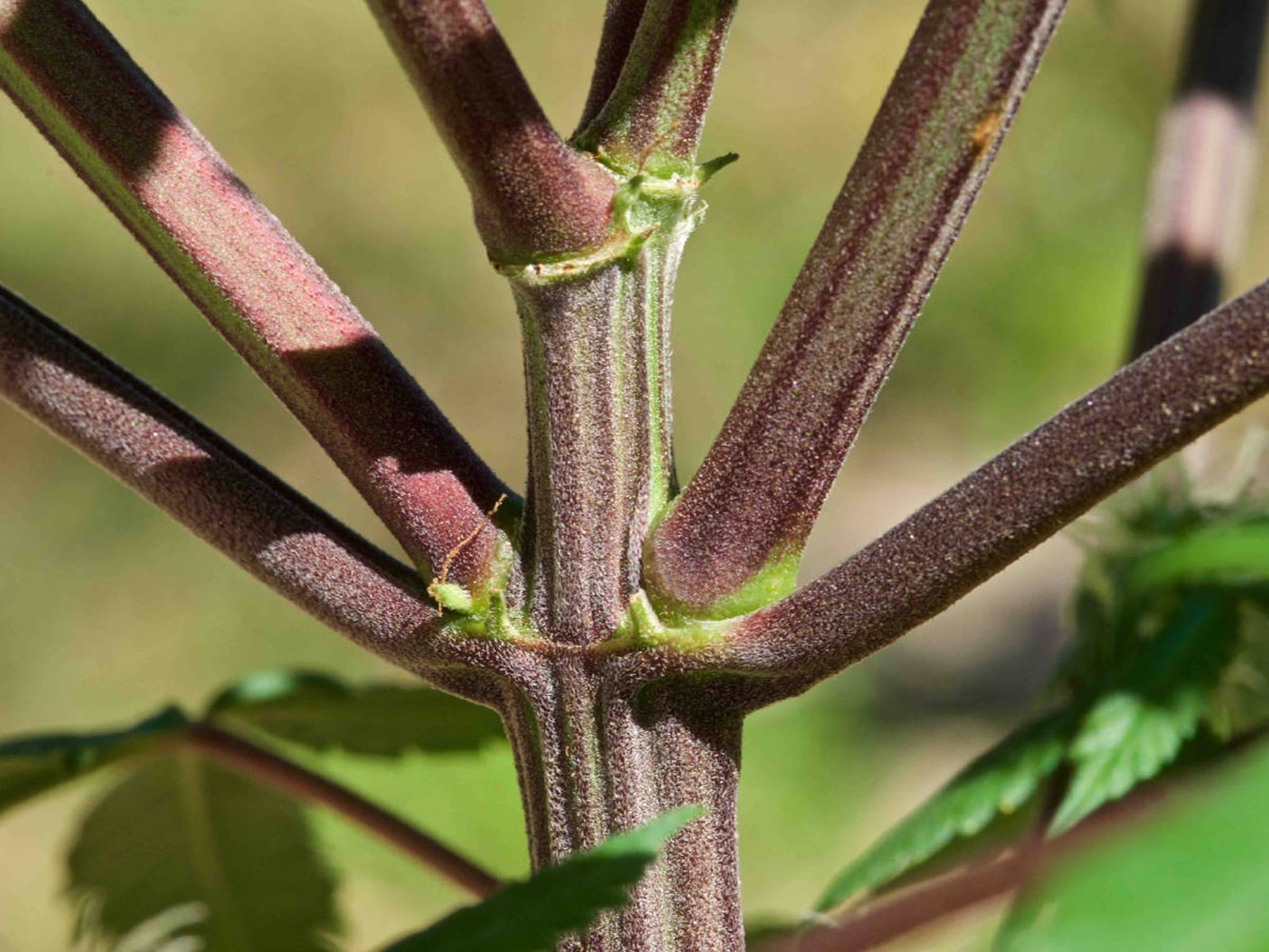
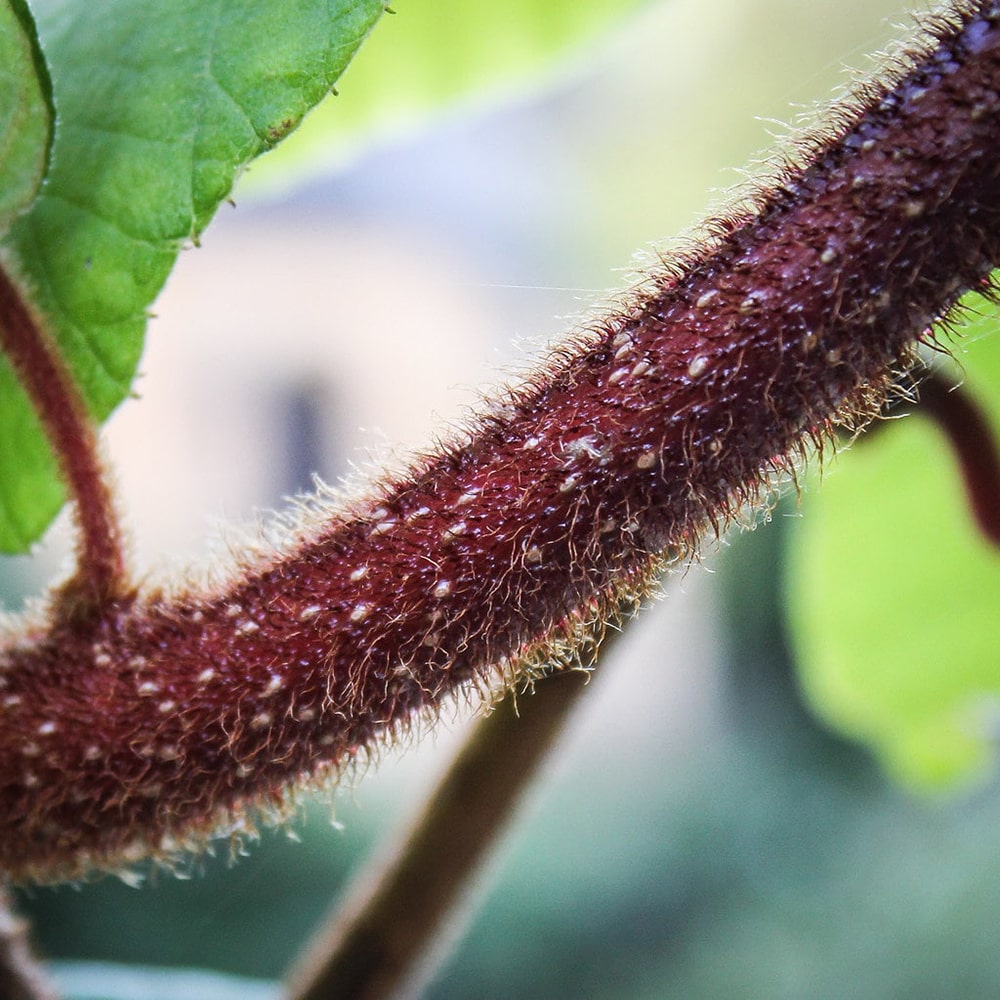
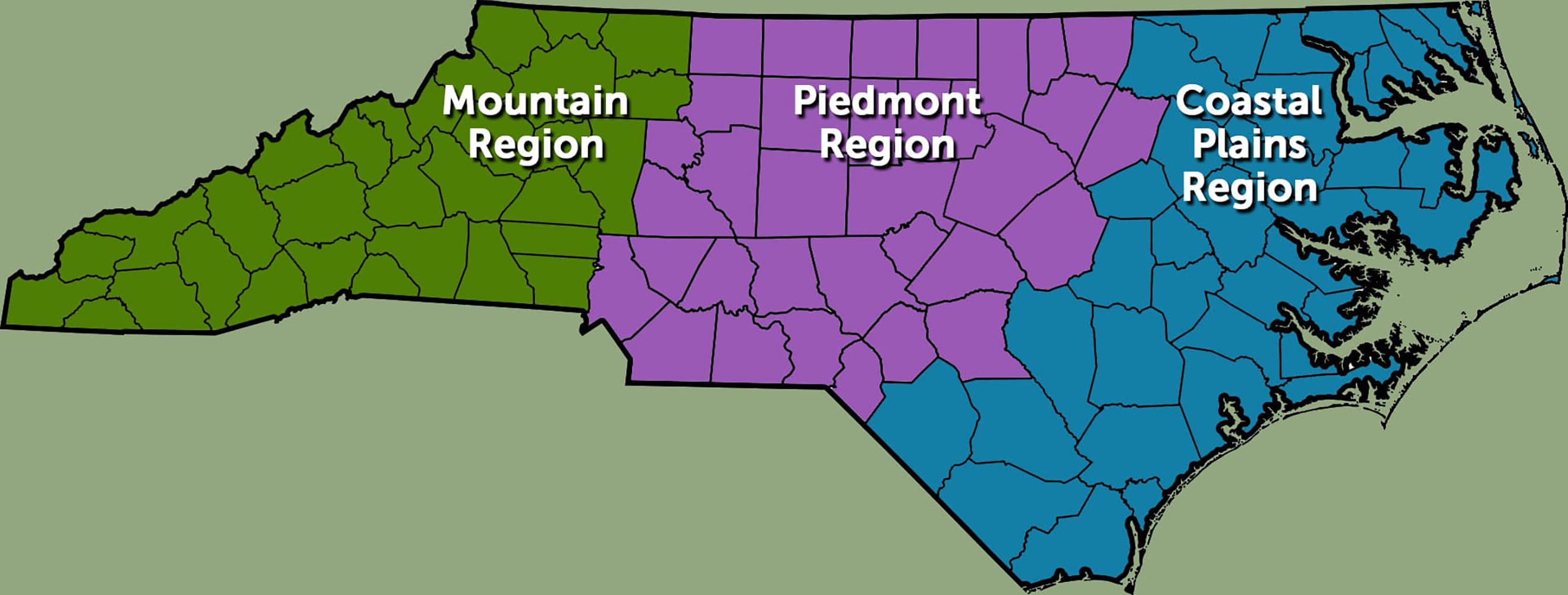
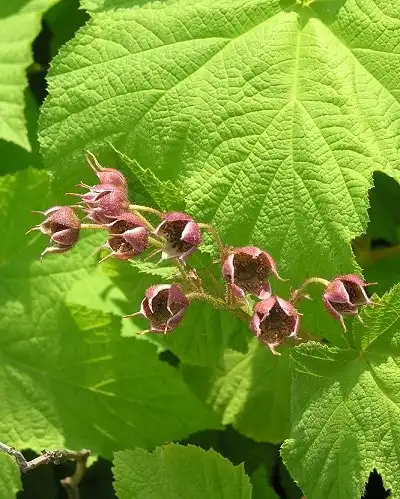
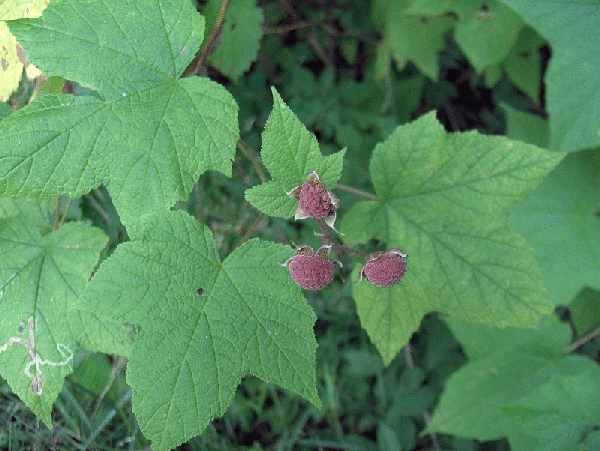
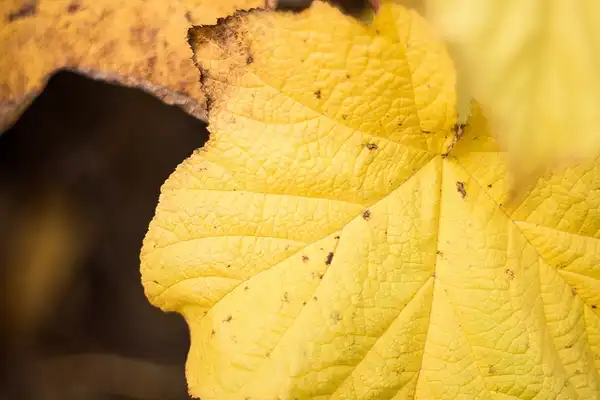
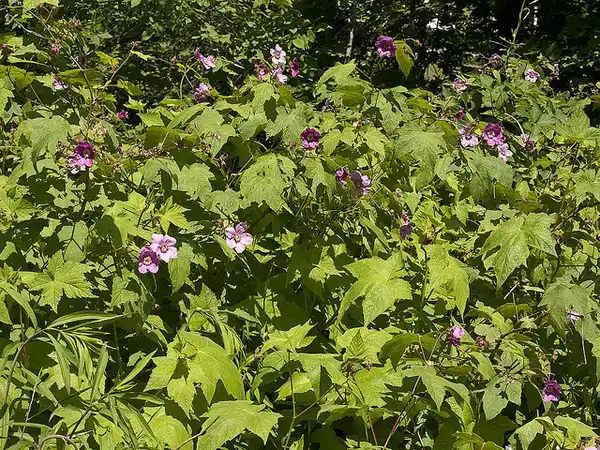
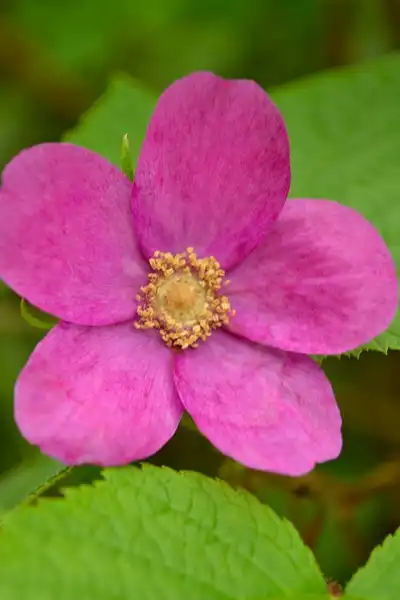
Rubus odoratus, commonly known as the Purple Flowering Raspberry, is a deciduous perennial indigenous to Eastern North America. This species is particularly prevalent in the mountainous areas of North Carolina and is easily identifiable due to its large, palmately lobed leaves and vibrant flowers. The shrub can reach heights of up to 6 feet and spread as wide as 12 feet. Primarily cultivated for ornamental purposes, it features rose-like, fragrant blooms that last for an extended period, medium green foliage that transforms to a golden hue in autumn, and stems that are hairy with minimal prickles. Although its fruit is edible, it tends to be dry, crumbly, and less appealing, which further enhances its ornamental appeal. It is sometimes referred to as thimbleberry, although this name is more accurately associated with the similar white-flowered Rubus parviflorus found in the West.
This plant serves as a valuable resource for various wildlife, including songbirds, game birds, butterflies, bees, and both large and small mammals. Additionally, it provides nesting materials for bees.
The Purple Flowering Raspberry thrives in average, moderately moist, well-drained soil and prefers full sun to partial shade. While it can adapt to sandy soils, it does not fare well in clay. The plant exhibits good shade tolerance and is best pruned right after fruiting. It flourishes in moist, organic-rich soil but dislikes excessive humidity and high temperatures, requiring adequate air circulation. Naturally, it can be found in upland forests, boulder fields, rocky outcrops, and thickets. Propagation can be achieved through bare root, seeds, or sprigs, though its aggressive suckering growth habit should be monitored.
In terms of health concerns, aside from susceptibility to honey fungus—which affects most Rubus species—there are no significant issues reported.
Rubus odoratus Feature Summary