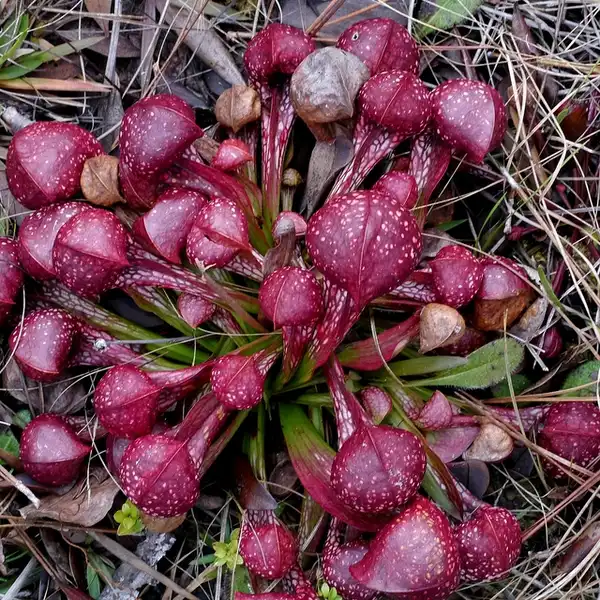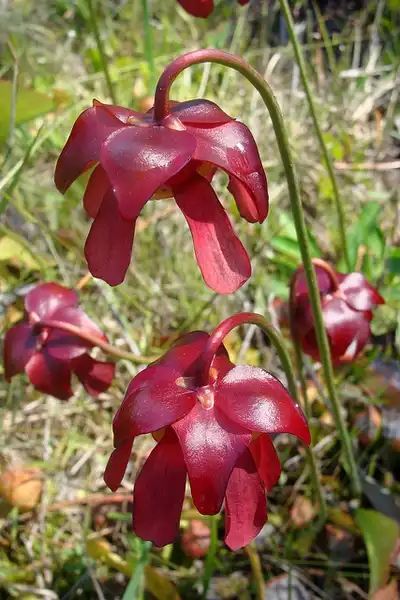
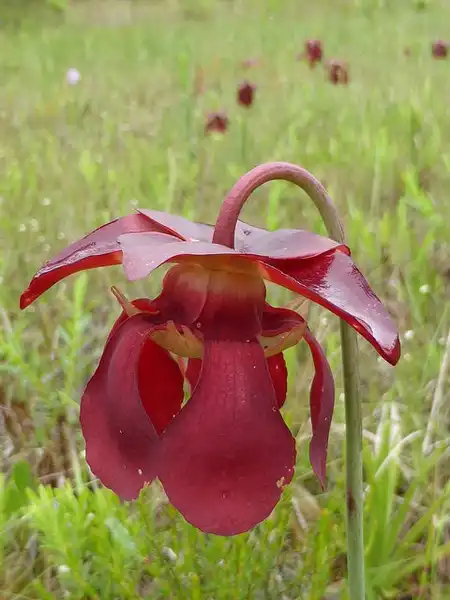
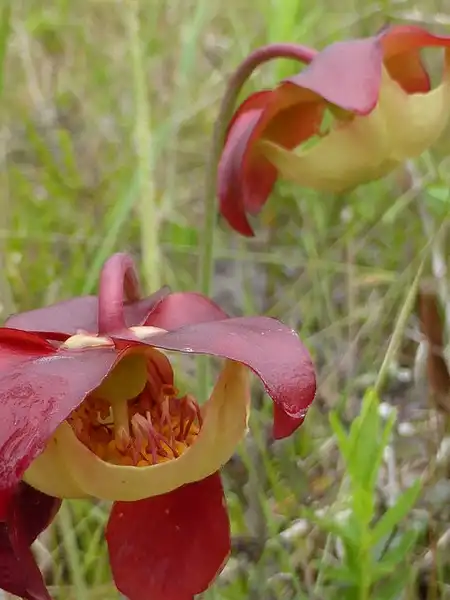
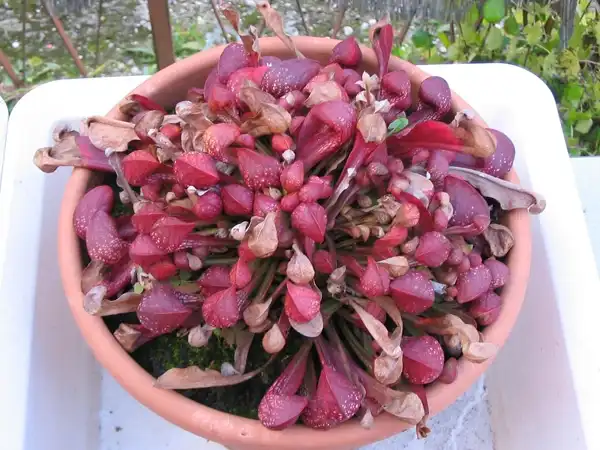
• Photo of Sarracenia psittacina (Sarracenia psittacinas)

Plant Profile: Sarracenia psittacina

Taxonomy: Sarracenia psittacina

Names

Parrot Pitcher Plant

  • Photo of Sarracenia psittacina (Sarracenia psittacinas)

Phonetic Spelling:sair-ah-SEEN-ee-ah sit-ah-CHEEN-ah

Genus:Sarracenia

Species:psittacina

Family:Sarraceniaceae

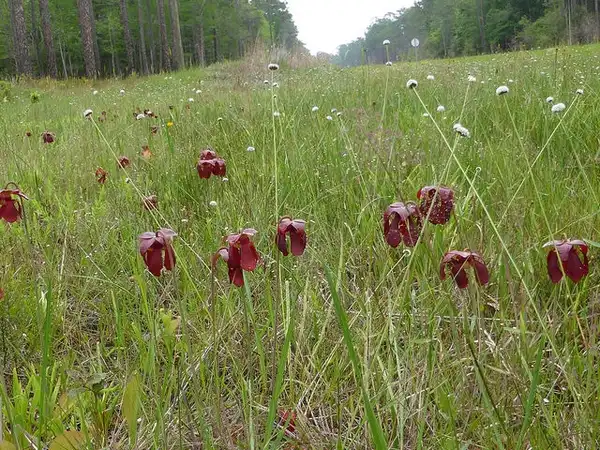
The Pitcher Plant thrives in the damp, low-lying regions of pine forests, often found in waterlogged areas or in soil that is moist, swampy, and rich in sphagnum moss. This environment typically has high acidity and low nutrient levels, particularly nitrogen. These plants often flourish in locations where wildfires have cleared surrounding vegetation, allowing them to bask in full sunlight. To meet their nutritional needs, Pitcher Plants capture and digest insects, spiders, and occasionally small frogs.

The leaves of the Pitcher Plant are elongated tubes with a wing-like structure on the side that faces inward. Mature specimens feature leaves topped with a balloon-shaped hood that is reddish-purple and ends in a beak-like opening, reminiscent of a parrot's head, which is how the plant gets its common name. The tubular pitchers lie horizontally and form a rosette pattern. The hoods of mature leaves function like a "lobster trap," luring insects with nectar. Once inside, the insects become ensnared in the plant's digestive fluid, unable to escape due to downward-facing hairs that permit entry but block exit. Additionally, the Pitcher Plant can survive submerged, allowing it to consume aquatic insects, tadpoles, fish, and even frogs.

In terms of care, this plant requires a dormant winter period, making it unsuitable for indoor cultivation or tropical environments.

Sarracenia psittacina Feature Summary

Sarracenia psittacina Image Gallery

Tags

#carnivorous
#slow growing
#colorful leaves
#wetlands
#wet sites
#ponds
#OBL
#bog gardens
#wet soils intolerant

Similar Plants

Sarracenia psittacina is often confused with:

Sarracenia psittacina Feature Summary

Attributes
Alabama, Georgia, Florida, and Southern Mississippi
Perennial
Flowers
2" red-purple flowers
Purple/Lavender
Red/Burgundy
1-3 inches
Leaves
Narrow, tubular, curving green leaves with red and pale white blotches. Forms a low rosette. 8" pitchers with lateral openings. Dome-like hood has clear spots and the belly of the pitcher has a leafy fin that runs the length of the tube. Nectar is lanced with a chemical that intoxicates the prey. Slippery, downward-pointing hairs. Pitcher-like leaves collect water and trap insects.
Green
White
Gold/Yellow
Red/Burgundy
Purple/Lavender
Whole Plant Traits
Perennial
Carnivorous
Cultural Conditions
Full sun (6 or more hours of direct sunlight a day)
Acid (<6.0)
Moist
Occasionally Wet
Occasional Flooding
Coastal
Piedmont
Landscape
Water Garden
Coastal
Riparian
Pond

Sarracenia psittacina Attributes

Sarracenia psittacina: Country Or Region Of Origin

Alabama, Georgia, Florida, and Southern Mississippi
Sarracenia psittacina: Life Cycle

Annual
Biennial
Bulb
Perennial
Woody

Sarracenia psittacina: Recommended Propagation Strategy

Division
Grafting
Layering
Leaf Cutting
Root Cutting
Seed
Stem Cutting

Sarracenia psittacina Flowers

Sarracenia psittacina: Flower Description

2" red-purple flowers

Sarracenia psittacina: Flower Color

filter_vintage
Purple/Lavender
filter_vintage
Red/Burgundy

Sarracenia psittacina: Flower Size

1-3 inches
3-6 inches
< 1 inch
> 6 inches

Sarracenia psittacina Leaves

Sarracenia psittacina: Leaf Description

Narrow, tubular, curving green leaves with red and pale white blotches. Forms a low rosette. 8" pitchers with lateral openings. Dome-like hood has clear spots and the belly of the pitcher has a leafy fin that runs the length of the tube. Nectar is lanced with a chemical that intoxicates the prey. Slippery, downward-pointing hairs. Pitcher-like leaves collect water and trap insects.

Sarracenia psittacina: Leaf Color

spa
Gold/Yellow
spa
Green
spa
Purple/Lavender
spa
Red/Burgundy
spa
White

Sarracenia psittacina: Leaf Type

Compound (Pinnately , Bipinnately, Palmately)
Fronds
Needles
Sheath
Simple

Sarracenia psittacina: Leaf Arrangement

Alternate
Opposite
Other/more complex
Rosulate
Whorled

Sarracenia psittacina: Hairs Present

No
Yes

Sarracenia psittacina Whole Plant Traits

Sarracenia psittacina: Plant Type

Annual
Bulb
Carnivorous
Edible
Epiphyte
Fern
Ground Cover
Herb
Herbaceous Perennial
Houseplant
Mushroom
Native Plant
Ornamental Grasses and Sedges
Perennial
Poisonous
Rose
Shrub
Succulent
Tree
Turfgrass
Vegetable
Vine
Water Plant
Weed
Wildflower

Sarracenia psittacina: Growth Rate

Slow
Medium
Rapid

Sarracenia psittacina Cultural Conditions

Sarracenia psittacina: Light

Dappled Sunlight (Shade through upper canopy all day)
Deep shade (Less than 2 hours to no direct sunlight)
Full sun (6 or more hours of direct sunlight a day)
Partial Shade (Direct sunlight only part of the day, 2-6 hours)

Sarracenia psittacina: Soil pH

Acid (<6.0)
Alkaline (>8.0)
Neutral (6.0-8.0)

Sarracenia psittacina: Soil Drainage

Frequent Standing Water
Good Drainage
Moist
Occasional Flooding
Occasionally Dry
Occasionally Wet
Very Dry

Sarracenia psittacina: NC Region

Coastal
Mountains
Piedmont

Sarracenia psittacina: USDA Plant Hardiness Zone

thermostat
7a
thermostat
7b
thermostat
8a
thermostat
8b

Sarracenia psittacina Stem

Sarracenia psittacina: Stem Is Aromatic

No
Yes

Sarracenia psittacina Landscape

Sarracenia psittacina: Landscape Theme

Asian Garden
Butterfly Garden
Children's Garden
Cottage Garden
Cutting Garden
Drought Tolerant Garden
Edible Garden
English Garden
Fairy Garden
Garden for the Blind
Native Garden
Nighttime Garden
Pollinator Garden
Rain Garden
Rock Garden
Shade Garden
Water Garden
Winter Garden

Sarracenia psittacina: Landscape Location

Coastal
Container
Hanging Baskets
Houseplants
Lawn
Meadow
Naturalized Area
Near Septic
Patio
Pond
Pool/Hardscape
Recreational Play Area
Riparian
Rock Wall
Slope/Bank
Small Space
Vertical Spaces
Walkways
Woodland