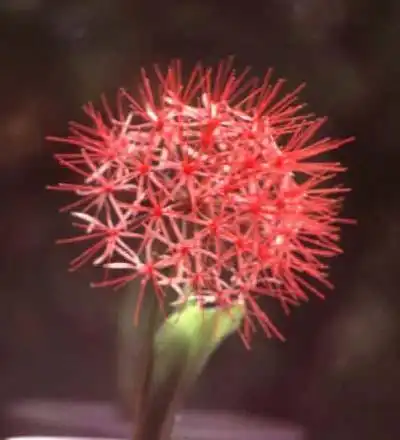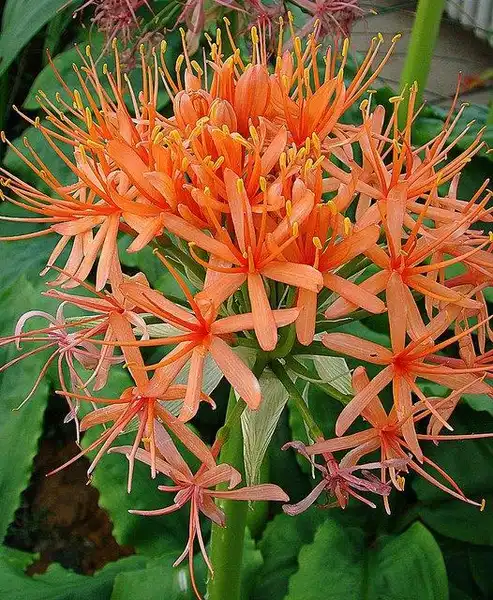
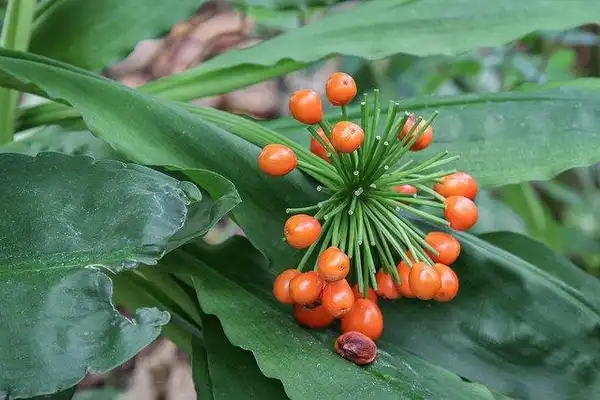
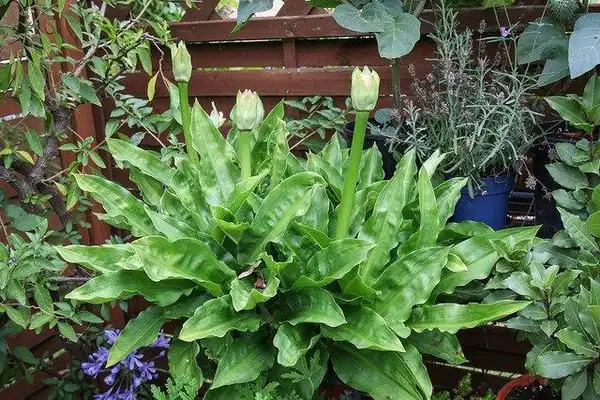
• Photo of Scadoxus multiflorus (Scadoxus multifloruss)

Plant Profile: Scadoxus multiflorus

Taxonomy: Scadoxus multiflorus

Names

African Blood Lily, Blood Lily, Powderpuff Lily

  • Photo of Scadoxus multiflorus (Scadoxus multifloruss)

Phonetic Spelling:ska-DOKS-us mul-tih-FLOR-us

Genus:Scadoxus

Species:multiflorus

Family:Amaryllidaceae

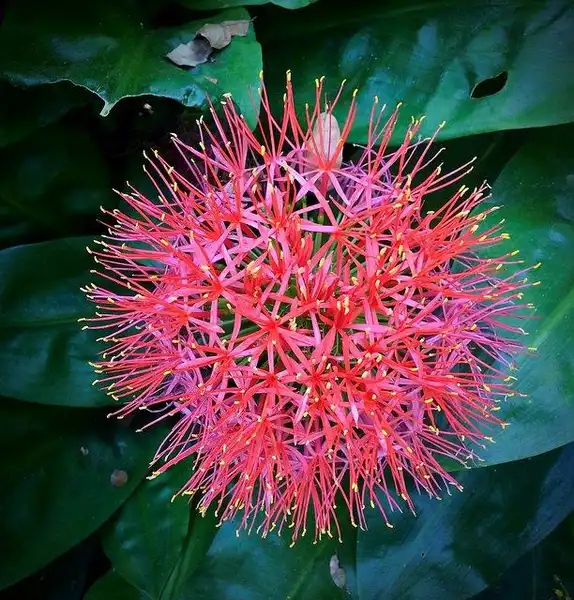
This herbaceous plant features bulbous growth with simple, alternate leaves and a stem adorned with spots. Its flowers are densely clustered in terminal umbels, predominantly upright, and consist of a tubular base with six petal-like segments that are scarlet or red-orange, gradually fading to pink. In the fall, it may yield orange-red, round berries. After flowering, it develops a rosette of dark green leaves and is scientifically referred to as Haemanthus multiflorus.

When planting, place the bulb in a container at a depth of one inch. This bulb is categorized as Tender II and is susceptible to damage if temperatures drop below 50°F (10°C).

For optimal care, bring the containers indoors, where you can either cultivate the plants in a well-lit area or store the bulbs dry in the container at temperatures between 50-58°F (10-14°C).

Commonly grown as a houseplant in interior landscapes, this species is regarded as an ornamental bulb. It is important to note that the bulb can pose a low toxicity risk if ingested.

Scadoxus multiflorus Feature Summary

Scadoxus multiflorus Image Gallery

Tags

#red
#not hardy
#fall interest
#summer bulbs
#container plants

Similar Plants

Scadoxus multiflorus Feature Summary

Poisonous to Humans
Salivation, nausea, vomiting, and diarrhea
Lycorine and other alkaliods
Whole Plant Traits
Poisonous
Bulb
Cultural Conditions
Partial Shade (Direct sunlight only part of the day, 2-6 hours)
Less than 12 inches
Flowers
Pink
Gold/Yellow
Red/Burgundy
Landscape

Scadoxus multiflorus Attributes

Scadoxus multiflorus: Country Or Region Of Origin

Africa
Scadoxus multiflorus Poisonous to Humans

Scadoxus multiflorus: Poison Symptoms

Salivation, nausea, vomiting, and diarrhea

Scadoxus multiflorus: Poison Toxic Principle

Lycorine and other alkaliods

Scadoxus multiflorus: Poison Severity

High
Low
Medium

Scadoxus multiflorus: Causes Contact Dermatitis

No
Yes

Scadoxus multiflorus: Poison Part

Bark
Flowers
Fruits
Leaves
Roots
Sap/Juice
Seeds
Stems

Scadoxus multiflorus Whole Plant Traits

Scadoxus multiflorus: Plant Type

Annual
Bulb
Carnivorous
Edible
Epiphyte
Fern
Ground Cover
Herb
Herbaceous Perennial
Houseplant
Mushroom
Native Plant
Ornamental Grasses and Sedges
Perennial
Poisonous
Rose
Shrub
Succulent
Tree
Turfgrass
Vegetable
Vine
Water Plant
Weed
Wildflower

Scadoxus multiflorus Cultural Conditions

Scadoxus multiflorus: Light

Dappled Sunlight (Shade through upper canopy all day)
Deep shade (Less than 2 hours to no direct sunlight)
Full sun (6 or more hours of direct sunlight a day)
Partial Shade (Direct sunlight only part of the day, 2-6 hours)

Scadoxus multiflorus: Available Space To Plant

12 inches-3 feet
12-24 feet
24-60 feet
3 feet-6 feet
6-feet-12 feet
Less than 12 inches
more than 60 feet

Scadoxus multiflorus Flowers

Scadoxus multiflorus: Flower Color

filter_vintage
Gold/Yellow
filter_vintage
Pink
filter_vintage
Red/Burgundy

Scadoxus multiflorus: Flower Bloom Time

Winter
Spring
Summer
Fall

Scadoxus multiflorus Leaves

Scadoxus multiflorus: Leaf Color

spa
Green

Scadoxus multiflorus: Hairs Present

No
Yes

Scadoxus multiflorus Stem

Scadoxus multiflorus: Stem Is Aromatic

No
Yes

Scadoxus multiflorus Landscape

Scadoxus multiflorus: Landscape Location

Coastal
Container
Hanging Baskets
Houseplants
Lawn
Meadow
Naturalized Area
Near Septic
Patio
Pond
Pool/Hardscape
Recreational Play Area
Riparian
Rock Wall
Slope/Bank
Small Space
Vertical Spaces
Walkways
Woodland