Bristly Greenbrier, China Root, Hagbrier, Hellfetter, Smilax Tamnoides Vas
Phonetic Spelling:SMIL-aks tam-NOY-deez
Genus:Smilax
Species:tamnoides
Family:Smilacaceae
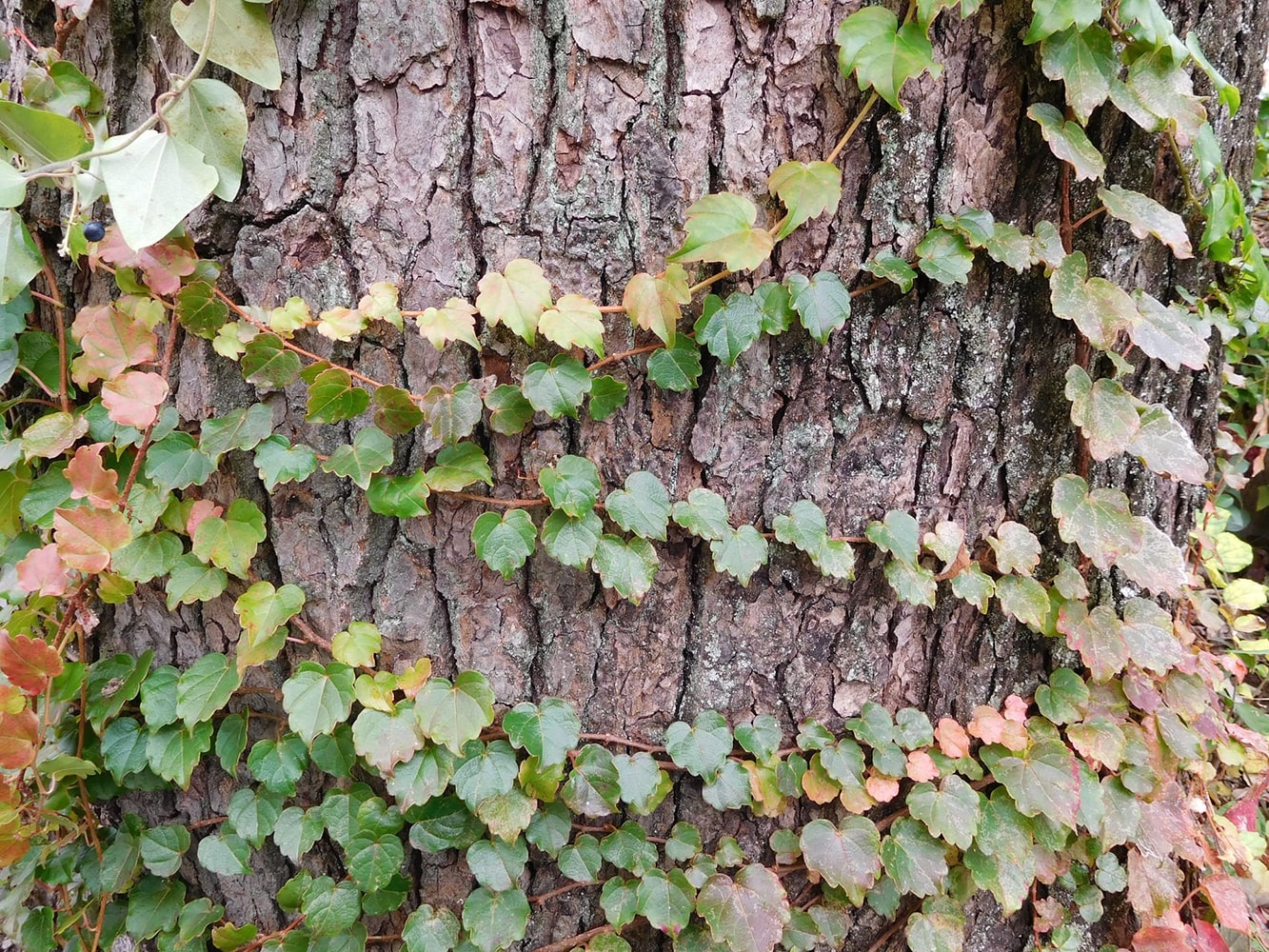
Bristly Greenbrier is a thorny, climbing vine that ascends over shrubs and the lower limbs of trees using its tendrils. This woody plant propagates either through rhizomes or by self-seeding. It thrives in various environments, including damp deciduous forests, thickets, floodplains, wooded slopes, bluffs, and along the banks of streams and rivers.
This species is dioecious, meaning that individual plants are either male or female, necessitating the presence of both sexes for seed production.
The prickles can be rubbed on the skin as a counter-irritant to relieve localized pains, muscle cramps, and twitching. Tea can be made from the leaves and stems for rheumatism and stomach problems. The wilted leaves have been used to treat boils. The crushed root has been used to wash leg ulcers.
It is insect-pollinated by both bees and flies .Moth caterpillars feed on the leaves. Game birds and songbirds feed on the berries during fall and winter. Black Bears, Raccoons, and other mammals will also eat the berries. White-Tailed Deer may eat the foliage and stems.
Each male has 6 yellow/white/green tepals and 6 stamens. Each female has 5 yellow/grey/green tepals, a single ovary, and a short tripartite style. The ovary is ovoid, shiny, and green.
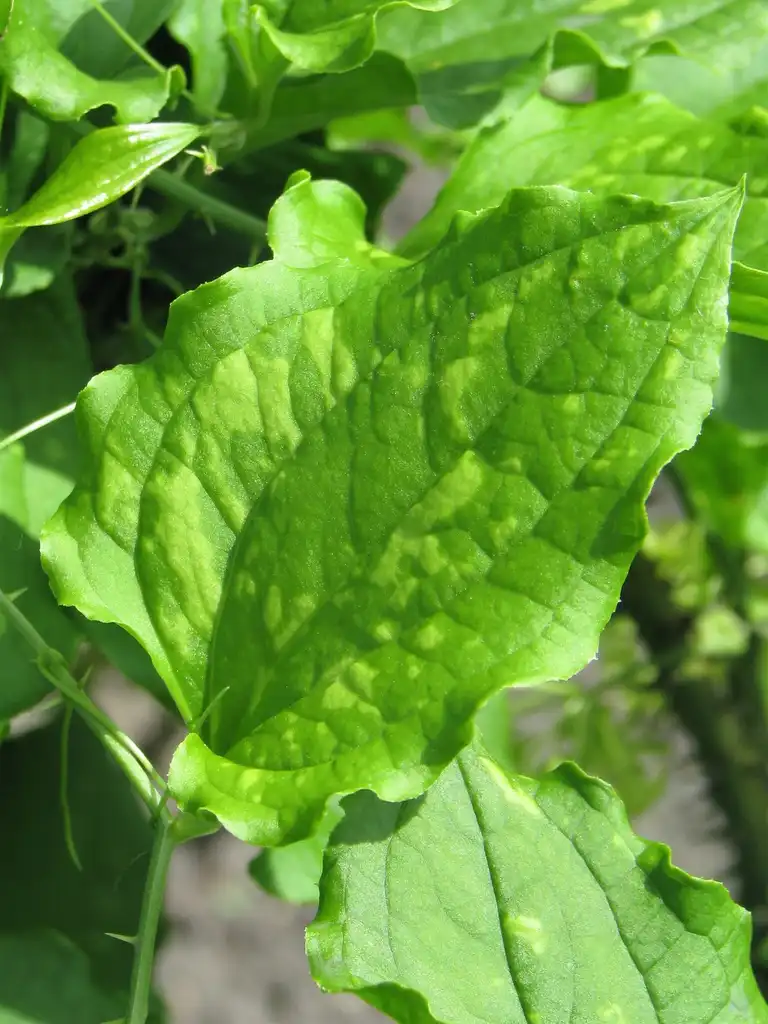
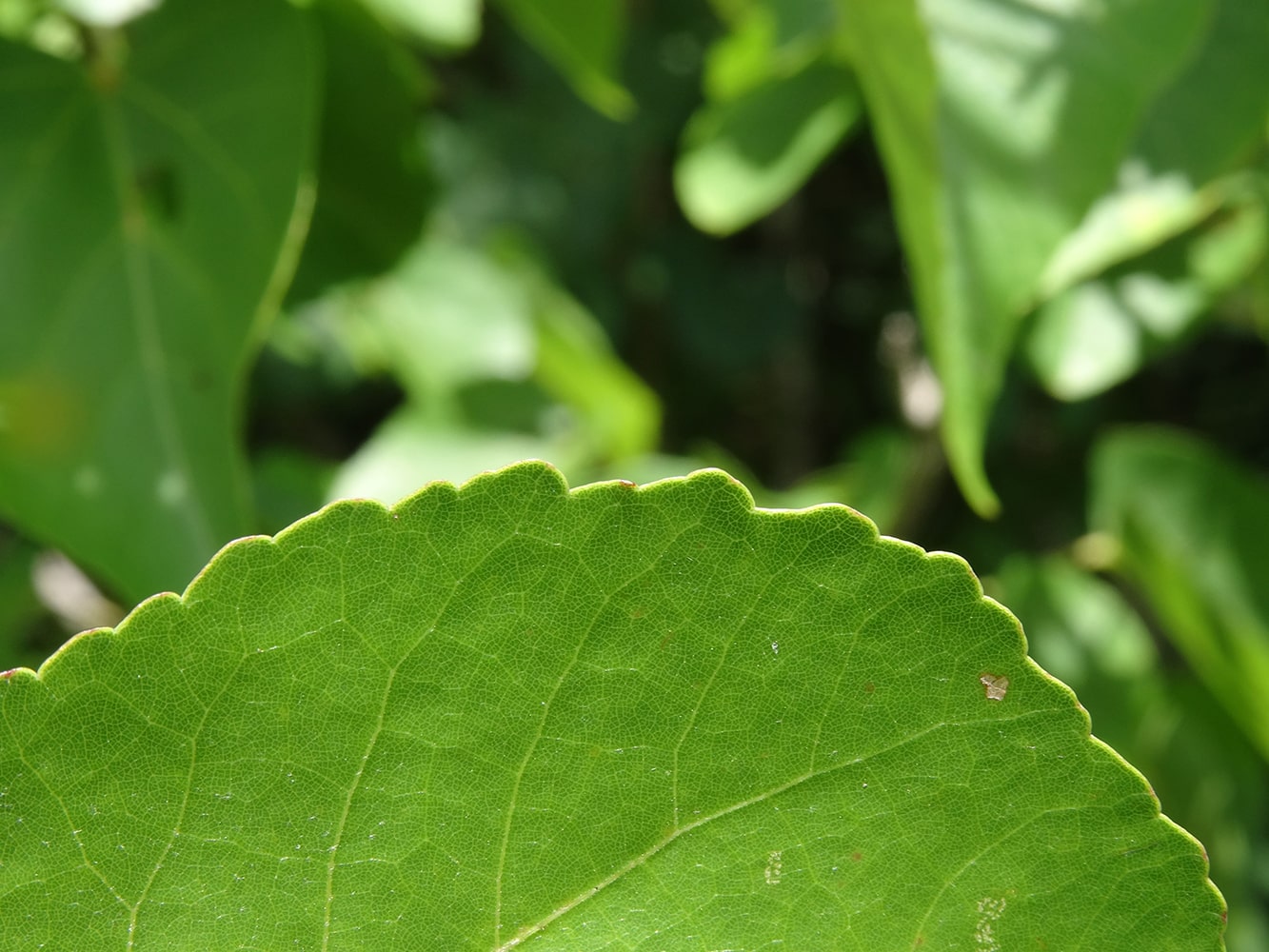
Leaves are up to 5" long and 4" wide, oval to broadly ovate/obovate, smooth margins (or possibly denticulate, but not visible without magnification), rounded to pointed at the tip, rounded to heart-shaped at the base and hairless. A leaf has 3-7 parallel veins; its upper surface is green, the lower surface is a lighter green. Leaves along the stem have a pair of tendrils at the base of the 3/4" stalk.
The prickles can be rubbed on the skin as a counter-irritant to relieve localized pains, muscle cramps, and twitching. Tea can be made from the leaves and stems for rheumatism and stomach problems. The wilted leaves have been used to treat boils. The crushed root has been used to wash leg ulcers.
Smilax tamnoides: Country Or Region Of Origin
North America
Smilax tamnoides: Distribution
Ontario, central and eastern U.S.A., Mexico
Smilax tamnoides: Wildlife Value
It is insect-pollinated by both bees and flies .Moth caterpillars feed on the leaves. Game birds and songbirds feed on the berries during fall and winter. Black Bears, Raccoons, and other mammals will also eat the berries. White-Tailed Deer may eat the foliage and stems.
Smilax tamnoides: Edibility
Young leaves, shoots, and tendrils can be added to salads
A berry is about ¼" in diameter, dark blue or black, and contains 1-3 seeds
Smilax tamnoides: Fruit Type
Achene
Aggregate
Berry
Capsule
Caryopsis
Drupe
Follicle
Legume
Nut
Pome
Samara
Schizocarp
Siliqua
Smilax tamnoides: Fruit Color
grass
Black
grass
Blue
Smilax tamnoides: Display/Harvest Time
Fall
Spring
Summer
Winter
Smilax tamnoides: Fruit Length
< 1 inch
1-3 inches
> 3 inches
Smilax tamnoides: Fruit Width
< 1 inch
1-3 inches
> 3 inches
Smilax tamnoides Flowers
Smilax tamnoides: Flower Description
Each male has 6 yellow/white/green tepals and 6 stamens. Each female has 5 yellow/grey/green tepals, a single ovary, and a short tripartite style. The ovary is ovoid, shiny, and green.
Smilax tamnoides: Flower Color
filter_vintage
Gold/Yellow
filter_vintage
Gray/Silver
filter_vintage
Green
filter_vintage
White
Smilax tamnoides: Flower Inflorescence
Catkin
Corymb
Cyme
Head
Insignificant
Panicle
Raceme
Solitary
Spadix
Spike
Umbel
Smilax tamnoides: Flower Value To Gardener
Edible
Fragrant
Good Cut
Good Dried
Long Bloom Season
Long-lasting
Showy
Smilax tamnoides: Flower Bloom Time
Winter
Spring
Summer
Fall
Smilax tamnoides: Flower Petals
2-3 rays/petals
4-5 petals/rays
6 petals/rays
7 - 20 petals/rays
asymmetrical petals
Bracts
Colored Sepals
fused petals
more than 20 petals/rays
Tepals
Smilax tamnoides: Flower Shape
Bell
Cross
Crown
Cup
Dome
Funnel
Irregular
Lipped
Radial
Saucer
Star
Trumpet
Tubular
Urn
Wheel
Smilax tamnoides: Flower Size
1-3 inches
3-6 inches
< 1 inch
> 6 inches
Smilax tamnoides Leaves
Smilax tamnoides: Leaf Description
Leaves are up to 5" long and 4" wide, oval to broadly ovate/obovate, smooth margins (or possibly denticulate, but not visible without magnification), rounded to pointed at the tip, rounded to heart-shaped at the base and hairless. A leaf has 3-7 parallel veins; its upper surface is green, the lower surface is a lighter green. Leaves along the stem have a pair of tendrils at the base of the 3/4" stalk.