Spiraea x cinerea 'Grefsheim': Country Or Region Of Origin
Japan and China
Phonetic Spelling:spy-REE-ah BY sin-EER-ee-uh
Genus:Spiraea
Species:cinerea
Family:Rosaceae
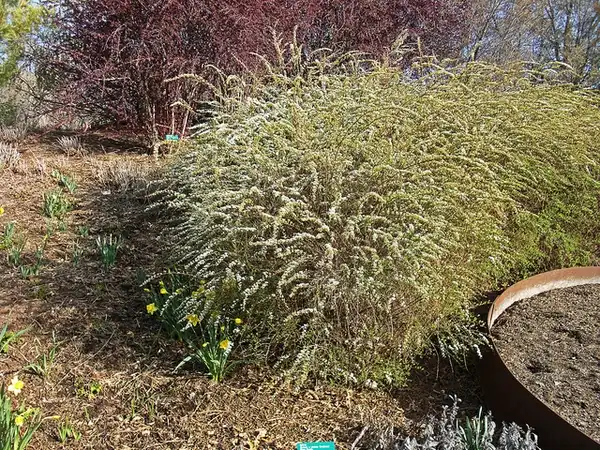
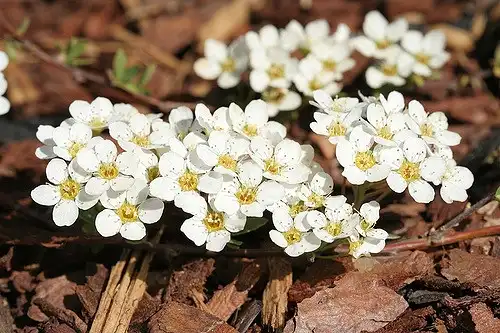
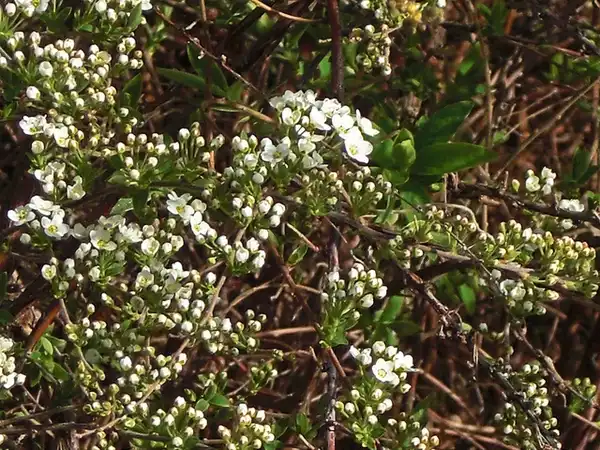
Spiraea x cinerea 'Grefsheim', commonly referred to as Garland spiraea, is a variety within the spiraea family. Like other spiraea species, it is a compact, deciduous shrub characterized by its dense growth and gracefully arching branches. This specific cultivar is particularly celebrated for its early spring blooms, showcasing fragrant white flowers that emerge along slender, bare branches. The shrub's narrow green leaves, which are lush and abundant, appear only after the flowering period. After the blossoms fade, the old, dried flower heads can remain on the plant; a light pruning can help promote further blooming. Since this plant flowers on new growth, it is advisable to trim the branches in late winter or early spring. Garland spiraea is ideal for use on slopes, as a low mass planting, or as a front feature in shrub borders.
This cultivar is drought-resistant and exhibits a broadly mounded, upright growth habit. While it thrives in rich loamy soil, it is adaptable to various soil types, including clay, provided there is average moisture, good drainage, and ample sunlight. It does not perform well in overly wet or poorly drained conditions. Although it can tolerate some light shade, it produces the best flowers when planted in full sun. Garland spiraea can be quite vigorous, often self-seeding and naturalizing in many regions of the eastern United States, and it may also spread through suckering in garden settings.
**Insects, Diseases, and Other Plant Issues:**
Spiraeas are vulnerable to a range of pests and diseases that affect other members of the rose family, including leaf spot, fire blight, powdery mildew, root rot, aphids, leaf rollers, and scale insects.
Spiraea x cinerea 'Grefsheim' Feature Summary
Spiraea x cinerea 'Grefsheim' Image Gallery