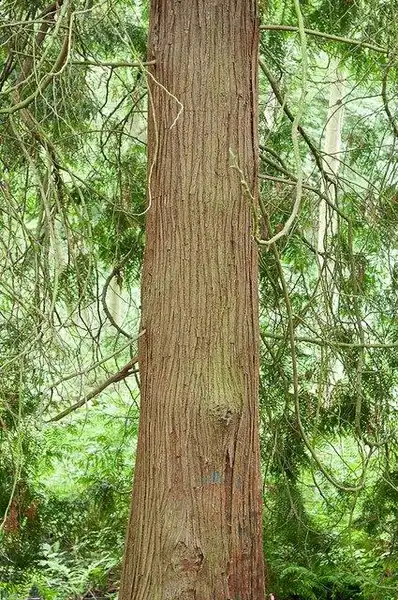
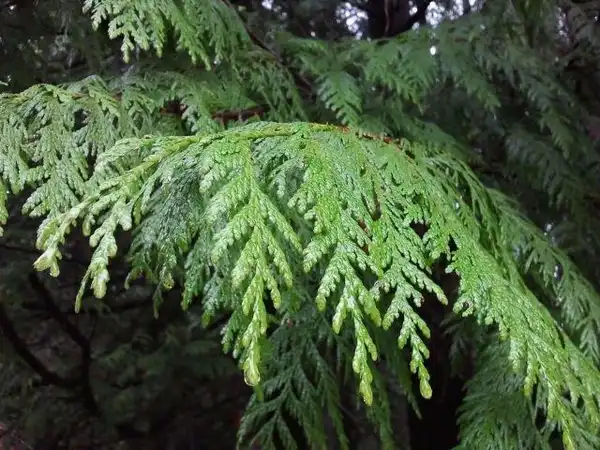
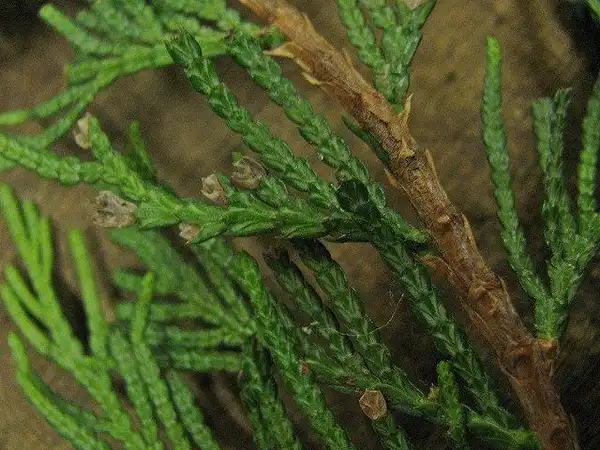
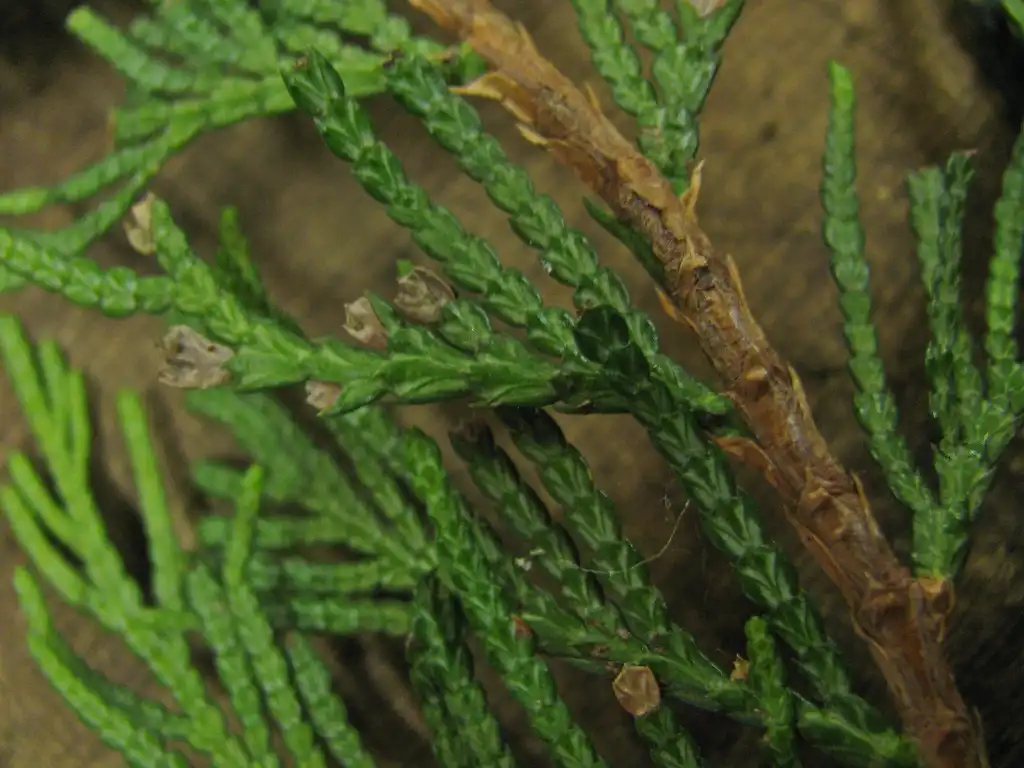
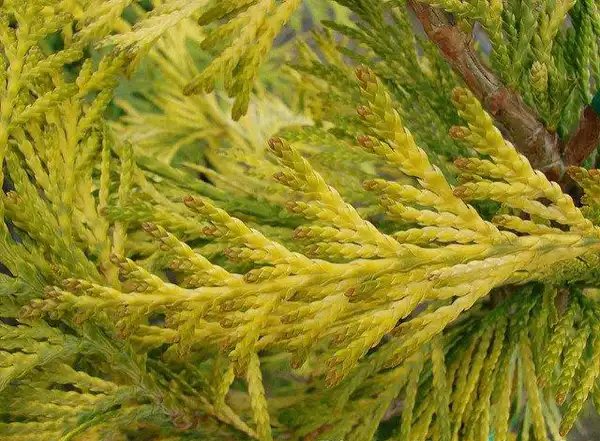
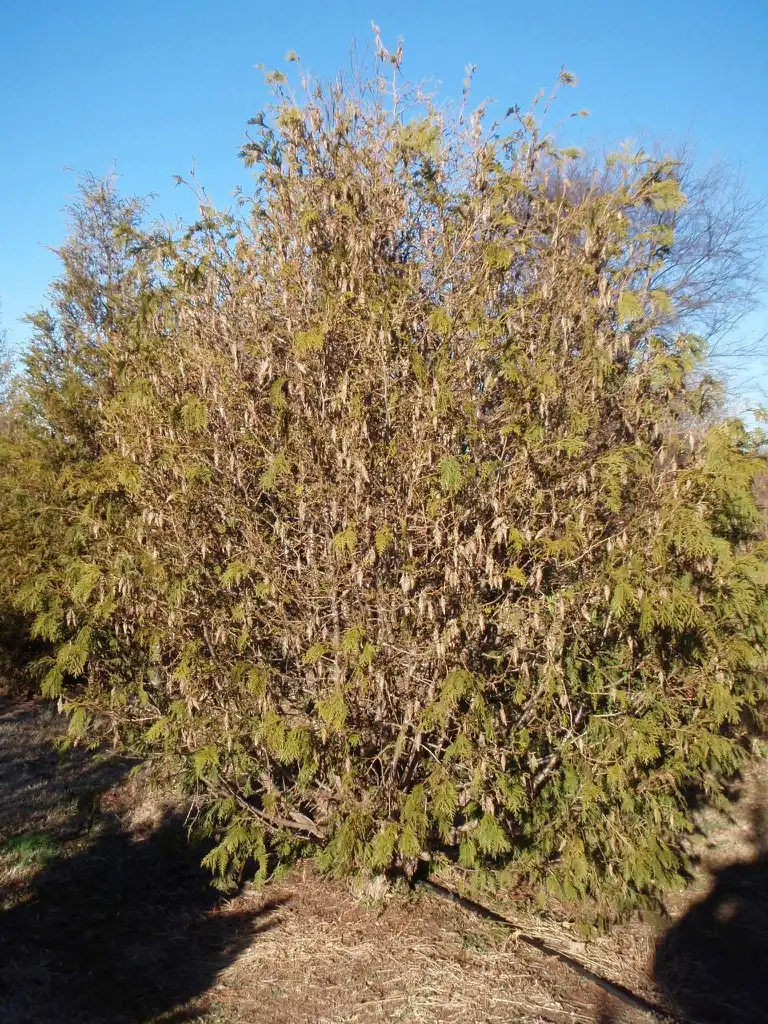
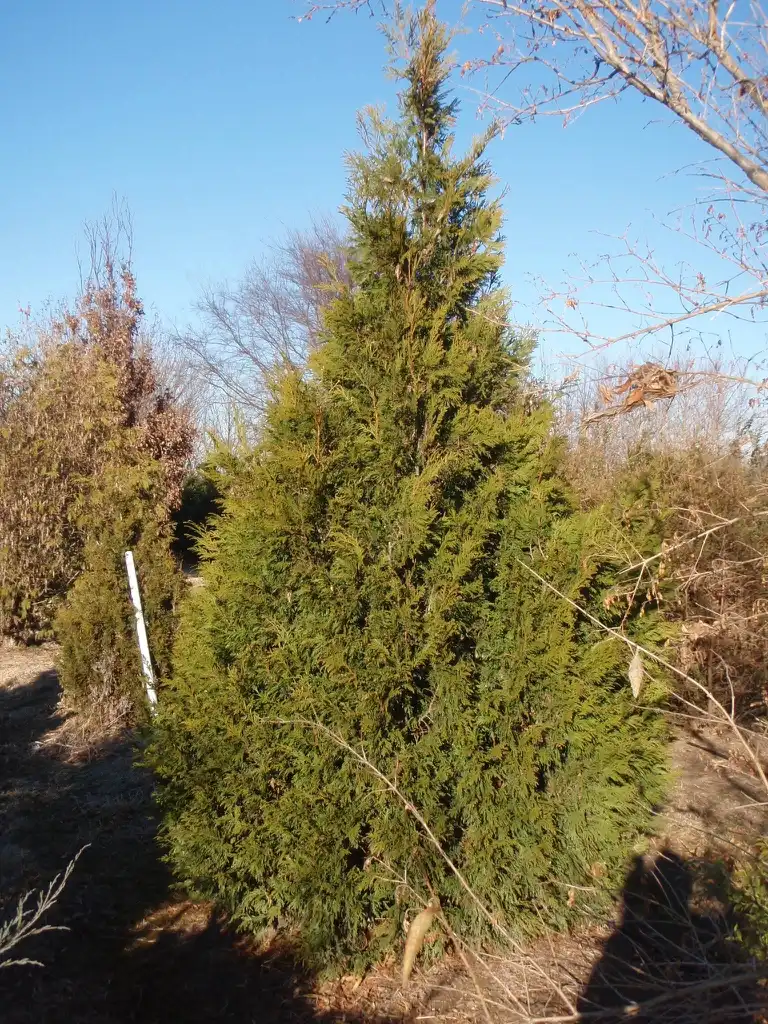
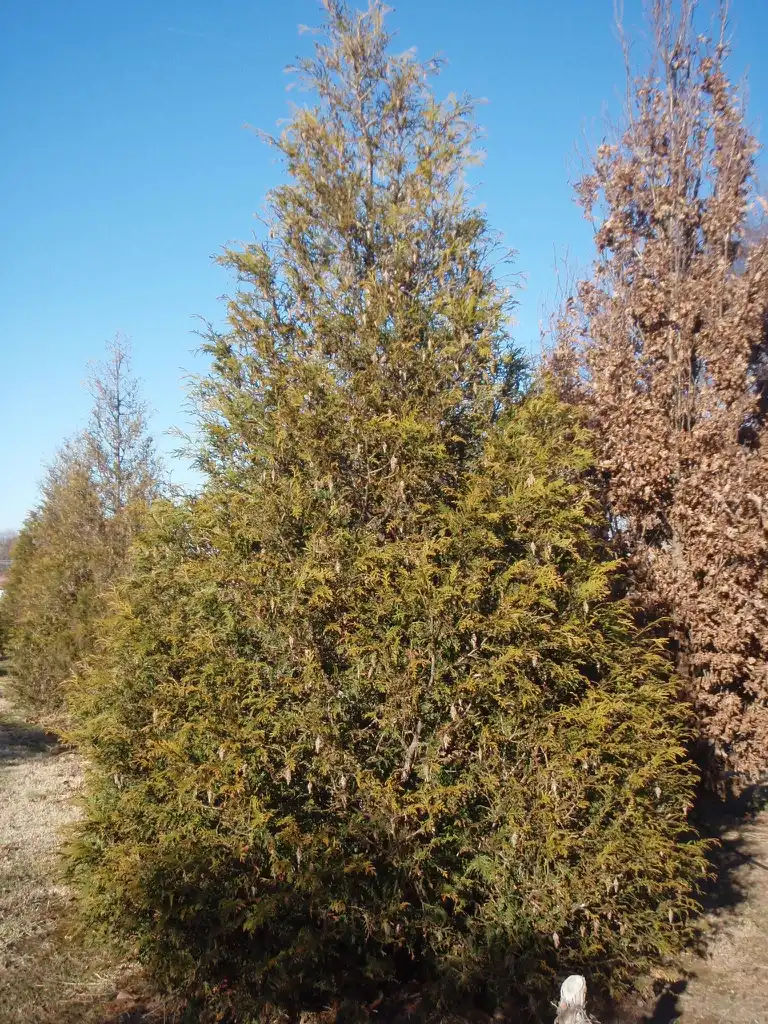
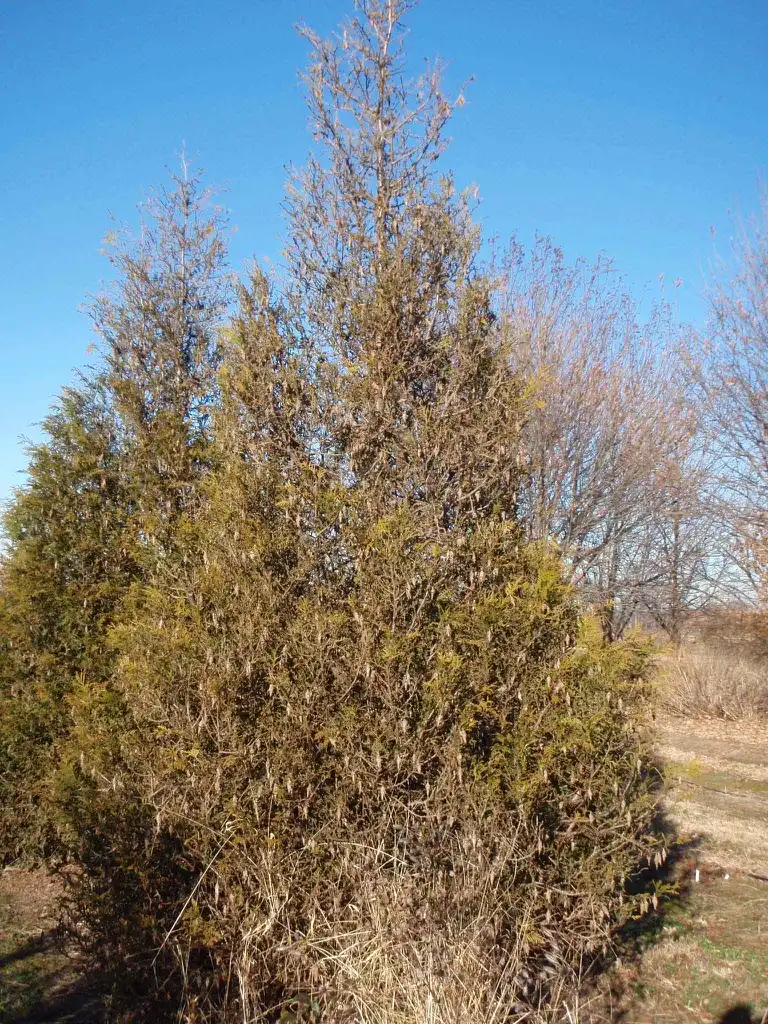
This towering evergreen belongs to the Cupressaceae family and is indigenous to the Pacific Northwest region of the United States. As the largest member of the cypress family, it can reach heights of 100 to 200 feet in its natural habitat, with trunk diameters measuring up to 23 feet. Typically, these trees grow to about 50 to 70 feet tall and spread 15 to 25 feet wide, with some specimens living for over a millennium. Mature individuals often display a pyramidal shape that can range from narrow to broad, sometimes developing a buttressed base. Trees that grow in dense forest settings tend to have a more slender form, while those with ample space for growth exhibit a wider shape. The branches may have a slight droop, with tips that curve upward, lending a graceful quality to their appearance.
The wood of this tree is commercially valuable, prized for its straight, tight grain, pleasant aroma, and natural resistance to decay. It is commonly used in the production of fences, boats, decks, outdoor furniture, telephone poles, caskets, closets, chests, and various interior finishes. The growth rate is rapid, typically averaging 2 to 3 feet annually.
This species may struggle in hot, humid climates but has the potential to thrive in the mountainous regions of North Carolina. It prefers a range of light conditions from full sun to full shade and thrives in consistently moist, well-drained soil with a pH level between 5.0 and 8.0. It is not drought-tolerant. Ideal uses include serving as a specimen tree in large yards, along the edges of ponds, streams, or bogs, and for creating privacy screens.
In terms of pests and diseases, this tree generally faces no significant threats. However, it may occasionally be affected by bagworms or certain root rot issues. It can struggle during the hot summers in North Carolina, so it is advisable to plant it in areas shielded from dry winds.
For more information on Thuja, please refer to additional resources.