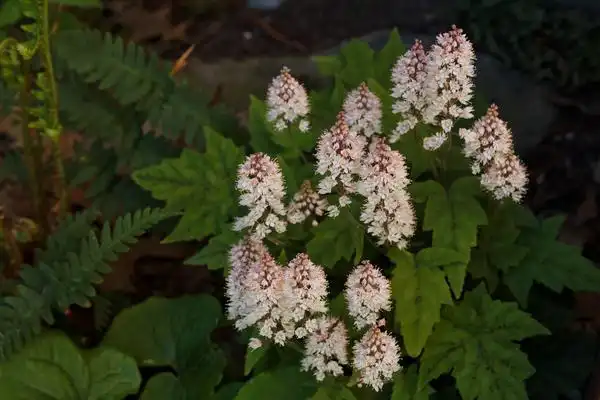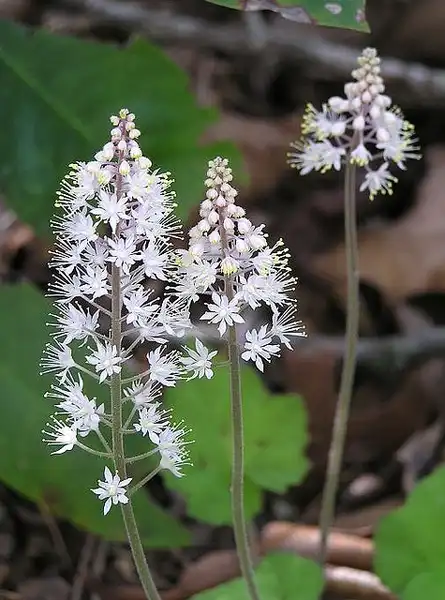
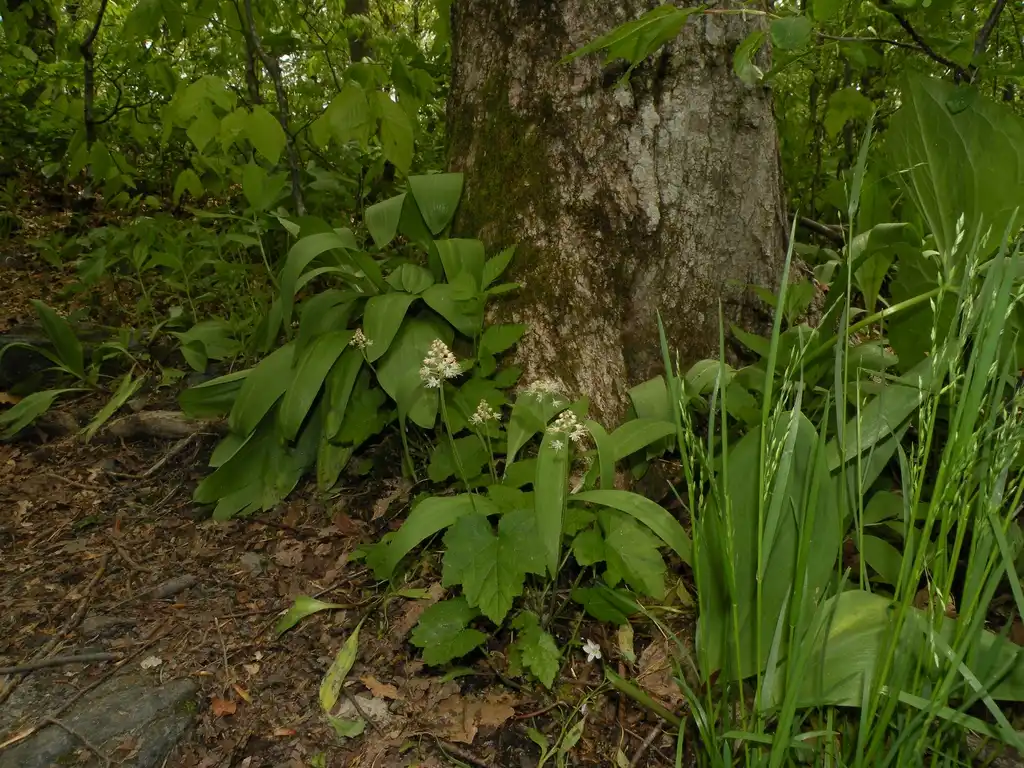
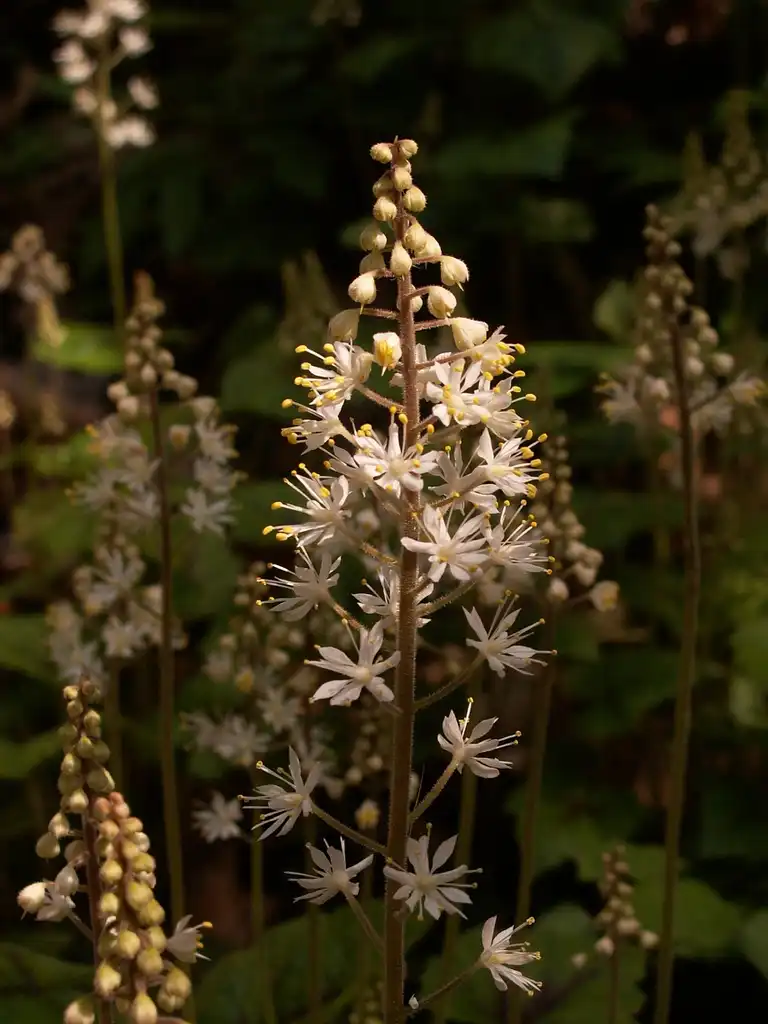
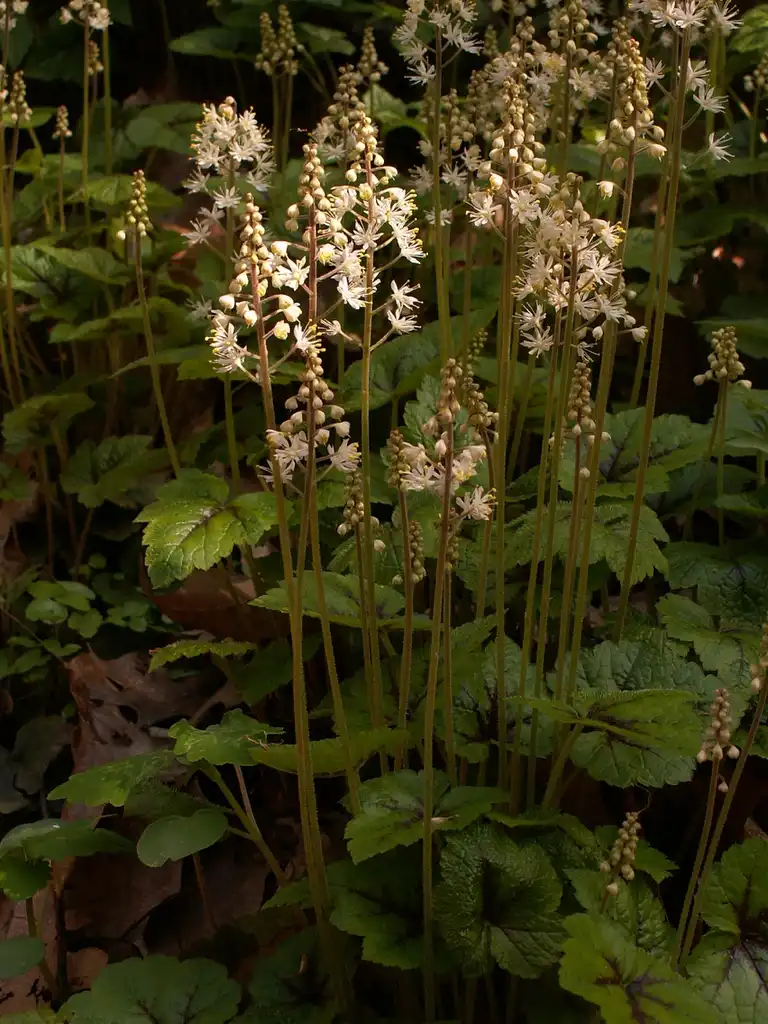
• Photo of Tiarella cordifolia (Tiarella cordifolias)

Plant Profile: Tiarella cordifolia

Taxonomy: Tiarella cordifolia

Names

False Miterwort, Foamflower

  • Photo of Tiarella cordifolia (Tiarella cordifolias)

Phonetic Spelling:tee-ah-REL-lah kor-dih-FOH-lee-ah

Genus:Tiarella

Species:cordifolia

Family:Saxifragaceae

Foamflower is a charming, delicate perennial herb native to the region, prized in gardens for its tidy, attractive foliage and clusters of creamy white blossoms. Although it grows slowly, Foamflower can serve as an effective groundcover due to its ability to spread through underground rhizomes. In contrast, Wherry's foamflower, a related hybrid, forms clumps and propagates through slender runners, creating colonies without the use of rhizomes. This plant is not drought-resistant and thrives in naturally moist environments such as forests, coves, and well-drained lowlands.

In 1986, Foamflower was honored as the NC Wildflower of the Year, a designation awarded by the North Carolina Botanical Garden with support from the Garden Club of North Carolina.

Seasons of Interest:
- Leaves: Spring/Summer/Fall
- Blooms: Early Spring
- Fruit/Seed/Nut: Spring

Tiarella cordifolia Feature Summary

Tiarella cordifolia Image Gallery

Tags

#white
#deciduous
#perennial
#wildlife plant
#moths
#shade tolerant
#nectar plant
#NC native
#rhizomes
#native garden
#dainty
#groundcover
#spring interest
#pollinator plant
#native wildflower
#wildflower garden
#food source herbage
#food source nectar
#food source pollen
#coastal FAC
#bird friendly
#flies
#butterfly friendly
#Piedmont Mountains FACU
#pollinators
#bee friendly
#audubon
#NC Wildflower of the Year

Similar Plants

Tiarella cordifolia is often confused with:

Tiarella cordifolia Feature Summary

Attributes
Nova Scotia, Appalachian Mountains to Alabama West to Minnesota
Flowers are attractive to bees, butterflies, and other pollinators.
Perennial
Wildlife Food Source
Fruit
Fruits are available May-June
Flowers
Narrow cluster of dainty small white-to-pink flowers on the upper portion of a leafless stalk floating above the leaves; five small petals that taper into stalked bases. Blooms in early spring (April-June)
Pink
White
4-5 petals/rays
Leaves
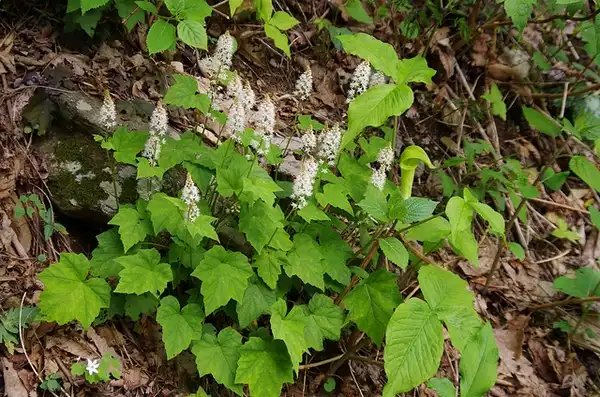
2" to 4" broad, long-stalked leaves; roundish to egg-shaped with heart-shaped base; three to seven shallow, sharply toothed lobes. Leaves are basal and resemble maple leaves.
1-3 inches
Whole Plant Traits
Perennial
Herbaceous Perennial
Native Plant
Wildflower
Ground Cover
Medium
Cultural Conditions
Partial Shade (Direct sunlight only part of the day, 2-6 hours)
Deep shade (Less than 2 hours to no direct sunlight)
Good Drainage
Moist
Coastal
Mountains
Piedmont
4a
4b
5b
5a
6a
6b
7a
7b
8b
8a
3a
3b
High Organic Matter
Landscape
Butterfly Garden
Pollinator Garden
Native Garden
Butterflies
Pollinators
Songbirds
Bees
Moths

Tiarella cordifolia Attributes

Tiarella cordifolia: Country Or Region Of Origin

Nova Scotia, Appalachian Mountains to Alabama West to Minnesota
Tiarella cordifolia: Wildlife Value

Flowers are attractive to bees, butterflies, and other pollinators.

Tiarella cordifolia: Particularly Resistant To (Insects/Diseases/Other Problems)

Moderately deer resistant.

Tiarella cordifolia: Life Cycle

Annual
Biennial
Bulb
Perennial
Woody

Tiarella cordifolia: Recommended Propagation Strategy

Division
Grafting
Layering
Leaf Cutting
Root Cutting
Seed
Stem Cutting

Tiarella cordifolia: Play Value

Attractive Flowers
Attracts Pollinators
Buffer
Colorful
Defines Paths
Easy to Grow
Edible fruit
Fragrance
Pieces Used in Games
Screening
Shade
Sound
Textural
Wildlife Cover/Habitat
Wildlife Food Source
Wildlife Larval Host
Wildlife Nesting
Wind Break
Wind Shimmer

Tiarella cordifolia Fruit

Tiarella cordifolia: Fruit Description

Fruits are available May-June

Tiarella cordifolia: Display/Harvest Time

Fall
Spring
Summer
Winter

Tiarella cordifolia Flowers

Tiarella cordifolia: Flower Description

Narrow cluster of dainty small white-to-pink flowers on the upper portion of a leafless stalk floating above the leaves; five small petals that taper into stalked bases. Blooms in early spring (April-June)

Tiarella cordifolia: Flower Color

filter_vintage
Pink
filter_vintage
White

Tiarella cordifolia: Flower Inflorescence

Catkin
Corymb
Cyme
Head
Insignificant
Panicle
Raceme
Solitary
Spadix
Spike
Umbel

Tiarella cordifolia: Flower Bloom Time

Winter
Spring
Summer
Fall

Tiarella cordifolia: Flower Petals

2-3 rays/petals
4-5 petals/rays
6 petals/rays
7 - 20 petals/rays
asymmetrical petals
Bracts
Colored Sepals
fused petals
more than 20 petals/rays
Tepals

Tiarella cordifolia Leaves

Tiarella cordifolia: Leaf Description

2" to 4" broad, long-stalked leaves; roundish to egg-shaped with heart-shaped base; three to seven shallow, sharply toothed lobes. Leaves are basal and resemble maple leaves.

Tiarella cordifolia: Woody Plant Leaf Characteristics

Broadleaf Evergreen
Deciduous
Needled Evergreen
Semi-evergreen

Tiarella cordifolia: Leaf Color

spa
Green

Tiarella cordifolia: Leaf Arrangement

Alternate
Opposite
Other/more complex
Rosulate
Whorled

Tiarella cordifolia: Leaf Margin

Crenate
Crenulate
Dentate
Denticulate
Doubly Crenate
Doubly Dentate
Doubly Serrate
Entire
Lobed
Serrate
Sinuate
Undulate

Tiarella cordifolia: Hairs Present

No
Yes

Tiarella cordifolia: Leaf Length

< 1 inch
1-3 inches
3-6 inches
> 6 inches

Tiarella cordifolia Whole Plant Traits

Tiarella cordifolia: Plant Type

Annual
Bulb
Carnivorous
Edible
Epiphyte
Fern
Ground Cover
Herb
Herbaceous Perennial
Houseplant
Mushroom
Native Plant
Ornamental Grasses and Sedges
Perennial
Poisonous
Rose
Shrub
Succulent
Tree
Turfgrass
Vegetable
Vine
Water Plant
Weed
Wildflower

Tiarella cordifolia: Woody Plant Leaf Characteristics

Broadleaf Evergreen
Deciduous
Needled Evergreen
Semi-evergreen

Tiarella cordifolia: Growth Rate

Slow
Medium
Rapid

Tiarella cordifolia: Maintenance

Low
Medium
High

Tiarella cordifolia: Texture

Fine
Medium
Coarse

Tiarella cordifolia Cultural Conditions

Tiarella cordifolia: Light

Dappled Sunlight (Shade through upper canopy all day)
Deep shade (Less than 2 hours to no direct sunlight)
Full sun (6 or more hours of direct sunlight a day)
Partial Shade (Direct sunlight only part of the day, 2-6 hours)

Tiarella cordifolia: Soil Drainage

Frequent Standing Water
Good Drainage
Moist
Occasional Flooding
Occasionally Dry
Occasionally Wet
Very Dry

Tiarella cordifolia: Available Space To Plant

12 inches-3 feet
12-24 feet
24-60 feet
3 feet-6 feet
6-feet-12 feet
Less than 12 inches
more than 60 feet

Tiarella cordifolia: NC Region

Coastal
Mountains
Piedmont

Tiarella cordifolia: USDA Plant Hardiness Zone

thermostat
3a
thermostat
3b
thermostat
4a
thermostat
4b
thermostat
5a
thermostat
5b
thermostat
6a
thermostat
6b
thermostat
7a
thermostat
7b
thermostat
8a
thermostat
8b

Tiarella cordifolia: Soil Texture

Clay
High Organic Matter
Loam (Silt)
Sand
Shallow Rocky

Tiarella cordifolia Stem

Tiarella cordifolia: Stem Is Aromatic

No
Yes

Tiarella cordifolia Landscape

Tiarella cordifolia: Landscape Theme

Asian Garden
Butterfly Garden
Children's Garden
Cottage Garden
Cutting Garden
Drought Tolerant Garden
Edible Garden
English Garden
Fairy Garden
Garden for the Blind
Native Garden
Nighttime Garden
Pollinator Garden
Rain Garden
Rock Garden
Shade Garden
Water Garden
Winter Garden

Tiarella cordifolia: Resistance To Challenges

Black Walnut
Compaction
Deer
Diseases
Drought
Dry Soil
Erosion
Fire
Foot Traffic
Heat
Heavy Shade
Humidity
Insect Pests
Pollution
Poor Soil
Rabbits
Salt
Slugs
Squirrels
Storm damage
Urban Conditions
Voles
Wet Soil
Wind

Tiarella cordifolia: Attracts

Bats
Bees
Butterflies
Frogs
Hummingbirds
Moths
Pollinators
Predatory Insects
Reptiles
Small Mammals
Songbirds
Specialized Bees