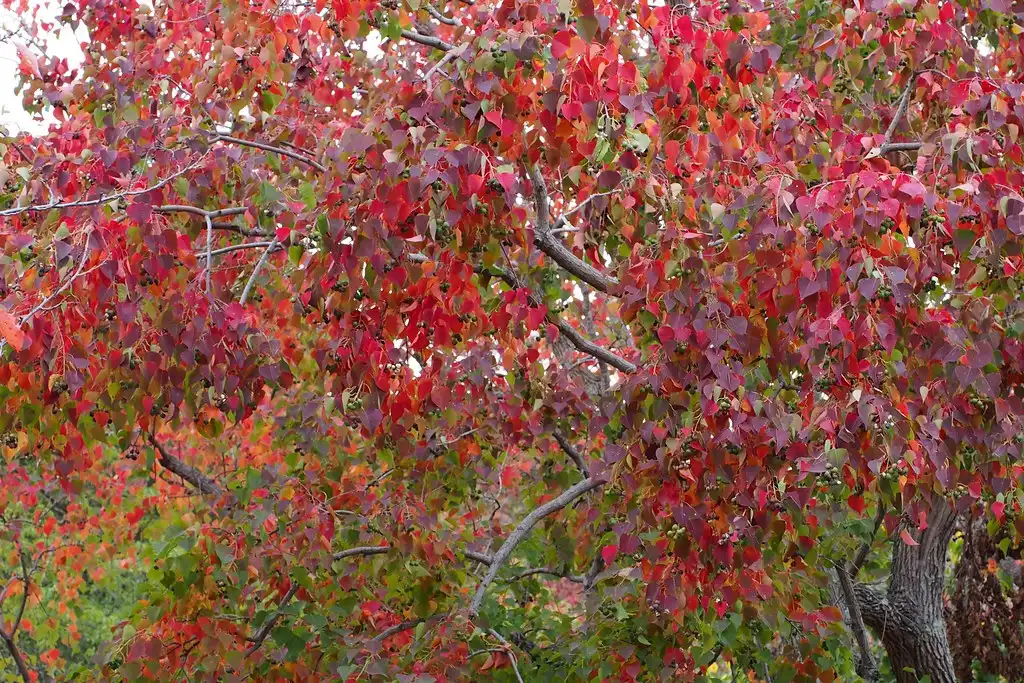
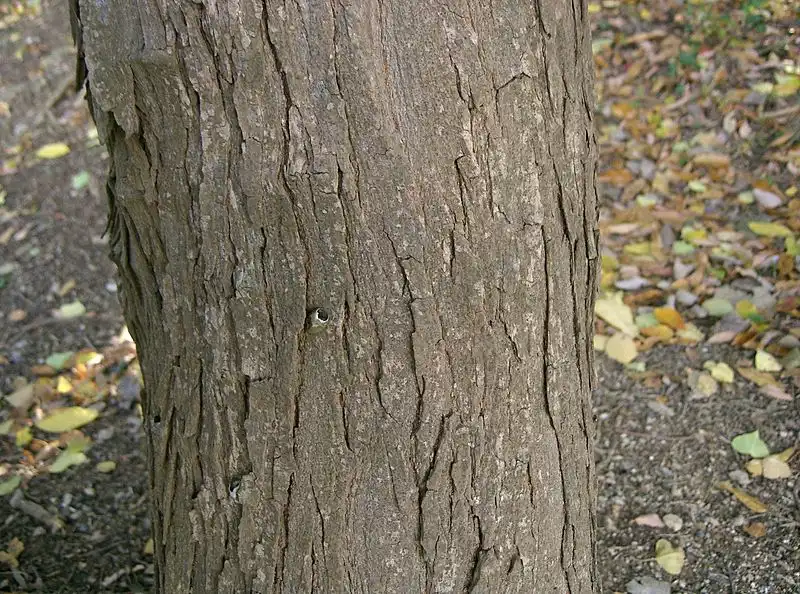
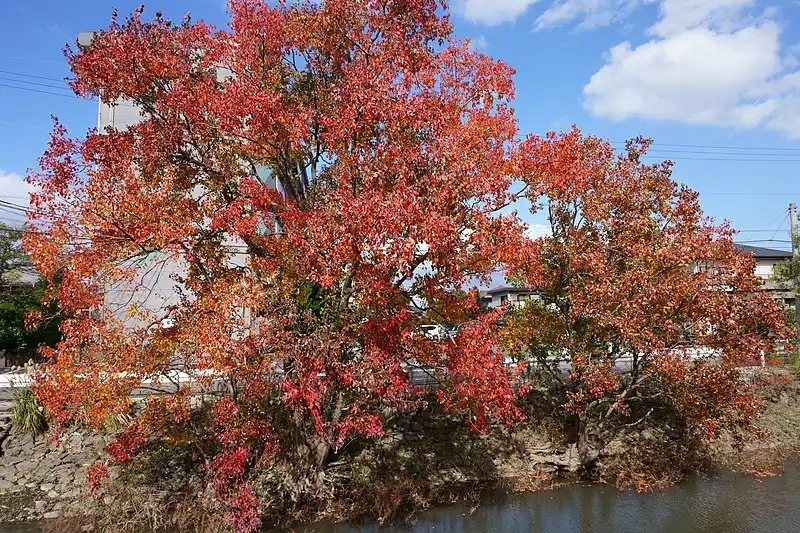
• Photo of Triadica sebifera (Triadica sebiferas)

Plant Profile: Triadica sebifera

Taxonomy: Triadica sebifera

Names

Chinese tallow tree, Popcorn Tree

  • Photo of Triadica sebifera (Triadica sebiferas)

Phonetic Spelling:try-uh-DEE-kuh seb-EE-fer-uh

Genus:Triadica

Species:sebifera

Family:Euphorbiaceae

Chinese tallow is a resilient shade tree belonging to the Euphorbiaceae family, capable of growing up to 40 feet tall and wide, with a trunk diameter of 3 feet, making it an excellent source of shade. Its deep taproot enables it to access moisture even during droughts.

This species tends to invade moist environments like ditches and stream banks, as well as some drier upland areas. In undisturbed forests, it can suppress native plant species and alter soil conditions due to the tannins present in its leaf litter. Its adaptability to crowded spaces and various light conditions facilitates the growth of additional trees. Birds play a significant role in dispersing its seeds, further complicating its spread. To effectively eliminate this plant, complete removal of both the tree and its seeds is necessary.

In terms of pests and diseases, the leaves and fruit of the Chinese tallow are toxic to both humans and livestock. This tree is recognized as an invasive species in North Carolina.

Triadica sebifera Feature Summary

Triadica sebifera Image Gallery

Tags

#deciduous
#fall color
#shade tree
#invasive
#drought tolerant
#salt tolerant
#fall interest
#fast growing
#aggressive
#deciduous tree
#flood tolerant

Similar Plants

Triadica sebifera Feature Summary

Attributes
AL, AR, CA, FL, GA, LA, MS, NC, SC, TX
Attracts bees and other insects.
Attracts Pollinators
Fruit
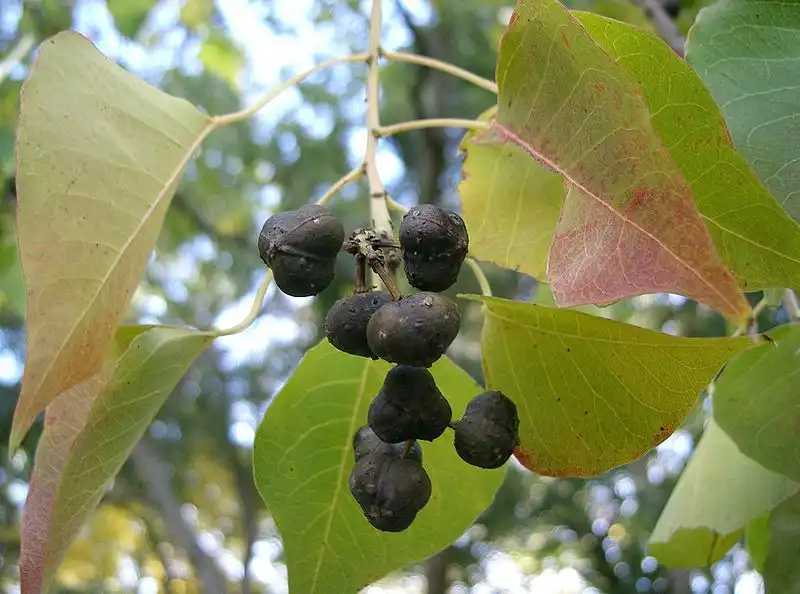
Clusters of greenish three-lobed fruit turn black when ripe. The Capsule contains white, wax-coated seeds.
Flowers
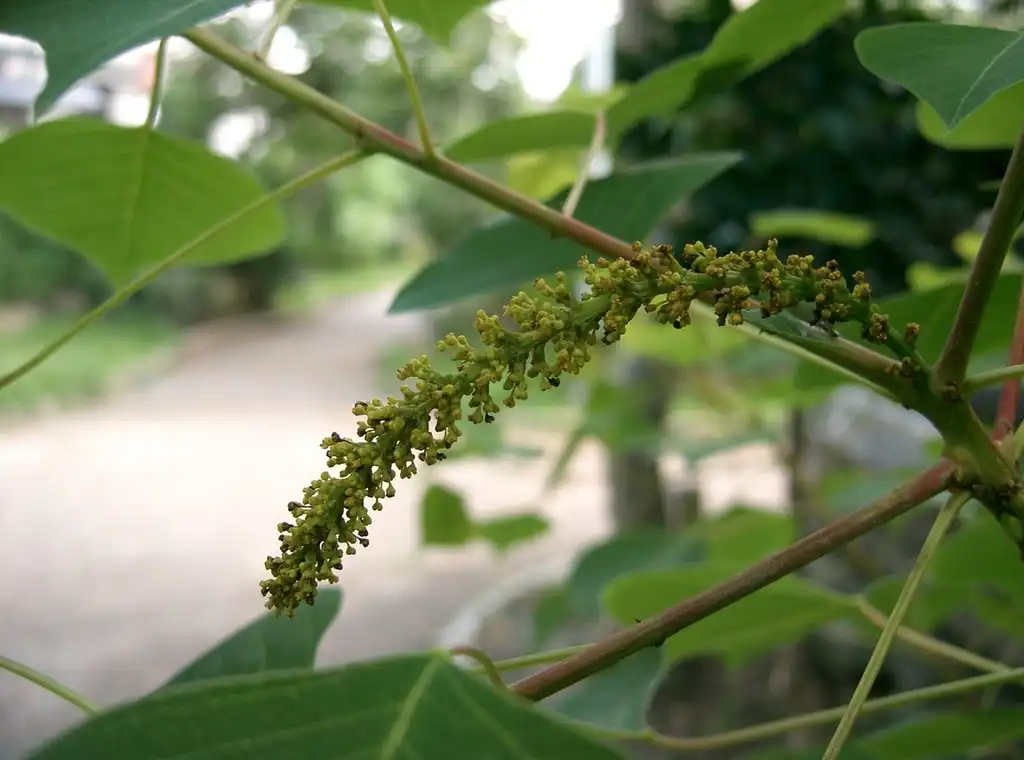
The yellowish flowers appear on 8 inch dangling spikes.
Gold/Yellow
Green
Spring
Summer
> 6 inches
Leaves
The leaves have a long pointed tip.
Purple/Lavender
Gold/Yellow
Red/Burgundy
Ovate
Cordate
1-3 inches
Poisonous to Humans
Whole Plant Traits
Rounded
Pyramidal
Cultural Conditions
Full sun (6 or more hours of direct sunlight a day)
Partial Shade (Direct sunlight only part of the day, 2-6 hours)
Dappled Sunlight (Shade through upper canopy all day)
Deep shade (Less than 2 hours to no direct sunlight)
24-60 feet
12-24 feet
Coastal
Landscape
Drought
Urban Conditions
Weedy
Invasive Species

Triadica sebifera Attributes

Triadica sebifera: Country Or Region Of Origin

China
Triadica sebifera: Distribution

AL, AR, CA, FL, GA, LA, MS, NC, SC, TX

Triadica sebifera: Wildlife Value

Attracts bees and other insects.

Triadica sebifera: Life Cycle

Annual
Biennial
Bulb
Perennial
Woody

Triadica sebifera: Recommended Propagation Strategy

Division
Grafting
Layering
Leaf Cutting
Root Cutting
Seed
Stem Cutting

Triadica sebifera: Play Value

Attractive Flowers
Attracts Pollinators
Buffer
Colorful
Defines Paths
Easy to Grow
Edible fruit
Fragrance
Pieces Used in Games
Screening
Shade
Sound
Textural
Wildlife Cover/Habitat
Wildlife Food Source
Wildlife Larval Host
Wildlife Nesting
Wind Break
Wind Shimmer

Triadica sebifera Fruit

Triadica sebifera: Fruit Description

Clusters of greenish three-lobed fruit turn black when ripe. The Capsule contains white, wax-coated seeds.

Triadica sebifera: Fruit Type

Achene
Aggregate
Berry
Capsule
Caryopsis
Drupe
Follicle
Legume
Nut
Pome
Samara
Schizocarp
Siliqua

Triadica sebifera: Fruit Color

grass
Black

Triadica sebifera: Display/Harvest Time

Fall
Spring
Summer
Winter

Triadica sebifera Flowers

Triadica sebifera: Flower Description

The yellowish flowers appear on 8 inch dangling spikes.

Triadica sebifera: Flower Color

filter_vintage
Gold/Yellow
filter_vintage
Green

Triadica sebifera: Flower Inflorescence

Catkin
Corymb
Cyme
Head
Insignificant
Panicle
Raceme
Solitary
Spadix
Spike
Umbel

Triadica sebifera: Flower Bloom Time

Winter
Spring
Summer
Fall

Triadica sebifera: Flower Size

1-3 inches
3-6 inches
< 1 inch
> 6 inches

Triadica sebifera Leaves

Triadica sebifera: Leaf Description

The leaves have a long pointed tip.

Triadica sebifera: Deciduous Leaf Fall Color

spa
Gold/Yellow
spa
Purple/Lavender
spa
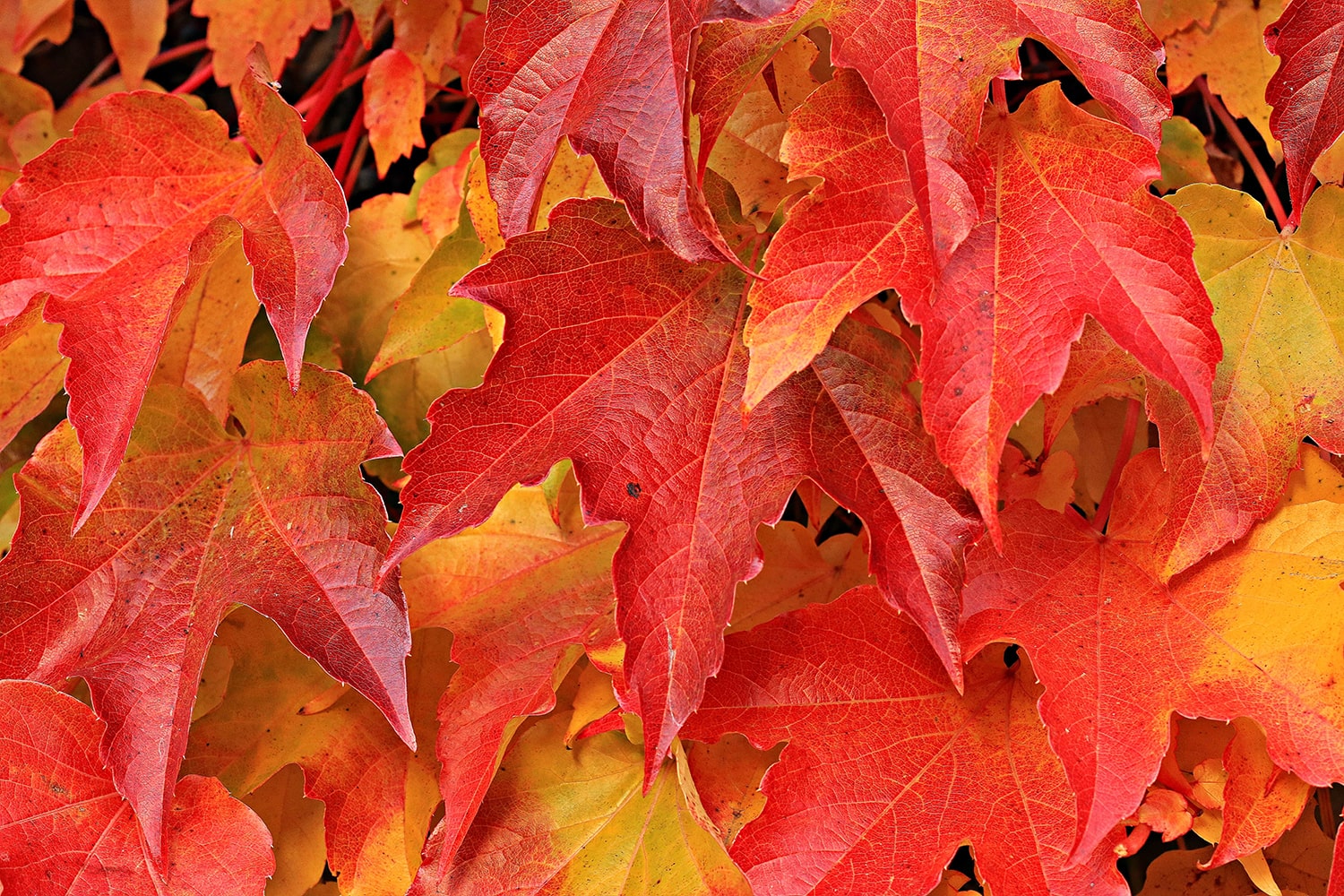
Red/Burgundy

Triadica sebifera: Leaf Arrangement

Alternate
Opposite
Other/more complex
Rosulate
Whorled

Triadica sebifera: Leaf Shape

Acicular
Auriculate
Cordate
Cuneate
Deltoid
Elliptical
Filiform
Lanceolate
Linear
Oblanceolate
Oblong
Obovate
Obtuse
Orbicular
Ovate
Palmasect
Palmatifid
Peltate
Pinnatifid
Pinnatisect
Reniform
Rhomboidal
Spatulate
Subcordate
Subulate

Triadica sebifera: Hairs Present

No
Yes

Triadica sebifera: Leaf Length

< 1 inch
1-3 inches
3-6 inches
> 6 inches

Triadica sebifera Poisonous to Humans

Triadica sebifera: Poison Symptoms

Nausea and vomiting.

Triadica sebifera: Poison Toxic Principle

Unknown

Triadica sebifera: Poison Severity

High
Low
Medium

Triadica sebifera: Causes Contact Dermatitis

No
Yes

Triadica sebifera: Poison Part

Bark
Flowers
Fruits
Leaves
Roots
Sap/Juice
Seeds
Stems

Triadica sebifera Whole Plant Traits

Triadica sebifera: Plant Type

Annual
Bulb
Carnivorous
Edible
Epiphyte
Fern
Ground Cover
Herb
Herbaceous Perennial
Houseplant
Mushroom
Native Plant
Ornamental Grasses and Sedges
Perennial
Poisonous
Rose
Shrub
Succulent
Tree
Turfgrass
Vegetable
Vine
Water Plant
Weed
Wildflower

Triadica sebifera: Habit/Form

Arching
Ascending
Broad
Cascading
Climbing
Clumping
Columnar
Conical
Creeping
Dense
Erect
Horizontal
Irregular
Mounding
Multi-stemmed
Multi-trunked
Open
Oval
Prostrate
Pyramidal
Rounded
Spreading
Vase
Weeping

Triadica sebifera: Growth Rate

Slow
Medium
Rapid

Triadica sebifera: Maintenance

Low
Medium
High

Triadica sebifera Cultural Conditions

Triadica sebifera: Light

Dappled Sunlight (Shade through upper canopy all day)
Deep shade (Less than 2 hours to no direct sunlight)
Full sun (6 or more hours of direct sunlight a day)
Partial Shade (Direct sunlight only part of the day, 2-6 hours)

Triadica sebifera: Available Space To Plant

12 inches-3 feet
12-24 feet
24-60 feet
3 feet-6 feet
6-feet-12 feet
Less than 12 inches
more than 60 feet

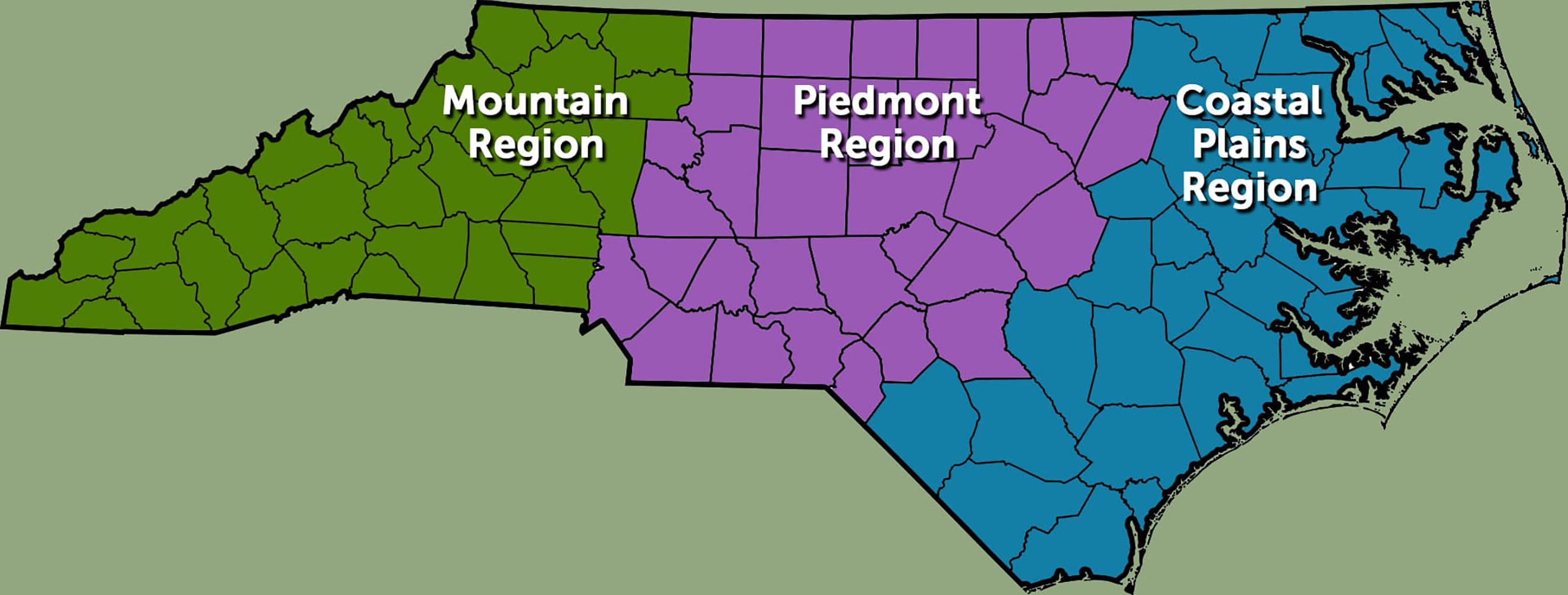
Triadica sebifera: NC Region

Coastal
Mountains
Piedmont

Triadica sebifera: USDA Plant Hardiness Zone

thermostat
10a
thermostat
10b
thermostat
8a
thermostat
8b
thermostat
9a
thermostat
9b

Triadica sebifera Stem

Triadica sebifera: Stem Is Aromatic

No
Yes

Triadica sebifera Landscape

Triadica sebifera: Resistance To Challenges

Black Walnut
Compaction
Deer
Diseases
Drought
Dry Soil
Erosion
Fire
Foot Traffic
Heat
Heavy Shade
Humidity
Insect Pests
Pollution
Poor Soil
Rabbits
Salt
Slugs
Squirrels
Storm damage
Urban Conditions
Voles
Wet Soil
Wind

Triadica sebifera: Problems

Allelopathic
Contact Dermatitis
Frequent Disease Problems
Frequent Insect Problems
Invasive Species
Malodorous
Messy
Poisonous to Humans
Problem for Cats
Problem for Children
Problem for Dogs
Problem for Horses
Short-lived
Spines/Thorns
Weak Wood
Weedy