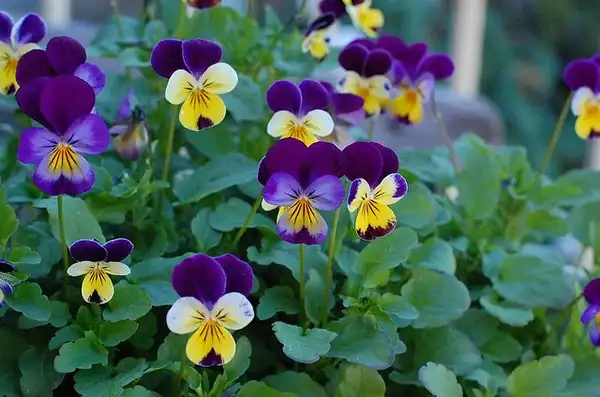
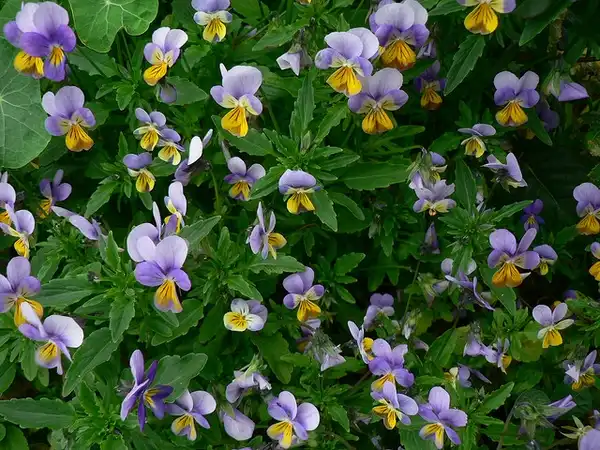
Viola cornuta: Country Or Region Of Origin
France and Spain
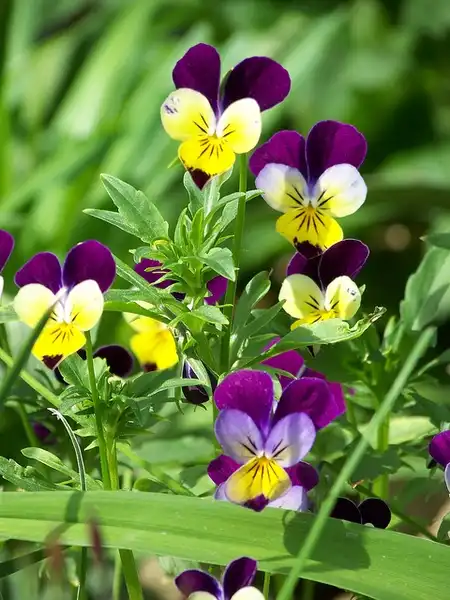

Phonetic Spelling:vy-OH-la kor-NOO-tuh
Genus:Viola
Species:cornuta
Family:Violaceae
Originating from the Pyrenees, this widely favored viola, known for its subtle fragrance, is commonly utilized as a bedding plant. It features creeping, ascending stems that can spread up to 12 inches wide. While typically cultivated as perennials, these plants can also thrive as biennials or annuals.
Blooming in the spring, they serve as excellent companions for tulips. This plant is hermaphroditic, possessing both male and female reproductive organs, and relies on insects for pollination.
The flowers usually exhibit a two-toned appearance, with shades of blue, violet, and lavender being predominant. However, cultivars can also showcase red, white, yellow, and apricot hues.
Prolonged periods of high temperatures may lead to a reduction in flowering. To encourage a second bloom when temperatures cool, it is advisable to cut the plants back. Additionally, deadheading can stimulate the emergence of new buds.
Both the young leaves and flower buds are edible, whether consumed raw or cooked, and tea can be brewed from the foliage.
The common name, Horned Violet, derives from its distinctive long, slender nectar spur. Pansy flowers can be differentiated from violets by examining their petal arrangement: pansies have four petals facing upward and one downward, while Viola Cornuta features two petals pointing up and three pointing down.
These plants thrive in humusy, moist, well-drained soils and prefer full sun to partial shade. They tend to bloom during cooler weather and may halt flowering during the summer heat. Numerous cultivars are available, expanding the range of colors.
When planted in a bed, regular weeding may be necessary until the plants become established. Once they do, they will effectively cover the ground, making it challenging for weeds to take hold.
In terms of pests and diseases, snails and slugs can pose a threat, along with various fungal leaf diseases.