Watsonia: Country Or Region Of Origin
Southern Africa, Lesotho, Swaziland
Phonetic Spelling:wat-SON-ee-uh
Genus:Watsonia
Species:
Family:Iridaceae
Named in honor of Sir William Watson, an 18th-century British botanist, physician, and naturalist, the Watsonia is indigenous to southern Africa. This species, which resembles both irises and gladiolas, is typically cultivated as a perennial in warmer regions. In colder climates, certain varieties can be grown as annuals; the corms can be harvested in the fall, stored in a cool, dry place, and replanted in the spring. To facilitate moisture retention during storage, it is beneficial to use a mixture of potting soil and peat. This method also allows for the division of the plant by detaching the offsets that develop from the corms.
For perennial growth, corms should be planted from late summer to early winter. They will begin to sprout in the fall, with flowers appearing in the spring. After the blooming period, it is advisable to cut back the flower stalks while leaving the leaves intact to help strengthen the corm for the next growth cycle.
Mature clumps should be divided every few years, as overcrowding can lead to a decrease in flowering.
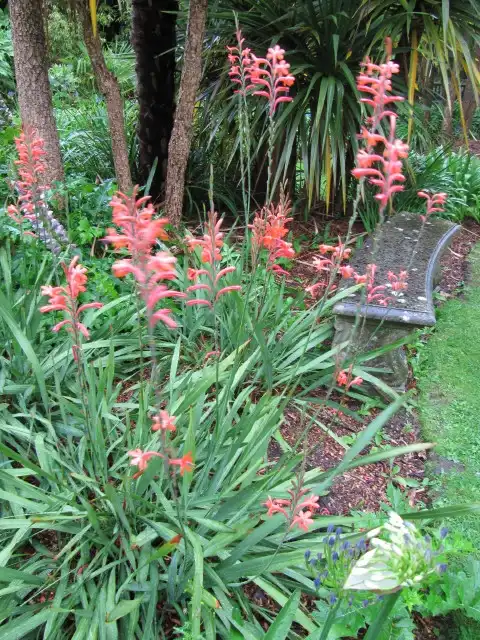
Watsonia blooms come in various colors, with coral, orange, and light pink being the most prevalent. These clumps thrive in full sunlight and well-composted soil. Regular watering during the summer months enhances growth and cold tolerance, with larger clumps exhibiting greater resistance to cold. Each clump can produce numerous flower spikes, with each spike bearing up to 25 flowers.
This remarkable cut flower thrives in well-drained soil, as poor drainage can result in corm rot. The Bugle Lily has a diameter of 12 inches and a planting depth of 3 inches, with corms able to be stored dry at temperatures between 35 and 41 degrees Fahrenheit. Its hardiness is classified as Tender III, and it is susceptible to damage when temperatures drop below 25 degrees Fahrenheit.
Insects, Diseases, and Other Plant Issues: While aphids do not harm the plant, they are known to inhabit it.
Due to its height, staking may be necessary for support.
It has the potential to spread and may be considered invasive in some areas.
Additionally, handling the plant can sometimes lead to skin irritation or allergic reactions.