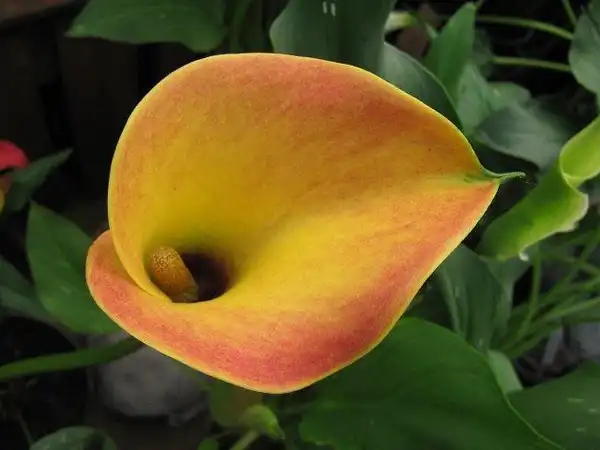
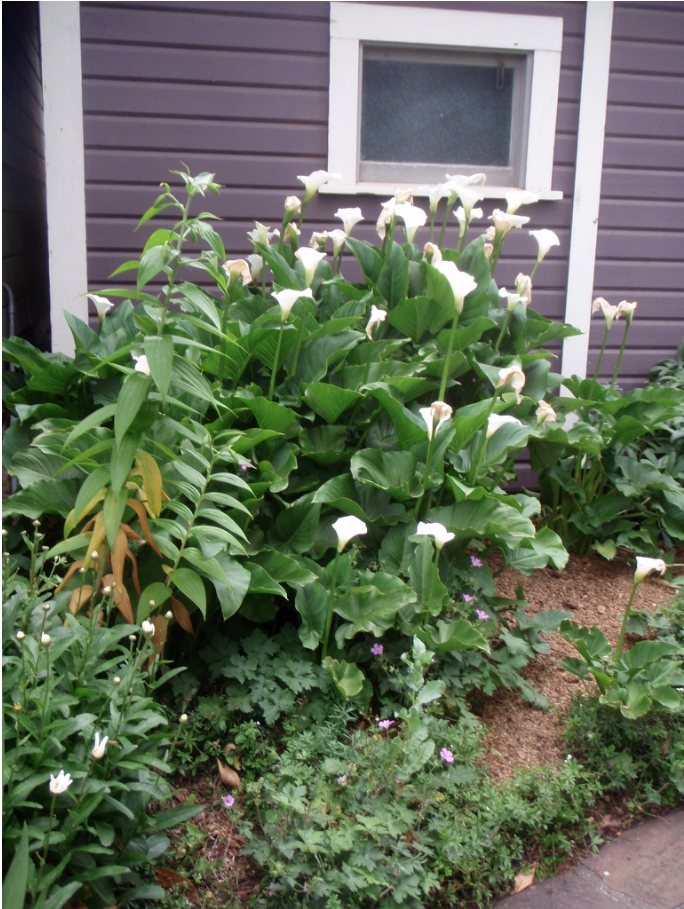
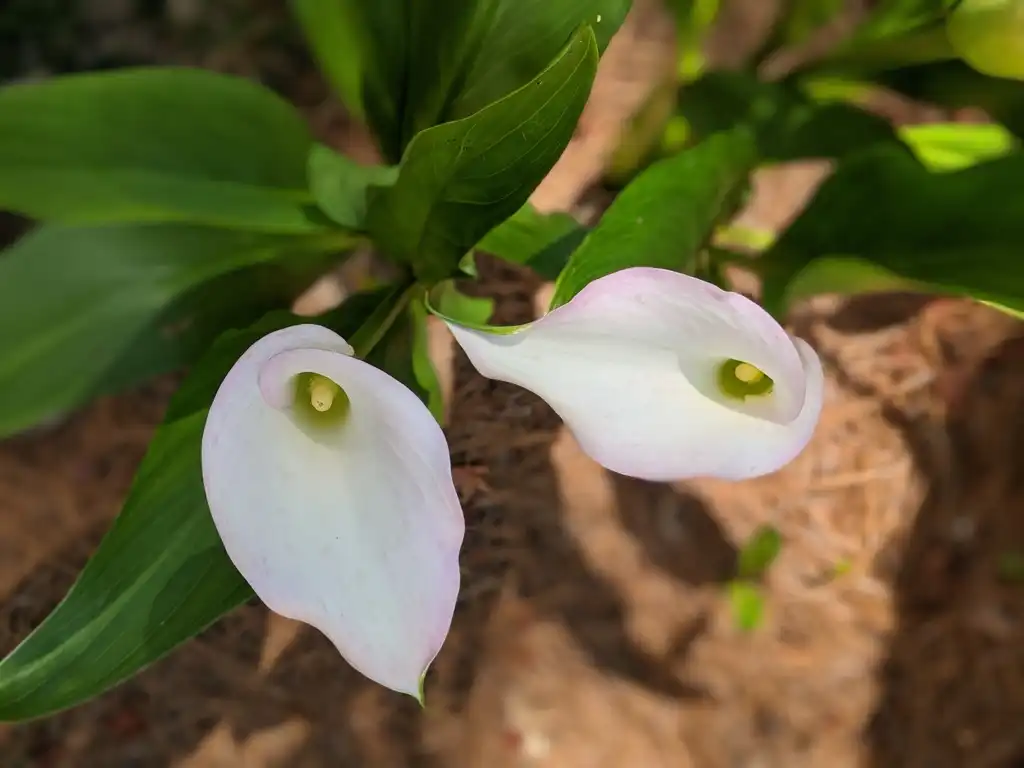
• Photo of Zantedeschia (Zantedeschias)

Plant Profile: Zantedeschia

Taxonomy: Zantedeschia

Names

Calla Lily

  • Photo of Zantedeschia (Zantedeschias)

Phonetic Spelling:zan-te-DES-kee-uh

Genus:Zantedeschia

Species:

Family:Araceae

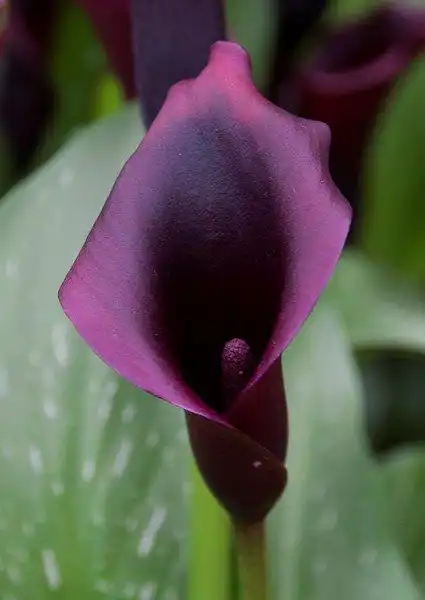
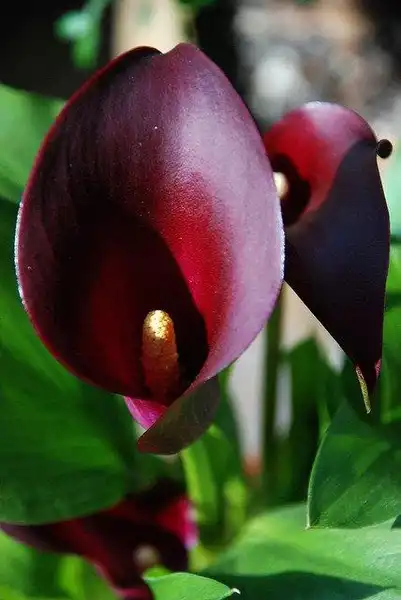
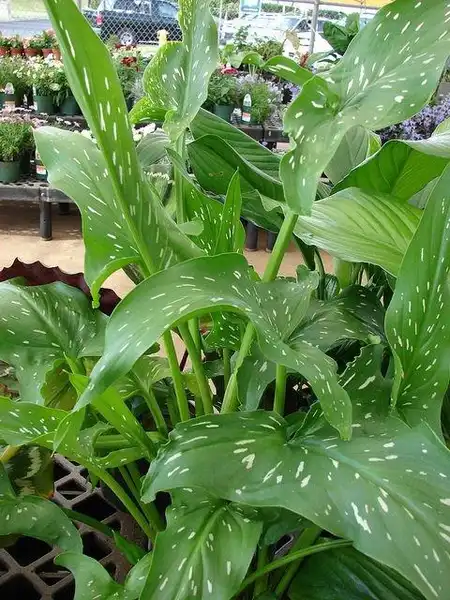
There are eight species and a variety of cultivars of the 'Calla lily.' These herbaceous, bulbous perennials feature long, arrow-shaped leaves, with some species displaying striking, translucent spots reminiscent of windows. Their distinctive flower heads, which consist of small flowers clustered on a spadix and encased in a spathe, make them excellent choices for cut arrangements. While the spathe is typically white or green, there are cultivars available in shades of yellow, pink, red, and purple. These plants typically bloom from late spring through early summer.

'Calla lilies' thrive in full sun to partial shade (up to 25%) and prefer moist, nutrient-rich soil, flourishing particularly well in bog-like conditions. In colder climates, they may not survive the winter, so it's advisable to apply a thick layer of organic mulch and, if necessary, dig up the corms for winter storage. They also adapt well to container gardening and can be cultivated indoors. When planting, ensure the rhizomes are buried to a depth of 2 inches (5 cm) and spaced 18 inches (45 cm) apart. Propagation can be achieved by separating cormels or by sowing seeds collected in the fall.

As a member of the Arum family, it's important to note that 'Calla lilies' are toxic if ingested.

Zantedeschia Feature Summary

Zantedeschia Image Gallery

Tags

#purple
#red
#white
#yellow
#poisonous
#rain garden
#perennial
#pink flowers
#cut flowers
#low maintenance
#tuberous
#moist soil
#spadix
#rhizomes
#summer bulbs

Similar Plants

Zantedeschia Feature Summary

Attributes
Store rhizomes or tubers dry at 50-60 degF (10-16 deg C). Take care not to injure the storage organs. Can overwinter in Zone 8 with mulch.
Perennial
Bulb
Flowers
Flowers small, in a spadix surrounded by a (commonly) white spathe. Blooms in late spring to early summer.
Pink
Purple/Lavender
White
Gold/Yellow
Red/Burgundy
Green
Orange
Spring
Summer
Fall
Leaves
Arrow-shaped, some with translucent spots
Green
White
Lanceolate
Poisonous to Humans
HIGHLY TOXIC, MAY BE FATAL IF EATEN! Severe burning sensation and swelling of lips, tongue, and throat; stomach pain and diarrhea possible.
Calcium oxalate crystals and possibly others.
Seeds
Leaves
Stems
Sap/Juice
Flowers
Bark
Fruits
Roots
Whole Plant Traits
Perennial
Herbaceous Perennial
Poisonous
Houseplant
Bulb
Cultural Conditions
Full sun (6 or more hours of direct sunlight a day)
Partial Shade (Direct sunlight only part of the day, 2-6 hours)
Dappled Sunlight (Shade through upper canopy all day)
Acid (<6.0)
Alkaline (>8.0)
Neutral (6.0-8.0)
Occasionally Wet
Coastal
7a
7b
8b
8a
9a
9b
10a
10b
Clay
High Organic Matter
Loam (Silt)
Landscape
Cutting Garden
Rain Garden
Deer
Wet Soil
Rabbits
Poor Soil
Container
Patio
Houseplants
Pond
Poisonous to Humans
Problem for Cats
Problem for Dogs

Zantedeschia Attributes

Zantedeschia: Country Or Region Of Origin

Africa
Zantedeschia: Bulb Storage

Store rhizomes or tubers dry at 50-60 degF (10-16 deg C). Take care not to injure the storage organs. Can overwinter in Zone 8 with mulch.
Zantedeschia: Life Cycle

Annual
Biennial
Bulb
Perennial
Woody

Zantedeschia: Recommended Propagation Strategy

Division
Grafting
Layering
Leaf Cutting
Root Cutting
Seed
Stem Cutting

Zantedeschia Flowers

Zantedeschia: Flower Description

Flowers small, in a spadix surrounded by a (commonly) white spathe. Blooms in late spring to early summer.

Zantedeschia: Flower Color

filter_vintage
Gold/Yellow
filter_vintage
Green
filter_vintage
Orange
filter_vintage
Pink
filter_vintage
Purple/Lavender
filter_vintage
Red/Burgundy
filter_vintage
White

Zantedeschia: Flower Inflorescence

Catkin
Corymb
Cyme
Head
Insignificant
Panicle
Raceme
Solitary
Spadix
Spike
Umbel

Zantedeschia: Flower Value To Gardener

Edible
Fragrant
Good Cut
Good Dried
Long Bloom Season
Long-lasting
Showy

Zantedeschia: Flower Bloom Time

Winter
Spring
Summer
Fall

Zantedeschia Leaves

Zantedeschia: Leaf Description

Arrow-shaped, some with translucent spots

Zantedeschia: Woody Plant Leaf Characteristics

Broadleaf Evergreen
Deciduous
Needled Evergreen
Semi-evergreen

Zantedeschia: Leaf Color

spa
Green
spa
White

Zantedeschia: Leaf Type

Compound (Pinnately , Bipinnately, Palmately)
Fronds
Needles
Sheath
Simple

Zantedeschia: Leaf Arrangement

Alternate
Opposite
Other/more complex
Rosulate
Whorled

Zantedeschia: Leaf Shape

Acicular
Auriculate
Cordate
Cuneate
Deltoid
Elliptical
Filiform
Lanceolate
Linear
Oblanceolate
Oblong
Obovate
Obtuse
Orbicular
Ovate
Palmasect
Palmatifid
Peltate
Pinnatifid
Pinnatisect
Reniform
Rhomboidal
Spatulate
Subcordate
Subulate

Zantedeschia: Leaf Margin

Crenate
Crenulate
Dentate
Denticulate
Doubly Crenate
Doubly Dentate
Doubly Serrate
Entire
Lobed
Serrate
Sinuate
Undulate

Zantedeschia: Hairs Present

No
Yes

Zantedeschia Poisonous to Humans

Zantedeschia: Poison Symptoms

HIGHLY TOXIC, MAY BE FATAL IF EATEN! Severe burning sensation and swelling of lips, tongue, and throat; stomach pain and diarrhea possible.

Zantedeschia: Poison Toxic Principle

Calcium oxalate crystals and possibly others.

Zantedeschia: Poison Severity

High
Low
Medium

Zantedeschia: Causes Contact Dermatitis

No
Yes

Zantedeschia: Poison Part

Bark
Flowers
Fruits
Leaves
Roots
Sap/Juice
Seeds
Stems

Zantedeschia Whole Plant Traits

Zantedeschia: Plant Type

Annual
Bulb
Carnivorous
Edible
Epiphyte
Fern
Ground Cover
Herb
Herbaceous Perennial
Houseplant
Mushroom
Native Plant
Ornamental Grasses and Sedges
Perennial
Poisonous
Rose
Shrub
Succulent
Tree
Turfgrass
Vegetable
Vine
Water Plant
Weed
Wildflower

Zantedeschia: Woody Plant Leaf Characteristics

Broadleaf Evergreen
Deciduous
Needled Evergreen
Semi-evergreen

Zantedeschia: Habit/Form

Arching
Ascending
Broad
Cascading
Climbing
Clumping
Columnar
Conical
Creeping
Dense
Erect
Horizontal
Irregular
Mounding
Multi-stemmed
Multi-trunked
Open
Oval
Prostrate
Pyramidal
Rounded
Spreading
Vase
Weeping

Zantedeschia: Maintenance

Low
Medium
High

Zantedeschia Cultural Conditions

Zantedeschia: Light

Dappled Sunlight (Shade through upper canopy all day)
Deep shade (Less than 2 hours to no direct sunlight)
Full sun (6 or more hours of direct sunlight a day)
Partial Shade (Direct sunlight only part of the day, 2-6 hours)

Zantedeschia: Soil pH

Acid (<6.0)
Alkaline (>8.0)
Neutral (6.0-8.0)

Zantedeschia: Soil Drainage

Frequent Standing Water
Good Drainage
Moist
Occasional Flooding
Occasionally Dry
Occasionally Wet
Very Dry

Zantedeschia: Available Space To Plant

12 inches-3 feet
12-24 feet
24-60 feet
3 feet-6 feet
6-feet-12 feet
Less than 12 inches
more than 60 feet

Zantedeschia: NC Region

Coastal
Mountains
Piedmont

Zantedeschia: USDA Plant Hardiness Zone

thermostat
10a
thermostat
10b
thermostat
7a
thermostat
7b
thermostat
8a
thermostat
8b
thermostat
9a
thermostat
9b

Zantedeschia: Soil Texture

Clay
High Organic Matter
Loam (Silt)
Sand
Shallow Rocky

Zantedeschia Stem

Zantedeschia: Stem Is Aromatic

No
Yes

Zantedeschia Landscape

Zantedeschia: Landscape Theme

Asian Garden
Butterfly Garden
Children's Garden
Cottage Garden
Cutting Garden
Drought Tolerant Garden
Edible Garden
English Garden
Fairy Garden
Garden for the Blind
Native Garden
Nighttime Garden
Pollinator Garden
Rain Garden
Rock Garden
Shade Garden
Water Garden
Winter Garden

Zantedeschia: Design Feature

Accent
Barrier
Border
Flowering Tree
Foundation Planting
Hedge
Mass Planting
Screen/Privacy
Security
Shade Tree
Small groups
Small Tree
Specimen
Street Tree
Understory Tree

Zantedeschia: Resistance To Challenges

Black Walnut
Compaction
Deer
Diseases
Drought
Dry Soil
Erosion
Fire
Foot Traffic
Heat
Heavy Shade
Humidity
Insect Pests
Pollution
Poor Soil
Rabbits
Salt
Slugs
Squirrels
Storm damage
Urban Conditions
Voles
Wet Soil
Wind

Zantedeschia: Landscape Location

Coastal
Container
Hanging Baskets
Houseplants
Lawn
Meadow
Naturalized Area
Near Septic
Patio
Pond
Pool/Hardscape
Recreational Play Area
Riparian
Rock Wall
Slope/Bank
Small Space
Vertical Spaces
Walkways
Woodland

Zantedeschia: Problems

Allelopathic
Contact Dermatitis
Frequent Disease Problems
Frequent Insect Problems
Invasive Species
Malodorous
Messy
Poisonous to Humans
Problem for Cats
Problem for Children
Problem for Dogs
Problem for Horses
Short-lived
Spines/Thorns
Weak Wood
Weedy