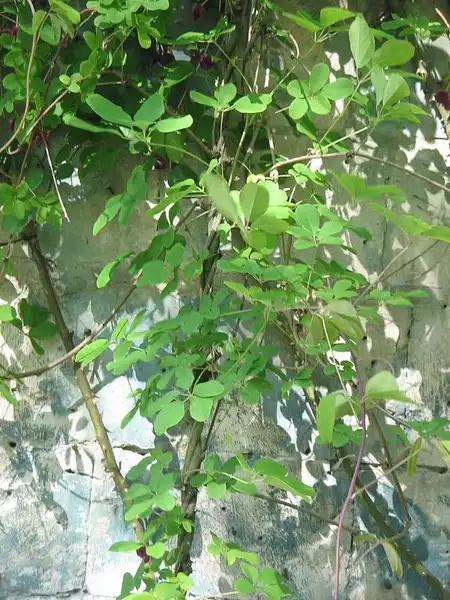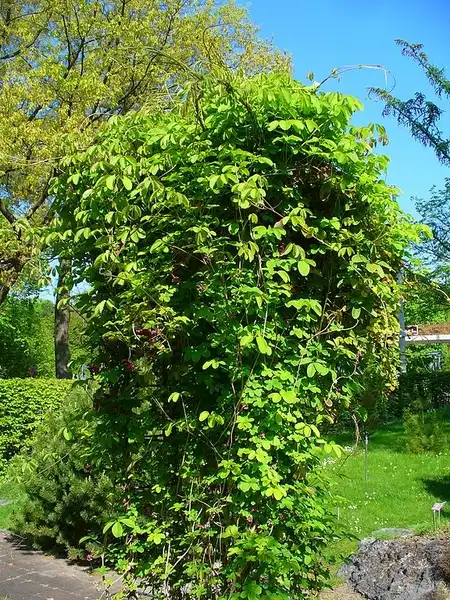
• Photo of Akebia quinata (Akebia quinatas)

Plant Profile: Akebia quinata

Taxonomy: Akebia quinata

Names

Chocolate Vine, Five Leaf Akebia, Five-leaf Chocolate Vine, Raisin Vine

  • Photo of Akebia quinata (Akebia quinatas)

Phonetic Spelling:a-KEE-bee-uh kwi-NAY-tuh

Genus:Akebia

Species:quinata

Family:Lardizabalaceae

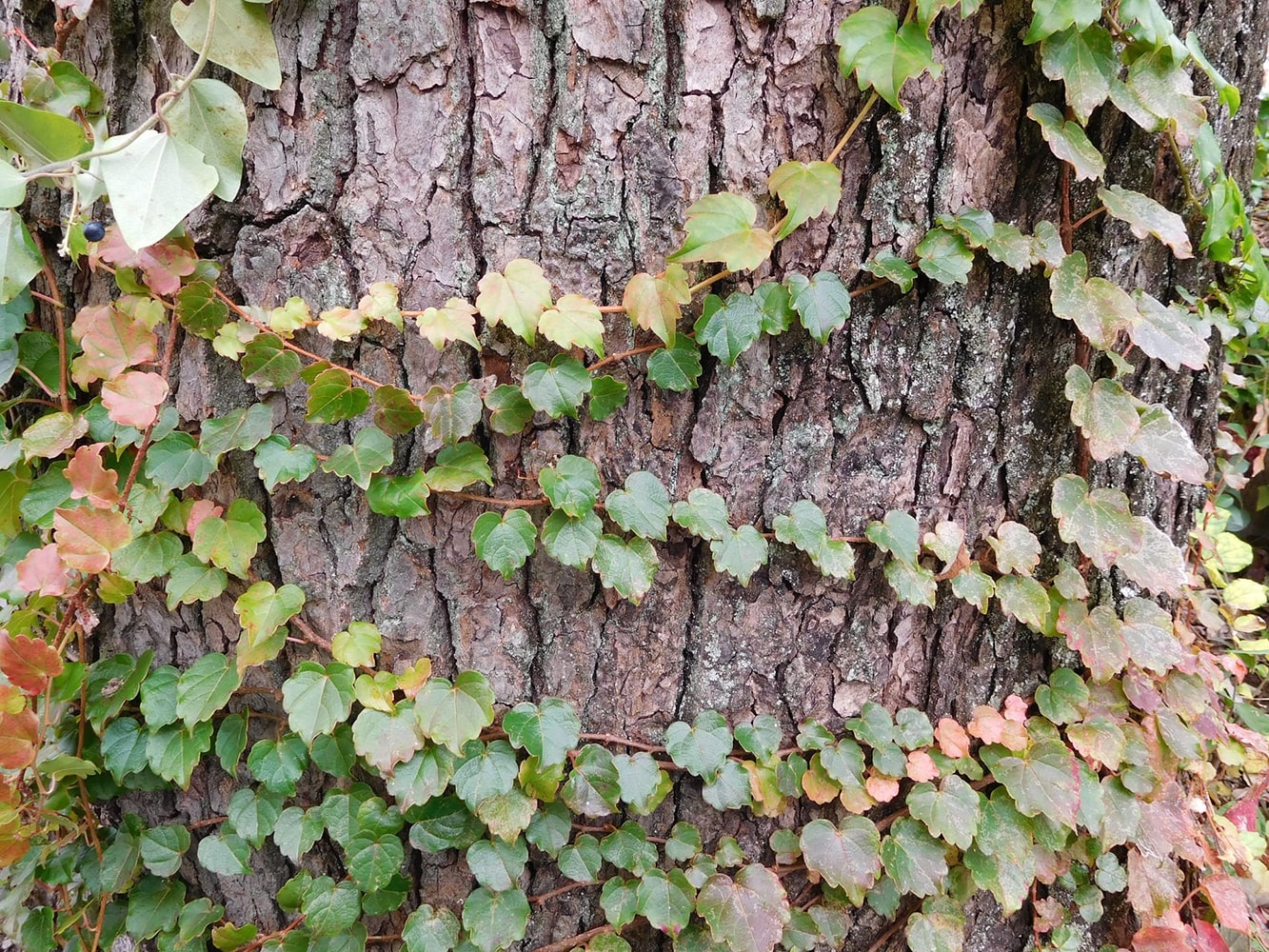
The chocolate vine, also known as five-leaf akebia, is a deciduous to semi-evergreen woody vine belonging to the Lardizabalaceae family. The genus name, Akebia, is derived from a Japanese term meaning "twining," while the species name, quinata, comes from the Latin word for "five," which describes its five-part compound leaves. This vigorous vine can grow up to 40 feet in length and features elegant, palmately compound leaves. It thrives in ordinary, well-drained soil and, although it prefers full sunlight, it can tolerate deep shade.

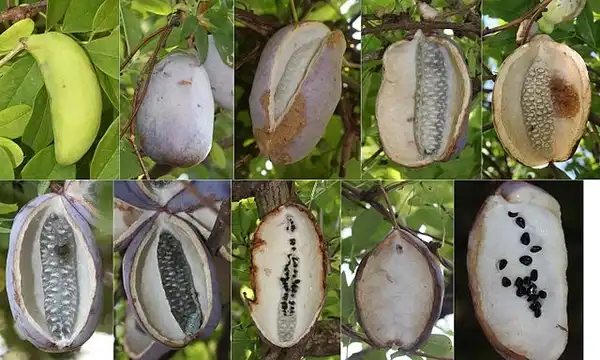
In early spring, the vine produces red-purple flowers that emerge alongside the leaves, often blending into the five-part green foliage reminiscent of Schefflera plants. The fragrant chocolate-purple blooms appear on older wood, so it is advisable to prune the vine after flowering. In the fall, large, sausage-shaped purple fruits split open to reveal edible white flesh and small black seeds. While the plant may die back during harsh winters, it remains evergreen in milder climates. Its rapid growth can easily overwhelm nearby shrubs and other vegetation if not properly managed, necessitating regular and substantial pruning.

This resilient plant can withstand drought, wet conditions, deer browsing, erosion, and heavy shade. There are also cultivars with white and pale pink flowers, as well as varieties featuring variegated foliage.

**Quick Identification Tips:**

**Insects, Diseases, and Other Plant Issues:** The chocolate vine does not face significant insect or disease threats. Although it is not classified as a noxious weed by the federal government, several states include it on their invasive species lists. Environmental organizations caution against planting this species in areas where it could spread or reseed, as it may outcompete native plants.

Akebia quinata Feature Summary

Akebia quinata Image Gallery

Tags

#weeping
#purple
#fragrant
#red
#evergreen
#deciduous
#full sun tolerant
#drought tolerant
#wildlife plant
#purple flowers
#red flowers
#weedy
#showy leaves
#climbing
#spring flowers
#high maintenance
#playground
#fast growing
#aggressive
#vines
#twining
#climbing vines
#blue-green leaves
#children's garden
#spring interest
#edible garden
#fantz
#fruits
#bird friendly
#heavy shade tolerant

Similar Plants

Akebia quinata is often confused with:

Akebia quinata Feature Summary

Attributes
The vines are used for basketweaving.
China, Korea, and Japan
Birds eat the fruits and disperse the seeds.
The inner white flesh of the fruit is edible and sweet, tastes like a combination of watermelon crossed with a canteloupe, however, many have a negative attitude toward eating the slimy mold-like tissue.
Edible fruit
Fragrance
Wildlife Food Source
Attractive Flowers
Fruit
4 inch long fleshy ovoid cucumber-shaped purple fruit which split open in the fall to reveal edible white flesh, similar to dragon fruit, and tiny black seeds.
Follicle
Purple/Lavender
Black
> 3 inches
Flowers
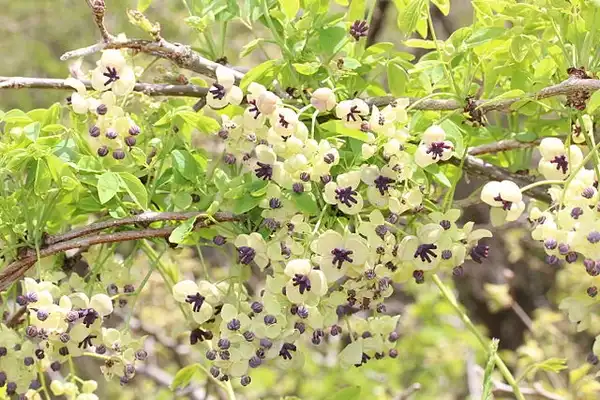
Small, reddish to purple, spicy, fragrant flowers in mid-spring. Male and female flowers in the same raceme. Fragrant chocolate-purple flowers appear on old wood, so prune after flowering. Pendulous dangling racemes, axillary. 2-5, maroon to chocolate-brown, fragrant, 1"; petals lacking; sepals 3, concave; male flowers smaller, clustered; female flowers on elongate pedicels, few. Flowers must be hand-pollinated to produce fruit.
Purple/Lavender
Gold/Yellow
Red/Burgundy
Brown/Copper
Green
< 1 inch
Leaves
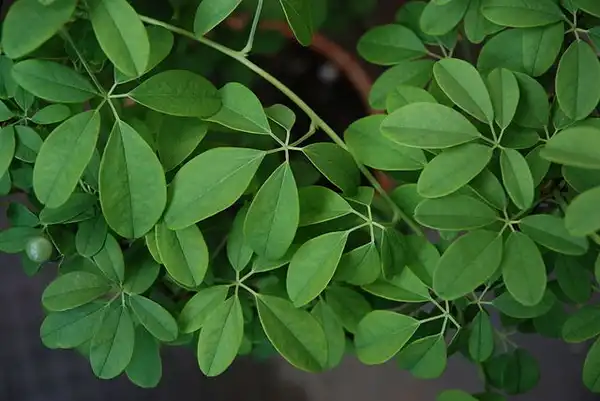
Alternate, palmately compound, 5 leaflets; leaflets are 1"-3" long oblong-obovate or elliptic, emarginate, rotund, entire, bright blue-green above, glaucous beneath, becoming purple in cold weater; petiolules 1 cm long.
Deciduous
Semi-evergreen
Green
Blue
Purple/Lavender
Compound (Pinnately , Bipinnately, Palmately)
Elliptical
Oblong
Obovate
1-3 inches
Stem
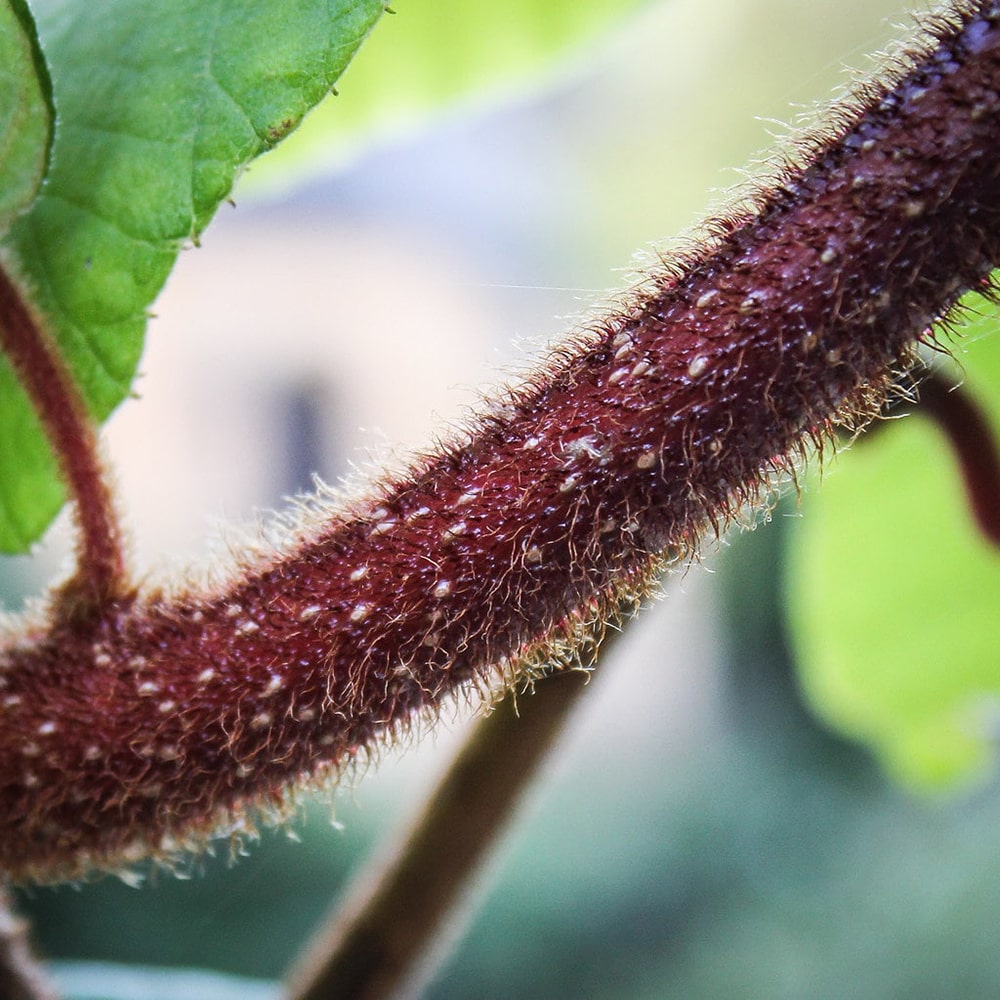
Slender, twining, green when young turning brown.
Brown/Copper
Green
Whole Plant Traits
Cultural Conditions
Full sun (6 or more hours of direct sunlight a day)
Partial Shade (Direct sunlight only part of the day, 2-6 hours)
Deep shade (Less than 2 hours to no direct sunlight)
Good Drainage
Moist
Occasionally Dry
Coastal
Mountains
Piedmont
Clay
Loam (Silt)
Sand
Landscape
Drought
Insect Pests
Diseases
Erosion
Heavy Shade
Songbirds

Akebia quinata Attributes

Akebia quinata: Uses (Ethnobotany)

The vines are used for basketweaving.
Akebia quinata: Country Or Region Of Origin

China, Korea, and Japan

Akebia quinata: Wildlife Value

Birds eat the fruits and disperse the seeds.

Akebia quinata: Particularly Resistant To (Insects/Diseases/Other Problems)

pests, diseases,

Akebia quinata: Edibility

The inner white flesh of the fruit is edible and sweet, tastes like a combination of watermelon crossed with a canteloupe, however, many have a negative attitude toward eating the slimy mold-like tissue.

Akebia quinata: Life Cycle

Annual
Biennial
Bulb
Perennial
Woody

Akebia quinata: Play Value

Attractive Flowers
Attracts Pollinators
Buffer
Colorful
Defines Paths
Easy to Grow
Edible fruit
Fragrance
Pieces Used in Games
Screening
Shade
Sound
Textural
Wildlife Cover/Habitat
Wildlife Food Source
Wildlife Larval Host
Wildlife Nesting
Wind Break
Wind Shimmer

Akebia quinata: Climbing Method

Clinging
Scrambler
Tendrils
Twining

Akebia quinata Fruit

Akebia quinata: Fruit Description

4 inch long fleshy ovoid cucumber-shaped purple fruit which split open in the fall to reveal edible white flesh, similar to dragon fruit, and tiny black seeds.

Akebia quinata: Fruit Type

Achene
Aggregate
Berry
Capsule
Caryopsis
Drupe
Follicle
Legume
Nut
Pome
Samara
Schizocarp
Siliqua

Akebia quinata: Fruit Color

grass
Black
grass
Purple/Lavender

Akebia quinata: Fruit Value To Gardener

Edible
Fragrant
Good Cut
Good Dried
Long Bloom Season
Long-lasting
Showy

Akebia quinata: Display/Harvest Time

Fall
Spring
Summer
Winter

Akebia quinata: Fruit Length

< 1 inch
1-3 inches
> 3 inches

Akebia quinata Flowers

Akebia quinata: Flower Description

Small, reddish to purple, spicy, fragrant flowers in mid-spring. Male and female flowers in the same raceme. Fragrant chocolate-purple flowers appear on old wood, so prune after flowering. Pendulous dangling racemes, axillary. 2-5, maroon to chocolate-brown, fragrant, 1"; petals lacking; sepals 3, concave; male flowers smaller, clustered; female flowers on elongate pedicels, few. Flowers must be hand-pollinated to produce fruit.

Akebia quinata: Flower Color

filter_vintage
Brown/Copper
filter_vintage
Gold/Yellow
filter_vintage
Green
filter_vintage
Purple/Lavender
filter_vintage
Red/Burgundy

Akebia quinata: Flower Inflorescence

Catkin
Corymb
Cyme
Head
Insignificant
Panicle
Raceme
Solitary
Spadix
Spike
Umbel

Akebia quinata: Flower Value To Gardener

Edible
Fragrant
Good Cut
Good Dried
Long Bloom Season
Long-lasting
Showy

Akebia quinata: Flower Bloom Time

Winter
Spring
Summer
Fall

Akebia quinata: Flower Size

1-3 inches
3-6 inches
< 1 inch
> 6 inches

Akebia quinata Leaves

Akebia quinata: Leaf Description

Alternate, palmately compound, 5 leaflets; leaflets are 1"-3" long oblong-obovate or elliptic, emarginate, rotund, entire, bright blue-green above, glaucous beneath, becoming purple in cold weater; petiolules 1 cm long.

Akebia quinata: Woody Plant Leaf Characteristics

Broadleaf Evergreen
Deciduous
Needled Evergreen
Semi-evergreen

Akebia quinata: Leaf Color

spa
Blue
spa
Green
spa
Purple/Lavender

Akebia quinata: Leaf Type

Compound (Pinnately , Bipinnately, Palmately)
Fronds
Needles
Sheath
Simple

Akebia quinata: Leaf Arrangement

Alternate
Opposite
Other/more complex
Rosulate
Whorled

Akebia quinata: Leaf Shape

Acicular
Auriculate
Cordate
Cuneate
Deltoid
Elliptical
Filiform
Lanceolate
Linear
Oblanceolate
Oblong
Obovate
Obtuse
Orbicular
Ovate
Palmasect
Palmatifid
Peltate
Pinnatifid
Pinnatisect
Reniform
Rhomboidal
Spatulate
Subcordate
Subulate

Akebia quinata: Hairs Present

No
Yes

Akebia quinata: Leaf Length

< 1 inch
1-3 inches
3-6 inches
> 6 inches

Akebia quinata: Leaf Value To Gardener

Edible
Fragrant
Good Cut
Good Dried
Long-lasting
Showy

Akebia quinata Stem

Akebia quinata: Stem Description

Slender, twining, green when young turning brown.

Akebia quinata: Stem Color

grass
Brown/Copper
grass
Green

Akebia quinata: Stem Is Aromatic

No
Yes

Akebia quinata Whole Plant Traits

Akebia quinata: Plant Type

Annual
Bulb
Carnivorous
Edible
Epiphyte
Fern
Ground Cover
Herb
Herbaceous Perennial
Houseplant
Mushroom
Native Plant
Ornamental Grasses and Sedges
Perennial
Poisonous
Rose
Shrub
Succulent
Tree
Turfgrass
Vegetable
Vine
Water Plant
Weed
Wildflower

Akebia quinata: Woody Plant Leaf Characteristics

Broadleaf Evergreen
Deciduous
Needled Evergreen
Semi-evergreen

Akebia quinata: Growth Rate

Slow
Medium
Rapid

Akebia quinata: Maintenance

Low
Medium
High

Akebia quinata: Texture

Fine
Medium
Coarse

Akebia quinata Cultural Conditions

Akebia quinata: Light

Dappled Sunlight (Shade through upper canopy all day)
Deep shade (Less than 2 hours to no direct sunlight)
Full sun (6 or more hours of direct sunlight a day)
Partial Shade (Direct sunlight only part of the day, 2-6 hours)

Akebia quinata: Soil Drainage

Frequent Standing Water
Good Drainage
Moist
Occasional Flooding
Occasionally Dry

Occasionally Wet

Very Dry

Akebia quinata: Available Space To Plant

12 inches-3 feet
12-24 feet
24-60 feet
3 feet-6 feet
6-feet-12 feet
Less than 12 inches
more than 60 feet

Akebia quinata: NC Region

Coastal
Mountains
Piedmont

Akebia quinata: USDA Plant Hardiness Zone

thermostat
5a
thermostat
5b
thermostat
6a
thermostat
6b
thermostat
7a
thermostat
7b
thermostat
8a
thermostat
8b

Akebia quinata: Soil Texture

Clay
High Organic Matter
Loam (Silt)
Sand
Shallow Rocky

Akebia quinata Landscape

Akebia quinata: Resistance To Challenges

Black Walnut
Compaction
Deer
Diseases
Drought
Dry Soil
Erosion
Fire
Foot Traffic
Heat
Heavy Shade
Humidity
Insect Pests
Pollution
Poor Soil
Rabbits
Salt
Slugs
Squirrels
Storm damage
Urban Conditions
Voles
Wet Soil
Wind

Akebia quinata: Attracts

Bats
Bees
Butterflies
Frogs
Hummingbirds
Moths
Pollinators
Predatory Insects
Reptiles
Small Mammals
Songbirds
Specialized Bees

Akebia quinata: Problems

Allelopathic
Contact Dermatitis
Frequent Disease Problems
Frequent Insect Problems
Invasive Species
Malodorous
Messy
Poisonous to Humans
Problem for Cats
Problem for Children
Problem for Dogs
Problem for Horses
Short-lived
Spines/Thorns
Weak Wood
Weedy