Alocasia: Country Or Region Of Origin
East Asia, Indian subcontinent, and Malaysia/
Phonetic Spelling:ah-loh-KAH-see-ah
Genus:Alocasia
Species:
Family:Araceae
Alocasia spp. comprises a genus of 80 species of tuberous, herbaceous perennials native to the tropical regions of Asia, where abundant rainfall is common. These plants thrive in environments with annual daytime temperatures between 68 and 77 degrees Fahrenheit, preferring shaded areas with well-drained, nutrient-rich loam, although they can adapt to various soil types. Divided roots can be initiated indoors in pots or containers and then transplanted outside after the last frost. Regular watering and fertilization are essential, as these plants may take up to 600 days to reach maturity. Before the first frost in fall, it is advisable to dig up the pots and bring them indoors for wintering. During the winter months, reduce watering, and reintroduce them to the garden in spring.
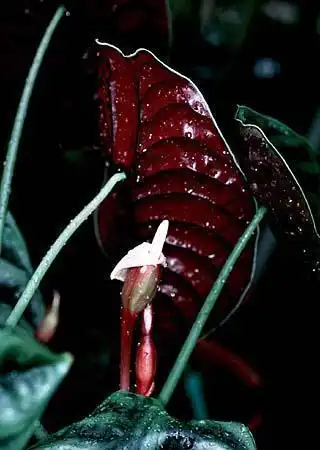
Many species within this genus possess the unique ability to generate heat in their flowering spadix as the pollen matures, which enhances the fragrance emitted by the plant. This increased aroma attracts more pollinators and boosts fertilization rates.
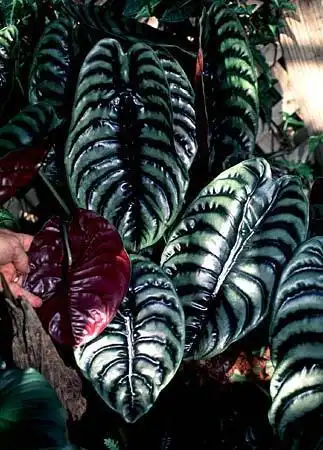
Although this plant rarely produces flowers, when it does, the blooms are a creamy white. In contrast, the foliage is vibrant and colorful. Alocasia is commonly cultivated as an indoor houseplant or, if conditions of temperature and moisture allow, as a summer ornamental. However, when grown in pots, the plant typically does not achieve its full height.
**Diseases, Pests, and Other Plant Issues:**
Alocasia plants are particularly vulnerable to spider mites and can be affected by strong winds; therefore, if planted outdoors, they should be situated in a sheltered location.