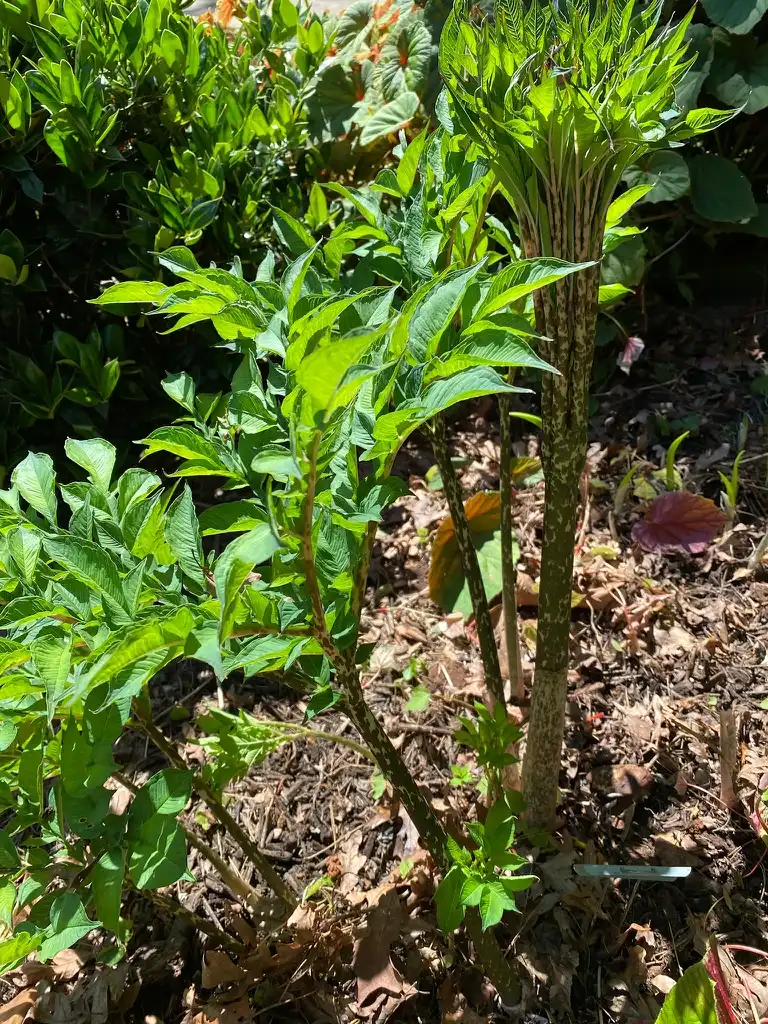
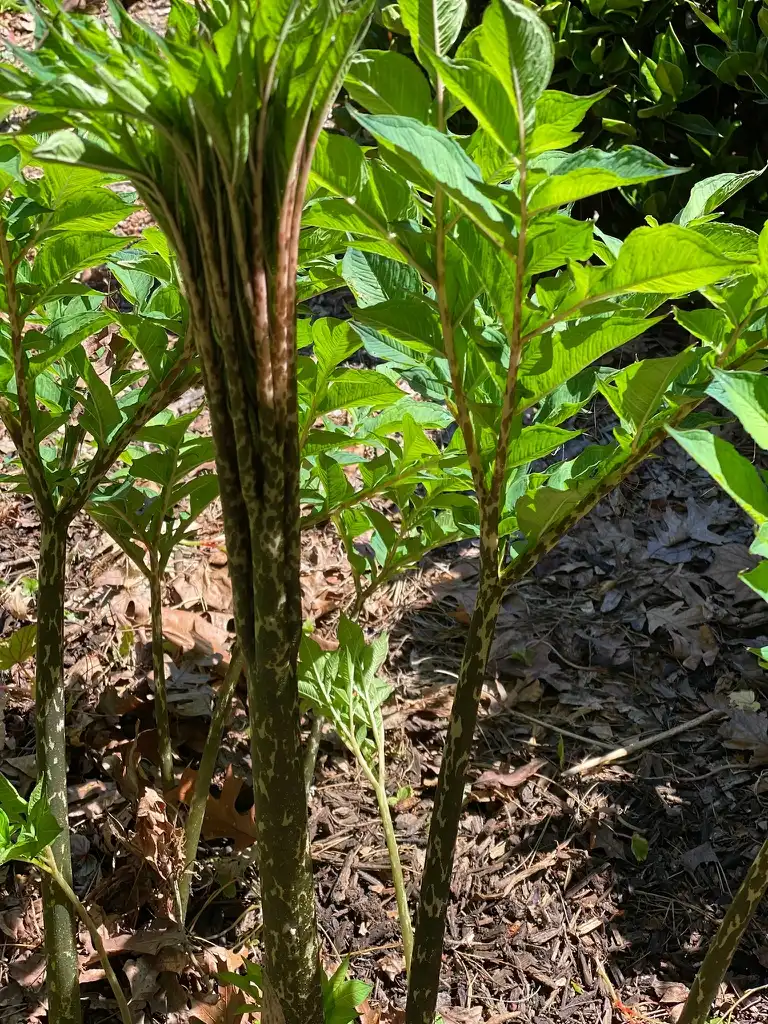
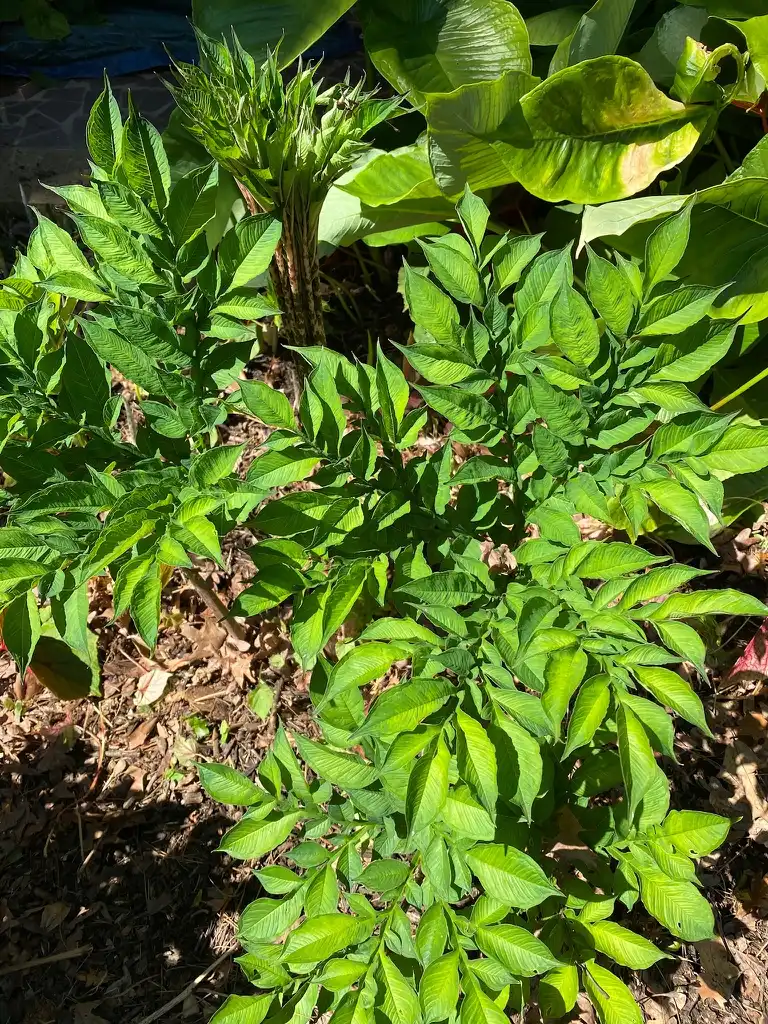
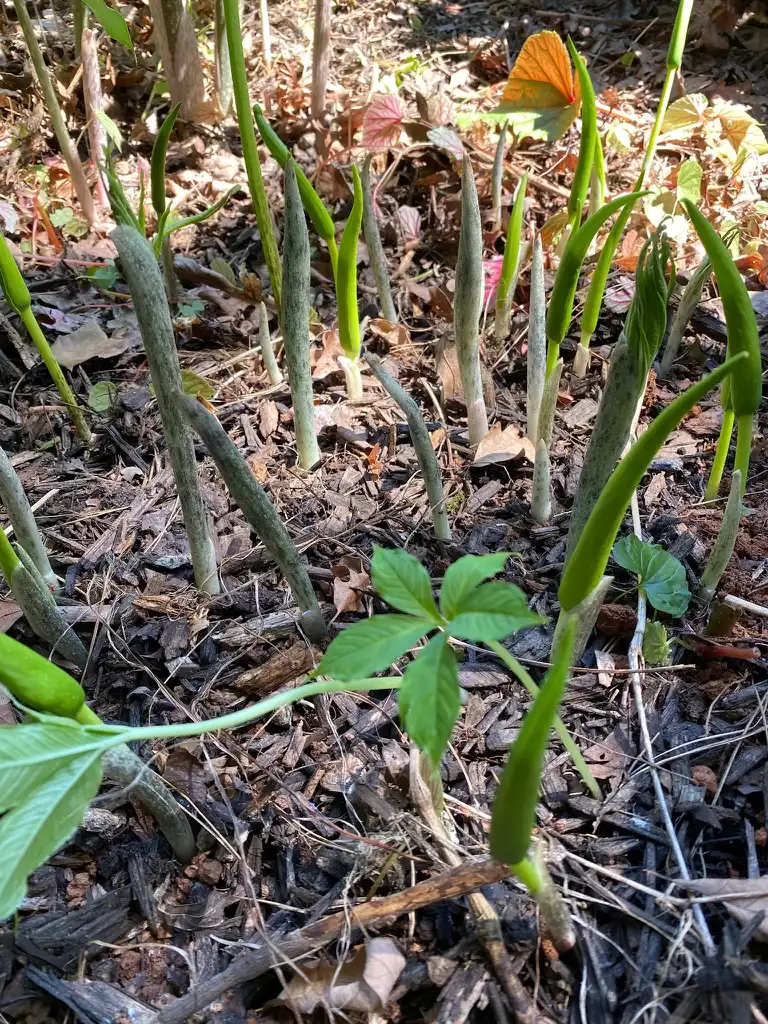
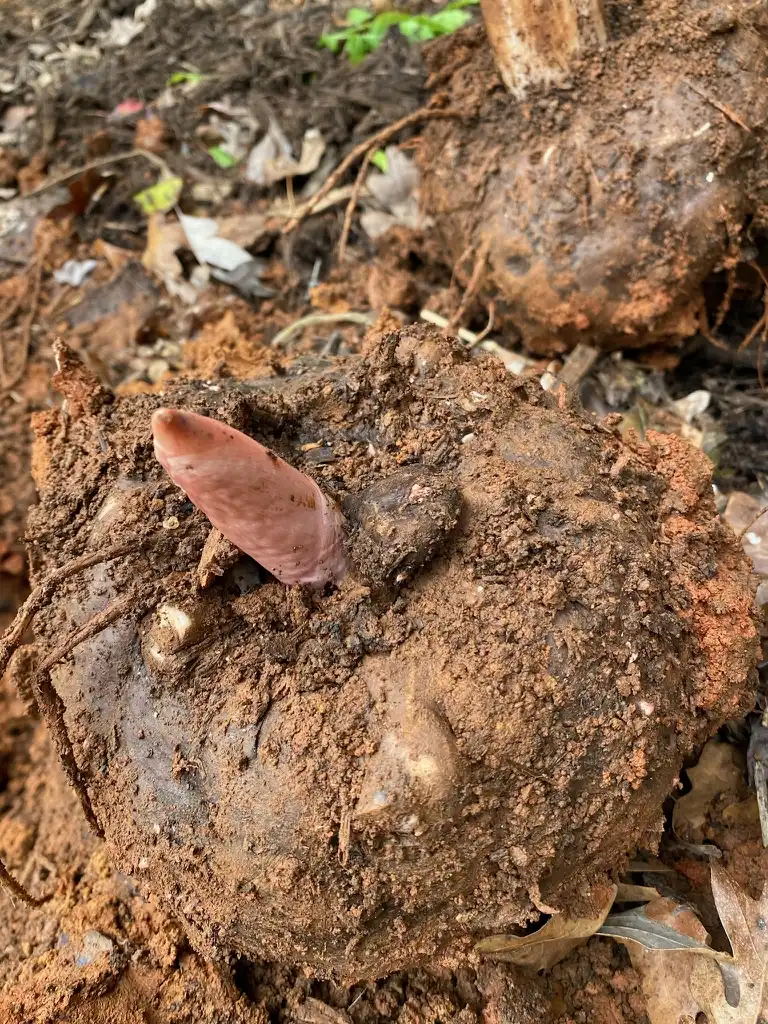
• Photo of Amorphophallus konjac (Amorphophallus konjacs)

Plant Profile: Amorphophallus konjac

Taxonomy: Amorphophallus konjac

Names

Devil's Tongue, Elephant Yam, Konjac, Konnyaku Potato, Snake Palm, Voodoo lily

  • Photo of Amorphophallus konjac (Amorphophallus konjacs)

Phonetic Spelling:a-mor-fo-FAL-us KON-jak

Genus:Amorphophallus

Species:konjac

Family:Araceae

Amorphophallus konjac, commonly referred to as Voodoo Lily, is a perennial herbaceous plant characterized by its corms and is typically found in the thickets and forest edges of China. This plant produces glossy brown edible corms, known as bobo-tubers, which generate rhizomatous offsets annually. It is extensively cultivated in both Japan and China, valued for its culinary uses and ornamental appeal. While the corm is edible, it contains calcium oxalate, rendering it toxic if consumed raw. In spring, the plant showcases large, striking purple flowers.

Voodoo Lily thrives in temperatures no lower than 60 degrees Fahrenheit during its growing season, with an ideal range between 68 and 77 degrees Fahrenheit. It prefers moist, well-drained, fertile soil rich in humus and partial shade, and it does not fare well in clay soil. It is important to shield the plant from the intense afternoon sun, particularly when the leaves first emerge, as they are particularly vulnerable to scorching. Regular fertilization is recommended, and watering should be reduced during the winter dormancy period. While the leaf and flower stem are sensitive to frost, the corm itself is resilient. Each year, the plant produces a single large leaf and one flowering stem. When the flowers are ready for pollination, they emit a scent reminiscent of decaying flesh, which attracts carrion flies and midges; this odor dissipates once pollination occurs. Additionally, the plant generates heat in the flowering spadix as the pollen matures, intensifying the aroma and drawing in more pollinators.

Regarding plant health, there are currently no known issues with diseases or insect pests.

Amorphophallus konjac Feature Summary

Amorphophallus konjac Image Gallery

Tags

#bulb
#poisonous
#colorful leaves
#spadix
#vegetable
#malodorous

Similar Plants

Amorphophallus konjac Feature Summary

Attributes
Used as a food source and traditional medicine in Asia. In Japan, the corm is known as a great source of Konnyaku, a type of flour used in many dietary products, and jelly.
East Asia and southwest China
Primarily Asia
The tubers are starchy and edible when cooked like a potato. It is commonly dried and ground into a flour and used in noodles and tofu. Can be toxic if eaten raw.
Perennial
Flowers
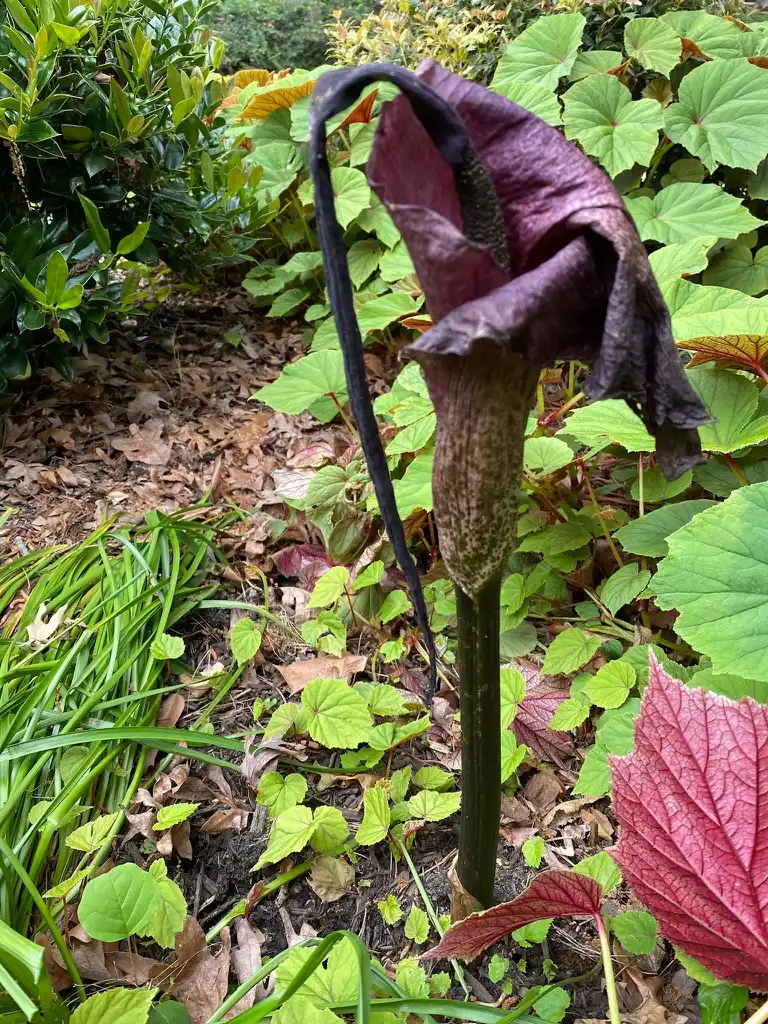
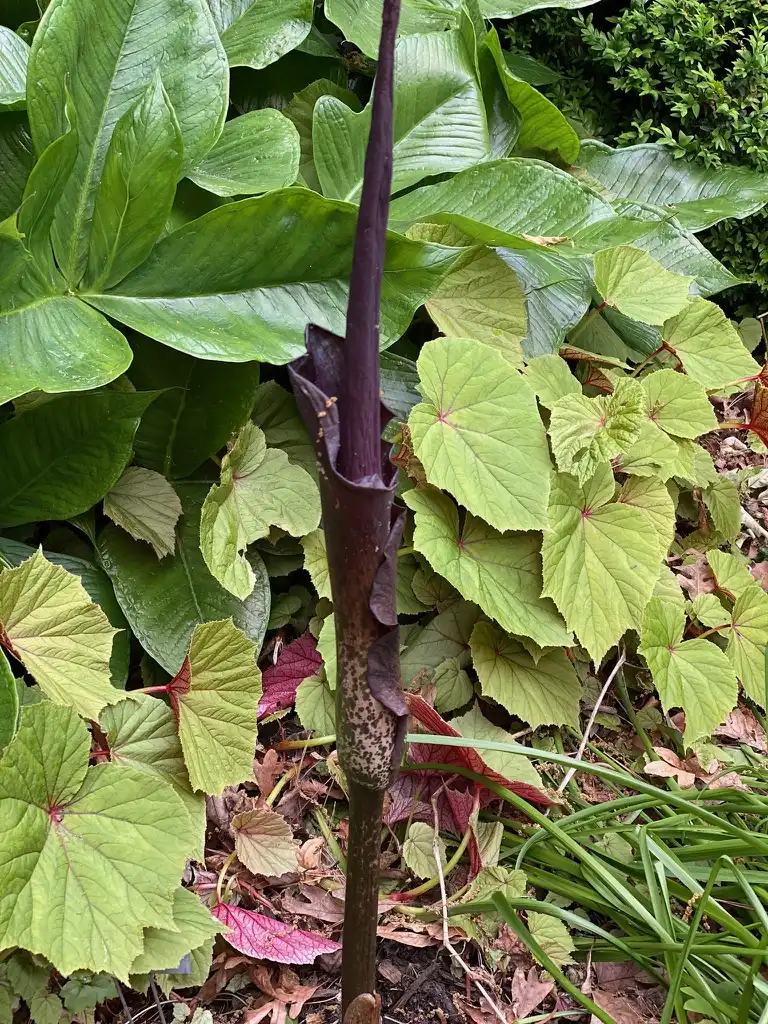
When the corms reach maturity they produce an inflorescence before the leaf emerges. The aroid-type infloresence is made up of a dense, spike-like spadix which bears numerous, small, male and female flowers and a leafy, dark maroon to purple-brown spathe with ruffled margins. The 3 to 4 foot tall bloom emits a strong odor of rotten flesh to attract pollinators.
Purple/Lavender
Red/Burgundy
Brown/Copper
> 6 inches
Leaves
A bipinnate, highly divided, single leaf with a pink leaf stem grows from a corm. The leaf grows up to 39 inches long while the corm grows up to 1 foot in diameter. The stem can reach 4 to 5 feet tall.
Compound (Pinnately , Bipinnately, Palmately)
> 6 inches
> 6 inches
Poisonous to Humans
Toxic if eaten raw. This plant belongs to a family where members contain calcium oxalate crystals which, if eaten, makes the mouth, tongue and throat feel as if small needles are digging in to them. Calcium oxalate is broken down by thoroughly cooking the plant or by fully drying it, rendering it safe to eat. People with a tendency to rheumatism, arthritis, gout, kidney stones and hyperacidity should take especial caution if including this plant in their diet.
Needle-like, calcium oxalate crystals; possible proteins.
Leaves
Roots
Whole Plant Traits
Perennial
Edible
Bulb
Cultural Conditions
Partial Shade (Direct sunlight only part of the day, 2-6 hours)
Dappled Sunlight (Shade through upper canopy all day)
Deep shade (Less than 2 hours to no direct sunlight)
Acid (<6.0)
Alkaline (>8.0)
Neutral (6.0-8.0)
Good Drainage
Moist
6a
6b
7a
7b
8b
8a
9a
9b
10a
10b
11a
11b
Loam (Silt)
Sand
Landscape
Asian Garden
Predatory Insects
Malodorous

Amorphophallus konjac Attributes

Amorphophallus konjac: Uses (Ethnobotany)

Used as a food source and traditional medicine in Asia. In Japan, the corm is known as a great source of Konnyaku, a type of flour used in many dietary products, and jelly.

Amorphophallus konjac: Country Or Region Of Origin

East Asia and southwest China

Amorphophallus konjac: Distribution

Primarily Asia

Amorphophallus konjac: Edibility

The tubers are starchy and edible when cooked like a potato. It is commonly dried and ground into a flour and used in noodles and tofu. Can be toxic if eaten raw.

Amorphophallus konjac: Life Cycle

Annual
Biennial
Bulb
Perennial
Woody

Amorphophallus konjac: Recommended Propagation Strategy

Division
Grafting
Layering
Leaf Cutting
Root Cutting
Seed
Stem Cutting

Amorphophallus konjac Flowers

Amorphophallus konjac: Flower Description

When the corms reach maturity they produce an inflorescence before the leaf emerges. The aroid-type infloresence is made up of a dense, spike-like spadix which bears numerous, small, male and female flowers and a leafy, dark maroon to purple-brown spathe with ruffled margins. The 3 to 4 foot tall bloom emits a strong odor of rotten flesh to attract pollinators.

Amorphophallus konjac: Flower Color

filter_vintage
Brown/Copper
filter_vintage
Purple/Lavender
filter_vintage
Red/Burgundy

Amorphophallus konjac: Flower Inflorescence

Catkin
Corymb
Cyme
Head
Insignificant
Panicle
Raceme
Solitary
Spadix
Spike
Umbel

Amorphophallus konjac: Flower Value To Gardener

Edible
Fragrant
Good Cut
Good Dried
Long Bloom Season
Long-lasting
Showy

Amorphophallus konjac: Flower Size

1-3 inches
3-6 inches
< 1 inch
> 6 inches

Amorphophallus konjac Leaves

Amorphophallus konjac: Leaf Description

A bipinnate, highly divided, single leaf with a pink leaf stem grows from a corm. The leaf grows up to 39 inches long while the corm grows up to 1 foot in diameter. The stem can reach 4 to 5 feet tall.

Amorphophallus konjac: Leaf Color

spa
Green

Amorphophallus konjac: Leaf Type

Compound (Pinnately , Bipinnately, Palmately)
Fronds
Needles
Sheath
Simple

Amorphophallus konjac: Hairs Present

No
Yes

Amorphophallus konjac: Leaf Length

< 1 inch
1-3 inches
3-6 inches
> 6 inches

Amorphophallus konjac: Leaf Value To Gardener

Edible
Fragrant
Good Cut
Good Dried
Long-lasting
Showy

Amorphophallus konjac: Leaf Width

< 1 inch
1-3 inches
3-6 inches
> 6 inches

Amorphophallus konjac Poisonous to Humans

Amorphophallus konjac: Poison Symptoms

Toxic if eaten raw. This plant belongs to a family where members contain calcium oxalate crystals which, if eaten, makes the mouth, tongue and throat feel as if small needles are digging in to them. Calcium oxalate is broken down by thoroughly cooking the plant or by fully drying it, rendering it safe to eat. People with a tendency to rheumatism, arthritis, gout, kidney stones and hyperacidity should take especial caution if including this plant in their diet.

Amorphophallus konjac: Poison Toxic Principle

Needle-like, calcium oxalate crystals; possible proteins.

Amorphophallus konjac: Poison Severity

High
Low
Medium

Amorphophallus konjac: Causes Contact Dermatitis

No
Yes

Amorphophallus konjac: Poison Part

Bark
Flowers
Fruits
Leaves
Roots
Sap/Juice
Seeds
Stems

Amorphophallus konjac Whole Plant Traits

Amorphophallus konjac: Plant Type

Annual
Bulb
Carnivorous
Edible
Epiphyte
Fern
Ground Cover
Herb
Herbaceous Perennial
Houseplant
Mushroom
Native Plant
Ornamental Grasses and Sedges
Perennial
Poisonous
Rose
Shrub
Succulent
Tree
Turfgrass
Vegetable
Vine
Water Plant
Weed
Wildflower

Amorphophallus konjac: Habit/Form

Arching
Ascending
Broad
Cascading
Climbing
Clumping
Columnar
Conical
Creeping
Dense
Erect
Horizontal
Irregular
Mounding
Multi-stemmed
Multi-trunked
Open
Oval
Prostrate
Pyramidal
Rounded
Spreading
Vase
Weeping

Amorphophallus konjac: Growth Rate

Slow
Medium
Rapid

Amorphophallus konjac: Maintenance

Low
Medium
High

Amorphophallus konjac Cultural Conditions

Amorphophallus konjac: Light

Dappled Sunlight (Shade through upper canopy all day)
Deep shade (Less than 2 hours to no direct sunlight)
Full sun (6 or more hours of direct sunlight a day)
Partial Shade (Direct sunlight only part of the day, 2-6 hours)

Amorphophallus konjac: Soil pH

Acid (<6.0)
Alkaline (>8.0)
Neutral (6.0-8.0)

Amorphophallus konjac: Soil Drainage

Frequent Standing Water
Good Drainage
Moist
Occasional Flooding
Occasionally Dry
Occasionally Wet
Very Dry

Amorphophallus konjac: USDA Plant Hardiness Zone

thermostat
10a
thermostat
10b
thermostat
11a
thermostat
11b
thermostat
6a
thermostat
6b
thermostat
7a
thermostat
7b
thermostat
8a
thermostat
8b
thermostat
9a
thermostat
9b

Amorphophallus konjac: Soil Texture

Clay
High Organic Matter
Loam (Silt)
Sand
Shallow Rocky

Amorphophallus konjac Stem

Amorphophallus konjac: Stem Is Aromatic

No
Yes

Amorphophallus konjac Landscape

Amorphophallus konjac: Landscape Theme

Asian Garden
Butterfly Garden
Children's Garden
Cottage Garden
Cutting Garden
Drought Tolerant Garden
Edible Garden
English Garden
Fairy Garden
Garden for the Blind
Native Garden
Nighttime Garden
Pollinator Garden
Rain Garden
Rock Garden
Shade Garden
Water Garden
Winter Garden

Amorphophallus konjac: Design Feature

Accent
Barrier
Border
Flowering Tree
Foundation Planting
Hedge
Mass Planting
Screen/Privacy
Security
Shade Tree
Small groups
Small Tree
Specimen
Street Tree
Understory Tree

Amorphophallus konjac: Attracts

Bats
Bees
Butterflies
Frogs
Hummingbirds
Moths
Pollinators
Predatory Insects
Reptiles
Small Mammals
Songbirds
Specialized Bees

Amorphophallus konjac: Problems

Allelopathic
Contact Dermatitis
Frequent Disease Problems
Frequent Insect Problems
Invasive Species
Malodorous
Messy
Poisonous to Humans
Problem for Cats
Problem for Children
Problem for Dogs
Problem for Horses
Short-lived
Spines/Thorns
Weak Wood
Weedy