Centaurea montana: Uses (Ethnobotany)
Borders, cottage gardens and naturalized areas
Phonetic Spelling:sen-TAR-ee-ah mon-TAY-nah
Genus:Centaurea
Species:montana
Family:Asteraceae
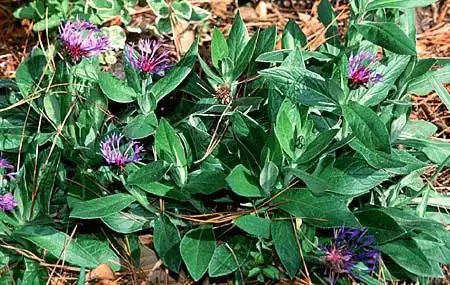
Mountain Bluet is a perennial flower that grows upright and forms clumps, originally found in Europe. It is distinguished by its solitary, fringed cornflowers, which display a vibrant blue hue with reddish-blue centers and black-edged bracts surrounding the flower heads.
This plant thrives in average conditions, preferring dry to medium moisture levels and well-drained soil, and it flourishes in full sunlight. Mountain Bluet is resilient, capable of withstanding drought and poor soil conditions. It can reproduce in two ways: through stolons, which quickly create colonies under ideal growth conditions, or by seed. If the spent blooms are removed, additional flowers may appear in the fall, and this practice also helps manage seed dispersal. To maintain its health, the plants should be divided every two to three years.
The genus name is derived from a popular term for various plants used in the late 14th century, tracing back to Medieval Latin "centaurea," which comes from the Latin "centaureum" and the Greek "kentaureion," linked to "kentauros," meaning "centaur." This nomenclature reflects the plant's medicinal uses, attributed to Chiron, the centaur of mythology. The specific epithet indicates a connection to mountainous regions or origins.
Centaurea montana Feature Summary
Centaurea montana Image Gallery