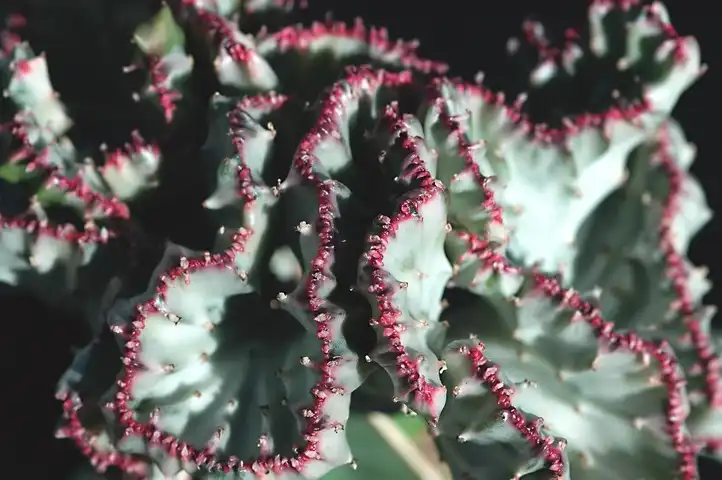
Euphorbia lactea: Country Or Region Of Origin
Sri Lanka, India, Thailand
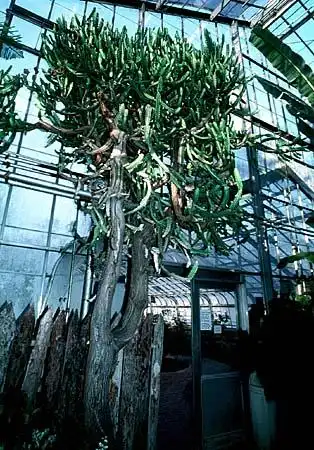
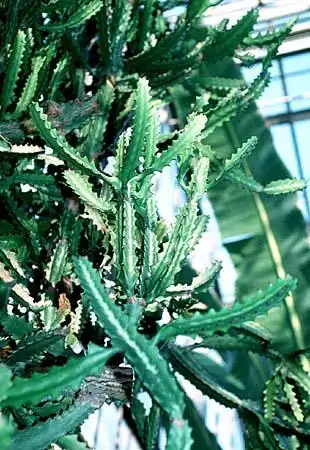
Phonetic Spelling:yoo-FOR-bee-ah lak-TAY-ah
Genus:Euphorbia
Species:lactea
Family:Euphorbiacea
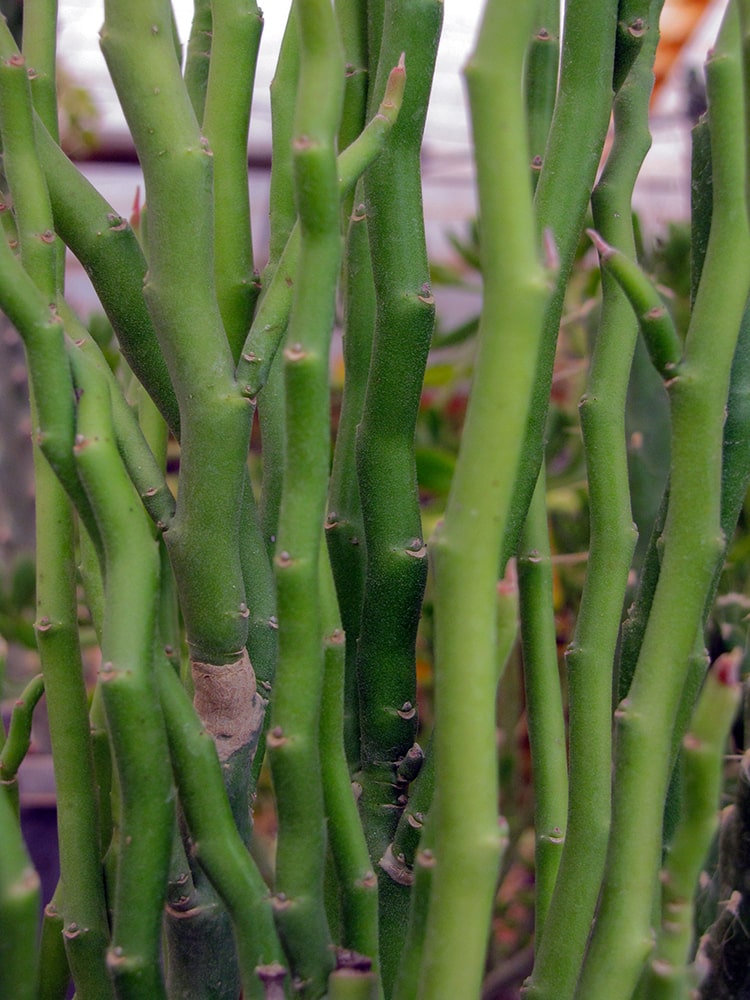
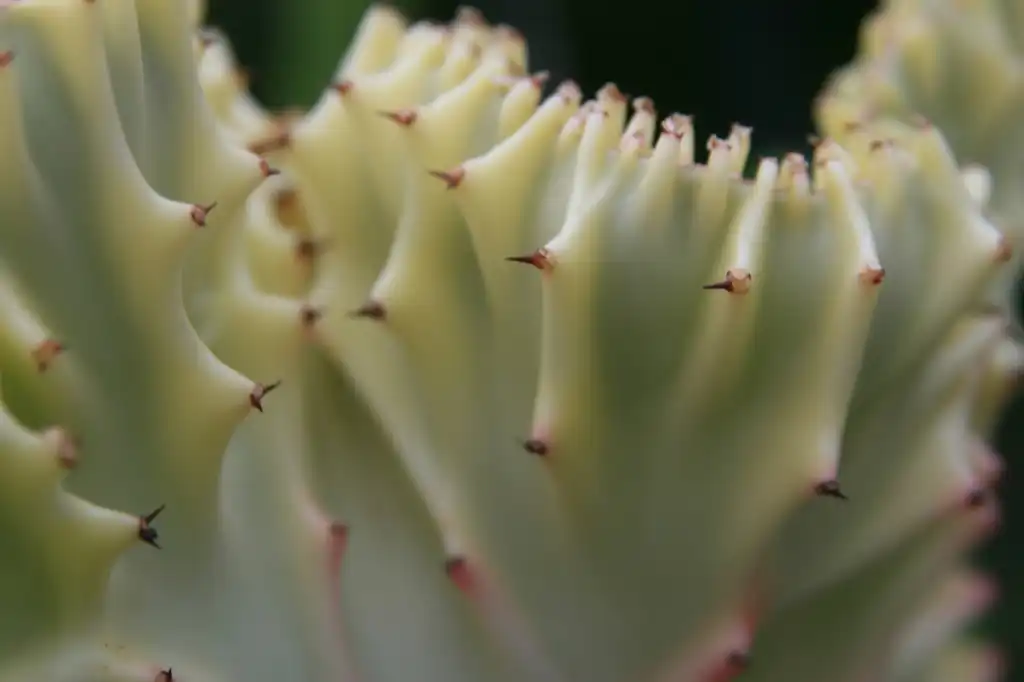
Euphorbia lactea, commonly referred to as Mottled spurge, is a deciduous, spiny succulent that resembles a cactus and can grow into a small tree or shrub. While it can reach heights of up to 15 feet, it is often kept as a houseplant measuring between 1 to 2 feet. The plant features spiny stems and mottled branches that display a green hue accented with white lines. Although tiny leaves may emerge during the summer, they quickly fall off, leaving the plant devoid of foliage. Flowering is infrequent, and the plant is sensitive to frost. Notable traits include its four-angled stems adorned with paired black thorns. If the plant is damaged, it secretes a toxic, milky latex.
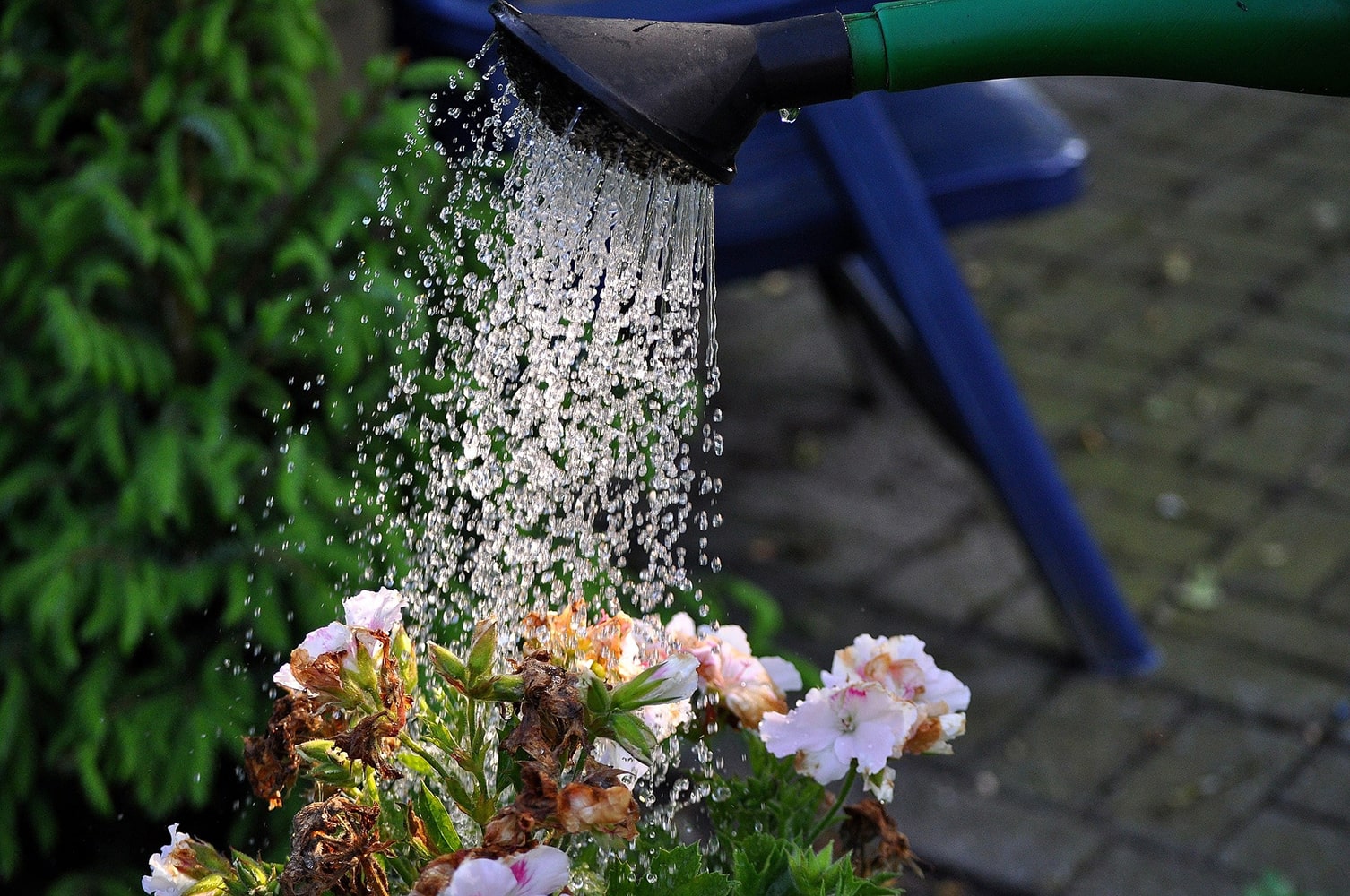
For optimal growth, Mottled spurge thrives in well-drained soil and prefers full sun to partial shade. It cannot withstand soggy conditions, so it's important to allow the soil to dry out between waterings. During the summer, consistent watering is necessary to prevent complete desiccation of the soil, while watering should be reduced in the winter months. This plant is hardy in USDA zone 10 but is not frost-resistant. Potted specimens can be brought indoors for the winter or kept as year-round houseplants.
Mottled spurge has adapted to arid environments and is found in various tropical and subtropical regions around the globe. It has been known to escape cultivation, leading to the formation of dense thickets. Wild populations thrive in tropical Asia, and it is extensively cultivated in the West Indies, Florida, and numerous tropical locales worldwide.
Regarding pests and diseases, Mottled spurge does not face significant threats. However, it may occasionally attract aphids, mealybugs, and nematodes, and vigilance for mites is advised. Caution is recommended to avoid contact with the plant's toxic sap.
Euphorbia lactea Feature Summary
Euphorbia lactea Image Gallery