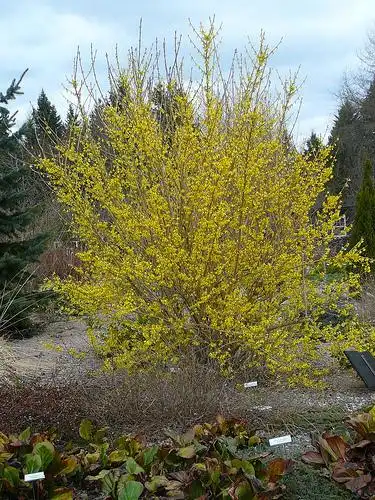
• Photo of Forsythia x intermedia (Forsythia x intermedias)

Plant Profile: Forsythia x intermedia

Taxonomy: Forsythia x intermedia

Names

Border Forsythia, Golden Bells

  • Photo of Forsythia x intermedia (Forsythia x intermedias)

Phonetic Spelling:for-SYE-thee-uh ex in-tur-MEE-dee-uh

Genus:Forsythia

Species:

Family:Oleaceae

Drought-resistant and moderately tolerant of salt, this plant may produce suckers and should have its oldest stems pruned after flowering. It exhibits rapid growth and comes in a variety of cultivars. However, it can occasionally be susceptible to deer damage.

**Quick Identification Tips:**
This deciduous shrub can reach heights of up to 10 feet, featuring an erect, spreading, and fountain-like form.

It blooms in early spring, prior to the emergence of leaves; significant flowering effects can be diminished if the plant is heavily pruned before it flowers. It is commonly used for bank stabilization, mass plantings, and in shrub borders.

This species is adaptable to pollution and urban settings, thrives in various soil types, and can tolerate different pH levels. It is easy to transplant and should be pruned after flowering. The growth is moderately rapid and cane-like, and it is relatively free from pests and diseases.

Notably, this species is an artificial hybrid.

For more information on Forsythia, please refer to additional resources.

Forsythia x intermedia Feature Summary

Forsythia x intermedia Image Gallery

Tags

#deciduous
#drought tolerant
#salt tolerant
#apvg
#tsc
#cpp
#fantz
#tsc-s
#non-toxic for horses
#non-toxic for dogs
#non-toxic for cats

Similar Plants

Forsythia x intermedia is often confused with:

Forsythia x intermedia Feature Summary

Fruit
A 2-celled, dehiscent capsule, brown, ca 1/4" long, non-ornamental; seeds winged, many.
Flowers
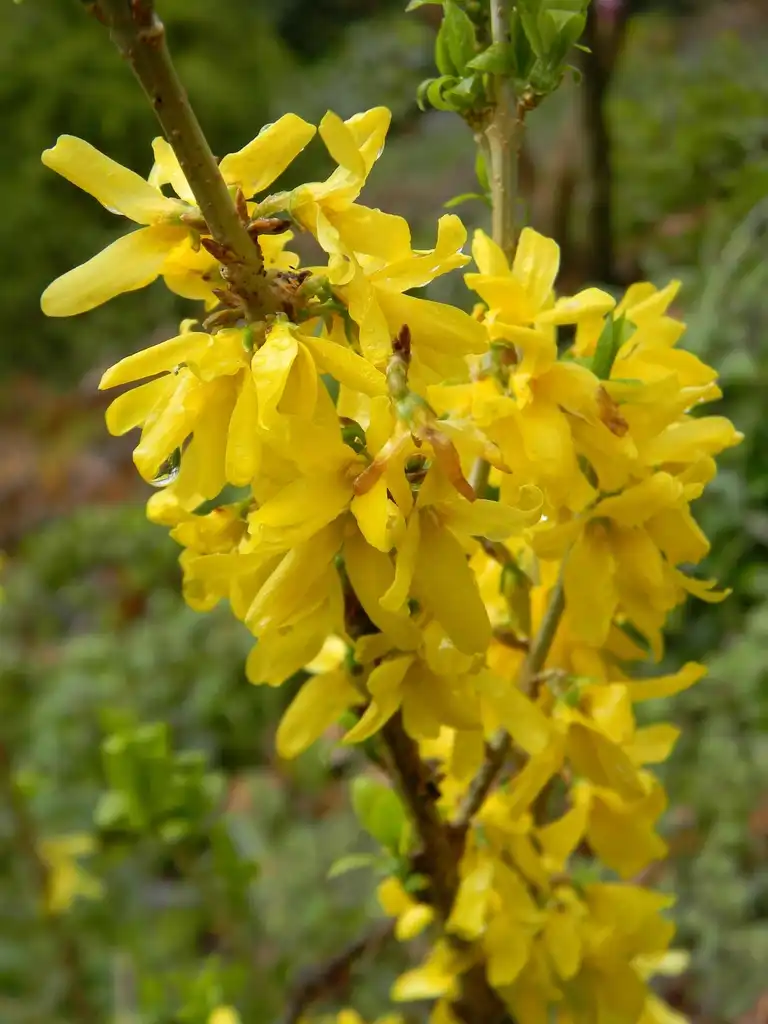
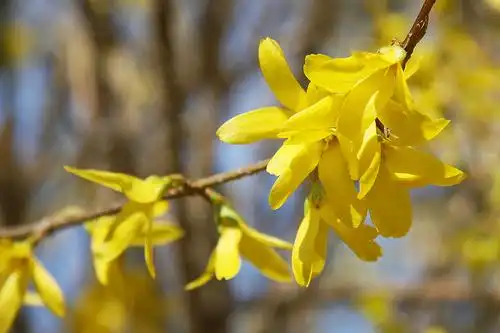
Pale to deep yellow flowers in early spring; borne on one to two year-old growth. Solitary or clusters of 2-6 on old wood. (1-6) yellow, scentless, 1" long; corolla deeply 4-lobed, lobes spreading, campanulate; calyx 4-lobed.
Gold/Yellow
< 1 inch
Leaves
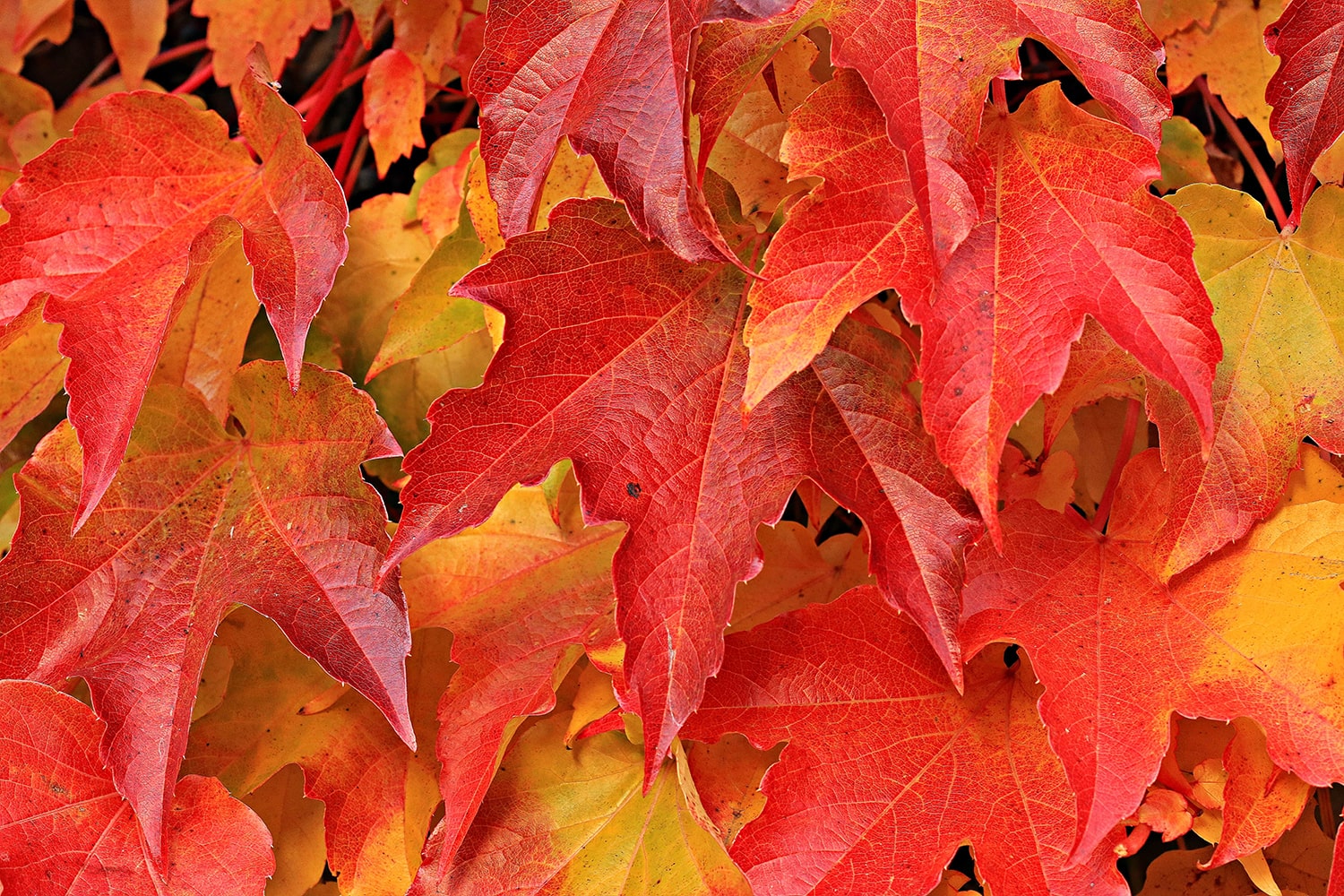
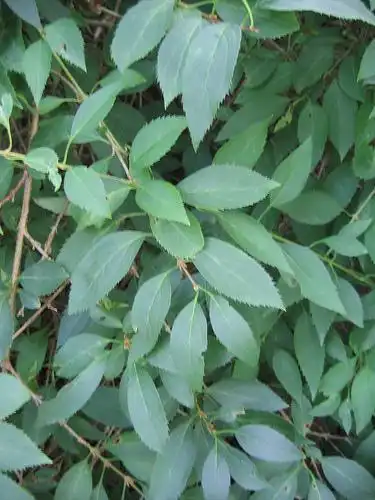
Opposite, simple, medium to dark green leaves; 3-5 in. long; green to yellowish green fall color, sometimes purplish; holds late into fall. Lanceolate, acute with apicular gland, toothed on the upper half, medium to dark green above, lighter below, glabrous.
Green
Purple/Lavender
Lanceolate
3-6 inches
Stem
Brown, 4-ridged, heavily lenticeled; pith chambered, sometimes hollow.
Whole Plant Traits
Cultural Conditions
Full sun (6 or more hours of direct sunlight a day)
Partial Shade (Direct sunlight only part of the day, 2-6 hours)
Clay
High Organic Matter
Loam (Silt)
Sand

Forsythia x intermedia Attributes

Forsythia x intermedia: Particularly Resistant To (Insects/Diseases/Other Problems)

Drought and salt resistant.
Forsythia x intermedia Fruit

Forsythia x intermedia: Fruit Description

A 2-celled, dehiscent capsule, brown, ca 1/4" long, non-ornamental; seeds winged, many.

Forsythia x intermedia Flowers

Forsythia x intermedia: Flower Description

Pale to deep yellow flowers in early spring; borne on one to two year-old growth. Solitary or clusters of 2-6 on old wood. (1-6) yellow, scentless, 1" long; corolla deeply 4-lobed, lobes spreading, campanulate; calyx 4-lobed.

Forsythia x intermedia: Flower Color

filter_vintage
Gold/Yellow

Forsythia x intermedia: Flower Size

1-3 inches
3-6 inches
< 1 inch
> 6 inches

Forsythia x intermedia Leaves

Forsythia x intermedia: Leaf Description

Opposite, simple, medium to dark green leaves; 3-5 in. long; green to yellowish green fall color, sometimes purplish; holds late into fall. Lanceolate, acute with apicular gland, toothed on the upper half, medium to dark green above, lighter below, glabrous.

Forsythia x intermedia: Woody Plant Leaf Characteristics

Broadleaf Evergreen
Deciduous
Needled Evergreen
Semi-evergreen

Forsythia x intermedia: Leaf Color

spa
Green
spa
Purple/Lavender

Forsythia x intermedia: Deciduous Leaf Fall Color

spa
Gold/Yellow

Forsythia x intermedia: Leaf Type

Compound (Pinnately , Bipinnately, Palmately)
Fronds
Needles
Sheath
Simple

Forsythia x intermedia: Leaf Arrangement

Alternate
Opposite
Other/more complex
Rosulate
Whorled

Forsythia x intermedia: Leaf Shape

Acicular
Auriculate
Cordate
Cuneate
Deltoid
Elliptical
Filiform
Lanceolate
Linear
Oblanceolate
Oblong
Obovate
Obtuse
Orbicular
Ovate
Palmasect
Palmatifid
Peltate
Pinnatifid
Pinnatisect
Reniform
Rhomboidal
Spatulate
Subcordate
Subulate

Forsythia x intermedia: Hairs Present

No
Yes

Forsythia x intermedia: Leaf Length

< 1 inch
1-3 inches
3-6 inches
> 6 inches

Forsythia x intermedia Stem

Forsythia x intermedia: Stem Description

Brown, 4-ridged, heavily lenticeled; pith chambered, sometimes hollow.

Forsythia x intermedia: Stem Is Aromatic

No
Yes

Forsythia x intermedia Whole Plant Traits

Forsythia x intermedia: Plant Type

Annual
Bulb
Carnivorous
Edible
Epiphyte
Fern
Ground Cover
Herb
Herbaceous Perennial
Houseplant
Mushroom
Native Plant
Ornamental Grasses and Sedges
Perennial
Poisonous
Rose
Shrub
Succulent
Tree
Turfgrass
Vegetable
Vine
Water Plant
Weed
Wildflower

Forsythia x intermedia: Woody Plant Leaf Characteristics

Broadleaf Evergreen
Deciduous
Needled Evergreen
Semi-evergreen

Forsythia x intermedia: Habit/Form

Arching
Ascending
Broad
Cascading
Climbing
Clumping
Columnar
Conical
Creeping
Dense
Erect
Horizontal
Irregular
Mounding
Multi-stemmed
Multi-trunked
Open
Oval
Prostrate
Pyramidal
Rounded
Spreading
Vase
Weeping

Forsythia x intermedia: Growth Rate

Slow
Medium
Rapid

Forsythia x intermedia: Texture

Fine
Medium
Coarse

Forsythia x intermedia Cultural Conditions

Forsythia x intermedia: Light

Dappled Sunlight (Shade through upper canopy all day)
Deep shade (Less than 2 hours to no direct sunlight)
Full sun (6 or more hours of direct sunlight a day)
Partial Shade (Direct sunlight only part of the day, 2-6 hours)

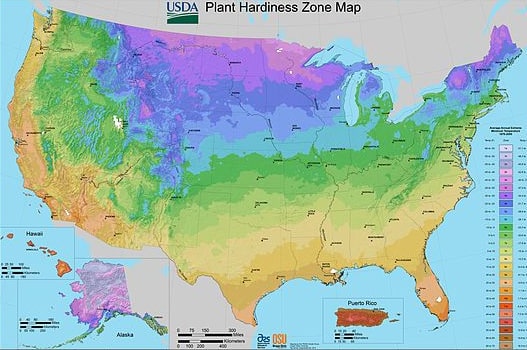
Forsythia x intermedia: USDA Plant Hardiness Zone

thermostat
6a
thermostat
6b
thermostat
7a
thermostat
7b
thermostat
8a
thermostat
8b

Forsythia x intermedia: Soil Texture

Clay
High Organic Matter
Loam (Silt)
Sand
Shallow Rocky

Forsythia x intermedia Landscape

Forsythia x intermedia: Resistance To Challenges

Black Walnut
Compaction
Deer
Diseases
Drought
Dry Soil
Erosion
Fire
Foot Traffic
Heat
Heavy Shade
Humidity
Insect Pests
Pollution
Poor Soil
Rabbits
Salt
Slugs
Squirrels
Storm damage
Urban Conditions
Voles
Wet Soil
Wind