Hosta 'Blue Mouse Ears': Country Or Region Of Origin
Japan, Korea, China, eastern Russia
Phonetic Spelling:
Genus:Hosta
Species:
Family:Asparagaceae
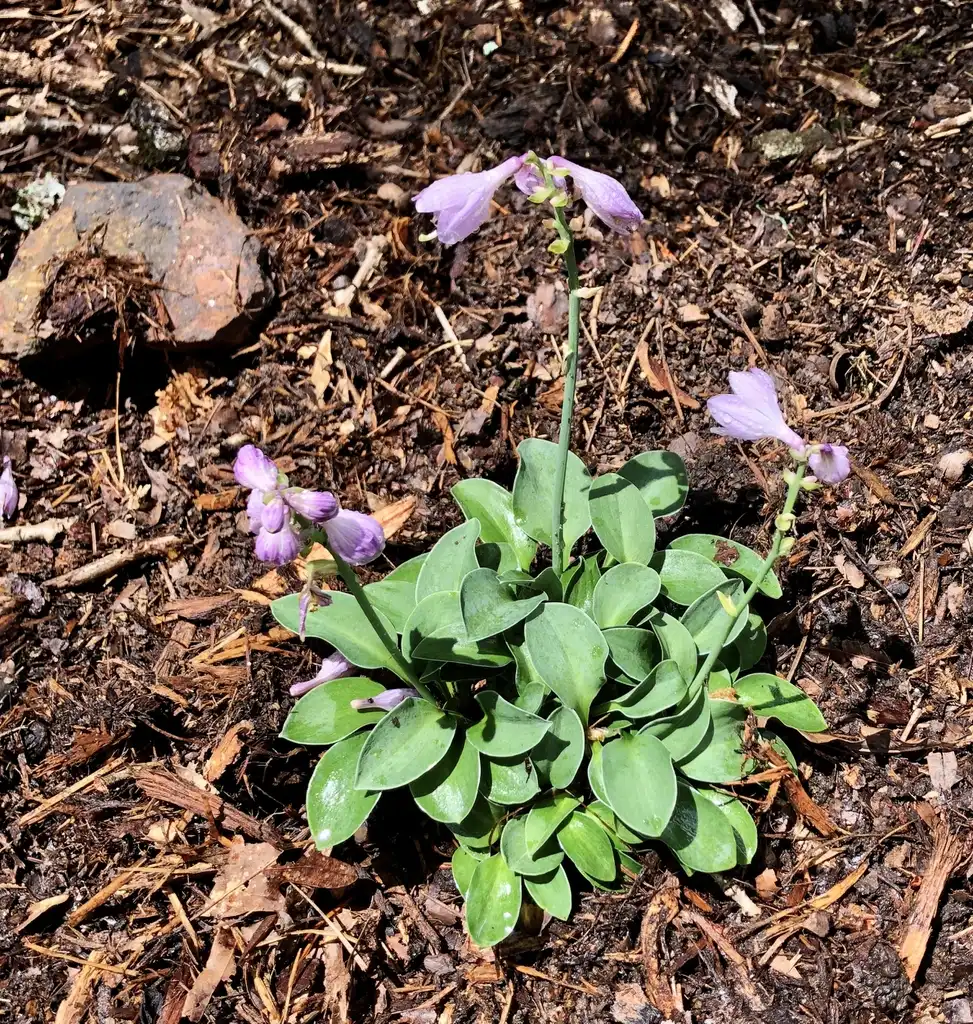
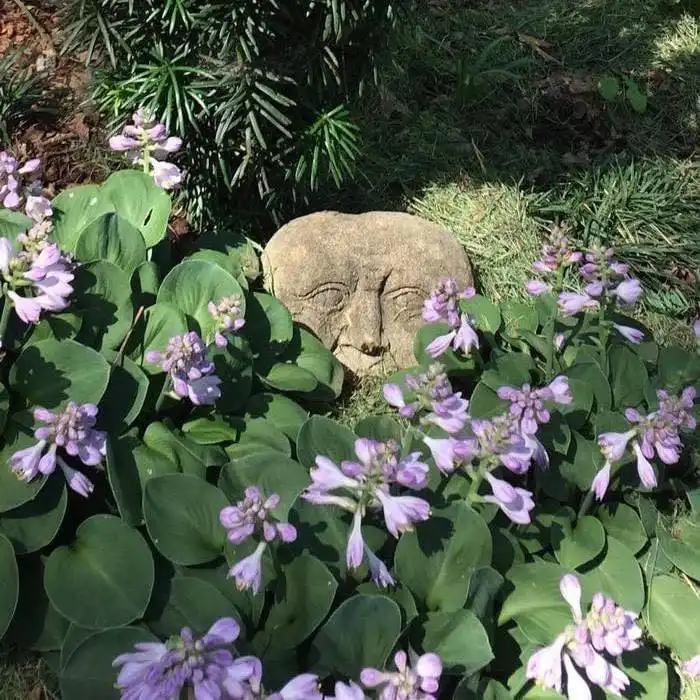
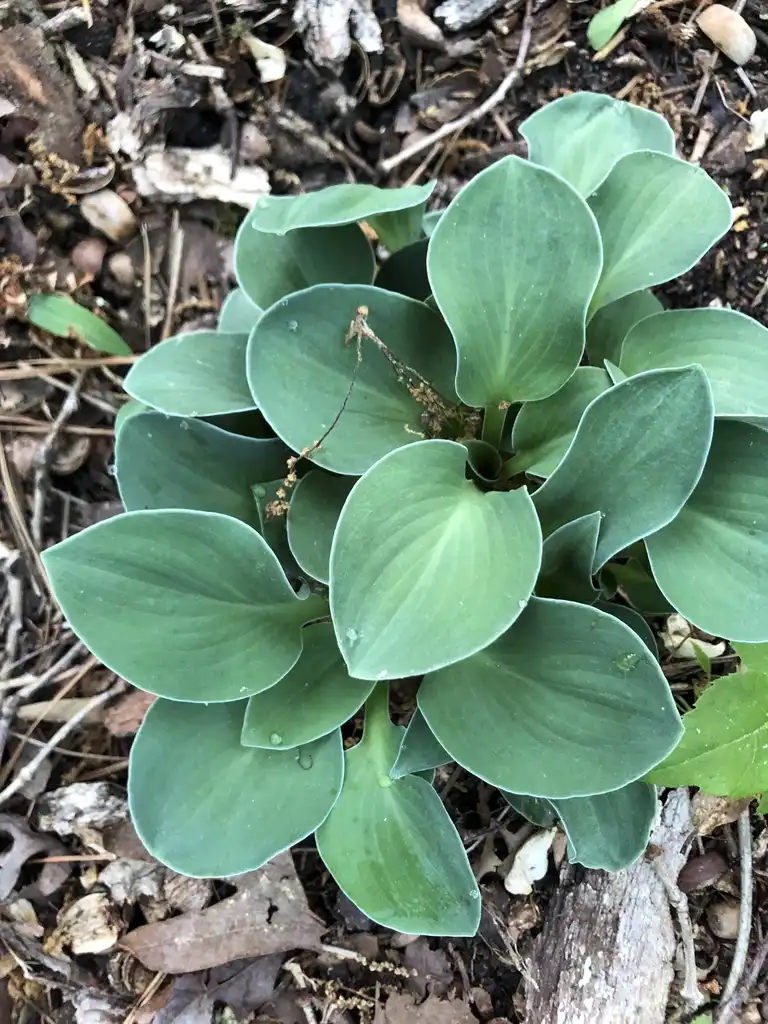
Hosta 'Blue Mouse Ears' is a charming herbaceous perennial and a compact variety within the Hosta genus. This plant develops a neat, decorative mound of foliage featuring leaves that are a striking blue-green to gray-green, distinctly heart-shaped, and curled, resembling mouse ears. Typically, 'Blue Mouse Ears' produces lavender flowers in mid-summer. Like many Hostas, it thrives in shady conditions and requires minimal upkeep. The best method for propagation is through division, which can be performed in either spring or fall. This plant flourishes in consistently moist, organic, well-drained soil, ideally in partial to full shade, although it can tolerate some morning sunlight or dappled light. Once established, plants with thicker leaves can endure dry shade, but it’s crucial to keep the soil consistently moist, applying water directly to the ground beneath the foliage. Hostas can remain undivided for several years, and it is advisable to divide them no more frequently than every 3 to 5 years to allow the leaves to mature fully. Additionally, protecting the plant from wind is essential to prevent leaf damage.
In 2008, the American Hosta Growers Association honored 'Blue Mouse Ears' as Hosta of the Year. The Hosta genus is indigenous to regions such as Japan, Korea, China, and eastern Russia, where they typically grow in woodlands and glades. The genus was named after the botanist Nicholas Thomas Host in 1812, and in 1817, it was temporarily renamed Funkia in tribute to another botanist, Heinrich Christian Funk, before reverting to its original name in 1915. Funkia remains a popular common name, along with Plantain Lily. Hosta 'Blue Mouse Ears' makes an excellent choice for shade gardens, oriental gardens, or shaded borders, adding a unique touch with its colorful foliage, heart-shaped leaves, and petite stature. Practically, they can also serve to conceal fading bulb foliage.
Disease, Pests, and Other Plant Issues:
Keep an eye out for snails, slugs, and nematodes that may inhabit the leaves, as well as deer, which are fond of the foliage. While leaf spot and crown rot are uncommon, plants can be susceptible to Hosta Virus X, tobacco rattle virus, or tomato ring spot virus. If any of these viruses are identified, the affected plant should be removed and destroyed. Voles can also pose a threat by feeding on the roots, and hail storms may cause damage to exposed leaves.
For more information on Hosta.
Hosta 'Blue Mouse Ears' Feature Summary
Hosta 'Blue Mouse Ears' Image Gallery