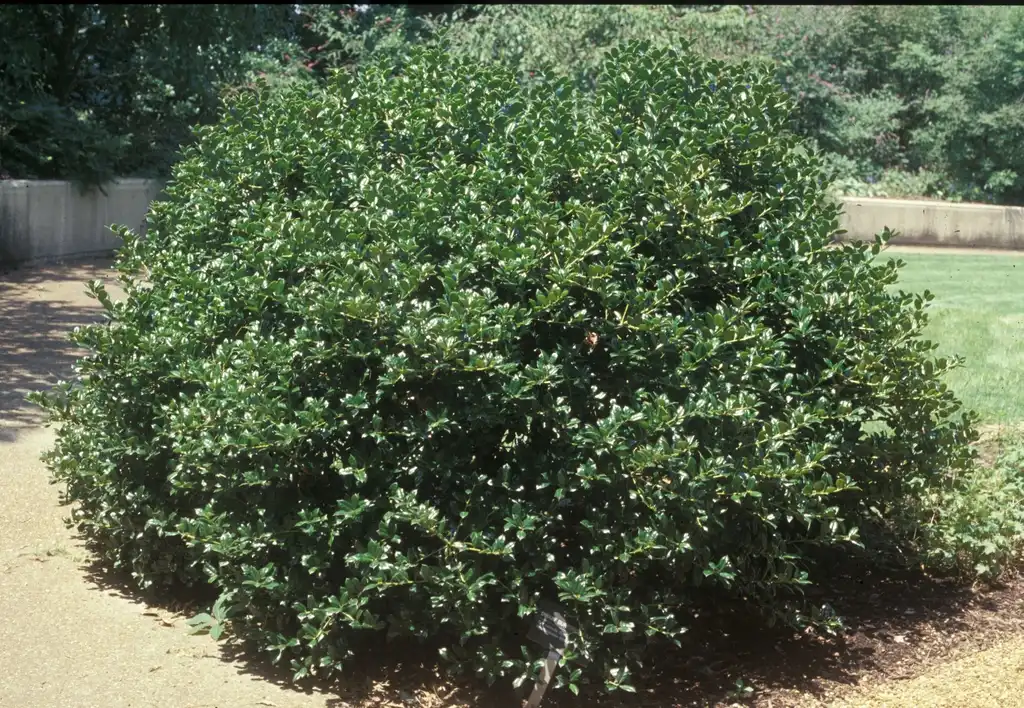

Ilex cornuta: Country Or Region Of Origin
Eastern China, Korea
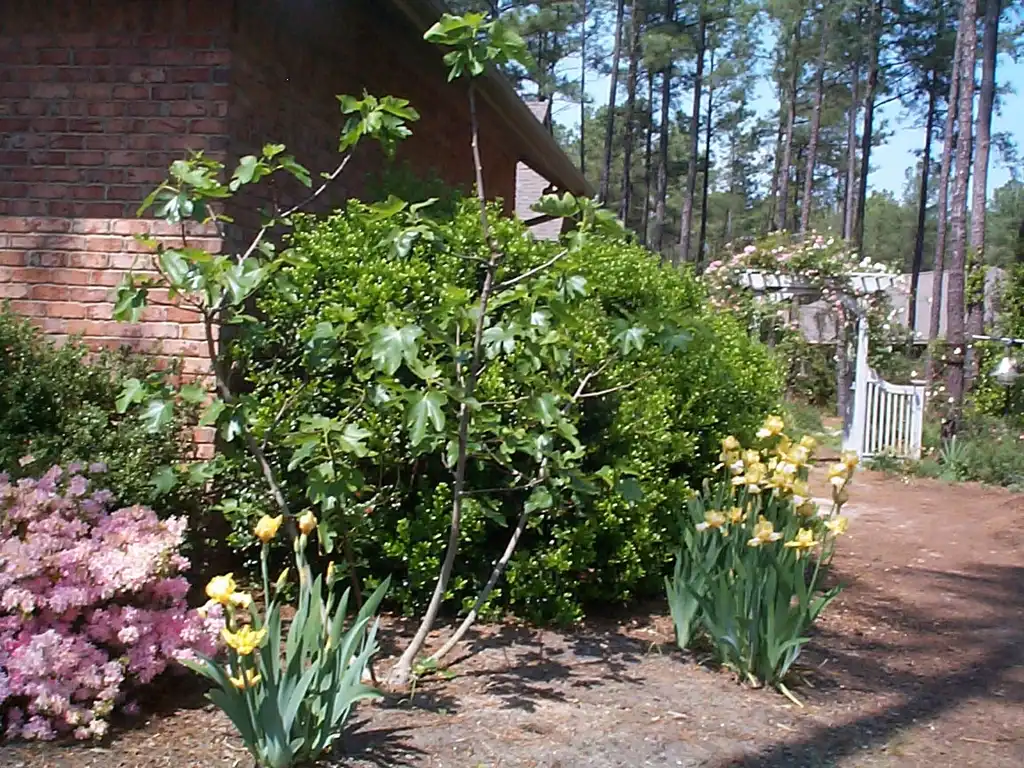
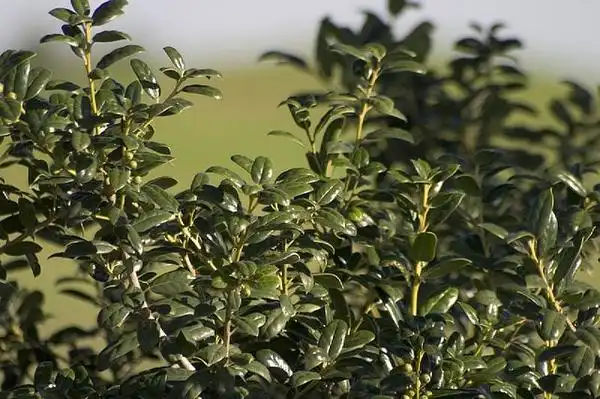
Phonetic Spelling:EYE-leks kor-NOO-tuh
Genus:Ilex
Species:cornuta
Family:Aquifoliaceae
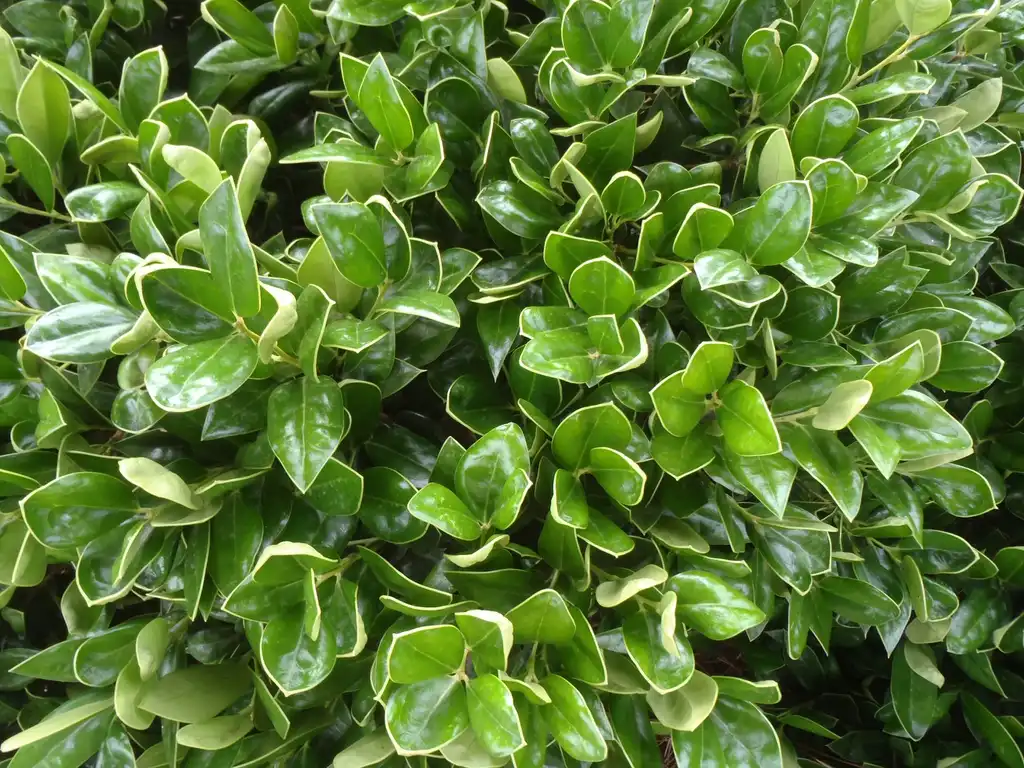
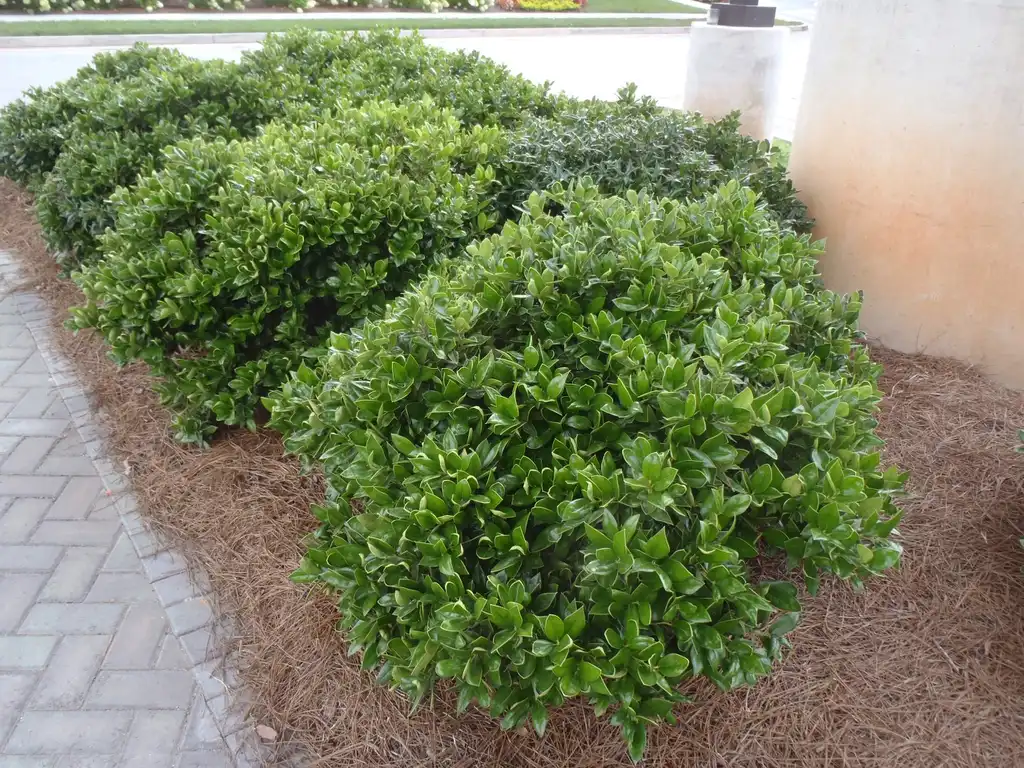
Chinese Holly is an Asian species that can be cultivated as a hedge reaching heights of up to 15 feet or shaped into a small tree that can grow as tall as 25 feet. Its distinctive rectangular leaves bear a resemblance to bull horns, which is reflected in its specific name "cornuta," meaning horn-shaped. While the flowers are not particularly striking, they do emit a pleasant fragrance.
This holly thrives in a variety of soil types, with the exception of poorly-drained conditions, and can flourish in both full and partial sunlight. It is well-suited to hot and humid climates and demonstrates drought resistance once established, making it an excellent option for southern regions. If size control is necessary, pruning should be done in late winter. To ensure that female plants produce berries, a male counterpart is required. The combination of its fruit and evergreen foliage provides visual interest during the winter months.
The spiny nature of its leaves makes Chinese Holly an ideal choice for creating barriers or privacy screens, as well as for use as a hedge. It can also be planted as a standalone specimen, in small clusters, or along building foundations.
This species has escaped cultivation and has become naturalized in several states, including North Carolina.
**Quick Identification Tips:**
**Insects, Diseases, and Other Plant Issues:** Common pests include holly leaf miners, scales, whiteflies, and spider mites. Potential diseases affecting this plant are powdery mildew, leaf spot, leaf rot, and tar spot. Depending on its planting environment, this shrub may experience chlorosis due to high pH soils, leaf drop, or leaf scorch. Additionally, it has a tendency to spread quickly and is classified as an invasive species by the USDA in Georgia.