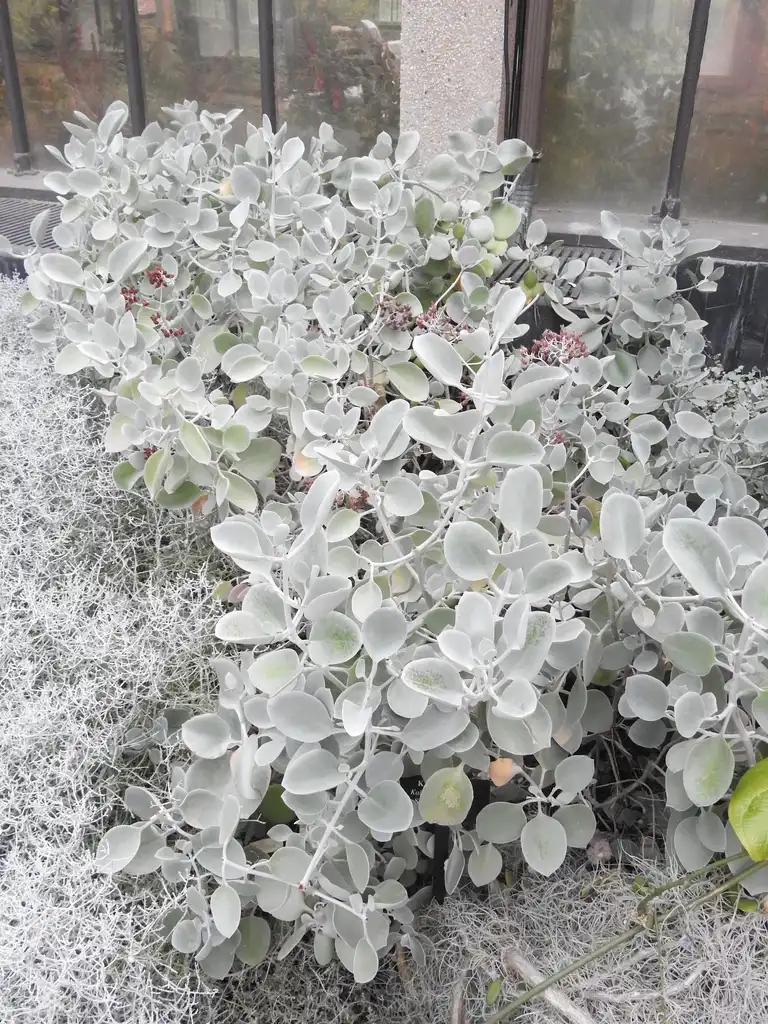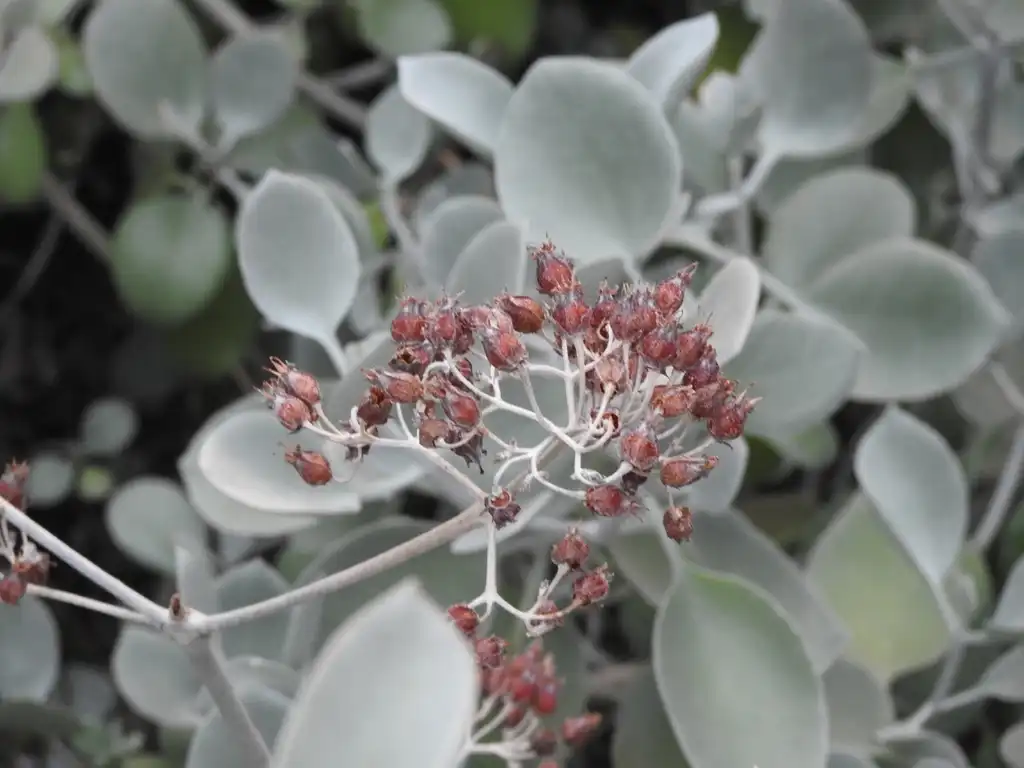
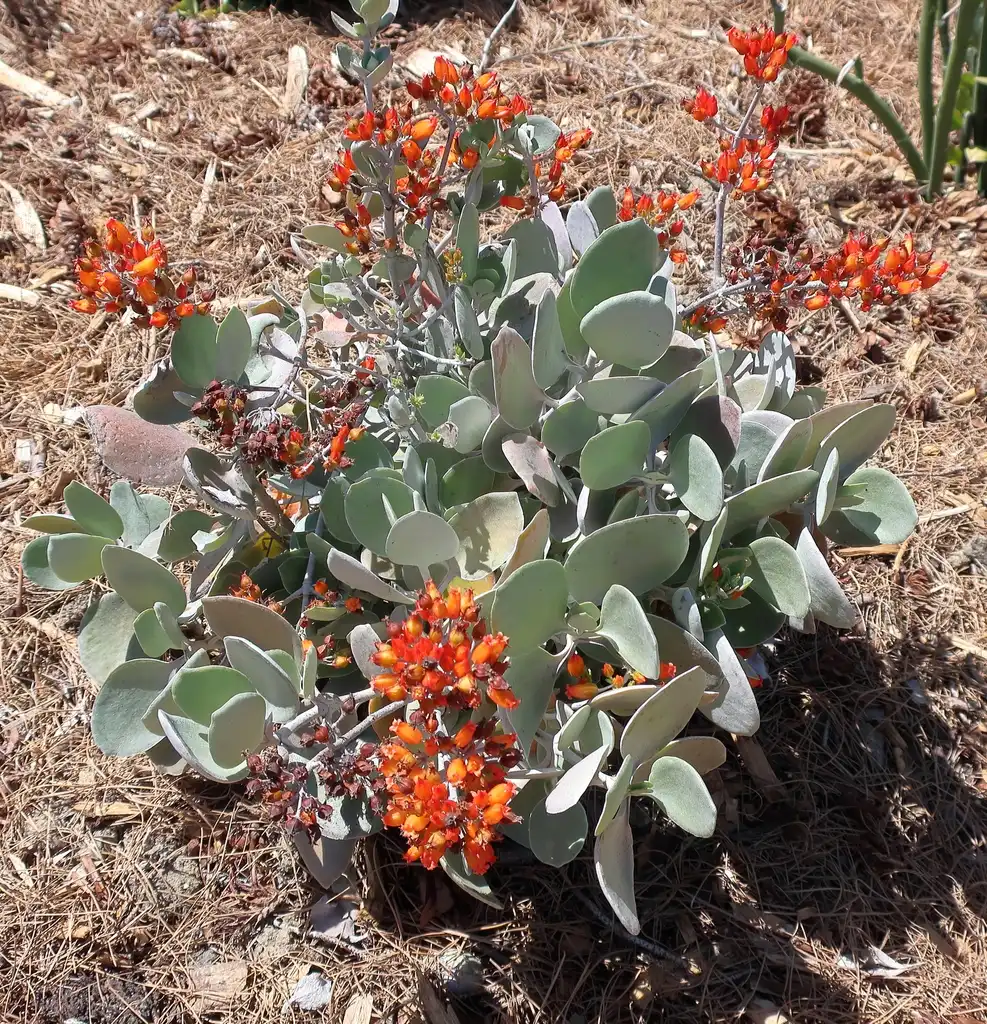
• Photo of Kalanchoe bracteata (Kalanchoe bracteatas)

Plant Profile: Kalanchoe bracteata

Names

Kalanchoe, Silver Teaspoons

  • Photo of Kalanchoe bracteata (Kalanchoe bracteatas)

Phonetic Spelling:kal-un-KOH-ee brak-tee-AY-tuh

Genus:Kalanchoe

Species:bracteata

Family:Crassulaceae

This compact succulent features silvery, fuzzy leaves that taper to a point. It thrives in bright, sunny environments and warm conditions, though it is winter hardy only if temperatures remain above 55 degrees Fahrenheit. In regions where this minimum is not achievable, planting in containers can be an effective alternative. During the summer, water the plant moderately, allowing the soil surface to dry out between waterings. In winter, reduce the frequency of watering significantly, permitting the plant to dry out considerably. Keep an eye on the leaves for any signs of water stress.

When grown in containers, these plants may require repotting every few years as they grow larger. It's important to ensure proper drainage, and they tend to thrive in clay pots.

Regarding pests, diseases, and other issues: while this succulent can be grown in sunny spots, caution is advised with southern exposures, as the leaf tips may scorch.

Kalanchoe bracteata Feature Summary

Kalanchoe bracteata Image Gallery

Tags

#evergreen
#succulent
#silver leaves
#problem for cats
#problem for dogs

Similar Plants

Kalanchoe bracteata is often confused with:

Kalanchoe bracteata Feature Summary

Attributes
Leaves
1-2" long silvery pubescent leaves pointed at the tip.
Gray/Silver
1-3 inches
Poisonous to Humans
Vomiting, diarrhea, abnormal heart rhythm (rare).
Whole Plant Traits
Succulent
Cultural Conditions
Full sun (6 or more hours of direct sunlight a day)
Partial Shade (Direct sunlight only part of the day, 2-6 hours)
Dappled Sunlight (Shade through upper canopy all day)
Flowers
Landscape
Problem for Cats
Problem for Dogs

Kalanchoe bracteata Attributes

Kalanchoe bracteata: Country Or Region Of Origin

Madagascar
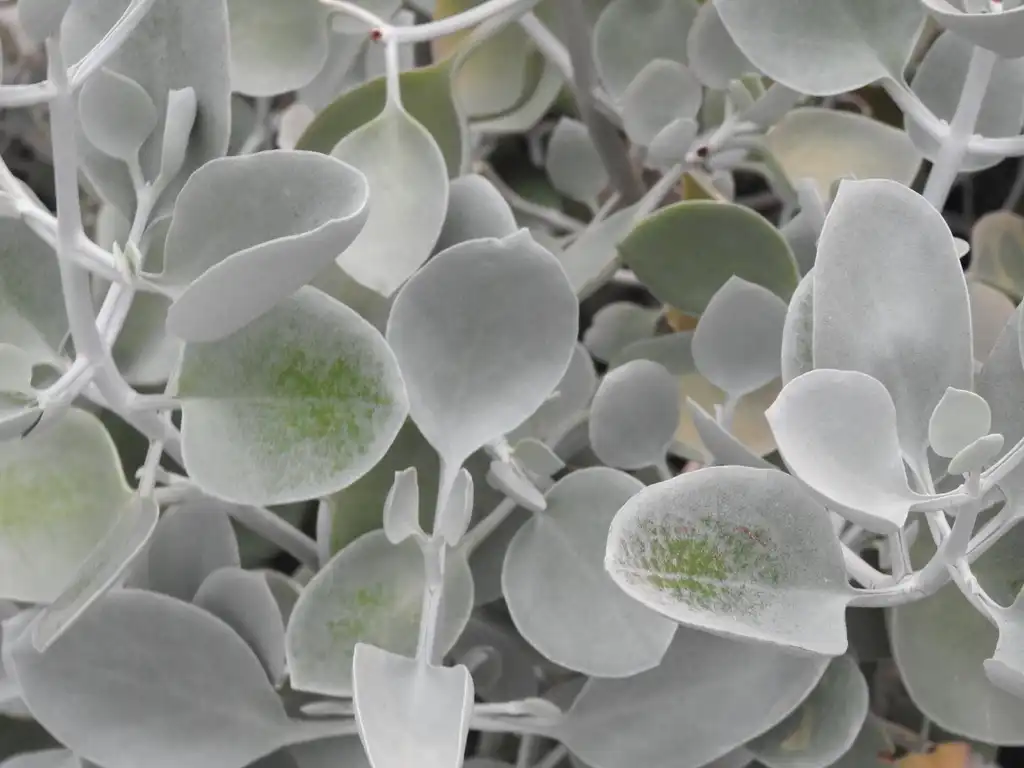
Kalanchoe bracteata Leaves

Kalanchoe bracteata: Leaf Description

1-2" long silvery pubescent leaves pointed at the tip.

Kalanchoe bracteata: Leaf Color

spa
Gray/Silver

Kalanchoe bracteata: Leaf Shape

Acicular
Auriculate
Cordate
Cuneate
Deltoid
Elliptical
Filiform
Lanceolate
Linear
Oblanceolate
Oblong
Obovate
Obtuse
Orbicular
Ovate
Palmasect
Palmatifid
Peltate
Pinnatifid
Pinnatisect
Reniform
Rhomboidal
Spatulate
Subcordate
Subulate

Kalanchoe bracteata: Hairs Present

No
Yes

Kalanchoe bracteata: Leaf Length

< 1 inch
1-3 inches
3-6 inches
> 6 inches

Kalanchoe bracteata Poisonous to Humans

Kalanchoe bracteata: Poison Symptoms

Vomiting, diarrhea, abnormal heart rhythm (rare).

Kalanchoe bracteata: Poison Toxic Principle

Bufodienolides

Kalanchoe bracteata: Poison Severity

High
Low
Medium

Kalanchoe bracteata: Causes Contact Dermatitis

No
Yes

Kalanchoe bracteata Whole Plant Traits

Kalanchoe bracteata: Plant Type

Annual
Bulb
Carnivorous
Edible
Epiphyte
Fern
Ground Cover
Herb
Herbaceous Perennial
Houseplant
Mushroom
Native Plant
Ornamental Grasses and Sedges
Perennial
Poisonous
Rose
Shrub
Succulent
Tree
Turfgrass
Vegetable
Vine
Water Plant
Weed
Wildflower

Kalanchoe bracteata Cultural Conditions

Kalanchoe bracteata: Light

Dappled Sunlight (Shade through upper canopy all day)
Deep shade (Less than 2 hours to no direct sunlight)
Full sun (6 or more hours of direct sunlight a day)
Partial Shade (Direct sunlight only part of the day, 2-6 hours)

Kalanchoe bracteata: USDA Plant Hardiness Zone

thermostat
10a
thermostat
10b
thermostat
11a
thermostat
11b
thermostat
9b

Kalanchoe bracteata Flowers

Kalanchoe bracteata: Flower Color

filter_vintage
Red/Burgundy

Kalanchoe bracteata: Flower Bloom Time

Winter
Spring
Summer
Fall

Kalanchoe bracteata Stem

Kalanchoe bracteata: Stem Is Aromatic

No
Yes

Kalanchoe bracteata Landscape

Kalanchoe bracteata: Design Feature

Accent
Barrier
Border
Flowering Tree
Foundation Planting
Hedge
Mass Planting
Screen/Privacy
Security
Shade Tree
Small groups
Small Tree
Specimen
Street Tree
Understory Tree

Kalanchoe bracteata: Landscape Location

Coastal
Container
Hanging Baskets
Houseplants
Lawn
Meadow
Naturalized Area
Near Septic
Patio
Pond
Pool/Hardscape
Recreational Play Area
Riparian
Rock Wall
Slope/Bank
Small Space
Vertical Spaces
Walkways
Woodland

Kalanchoe bracteata: Problems

Allelopathic
Contact Dermatitis
Frequent Disease Problems
Frequent Insect Problems
Invasive Species
Malodorous
Messy
Poisonous to Humans
Problem for Cats
Problem for Children
Problem for Dogs
Problem for Horses
Short-lived
Spines/Thorns
Weak Wood
Weedy