Plant Profile: Lagenaria siceraria

Taxonomy: Lagenaria siceraria

Names

Bottle Gourd, Calabash Gourd, Gourds

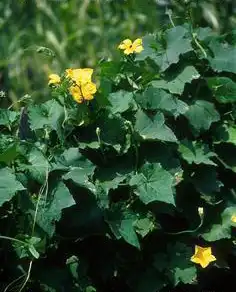
  • Photo of Lagenaria siceraria (Lagenaria sicerarias)

Phonetic Spelling:lag-en-AR-ee-uh sy-ker-AR-ee-uh

Genus:Lagenaria

Species:siceraria

Family:Cucurbitaceae

Bottle gourd, also known as calabash, is a climbing plant from the squash family that is cultivated annually for its uniquely shaped fruits. The name of its genus comes from the Greek word "lagenos," meaning "vase." Once dried, these fruits can serve various purposes, including as containers, pipes, and rattles. The large white flowers bloom at night, and hand-pollination can improve fruit production. All parts of the plant—seeds, leaves, flowers, and young stems—are edible. It is advisable to sow seeds outdoors only after the last frost, and the fruits should be picked only once their skin has hardened.

Lagenaria siceraria Feature Summary

Lagenaria siceraria Image Gallery

Tags

Lagenaria siceraria Feature Summary

Attributes
Western Tropical Africa to Ethiopia and Tanzania
Seeds, leaves, flowers, and young stems are all edible
Fruit
The fruit is fleshy and dry but not split open.
Flowers
Flowers are generally white or yellow and there are five petals, sepals, or tepals in the flower. The petals or the sepals are fused into a cup or tube.
White
Gold/Yellow
4-5 petals/rays
Leaves
The alternate leaves are simple, lobed but not separated into leaflets, there is one leaf per node along the stem. The leaf edge is serrated and lobed.
Whole Plant Traits
Cultural Conditions
Full sun (6 or more hours of direct sunlight a day)
4a
4b
5b
5a
6a
6b
7a
7b
8b
8a
2a
2b
3a
3b
9a
9b
10a
10b
11a
11b
Landscape
Frequent Insect Problems

Lagenaria siceraria Attributes

Lagenaria siceraria: Country Or Region Of Origin

Western Tropical Africa to Ethiopia and Tanzania
Lagenaria siceraria: Edibility

Seeds, leaves, flowers, and young stems are all edible

Lagenaria siceraria: Life Cycle

Annual
Biennial
Bulb
Perennial
Woody

Lagenaria siceraria: Climbing Method

Clinging
Scrambler
Tendrils
Twining

Lagenaria siceraria Fruit

Lagenaria siceraria: Fruit Description

The fruit is fleshy and dry but not split open.

Lagenaria siceraria: Fruit Value To Gardener

Edible
Fragrant
Good Cut
Good Dried
Long Bloom Season
Long-lasting
Showy

Lagenaria siceraria Flowers

Lagenaria siceraria: Flower Description

Flowers are generally white or yellow and there are five petals, sepals, or tepals in the flower. The petals or the sepals are fused into a cup or tube.

Lagenaria siceraria: Flower Color

filter_vintage
Gold/Yellow
filter_vintage
White

Lagenaria siceraria: Flower Value To Gardener

Edible
Fragrant
Good Cut
Good Dried
Long Bloom Season
Long-lasting
Showy

Lagenaria siceraria: Flower Bloom Time

Winter
Spring
Summer
Fall

Lagenaria siceraria: Flower Petals

2-3 rays/petals
4-5 petals/rays
6 petals/rays
7 - 20 petals/rays
asymmetrical petals
Bracts
Colored Sepals
fused petals
more than 20 petals/rays
Tepals

Lagenaria siceraria Leaves

Lagenaria siceraria: Leaf Description

The alternate leaves are simple, lobed but not separated into leaflets, there is one leaf per node along the stem. The leaf edge is serrated and lobed.

Lagenaria siceraria: Leaf Color

spa
Green

Lagenaria siceraria: Leaf Type

Compound (Pinnately , Bipinnately, Palmately)
Fronds
Needles
Sheath
Simple

Lagenaria siceraria: Leaf Arrangement

Alternate
Opposite
Other/more complex
Rosulate
Whorled

Lagenaria siceraria: Leaf Margin

Crenate
Crenulate
Dentate
Denticulate
Doubly Crenate
Doubly Dentate
Doubly Serrate
Entire
Lobed
Serrate
Sinuate
Undulate

Lagenaria siceraria: Hairs Present

No
Yes

Lagenaria siceraria Whole Plant Traits

Lagenaria siceraria: Plant Type

Annual
Bulb
Carnivorous
Edible
Epiphyte
Fern
Ground Cover
Herb
Herbaceous Perennial
Houseplant
Mushroom
Native Plant
Ornamental Grasses and Sedges
Perennial
Poisonous
Rose
Shrub
Succulent
Tree
Turfgrass
Vegetable
Vine
Water Plant
Weed
Wildflower

Lagenaria siceraria: Growth Rate

Slow
Medium
Rapid

Lagenaria siceraria: Maintenance

Low
Medium
High

Lagenaria siceraria: Texture

Fine
Medium
Coarse

Lagenaria siceraria Cultural Conditions

Lagenaria siceraria: Light

Dappled Sunlight (Shade through upper canopy all day)
Deep shade (Less than 2 hours to no direct sunlight)
Full sun (6 or more hours of direct sunlight a day)
Partial Shade (Direct sunlight only part of the day, 2-6 hours)

Lagenaria siceraria: USDA Plant Hardiness Zone

thermostat
10a
thermostat
10b
thermostat
11a
thermostat
11b
thermostat
2a
thermostat
2b
thermostat
3a
thermostat
3b
thermostat
4a
thermostat
4b
thermostat
5a
thermostat
5b
thermostat
6a
thermostat
6b
thermostat
7a
thermostat
7b
thermostat
8a
thermostat
8b
thermostat
9a
thermostat
9b

Lagenaria siceraria Stem

Lagenaria siceraria: Stem Is Aromatic

No
Yes

Lagenaria siceraria Landscape

Lagenaria siceraria: Problems

Allelopathic
Contact Dermatitis
Frequent Disease Problems
Frequent Insect Problems
Invasive Species
Malodorous
Messy
Poisonous to Humans
Problem for Cats
Problem for Children
Problem for Dogs
Problem for Horses
Short-lived
Spines/Thorns
Weak Wood
Weedy