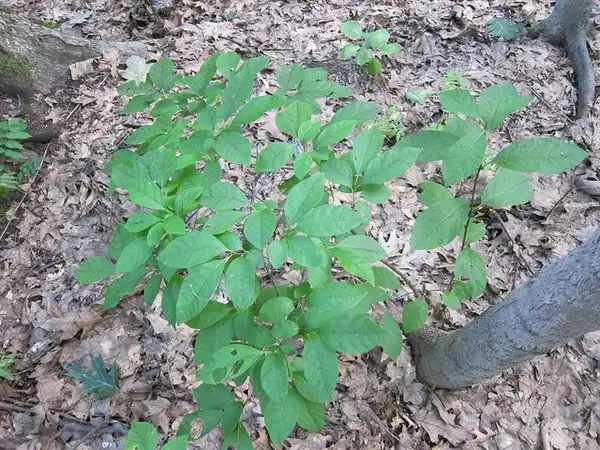
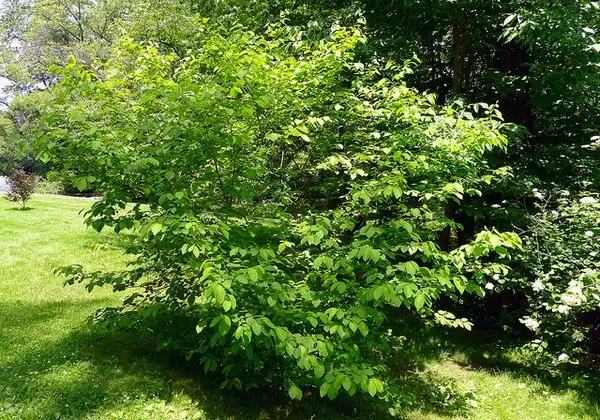
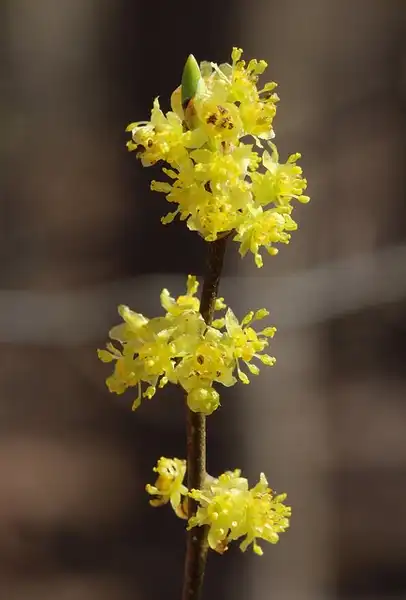
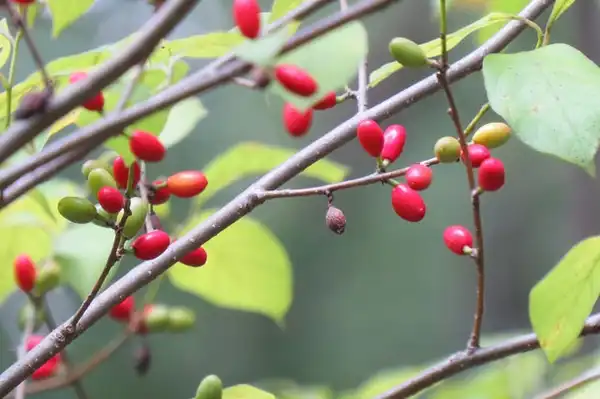
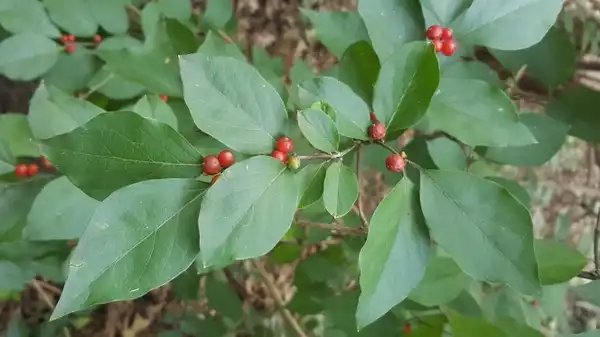
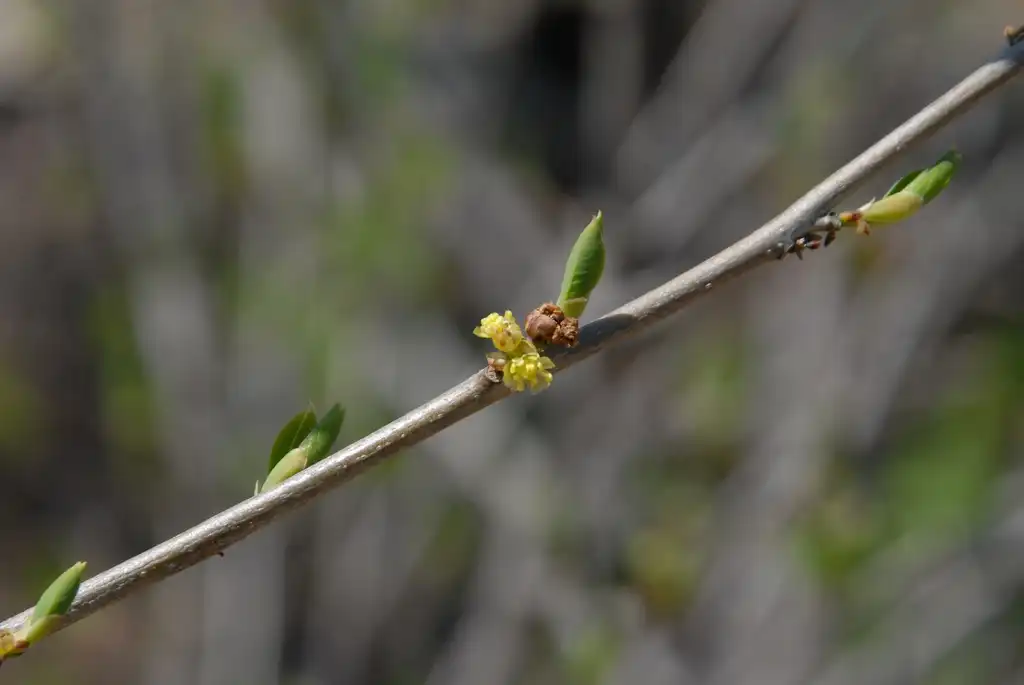
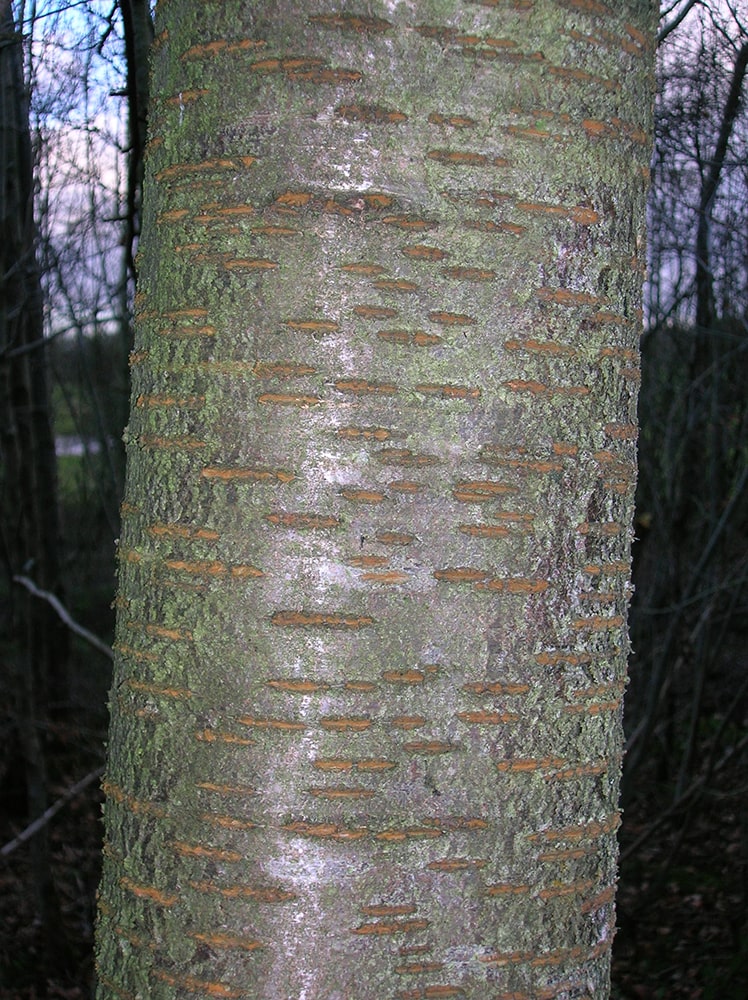
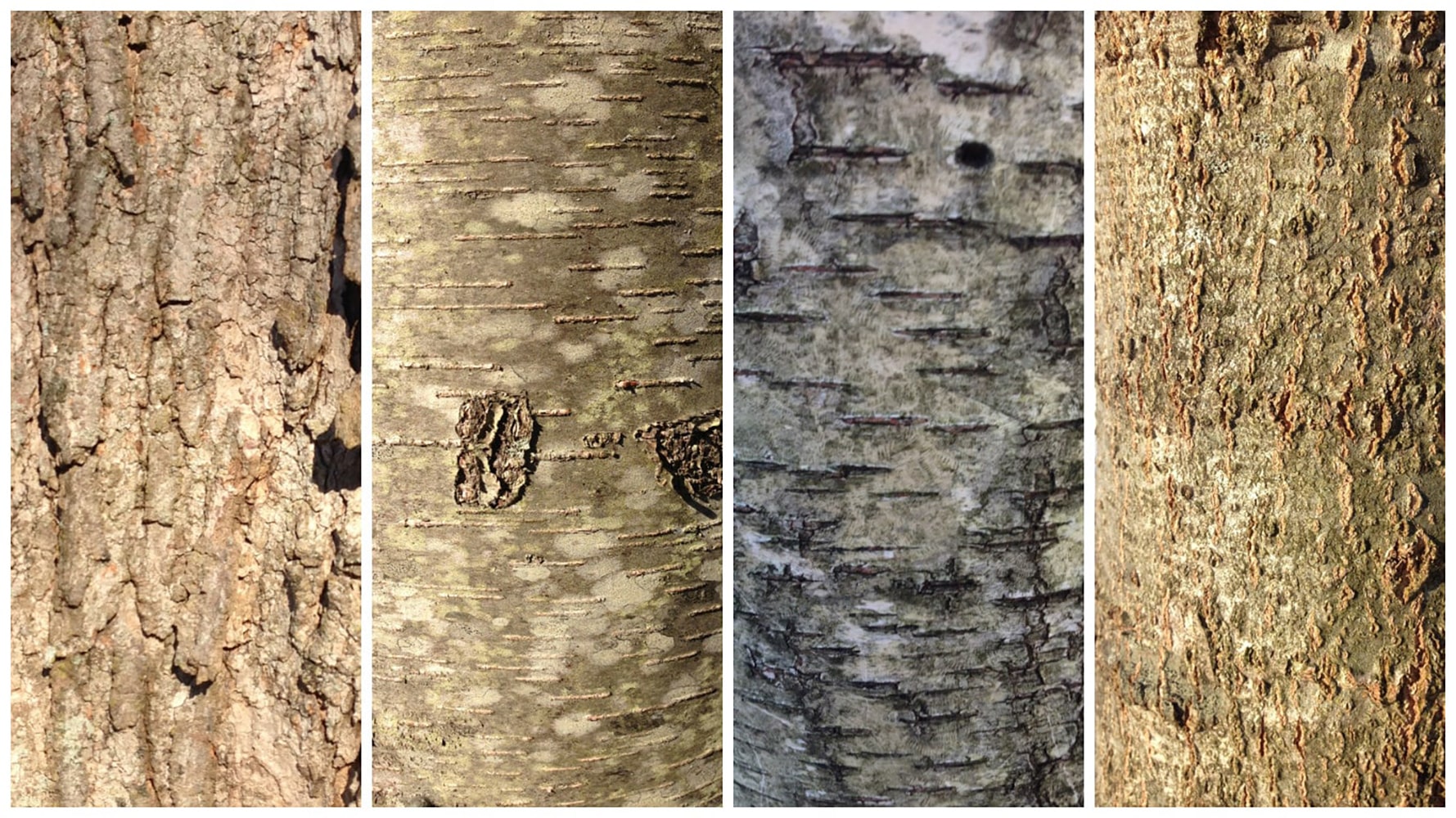
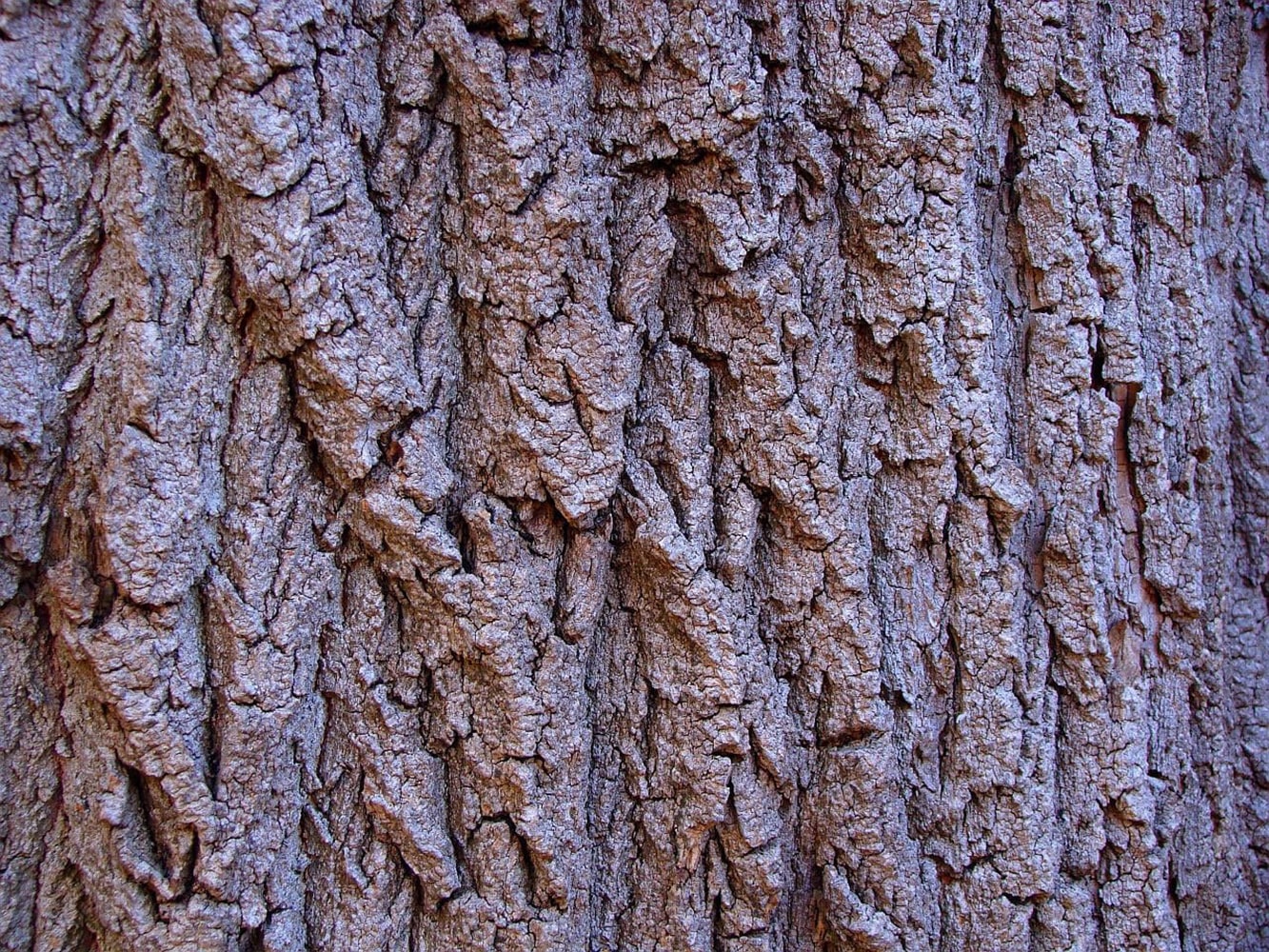
Spicebush is a deciduous shrub that typically reaches heights of 8 to 15 feet and thrives in a variety of environments, including lush forests, dry slopes, and wetlands. Its leaves are arranged alternately and feature smooth edges, releasing a spicy fragrance when crushed. The bark exhibits a brown to gray-brown hue, adorned with light-colored lenticels. In early spring, the shrub produces small yellow flowers that bloom in clusters at the axils of the leaves. By fall, it bears bright red drupes that have a distinctive peppery flavor and aroma. This plant is sensitive to high temperatures and drought conditions. As a dioecious species, it requires male plants for the female fruit to develop. Additionally, it showcases a vibrant yellow color in the fall.
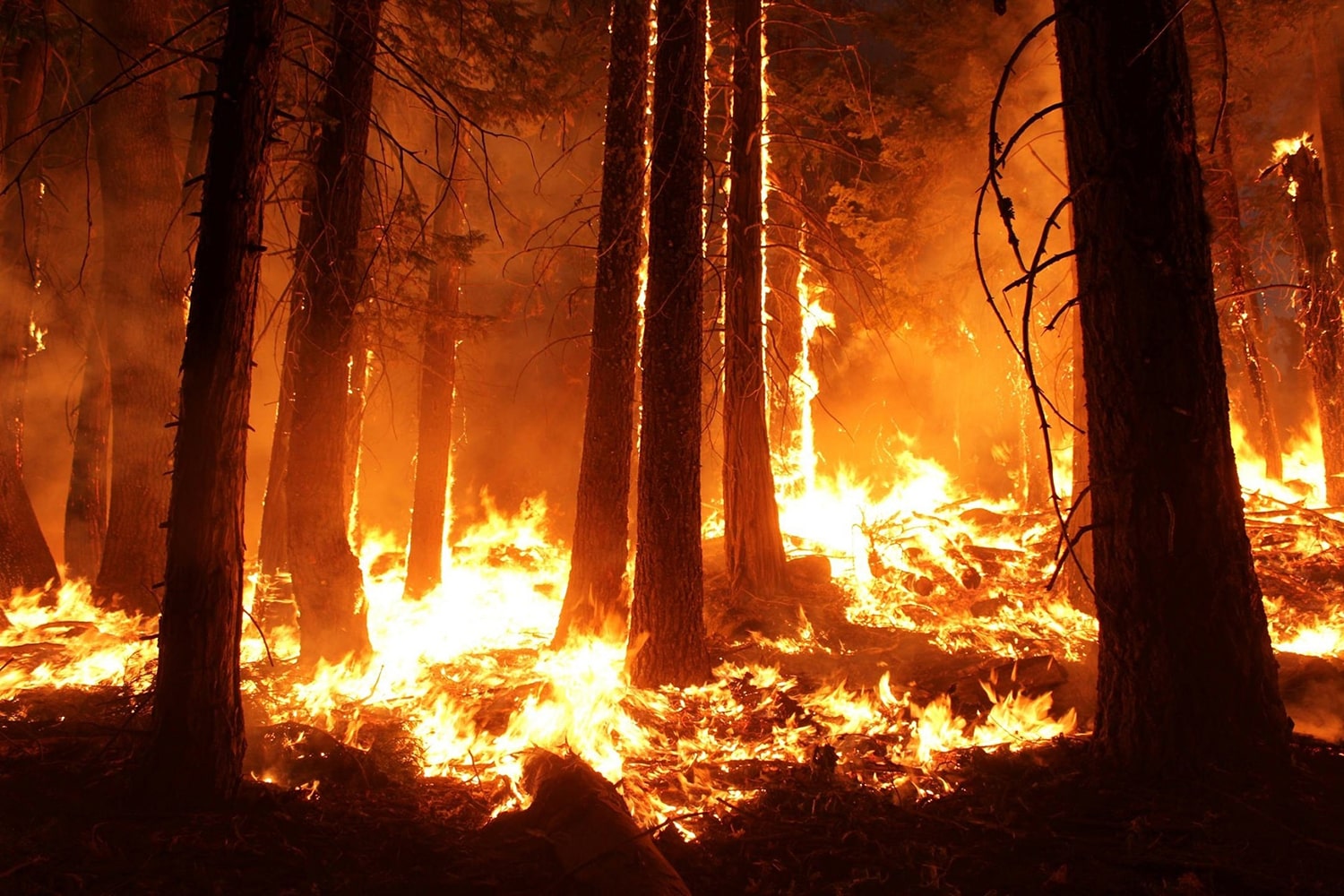
Fire Risk: This shrub has a low flammability rating.
Insects, Diseases, and Other Plant Problems: Spicebush is vulnerable to laurel wilt.
Essential oils from this plants leaves, twigs, and fruits, have been used in teas. The fragrant fruits are sometimes dried and used in sachets. Native Americans have been known to use the dried fruits of this plant as a spice, and the leaves of this plant for tea.
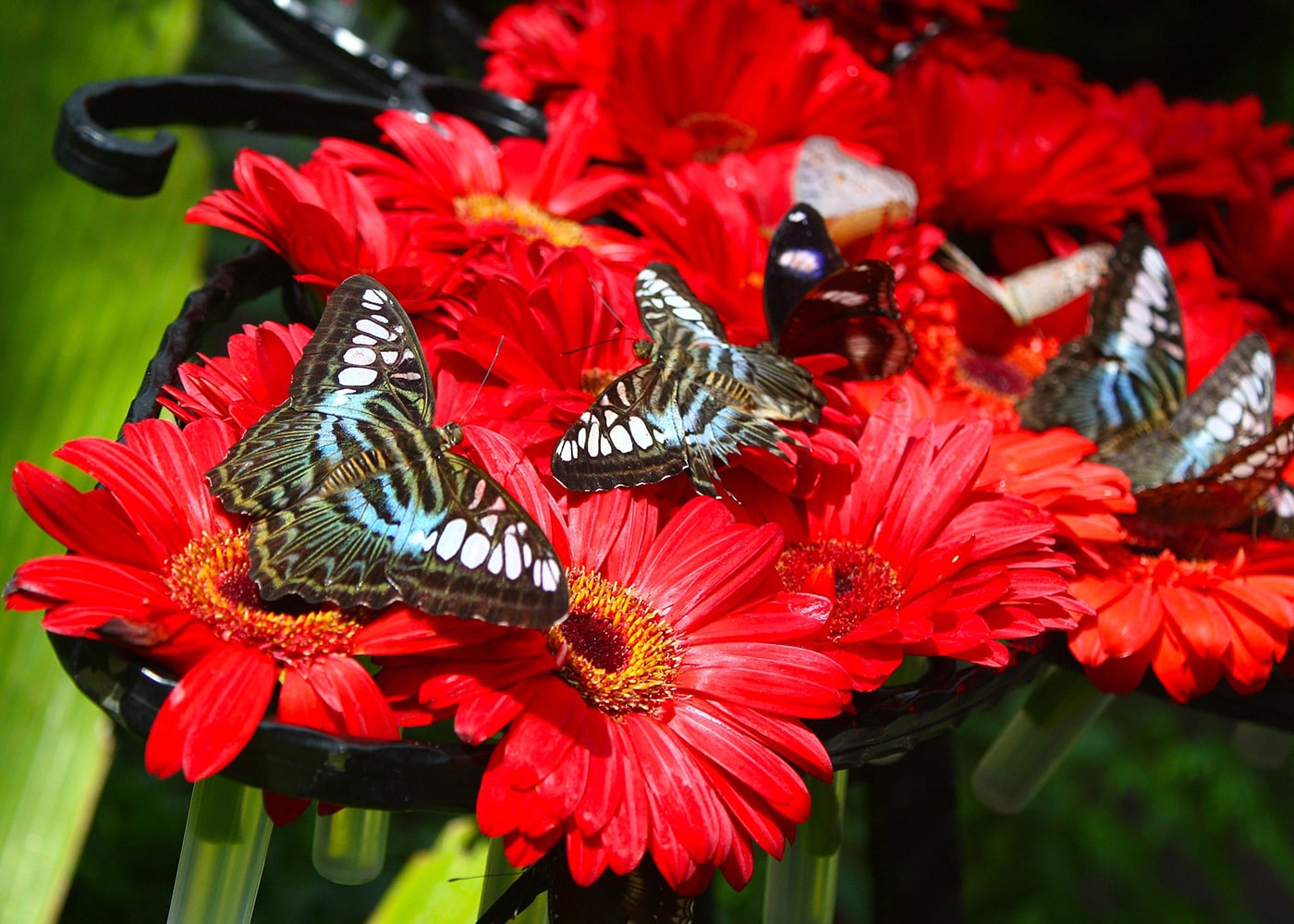
This plant supports Palamedes Swallowtail (Papilio palamedes) larvae which has two flights from March-December with a partial 3rd flight in the South. The adult butterflies feed on nectar from flowers like sweet pepperbush, thistles, blue flag, and azalea. This plant also supports Spicebush Swallowtail (Papilio troilus) larvae which have 2 generations per year from April-October. Adult Spicebush Swallowtail butterflies feed on nectar from Japanese honeysuckle, jewelweed, thistles, milkweed, azalea, dogbane, lantana, mimosa, and sweet pepperbush. Also a host plant for the Spicebush Swallowtail butterfly. Fruits are eaten by songbirds, especially during fall migration. White-tailed deer will browse twigs and leaves.
The Spice bush has clusters of tiny, apetalous, aromatic, greenish-yellow flowers that bloom along the branches in early spring before the foliage emerges (March-April). It has dioecious (male and female flowers on separate plants), with the male flowers being larger and showier than the female ones. The flowers of female plants give way to bright red drupes. Female plants need a male pollinator in order to set fruit (scarlet red), however. It's drupes are very attractive, but are largely hidden by the foliage until the leaves drop.
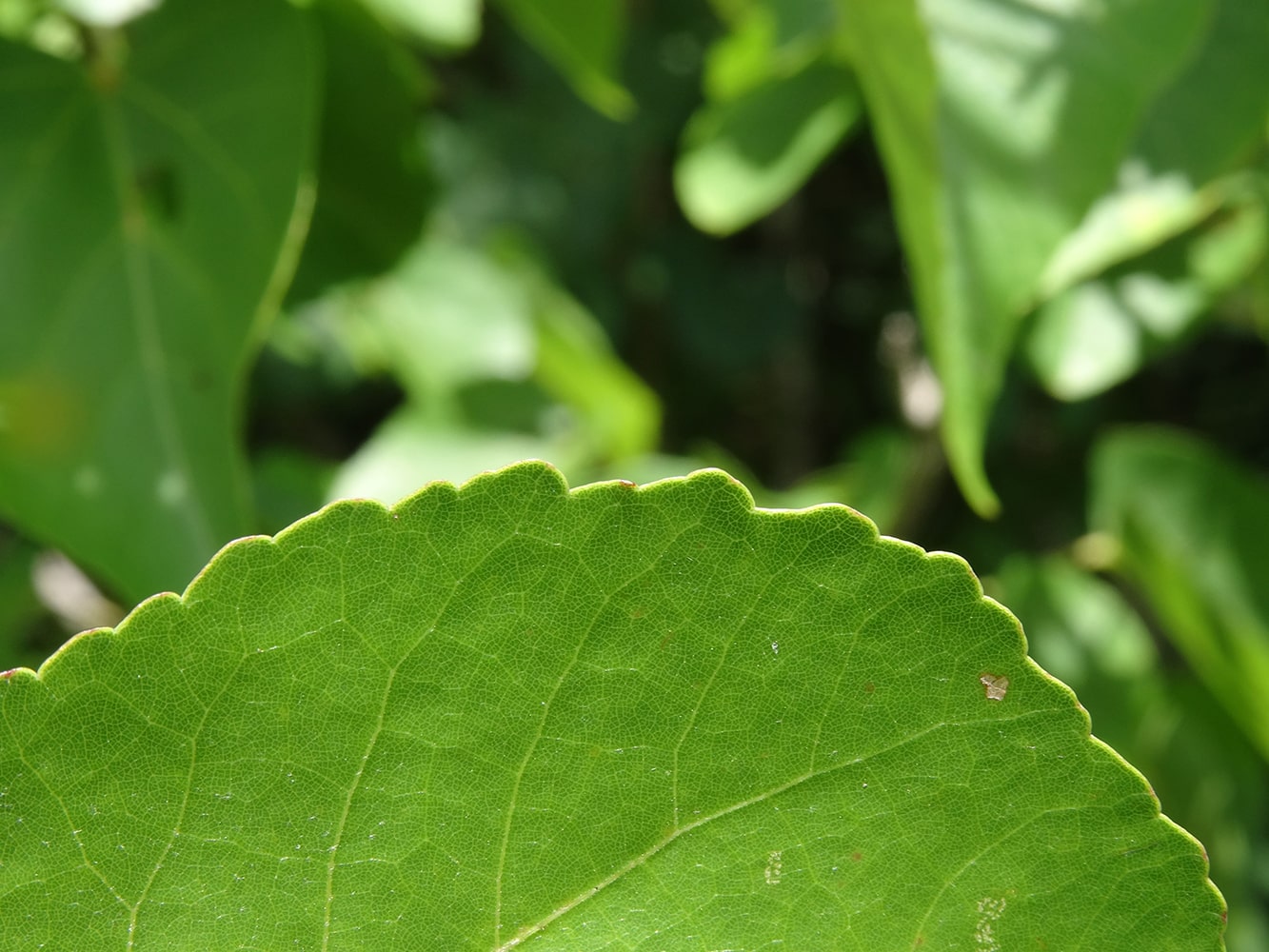
The Spice bush has thick, alternate, oblong-obovate, light green leaves (to 5" long) turn an attractive yellow in autumn. Leaves are aromatic (spicy fragrance) when crushed.
Essential oils from this plants leaves, twigs, and fruits, have been used in teas. The fragrant fruits are sometimes dried and used in sachets. Native Americans have been known to use the dried fruits of this plant as a spice, and the leaves of this plant for tea.
Lindera benzoin: Country Or Region Of Origin
South East Canada to Central & Eastern U.S.A
Lindera benzoin: Wildlife Value
This plant supports Palamedes Swallowtail (Papilio palamedes) larvae which has two flights from March-December with a partial 3rd flight in the South. The adult butterflies feed on nectar from flowers like sweet pepperbush, thistles, blue flag, and azalea. This plant also supports Spicebush Swallowtail (Papilio troilus) larvae which have 2 generations per year from April-October. Adult Spicebush Swallowtail butterflies feed on nectar from Japanese honeysuckle, jewelweed, thistles, milkweed, azalea, dogbane, lantana, mimosa, and sweet pepperbush. Also a host plant for the Spicebush Swallowtail butterfly. Fruits are eaten by songbirds, especially during fall migration. White-tailed deer will browse twigs and leaves.
Lindera benzoin: Particularly Resistant To (Insects/Diseases/Other Problems)
fire in the landscape.
Lindera benzoin: Life Cycle
Annual
Biennial
Bulb
Perennial
Woody
Lindera benzoin: Play Value
Attractive Flowers
Attracts Pollinators
Buffer
Colorful
Defines Paths
Easy to Grow
Edible fruit
Fragrance
Pieces Used in Games
Screening
Shade
Sound
Textural
Wildlife Cover/Habitat
Wildlife Food Source
Wildlife Larval Host
Wildlife Nesting
Wind Break
Wind Shimmer
Lindera benzoin: Fire Risk Rating
extreme flammability
high flammability
low flammability
medium flammability
Lindera benzoin Fruit
Lindera benzoin: Fruit Description
A drupe, scarlet red spicy scented fruit in late Summer/early Fall (August-September) 1/2' wide.
Lindera benzoin: Fruit Type
Achene
Aggregate
Berry
Capsule
Caryopsis
Drupe
Follicle
Legume
Nut
Pome
Samara
Schizocarp
Siliqua
Lindera benzoin: Fruit Color
grass
Red/Burgundy
Lindera benzoin: Fruit Value To Gardener
Edible
Fragrant
Good Cut
Good Dried
Long Bloom Season
Long-lasting
Showy
Lindera benzoin: Display/Harvest Time
Fall
Spring
Summer
Winter
Lindera benzoin: Fruit Width
< 1 inch
1-3 inches
> 3 inches
Lindera benzoin Flowers
Lindera benzoin: Flower Description
The Spice bush has clusters of tiny, apetalous, aromatic, greenish-yellow flowers that bloom along the branches in early spring before the foliage emerges (March-April). It has dioecious (male and female flowers on separate plants), with the male flowers being larger and showier than the female ones. The flowers of female plants give way to bright red drupes. Female plants need a male pollinator in order to set fruit (scarlet red), however. It's drupes are very attractive, but are largely hidden by the foliage until the leaves drop.
Lindera benzoin: Flower Color
filter_vintage
Gold/Yellow
filter_vintage
Green
Lindera benzoin: Flower Value To Gardener
Edible
Fragrant
Good Cut
Good Dried
Long Bloom Season
Long-lasting
Showy
Lindera benzoin: Flower Bloom Time
Winter
Spring
Summer
Fall
Lindera benzoin Leaves
Lindera benzoin: Leaf Description
The Spice bush has thick, alternate, oblong-obovate, light green leaves (to 5" long) turn an attractive yellow in autumn. Leaves are aromatic (spicy fragrance) when crushed.
Lindera benzoin: Woody Plant Leaf Characteristics
Broadleaf Evergreen
Deciduous
Needled Evergreen
Semi-evergreen
Lindera benzoin: Leaf Color
spa
Gold/Yellow
spa
Green
Lindera benzoin: Deciduous Leaf Fall Color
spa
Gold/Yellow
Lindera benzoin: Leaf Type
Compound (Pinnately , Bipinnately, Palmately)
Fronds
Needles
Sheath
Simple
Lindera benzoin: Leaf Arrangement
Alternate
Opposite
Other/more complex
Rosulate
Whorled
Lindera benzoin: Leaf Shape
Acicular
Auriculate
Cordate
Cuneate
Deltoid
Elliptical
Filiform
Lanceolate
Linear
Oblanceolate
Oblong
Obovate
Obtuse
Orbicular
Ovate
Palmasect
Palmatifid
Peltate
Pinnatifid
Pinnatisect
Reniform
Rhomboidal
Spatulate
Subcordate
Subulate
Lindera benzoin: Leaf Margin
Crenate
Crenulate
Dentate
Denticulate
Doubly Crenate
Doubly Dentate
Doubly Serrate
Entire
Lobed
Serrate
Sinuate
Undulate
Lindera benzoin: Hairs Present
No
Yes
Lindera benzoin: Leaf Length
< 1 inch
1-3 inches
3-6 inches
> 6 inches
Lindera benzoin: Leaf Feel
Fleshy
Glossy
Leathery
Papery
Prickly
Rough
Rubbery
Slippery
Smooth
Soft
Velvety
Waxy
Lindera benzoin: Leaf Value To Gardener
Edible
Fragrant
Good Cut
Good Dried
Long-lasting
Showy
Lindera benzoin Stem
Lindera benzoin: Stem Description
Has a spicy fragrance
Lindera benzoin: Stem Is Aromatic
No
Yes
Lindera benzoin: Stem Lenticels
Conspicuous
Not Conspicuous
Lindera benzoin Whole Plant Traits
Lindera benzoin: Plant Type
Annual
Bulb
Carnivorous
Edible
Epiphyte
Fern
Ground Cover
Herb
Herbaceous Perennial
Houseplant
Mushroom
Native Plant
Ornamental Grasses and Sedges
Perennial
Poisonous
Rose
Shrub
Succulent
Tree
Turfgrass
Vegetable
Vine
Water Plant
Weed
Wildflower
Lindera benzoin: Woody Plant Leaf Characteristics
Broadleaf Evergreen
Deciduous
Needled Evergreen
Semi-evergreen
Lindera benzoin: Habit/Form
Arching
Ascending
Broad
Cascading
Climbing
Clumping
Columnar
Conical
Creeping
Dense
Erect
Horizontal
Irregular
Mounding
Multi-stemmed
Multi-trunked
Open
Oval
Prostrate
Pyramidal
Rounded
Spreading
Vase
Weeping
Lindera benzoin: Growth Rate
Slow
Medium
Rapid
Lindera benzoin: Texture
Fine
Medium
Coarse
Lindera benzoin Cultural Conditions
Lindera benzoin: Light
Dappled Sunlight (Shade through upper canopy all day)
Deep shade (Less than 2 hours to no direct sunlight)
Full sun (6 or more hours of direct sunlight a day)
Partial Shade (Direct sunlight only part of the day, 2-6 hours)